
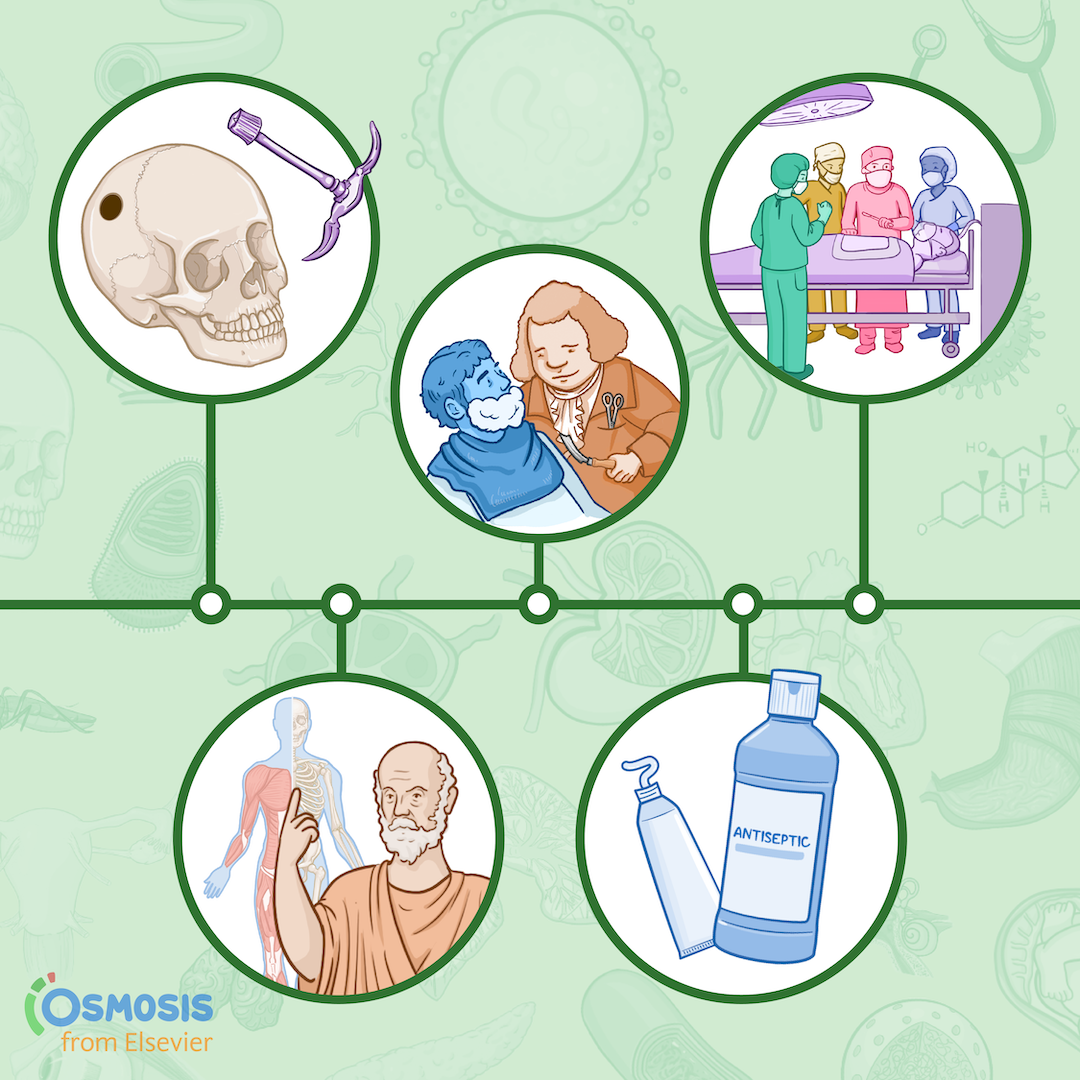
Surgical Medicine, or Surgery, is the electrifying pulse of modern medicine; a breathtaking fusion of precision, courage, and artistry that has the potential to pull lives back from death’s door. Try to envision a world without it, where there are no heart transplants, no tumor removals, no bones reset. It’s like imagining a rockstar without a guitar, a chef without a knife, or a poet without a pen.
Surgery is where science struts its stuff, where hands brandish scalpels to rewrite outcomes. Let’s trace the epic journey of surgery, from ancient skull-scrapers to robotic maestros, while celebrating legends like Sushruta, Lister, and DeBakey who helped to carve its path. It’s time to explore the bloody but brilliant history of surgery, a craft that’s as much about heart as it is about hands.

Ancient Beginnings of Surgery
Long before sterile operating rooms or medical diplomas, humans were slicing into each other. Prehistoric surgeons with Stone Age swagger mastered the art of trepanation, which involves drilling holes in the skulls of the living with flint tools. Why? To chase out evil spirits, soothe migraines, and demonstrate their skill and status within the tribe. How do we know? Archaeologists have unearthed healed skulls, proving these patients often survived, offering a nod to raw talent and a bit of luck. Their toolkit, obsidian and flint, was sharper than many modern-day blades, wielded under open skies with nothing but instinct and a prayer to the gods.
Ancient civilizations took these rudimentary practices and refined surgery into an art. In Egypt, the Edwin Smith Papyrus (1600 BC) was a surgical cheat sheet, detailing treatments for fractures, wounds, and dislocations with remarkable precision. Egyptian surgeons stitched gashes with linen and used herbal remedies to treat ailments, many of which were validated by modern pharmacology. In India, Sushruta (600 BC), the godfather of surgery, penned the Sushruta Samhita, a 300-procedure masterpiece. It even included rhinoplasty, plastic surgery’s spicy debut! He used bamboo reeds and ant heads as sutures, proving innovation thrives in any era.
Greece’s Hippocrates, the ethical trailblazer, gave us the Hippocratic Oath, instructing surgeons to heal with honor, not hack like overzealous butchers. His texts on fractures and dislocations were surgical gospel. Rome’s Galen, the anatomy expert, dissected pigs and apes to map the human body, influencing surgical knowledge for centuries despite a few inaccuracies (ahem, human livers aren’t the same as pig livers, Galen). Persia’s Avicenna, with his Canon of Medicine, wove surgical wisdom into a poetic tapestry. In doing so, he guided healers across continents with his intellectual flair.
These pioneers laid surgery’s foundation. Their insights weren’t just flashes of genius, but the bedrock of a developing craft that’s evolved into a cornerstone of medicine. Their work, bold, courageous, and curious, set the stage for centuries of progress, proving surgery was as much about brains as it was about bravery.
The Middle Ages: The Rise of Surgery in Europe
Medieval Europe was surgery’s gritty “teenage phase,” with a wild mix of blood, barbers, and battlefield bravado. Barbers doubled as surgeons, wielding razors for shaves and saws for emergency amputations with equal panache; multitasking at its most medieval. Surgery guilds sprang up to tame the chaos, helping to ensure only skilled hands could make the cut.
During this period, Avicenna’s Canon remained a surgical beacon. Its detailed wound care and fracture treatments lighting the way for European practitioners through the dark ages of medicine. With infection a constant risk, progress inched forward despite grim odds. Guy de Chauliac, the 14th-century surgical prodigy, wrote Chirurgia Magna, a tome that ruled operating tents for centuries. He tackled fractures, dislocations, and wounds, though sepsis was a relentless gate-crasher.
What did they use for anesthesia? A slug of wine or a well-aimed whack to the head. Antisepsis? Barely a nod, but boiling instruments hinted at cleaner practices to come.
Surgeons like Chauliac were both part scholar and part warrior, swapping battlefield stories while barbers still moonlighted as surgeons, as the profession began carving its own identity.Surgery was no longer an uneducated person’s profession, but a learned craft demanding respect, skill, and a steady hand.
The Renaissance: A Turning Point for Surgery
The Renaissance reintroduced surgery to the world, with dusty texts meeting daring hands. Andreas Vesalius, the anatomical genius, stole the show with his stunning De Humani Corporis Fabrica (1543). His cadaver sketches reflected the aesthetics of the time, with beautiful Renaissance masterpieces directing surgeons exactly where to cut, stitch, or marvel at the intricacies of the human body. In fact, dissections became crowded events, with the masses packing anatomy theaters as if they were Shakespeare’s Globe.
Ambroise Paré (1510-1590), France’s surgical maverick, revolutionized battlefield medicine by ditching boiling oil for soothing salves and tying off arteries during amputations. His mantra, “I dressed him, God healed him,” was humble yet iconic, earning him a spot in surgery’s hall of fame.
Surgical tools also got a serious upgrade. Tourniquets, cauterizing irons, and silk sutures turned crude hacks into controlled art. The first surgical textbooks hit the shelves, spreading knowledge faster than a bard’s ballad. The anatomical precision of Vesalius and Paré’s practical genius shifted surgery from not-very-well-informed guesswork to scientific practices, demonstrating it was as cerebral as it was visceral. Surgeons weren’t just guilded craftsmen anymore; they were educated scholars, wielding scalpels like Renaissance polymaths.
This era marked a turning point when surgery entered the global stage, blending brains, bravery, and a touch of showmanship that would define its future. The Renaissance wasn’t just a rebirth of art. It was surgery’s chance to shine, setting the stage for modern miracles.
The 18th and 19th Centuries: The Birth of Modern Surgery
The 18th and 19th centuries were surgery’s coming-of-age, with science and swagger colliding in spectacular fashion. Anesthesia, developed in 1846 with the application of ether, transformed ORs from scream-filled torture chambers to serene workspaces. Patients slept, surgeons exhaled. Joseph Lister, the antiseptic superhero, deployed the use of carbolic acid in the 1860s, banishing infection and slashing mortality rates. His work made surgery a calculated triumph rather than a deadly gamble, and his legacy endures in every sterile OR.
Surgery earned its stripes as a proper medical specialty. Surgical societies, like the Royal College of Surgeons, set standards and shared best practices. Women became medical practitioners, with Elizabeth Blackwell, the first woman MD in the US, and Mary Edwards Walker, a Civil War surgeon and Medal of Honor winner, smashing through social barriers while proving women could wield scalpels with unmatched finesse. William Halsted, the “father of modern surgery,” introduced sterile gloves and precision techniques at Johns Hopkins, although his cocaine-fueled experiments added an outlandish twist to his medical legacy.
Hospitals became surgical hubs, training doctors in anatomy labs and bustling operating rooms. Surgeons raced to operate faster, some nailing amputations in under a minute (earning nicknames like “the butcher” or “the blade”). Beneath the theatrics, surgery was maturing and saving lives with newfound reliability. The era was a crucible, forging surgery into a respected profession, with pioneers proving it was as much about perseverance as it was about precision.
The 20th Century: Rapid Advancements and Specialization
The 20th century was the start of surgery’s golden era, with technology and talent soaring to dizzying heights. X-rays, CT scans, and MRIs turned bodies into open books, guiding surgeons with science fiction-esque precision. Minimally invasive surgery, with laparoscopes snaking through tiny incisions, meant quicker recoveries and smaller scars.
The neurosurgery titan, Harvey Cushing, tamed brain tumors, laying the foundation for brain surgery’s golden age. Michael DeBakey, the heart surgery maestro, pioneered bypasses, transplants, and artificial hearts, making the impossible routine.
Surgical specializations exploded. Cardiothoracic, neurosurgery, and orthopedics became distinct domains, each with its legends. Helen Brooke Taussig, the pediatric cardiology queen, saved “blue babies” with her Blalock-Taussig shunt, offering a lifeline to infants with heart defects. Virginia Apgar, anesthesiology’s unsung hero, gave us the Apgar score, ensuring newborns get a fighting start.
Residency programs began churning out surgical experts, with practitioners like DeBakey and Cushing mentoring the next generation over late-night dissections. Innovations like organ transplantation, pacemakers, and laser surgery shifted ORs into modern miracles.
Cushing’s brain surgeries, DeBakey’s heart miracles, and Taussig’s pediatric triumphs showed surgery’s boundless potential. The century was a whirlwind of progress, with surgeons pushing boundaries, each advancement building on the legacy of their predecessors.
Modern Surgery: Challenges and Future Directions
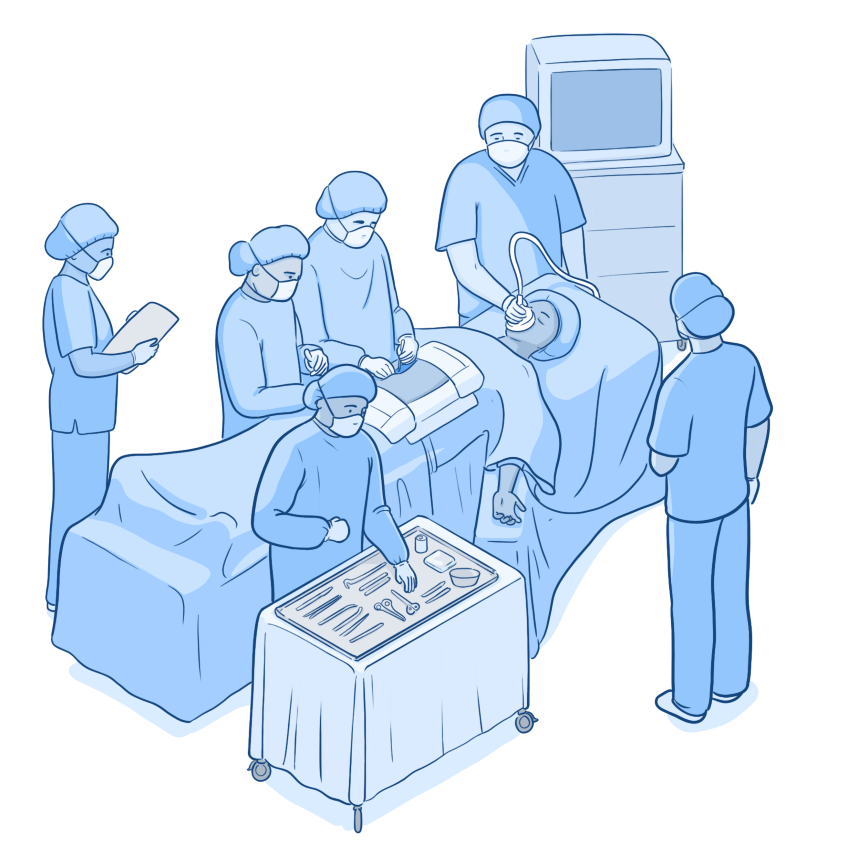
Today, surgery is a high-stakes dance, blending ethics, technology, and human touch. Informed consent is sacred. Patients are partners, not projects. Surgeons explain risks with the clarity of poets, honoring autonomy in the spirit of Hippocrates.
Technology, though, is a double-edged scalpel. Robotic systems like the da Vinci let surgeons zoom into bodies like fighter pilots, offering a level of precision Paré could only dream of. It has also sparked debates. Are we outsourcing too much to machines? The profession grapples with these questions, guided by Lister’s rigor and Cushing’s vision, while creating a surgical wonderland.
Robotic-assisted surgery is just the appetizer; think AI-guided incisions, 3D-printed organs tailored to patients, or nanobots repairing arteries. Personalized medicine promises treatments as unique as fingerprints, while regenerative techniques grow new tissues like science fiction magic. Sushruta’s spirit lives in these impressive innovations, as modern-day surgeons push boundaries with the same audacity and quest for knowledge. However, challenges loom: soaring costs, inequitable access, and ethical minefields over advancements like gene-editing or cybernetic implants are still in discussion.
Global health disparities also add urgency. While DeBakey’s heart pumps save lives in high-tech hospitals, rural clinics lack basic surgical tools. The medical profession must bridge this gap. Climate change, pandemics, and aging populations will test surgery’s resilience, but the field seems to thrive on adversity, turning the impossible into everyday expectations. Ethical dilemmas, from the system of organ allocation to AI in the OR, demand the wisdom of Avicenna and the boldness of Halsted, ensuring surgery remains a beacon of hope in a complex world.
The Legacy and Future of Surgical Innovation
Surgery’s saga is a love story written in blood, sweat, and sutures. From Sushruta’s rhinoplasties to DeBakey’s heart miracles, it’s a tale of heroes, with each generation turning knives into lifelines. Each leap, from Galen’s dissections to Apgar’s newborn scores, built a legacy of healing against the odds. Surgeons are medicine’s poets, crafting second chances with every incision, their hands guided by centuries of wisdom.
The future calls with dreams and research trials. Imagine VR-trained surgeons, bioprinted livers, or AI assistants channeling Cushing’s precision. The possibilities are as truly endless, but surgery’s soul remains unchanged with a longstanding vow to heal, innovate, and defy limits. So here’s your call to action, surgery students: cherish the craft. Dive into Sushruta’s texts, marvel at Vesalius’s sketches, cheer Blackwell’s grit, and geek out over DeBakey’s daring. Surgery isn’t just a job; it’s a passion, a privilege, and a promise to keep pushing what’s possible.
Key Takeaways
- Pioneers like Hippocrates, Sushruta, Lister, and DeBakey shaped surgical practices.
- The Renaissance marked a turning point in surgery practices due to increased anatomical precision and better tools.
- Modern surgery benefits from imaging, specialization, and minimally invasive techniques.
- Future challenges include resolving ethical dilemmas, technology access, and global health disparities.
References
- https://www.osmosis.org/blog/the-top-10-medical-advances-in-history
- https://www.osmosis.org/blog/a-lighthearted-history-of-doctors-day
- https://www.osmosis.org/blog/the-osmosis-ultimate-guide-to-thriving-in-clinical-rotations
- https://www.elsevier.es/en-revista-cirugia-espanola-english-edition–436-articulo-choosing-surgery-as-specialty-opinions-S2173507714003639
- https://www.sciencedirect.com/science/article/abs/pii/S014979449900094X
- https://pmc.ncbi.nlm.nih.gov/articles/PMC10013151/
- https://www.sciencedirect.com/topics/nursing-and-health-professions/surgical-history
- https://www.nejm.org/doi/full/10.1056/NEJMra1202392
- https://www.verywellhealth.com/the-history-of-surgery-timeline-3157332
- https://pmc.ncbi.nlm.nih.gov/articles/PMC2871217/
- https://pmc.ncbi.nlm.nih.gov/articles/PMC10013151/
- https://www.facs.org/about-acs/archives/history-archives-committee/surgical-history-education/
- https://www.laphamsquarterly.org/roundtable/brief-history-surgeons
- https://journalofethics.ama-assn.org/article/evolving-relationship-between-surgery-and-medicine/2010-02

Try Osmosis by Elsevier today! Access your free trial and find out why millions of current and future clinicians and caregivers love learning with us.
Leave a Reply