
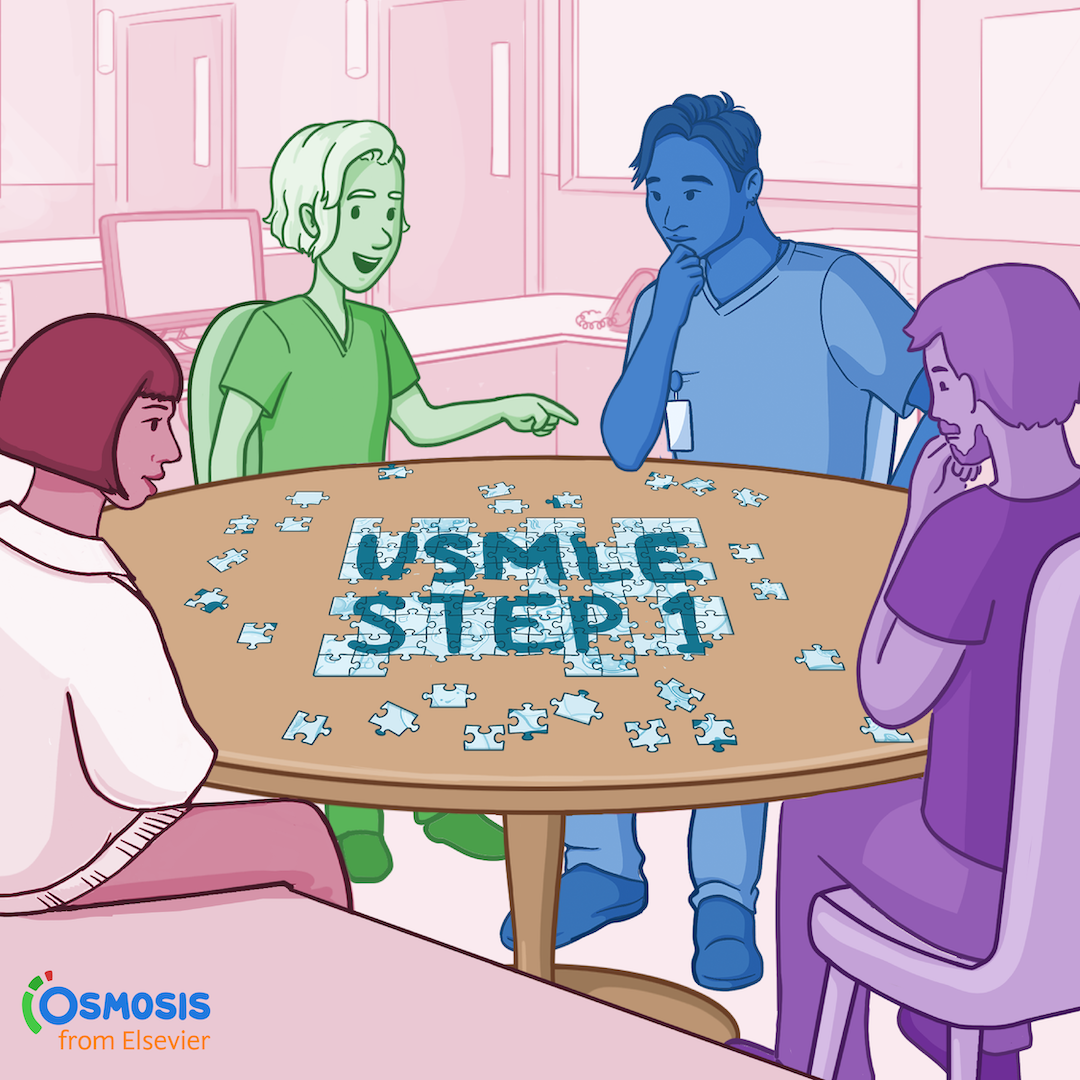
Preparing for the USMLE® Step 1 exam can feel like a huge milestone in your learning journey, and that’s because it is! Even though it’s now pass/fail, Step 1 still plays an important role in shaping your medical knowledge and determining your level of confidence as you head into clinical training.
We understand that studying for Step 1 can feel overwhelming, so we’re sharing a succinct, approachable breakdown of what to expect, when to take the Step 1 exam, and how to prepare for it. Think of this article as your checklist to navigate USMLE Step 1 with less stress and lots of helpful recommendations.
What Is USMLE Step 1?
The United States Medical Licensing Examination (USMLE) Step 1 is the first of three exams you’ll need to pass on your path to becoming a physician. It focuses on the basic sciences, including topics like physiology, pathology, and pharmacology, and requires you to apply that knowledge to real-world clinical problems.
The NBME and FSMB developed and manage the exam, and while it’s now graded pass/fail, it still represents a significant stepping stone in your medical journey.

Why Does Step 1 Still Matter?
You might be wondering, if Step 1 is pass/fail, should I even worry about studying for it? While residency programs take into account Step 1 no longer provides a numeric score, your exam performance still matters for a few meaningful reasons:
- It’s the foundation for Step 2 CK: The concepts you master here carry directly into your clinical training.
- Retake factors: Failing Step 1 and retaking it can raise questions for program directors. (But don’t panic; it’s not the end of the world if you have to retake it.)
- Feeling prepared: Preparing for and passing Step 1 makes later exams feel much more manageable.
In short, passing Step 1 is about more than checking a box; it’s about preparing yourself for success in med school and beyond.
When Do Most Medical Students Take USMLE Step 1?
Most medical students take the exam at the end of their preclinical years, which typically falls between their second and third year. After completing their coursework, many medical students dedicate approximately 4–8 weeks of focused study time before exam day.
Often referred to as your “dedicated (preparation) period” (DPP), preparing for the Step 1 exam is likely to be one of the most intense (and rewarding) phases of your medical school experience.
USMLE Step 1 Format, Length, and Logistics
As of May 14, 2026, Step 1 uses an updated testing interface and block structure. The content, scoring, and pass/fail standard haven’t changed, just the format:
- Format: Computer-based, multiple choice
- Length: The exam takes approximately 8 hours total
- Structure: 14 blocks of up to 20 questions each, 30 minutes per block, totaling up to 280 multiple-choice questions
- Break time: 55 minutes total, which you can use however you like between blocks (you can’t pause in the middle of one)
- Tutorial: 5 minutes (optional)
- Fee: Around $695 as of 2026 (note that it’s more expensive for international testing)
- Registration: U.S./Canadian students register through NBME; international students register through ECFMG
If you require test accommodations, make sure to apply early through NBME or ECFMG. And if you’re an IMG, we have a dedicated International Medical Graduate category to help you prepare for exam day.
What Changed With the 2026 Interface Update?
If you’ve heard about a “new” Step 1 format and are wondering if your study plan needs to change: it doesn’t. The May 2026 update modernized the testing software — cleaner design, adjustable image contrast, improved navigation — and shifted the block structure from seven 60-minute blocks to fourteen 30-minute blocks. You’ll still answer the same 280 questions over the same roughly 8-hour day.
The new interface also matches what’s used on NBOME Shelf exams, so getting comfortable with it now pays off beyond just Step 1. Before test day, it’s worth working through the official Step 1 Interactive Testing Experience so the layout feels familiar.

What Topics Does USMLE Step 1 Cover?
Step 1 isn’t just about memorizing; it’s about applying science to clinical reasoning. The exam tests your knowledge in:
- Anatomy (11-15%)
- Physiology (25-35%)
- Pathology (44-52%)
- Pharmacology (15-22%)
- Biochemistry & Nutrition (14-24%)
- Microbiology (10-15%)
- Genetics (5-9%)
- Immunology (6-11%)
- Behavioral science, ethics, and biostats (8-13%)
Expect integrated questions that require drawing on multiple disciplines simultaneously. As you can see from the percentages listed above, high-yield areas like pathology, physiology, and pharmacology get extra emphasis.
What Are the USMLE Step 1 Question Types?
Step 1 questions do more than test recall; they want to see if you can apply what you know in a clinical context. Here are the primary types of questions you’ll answer:
Single Best Answer (Multiple Choice)
Most Step 1 questions follow this format: a short clinical vignette followed by 4–5 possible answers. Only one answer is correct. For example: “A patient presents with chest pain and lab results. What’s the most likely diagnosis?”
Clinical Vignettes
Vignettes are case-based questions that give you background information (history, physical exam, lab values, imaging). They often integrate multiple subjects, such as physiology, pathology, and pharmacology, into one scenario.
Abstract or Research-Style Questions
Some questions mimic the format of scientific abstracts or journal articles. You’ll need to interpret study designs, data tables, or graphs.
Multimedia Items
Expect images such as pathology slides, radiographs, ECGs, or gross anatomy photos. You’ll need to recognize abnormalities or apply your knowledge to interpret findings.
Data Interpretation
You may see tables, lab results, or genetic sequences. These questions test your ability to pull out the key information and connect it to clinical reasoning.
Want to practice answering Step 1 questions? We offer Step 1 practice questions on our blog, along with thousands of questions in the Osmosis platform to quiz yourself. Try it now for free!
How to Study Effectively for Step 1
Every student’s study plan will look a little different, but here are strategies that consistently work:
- Focus on active learning: Use spaced repetition and active recall to strengthen memory. Download and refer to helpful resources like the Osmosis USMLE Step 1 Guide.
- Pick your core resources: It’s tempting to try to use everything you can get your hands on, but sticking with a few high-yield tools (like Osmosis) and using them to review the medical topics you’ve learned is more effective.
- Practice with questions: Question banks and quizzes help you apply your knowledge and identify areas for improvement.
- Mix it up: Osmosis videos, flashcards, and notes keep studying fresh and engaging (and apply active learning strategies).
- Build stamina: Use full-length practice tests to get comfortable with the exam’s length, and try a practice block or two in the updated 30-minute format so the new pacing feels natural on test day.
- Take care of yourself: Sleep, nutrition, breaks, and support from peers or mentors make a big difference.
- Rest before test day: The day before the exam is best spent relaxing, not cramming. (And, logically, a day won’t make the difference.)
A Sample Study Schedule
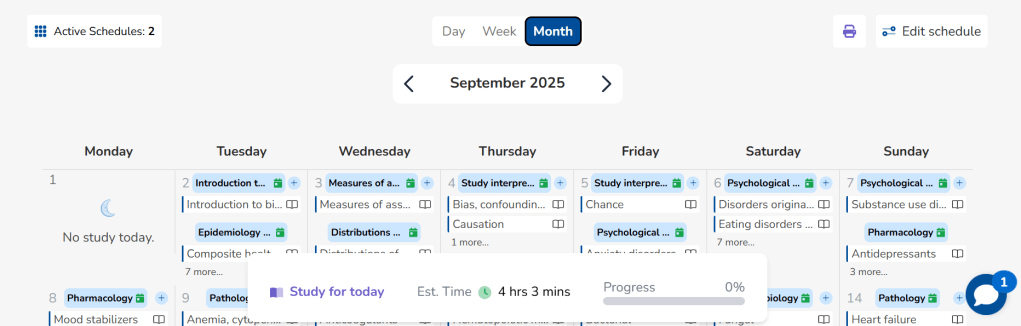
Here’s what a productive Step 1 study day might look like:
- Morning: Dive into videos, flashcards, or summary notes
- Midday: Complete 2–3 practice question sets
- Afternoon: Review your questions and focus on reviewing the topics you got wrong
- Ongoing: Track your progress. If you notice burnout or dips in performance, take some time to pause and recharge
Consistent studying beats cramming. Think steady progress, rather than last-minute sprints.
How Osmosis Can Help You Study Smarter, Not Harder
At Osmosis, our goal is to make learning medicine easier, more engaging, and more effective. When you’re prepping for USMLE Step 1, here’s how Osmosis supports you:
- Customizable study schedules: Whether you’re starting a year in advance or six weeks from taking the exam, our tool creates a plan that works for you! And you can have peace of mind knowing when and what you need to study.
- Engaging videos and notes: Our high-yield content makes tough topics easier to understand and to practice active learning techniques.
- Flashcards powered by spaced repetition: Designed to help you remember what matters most by periodically re-testing you on your most challenging topics.
- Practice questions and quizzes: Apply your knowledge and track your progress in the Osmosis dashboard.
- Learning community: Join thousands of other students going through the same challenges; you’re not alone in facing this daunting challenge
- Helpful advice from experts: Download the free Ultimate Guide to USMLE Step 1 from Osmosis to prepare for the exam and learn what to expect on exam day.
A Few Final Thoughts on Preparing for Step 1
We know USMLE Step 1 is a tough challenge, but it’s also an important opportunity to deepen your medical knowledge, develop strong study habits, and demonstrate your commitment to becoming a skilled, knowledgeable physician. With the right preparation strategy and study resources, you’ll not only pass but also build a strong foundation for your clinical years and beyond. Step 1 is a significant part of your academic life in the first two years of medical school, but we know you have the tools, the community, and the resilience to make it through. You can do this!
Key Takeaways
- As of May 2026, Step 1 uses 14 shorter blocks (30 min each) instead of 7 longer ones, so same content, same total time, updated interface.
- The exam is now pass/fail, but remains crucial for medical education.
- Key subjects include pathology, physiology, pharmacology, and more.
- Use active learning, question banks, and spaced repetition to study.
- Balanced study schedules and self-care improve retention and reduce burnout.
- Get helpful tips, guidance, and support during your dedicated study period with the free Osmosis Ultimate Guide to USMLE Step 1.

Ready to get started? Explore Osmosis for 7 days for free to find out why millions of current and future clinicians and caregivers love learning by Osmosis.
Leave a Reply