
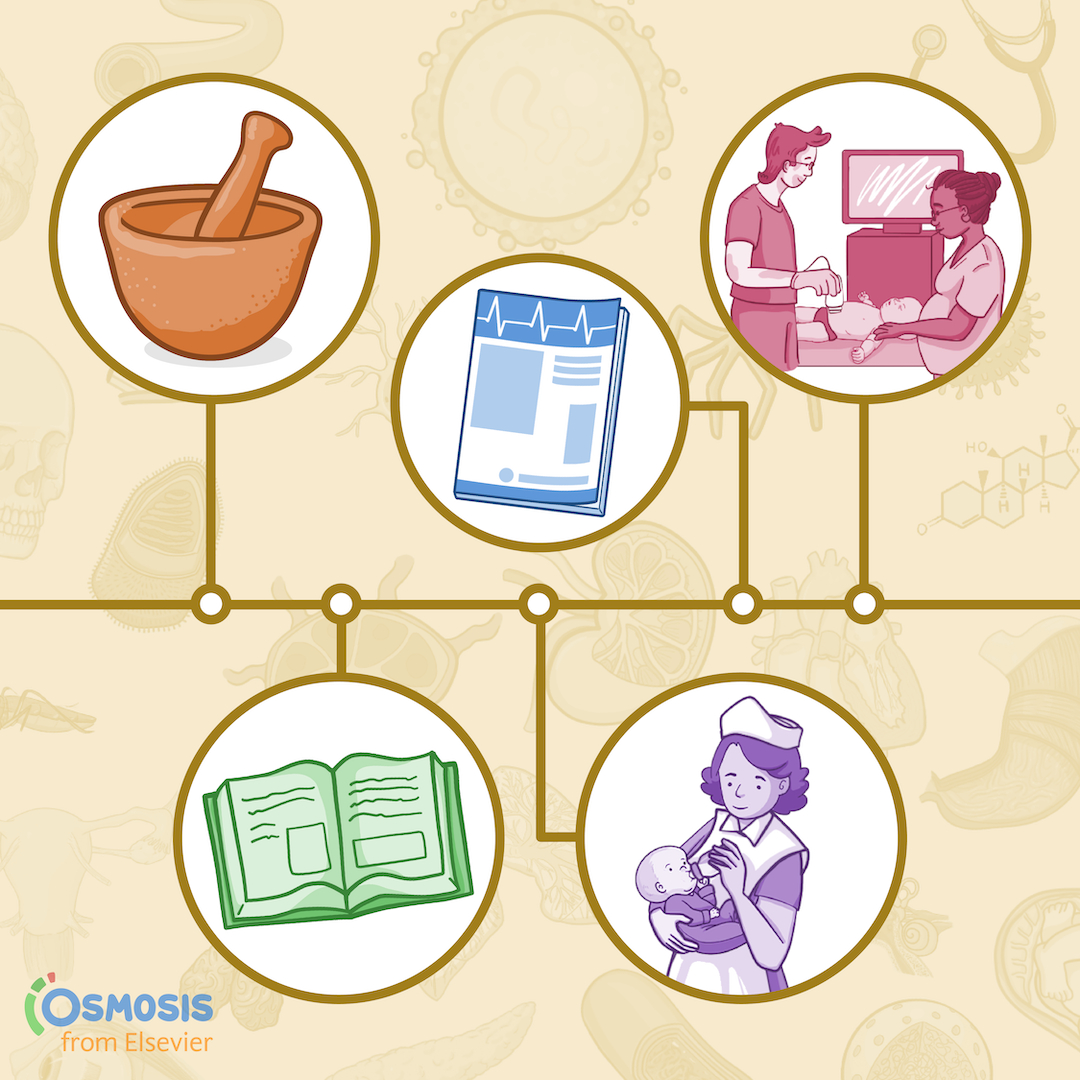
Pediatric medicine is the vibrant, beating heart of healthcare dedicated to ensuring our children grow up healthy, strong, and ready to take on the world. This distinctive medical specialty blends cutting-edge science with boundless compassion to meet the unique health needs of infants, children, and teens, whether soothing high fevers or tackling one of thousands of life-threatening diseases. By observing this incredible journey, we honor the pioneers and breakthroughs that have transformed healthcare and find inspiration for the path ahead.
So let’s take a few minutes to learn about the key milestones of pediatric medicine, from ancient Egyptian remedies to genetic therapies, while spotlighting the heroes who’ve made it all possible. We’ll explore the exhilarating history of pediatric medicine and its evolution from humble beginnings to a dynamic, life-saving discipline that profoundly impacts the health of children worldwide.
Planning to specialize in pediatric medicine? Learn How to Collaborate Effectively with Your Attending: Pediatrics Edition
What are the origins of pediatric medicine?
Pediatric medical practices date back thousands of years. Mesopotamian cuneiform tablets from 2000 BC documented the use of barley poultices for fevers, demonstrating early medical ingenuity. In ancient Egypt, around 1550 BC, the Ebers Papyrus prescribed honey-based syrups for coughs and herbal salves for rashes specific to children, blending practical remedies with spiritual rituals invoking gods like Isis for protection. Three-thousand-year-old Ayurvedic texts from India recommend turmeric and warm milk to boost children’s immunity, acknowledging their delicate systems couldn’t handle adult doses. However, while medical knowledge increased, superstition often clouded progress, with many believing that angry gods or evil spirits caused childhood illness.
In ancient Greece, our go-to medical legend Hippocrates observed childhood ailments such as diarrhea and teething troubles, recommending gentle treatments like barley water or diluted wine to alleviate their discomfort. His simple notes were an early recognition of children’s unique needs, emphasizing that their bodies require milder approaches than those of their adult counterparts. Roman physician Galen built on this foundational teaching, describing conditions such as growing pains and advocating for balanced diets to support growing bodies.
Despite societal hurdles, ancient healers meticulously recorded their findings, creating a knowledge base that recognized children’s unique vulnerabilities. In Egypt, community healers worked with families, believing that a child’s health reflected the strength of society. Indian practitioners tailored remedies for children, knowing adult treatments could harm kids. These practices, though limited by primitive tools and beliefs, were groundbreaking. Their extensive documentation of remedies and observations laid the foundation for pediatric medicine, proving that caring for kids was a universal priority across time and civilizations.

What was pediatric care like during the Medieval and Renaissance Periods?
The Medieval period was a challenging time for pediatric care, with religion and superstition often overshadowing reasoning and science. In Europe, much of the population thought childhood illnesses were divine punishments or the work of malevolent spirits, leading to treatments like prayers, holy water, or exorcisms. Village healers, often women like midwives, relied on folklore-inspired remedies passed down through oral tradition, such as rosewater for fevers, chamomile for teething pain, or fennel tea for colic.
Monasteries served as early care centers, with monks and nuns treating sick or orphaned children using herbal knowledge from ancient texts, such as willow bark for pain relief or mint for digestive issues. But plagues, famines, and poor sanitation made child mortality heartbreakingly common, with nearly half of the children dying before age five in some regions. Medical knowledge stagnated, and care was often more about comfort than cure.
In the Islamic world, pediatric care was more advanced during the Medieval period. Physician Avicenna’s Canon of Medicine included detailed sections on infant feeding, childhood fevers, and growth milestones. It urged doctors to observe symptoms closely rather than rely on superstition. His contemporary, Al-Razi (Rhazes), distinguished smallpox from measles in the 9th century, a diagnostic breakthrough that enabled targeted treatments and saved countless lives.
The Renaissance sparked a medical revival that breathed new life into pediatric care. Physicians like Thomas Sydenham, dubbed the “English Hippocrates,” advanced the field with his meticulous descriptions of diseases such as measles and scarlet fever, helping doctors distinguish between childhood illnesses and adult conditions. Sydenham’s clinical observations emphasized the study of symptoms over outdated theories, which was an important step toward specialization. Italian physician Girolamo Mercuriale’s text on child health pushed for exercise and balanced diets. As Gutenberg’s printing press revolutionized access to knowledge, medical texts spread across Europe, inspiring a new generation of physicians who began to focus on the unique needs of children.
Early hospitals, such as the Ospedale degli Innocenti in Florence, Italy (founded in 1419 and still in operation), cared for abandoned or sick children, providing them with shelter, food, and basic medical treatments, including herbal poultices. These facilities were early models of pediatric care, although they primarily focused on charity rather than advanced medical care. Other European cities began following suit. Renaissance physicians also began questioning superstitious practices, favoring observation and experimentation over spiritual beliefs. Growing anatomical knowledge, driven by figures like Andreas Vesalius, has improved our understanding of children’s developing bodies, aiding in diagnosis and treatment. This era’s blend of preserved knowledge, new curiosity, and institutional care laid the critical groundwork for pediatrics to become a distinct medical field.

The 18th and 19th Century: The Foundation of Modern Pediatrics
The 18th and 19th centuries were pivotal in the development of pediatrics as a recognized medical specialty, driven by the realization that children’s bodies responded differently to diseases and treatments. In 1545, Thomas Phaire published The Boke of Chyldren, which was one of the first pediatric medical texts in English. Written in plain language, it offered practical advice for treating ailments like worms, rashes, and fevers, blending Renaissance science with traditional remedies like honey and herbal teas. Phaire’s work made pediatric care accessible to a broader audience and inspired future physicians to focus on kids. British physician Michael Underwood’s 1784 book, A Treatise on the Diseases of Children, built on this foundation, detailing common conditions like croup and congenital disorders with remarkable accuracy, while providing a roadmap for diagnosing and treating childhood illnesses.
In the 19th century, Abraham Jacobi, often hailed as the “father of American pediatrics,” opened the first pediatric clinic in New York in 1854, The Nursery and Child’s Hospital (initially called The Nursery for the Children of the Poor Women), emphasizing preventive care, nutrition, and hygiene. At that time, the infant mortality rate was staggering, with up to 50% of children dying before reaching the age of five in urban areas due to poor sanitation, malnutrition, and diseases like cholera. Jacobi’s rigorous approach included systematic record-keeping and growth tracking, which helped to slash the death rates and set standards for medical training. His clinics introduced pediatric charts, a precursor to modern developmental monitoring, helping doctors spot health issues early. Jacobi’s focus on education also trained a new generation of pediatricians, spreading his methods across the US.
Elizabeth Blackwell, the first woman to earn a medical degree in the US in 1849, was another trailblazer. Her advocacy for women in medicine and her efforts to improve healthcare access for children, especially in poor communities, were game-changing. Blackwell founded the New York Infirmary for Women and Children in 1857, where she trained women as doctors specializing in pediatric care, providing free or low-cost services to underserved populations in the area. Her innovative work ensured that children in slums received vaccinations, checkups, and hygiene education, reducing common infections such as tuberculosis, diphtheria, measles, scarlet fever, and whooping cough. Blackwell’s push for women’s medical education also expanded the workforce, increasing access to compassionate care for young patients.
Hospitals dedicated to pediatric care were established in the mid-1800s, with the Hospital for Sick Children in London in 1852 and the Children’s Hospital of Philadelphia in 1855, acting as benchmarks for specialized medical care for children. These dedicated institutions trained staff, provided isolation wards to prevent the spread of disease, and developed tools specifically designed for young patients, such as smaller surgical instruments to pioneer procedures like correcting congenital heart defects. Public health efforts took off with Edward Jenner’s smallpox vaccine in 1796, a breakthrough that saved millions.
By the 1850s, governments in Europe and North America mandated smallpox immunization, resulting in steep declines in mortality rates. Later health campaigns targeted diphtheria and tuberculosis, further protecting children. Swedish physician Nils Rosén von Rosenstein’s 1764 book, The Diseases of Children and Their Remedies, provided detailed guidance on conditions like whooping cough and diarrhea. Improved sanitation, including cleaner water and sewage systems, as well as increased access to fresh food, reduced the number of childhood deaths resulting from infections and malnutrition. These milestones cemented pediatrics as a vital, distinct field, focused on both treating illness and preventing it.

20th-Century Pediatrics: What were the most significant milestones in pediatric medicine?
The 20th century was a golden age for pediatric medicine, bursting with breakthroughs that transformed child healthcare. The discovery of penicillin by Alexander Fleming in 1928 revolutionized treatment for bacterial infections like pneumonia, meningitis, and streptococcal disease, all of which had been death sentences for kids for generations. By the 1940s, antibiotics were widely available, boosting survival rates for a range of infectious diseases.
The arrival of vaccines was a game-changer. The polio vaccine, introduced in 1955 by Jonas Salk, eradicated a disease that paralyzed thousands of children annually. The measles, mumps, and rubella (MMR) vaccine, developed in the 1960s, slashed measles cases in the US from over 500,000 a year to nearly zero by the 2000s. Vaccines for diphtheria, tetanus, and pertussis further reduced childhood mortality, making what was once inevitable, preventable. Nutrition science soared, with research on vitamins and minerals eliminating diseases like rickets (vitamin D deficiency) and scurvy (vitamin C deficiency). Fortified foods, like vitamin D-enriched milk, became the standard, ensuring stronger bones and healthier kids across the globe.
Pediatric subspecialties emerged to tackle specific needs. Neonatology transformed care for premature infants, with incubators and ventilators saving newborns who once had little chance of survival. By the 1970s, neonatal intensive care units (NICUs) were standard in major hospitals. Pediatric oncology made huge strides, thanks to pioneers like Dr. Sidney Farber, who introduced chemotherapy for leukemia in the 1940s. By the 1990s, childhood leukemia survival rates reached 80%, up from near zero. Technology played a significant role, with the advent of X-rays (1895), ultrasound (1960s), and MRI scans (1980s) enabling the precise diagnosis of conditions like congenital heart defects and brain abnormalities. The electrocardiogram (1903) and echocardiography (1950s) revolutionized pediatric cardiology, allowing for the early detection of heart issues. Pediatric anesthesia, developed in the 1940s, made surgeries like cleft palate repairs safer.
African American physician Dr. Charles R. Drew left an indelible mark on pediatric surgery and emergency care with his pioneering work on blood storage and transfusion in the 1940s, which enabled the creation of reliable blood banks and ensured safe transfusions for children undergoing surgery or suffering from traumatic injuries, as well as supporting pediatric hospitals during emergencies, ensuring no child was turned away. His innovations saved countless lives and helped to tackle racial inequities in healthcare, making treatments more accessible to Black children and other marginalized people who were often denied care due to segregation. His legacy shows how medical breakthroughs can uplift entire communities, improving access and outcomes for everyone.
The founding of professional organizations strengthened the field, with the American Academy of Pediatrics (AAP) established in 1930: the AAP standardized training and set guidelines for vaccinations, screenings, and treatments. The World Health Organization, established in 1948, launched campaigns to eradicate smallpox and expand childhood vaccinations, reaching hundreds of millions by the 1980s. Research institutions like St. Jude Children’s Research Hospital, founded in 1962, drove advances in cancer, infectious diseases, and genetic disorders. Pediatric psychology emerged, acknowledging the link between mental and physical health, with therapies for conditions like autism gaining traction by the 1990s. The century’s achievements—including antibiotics, vaccines, subspecialties, technology, and global efforts to implement them—transformed pediatric medicine into a professional powerhouse.

Contemporary Pediatric Medicine: What advances are on the way?
Today, pediatric medicine is a vibrant field that blends cutting-edge science with a deep commitment to children’s holistic well-being. Genetic research has unlocked new possibilities. Newborn screening tests are now standard in over 70 countries. Clinicians regularly detect rare disorders like cystic fibrosis, spinal muscular atrophy, or PKU (phenylketonuria) before symptoms appear. Personalized medicine enables care teams to tailor treatments to a child’s unique genetic profile, improving results for complex conditions like pediatric cancers and epilepsy. For example, targeted therapies for leukemia now achieve survival rates of up to 90%. Telemedicine has been revolutionary, connecting families in remote or underserved areas with pediatricians via video calls. Wearable devices, like smart monitors for heart rate or glucose levels, empower parents and doctors to track kids’ health in real time.
But challenges loom large. Childhood obesity has skyrocketed, with 19% of US children classified as obese as of 2020, increasing the risk of diabetes, hypertension, and heart disease. Mental health disorders are rising, with 1 in 5 adolescents experiencing anxiety or depression, fueled by social pressures, bullying, and social media’s impact. Chronic conditions like asthma, linked to environmental factors like pollution, affect over 6 million US kids. Socioeconomic disparities continue to be a significant barrier, limiting access to quality health care. Climate change poses new threats, with rising temperatures and air pollution linked to higher rates of respiratory and allergic conditions.
Pediatricians are now adopting a holistic approach to care by addressing physical, emotional, and social needs. Dr. Nadine Burke Harris, a pediatrician and former California Surgeon General, has been a trailblazer in this transition. Her groundbreaking research on Adverse Childhood Experiences (ACEs) shows how trauma, such as abuse, neglect, or family dysfunction, can lead to lifelong health issues ranging from heart disease to mental illness. Her advocacy for trauma-informed care has reshaped pediatrics. Her 2018 book, The Deepest Well, inspired programs in over 20 countries to integrate trauma screening into their processes.
The future is brimming with promise. Artificial intelligence (AI) is enhancing diagnostics using algorithms that predict risks for conditions like sepsis or autism 30% faster than human experts. Gene-editing tools like CRISPR offer potential for curing genetic disorders, with trials underway for sickle cell anemia and muscular dystrophy showing high success rates in early studies. Stem cell therapies are looking promising for conditions like cerebral palsy and congenital heart defects, with clinical trials reporting 60% improvement in motor function for some patients. Global health initiatives, like GAVI’s vaccine programs, aim to immunize 300 million children by 2030, targeting diseases like malaria and HPV. Pediatricians are also advocating for policies that address social determinants of health, including socioeconomic needs, education, and housing, to create healthier communities. For example, programs providing free school meals have cut childhood obesity rates in some regions. In tackling these challenges, pediatric medicine is well-positioned to ensure that every child has a chance at a healthy, vibrant future.
From ancient Egypt’s herbal remedies to today’s gene-editing breakthroughs, the history of pediatric medicine is a thrilling saga of human compassion and ingenuity. Pioneers like Thomas Phaire, Abraham Jacobi, Elizabeth Blackwell, Charles Drew, and Nadine Burke Harris have left an indelible mark on both medicine and humanity. Each milestone — from vaccines, antibiotics, and subspecialties to genetic therapies — has turned deadly threats into manageable challenges. As we look to the future, pediatric medicine continues to evolve, tackling new challenges with relentless optimism and innovation. Let’s celebrate this legacy and rally behind the mission to ensure every child grows up healthy, strong, and full of possibility.
Key Takeaways
- Pediatric medicine evolved from ancient remedies to advanced scientific care.
- Major milestones include the development of vaccines, antibiotics, and neonatal intensive care.
- Pioneers like Elizabeth Blackwell and Charles Drew transformed child healthcare.
- Modern advances include gene therapy, AI, and telehealth in pediatrics.
- Addressing social determinants is vital for equitable child health outcomes.
References
- https://www.ncbi.nlm.nih.gov/pmc/articles/PMC2620468/
- https://www.ncbi.nlm.nih.gov/pmc/articles/PMC1200677/
- https://www.carerev.com/blog/famous-doctors-medical-practitioners-in-healthcare
- https://www.nursing.upenn.edu/nhhc/late-nineteenth-and-early-twentieth-century-pediatrics/
- https://www.sciencedirect.com/science/article/abs/pii/S0022347613002970
- https://www.aap.org/en/patient-care/immunizations/
- https://www.nature.com/articles/pr2005100
- https://www.nemours.org/services/kidshealth.html
- https://www.cidrap.umn.edu/
- https://www.nadineburkeharrismd.com/
- https://www.nma.org/charles-drew
- https://www.cdc.gov/obesity/data/childhood.html
- https://www.who.int/health-topics/vaccines-and-immunization
- https://www.gavi.org/our-impact/global-vaccine-goals
- https://www.britannica.com/topic/Ebers-papyrus
- https://etheses.bham.ac.uk/id/eprint/7377/1/Bagley17PhD.pdf
- https://www.mucta.in/pdf/The-Complete-Book-of-Ayurvedic-Home-Remedies.pdf
- https://ourworldindata.org/child-mortality-in-the-past
- https://pubmed.ncbi.nlm.nih.gov/17805338/
- https://pmc.ncbi.nlm.nih.gov/articles/PMC6074295/
- https://www.osmosis.org/learn/Immunizations_(pediatrics):_Clinical_sciences
- https://medicalxpress.com/news/2024-07-classics-art-physical-16th-century.html
- https://www.istitutodeglinnocenti.it/en/about-us/history
- https://neonatology.net/history/classic-books/the-boke-of-chyldren/
- https://pmc.ncbi.nlm.nih.gov/articles/PMC2672675/
- https://obgynkey.com/the-history-of-pediatrics-in-america/
- https://www.nature.com/articles/pr200425
- https://www.womenshistory.org/education-resources/biographies/elizabeth-blackwell
- https://www.enhe.eu/enhe/article/download/21/28/225
- https://www.chop.edu/about-us/our-history
- https://pmc.ncbi.nlm.nih.gov/articles/PMC10803505/
- https://www.cdc.gov/measles/about/history.html
- https://ourworldindata.org/childhood-leukemia-treatment-history
- https://bloodcancer.org.uk/news/charles-r-drew-the-father-of-the-blood-bank/
- https://www.aap.org
- https://www.stjude.org/
- https://pmc.ncbi.nlm.nih.gov/articles/PMC11203842/
- https://publications.aap.org/aapnews/news/23772/AAP-study-shows-telehealth-use-common-in-pediatric?autologincheck=redirected
- https://www.kff.org/coronavirus-covid-19/press-release/roughly-1-in-5-adolescents-report-experiencing-symptoms-of-anxiety-or-depression/
- https://burkefoundation.org/what-drives-us/adverse-childhood-experiences-aces/
- https://www.nature.com/articles/s41467-021-20910-4
- https://crisprtx.com/
- https://pmc.ncbi.nlm.nih.gov/articles/PMC8284300/
- https://www.nursing.upenn.edu/nhhc/home-care/late-nineteenth-and-early-century-pediatrics/
- https://www.news-medical.net/health/A-Brief-History-of-Pediatrics.aspx
- https://jamanetwork.com/journals/jamapediatrics/fullarticle/1175690
- https://guides.library.duke.edu/c.php?g=1339044&p=9869539
- https://www.abp.org/content/history-abp
- https://ttuec-ojs-ttu.tdl.org/ttuec/article/view/17/18
- https://publications.aap.org/pediatrics/article/37/6/920/42955/The-History-of-Paediatrics-The-Progress-of-the

Enjoy learning pediatrics? Try Osmosis from Elsevier today! Access your free trial and discover why millions of current and future clinicians and caregivers love learning with us.
Leave a Reply