
Category: Educators
-
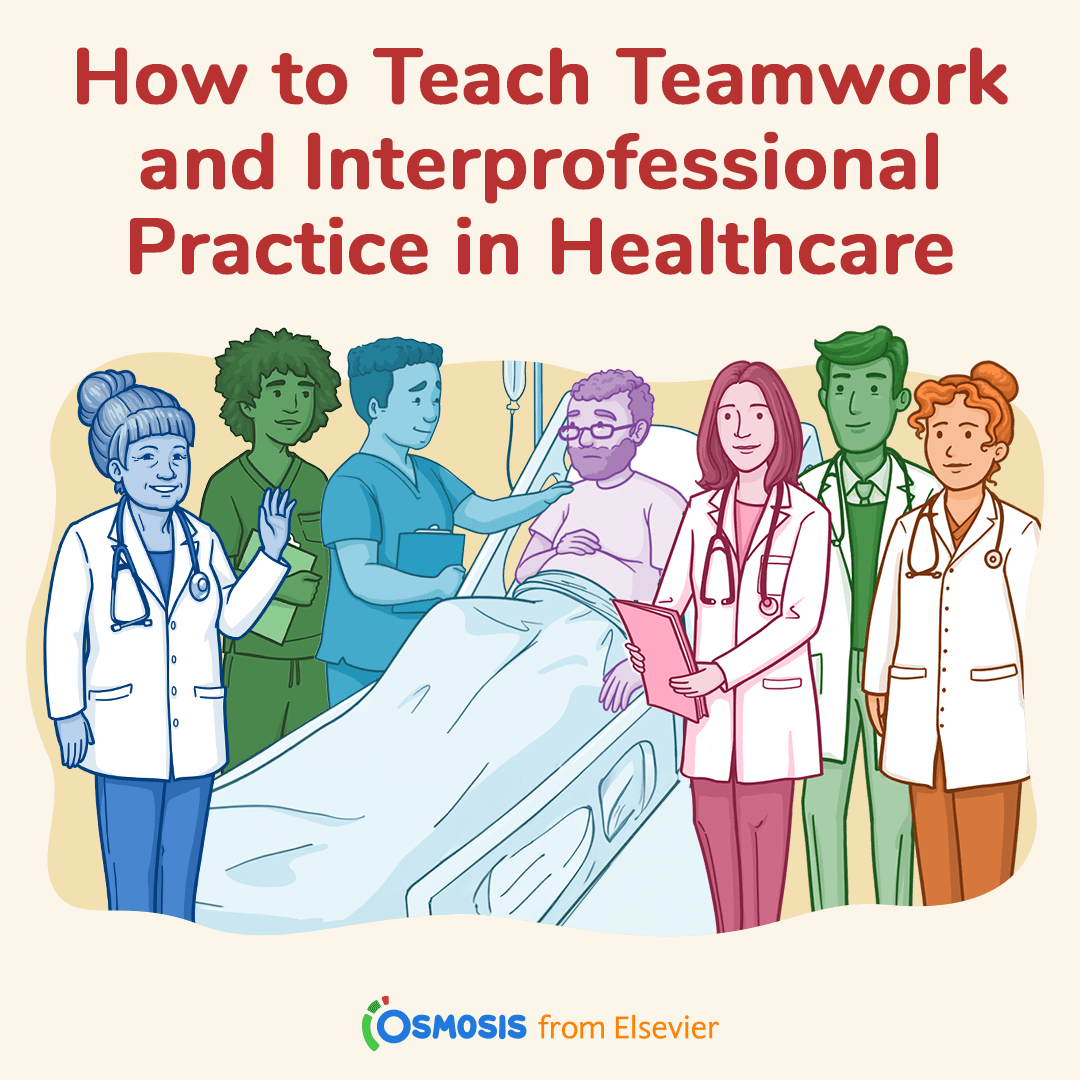
How to Teach Teamwork and Interprofessional Practice in Healthcare
— Updated:
Teamwork and interprofessional practice are essential components of modern healthcare. They are the collaborative efforts of various healthcare professionals to provide comprehensive patient care. Developing teamwork and interprofessional practice skills is crucial for the following reasons: Creating supportive learning environments with effective curricula and assessments enables healthcare educators to teach…
-

Collaborative Learning: How to Use It In Your Classroom
— Updated:
The phrase “collaborative learning” refers to a broad range of pedagogical strategies that involve student work or the combined intellectual work of students and their teachers. Students typically work in groups of two or more, producing a product or collaboratively seeking insight, answers, or meanings. Let’s explore the importance of…
-
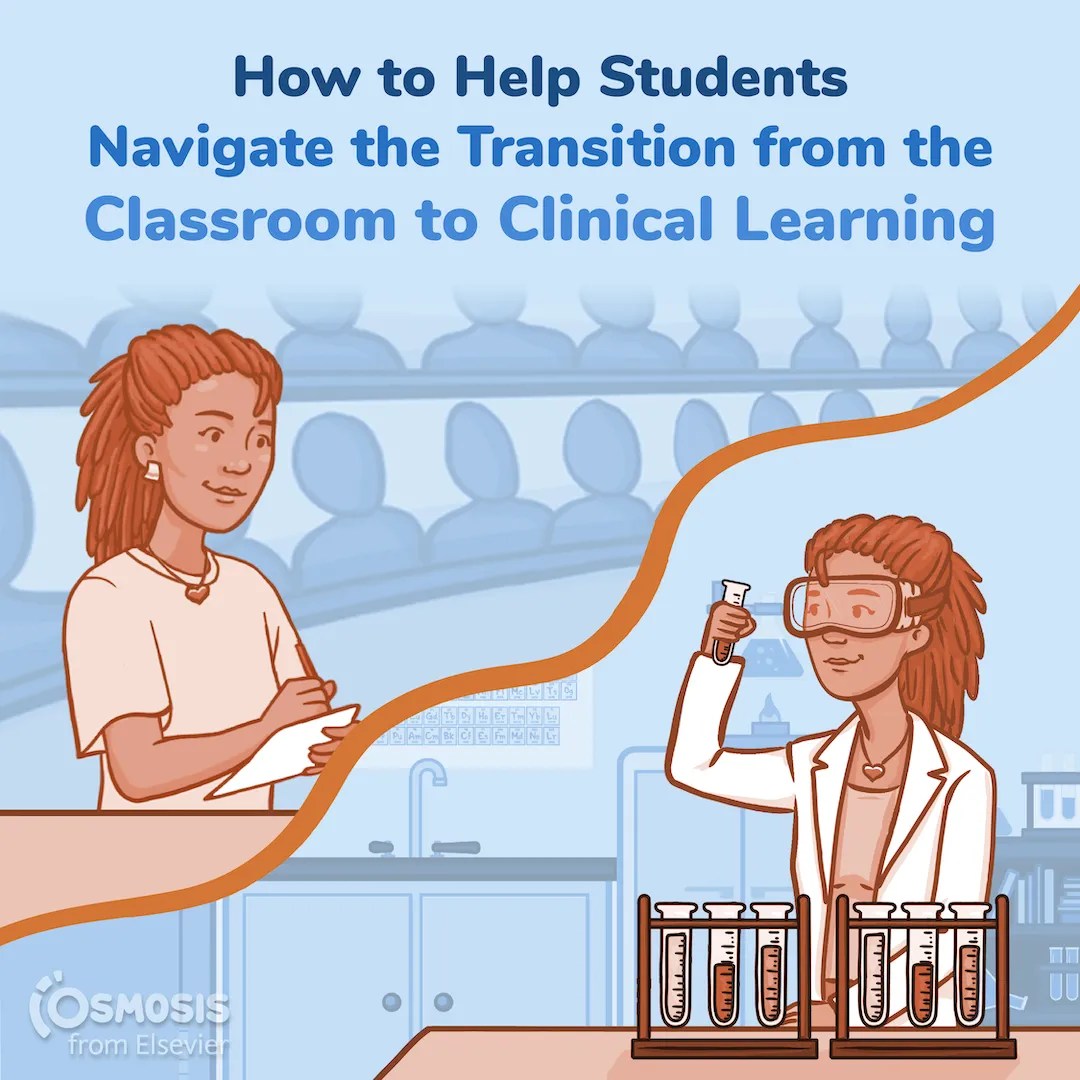
How to Help Students Navigate the Transition From the Classroom to Clinical Learning
— Updated:
Transitioning from the classroom to clinical learning is a significant milestone for healthcare students. This phase is fraught with challenges, including adapting to new environments, applying theoretical knowledge in practical settings, and anxiety about interacting with real patients. Additionally, the pressure to perform can exacerbate stress and impact learning. Healthcare educators can help ease…
-
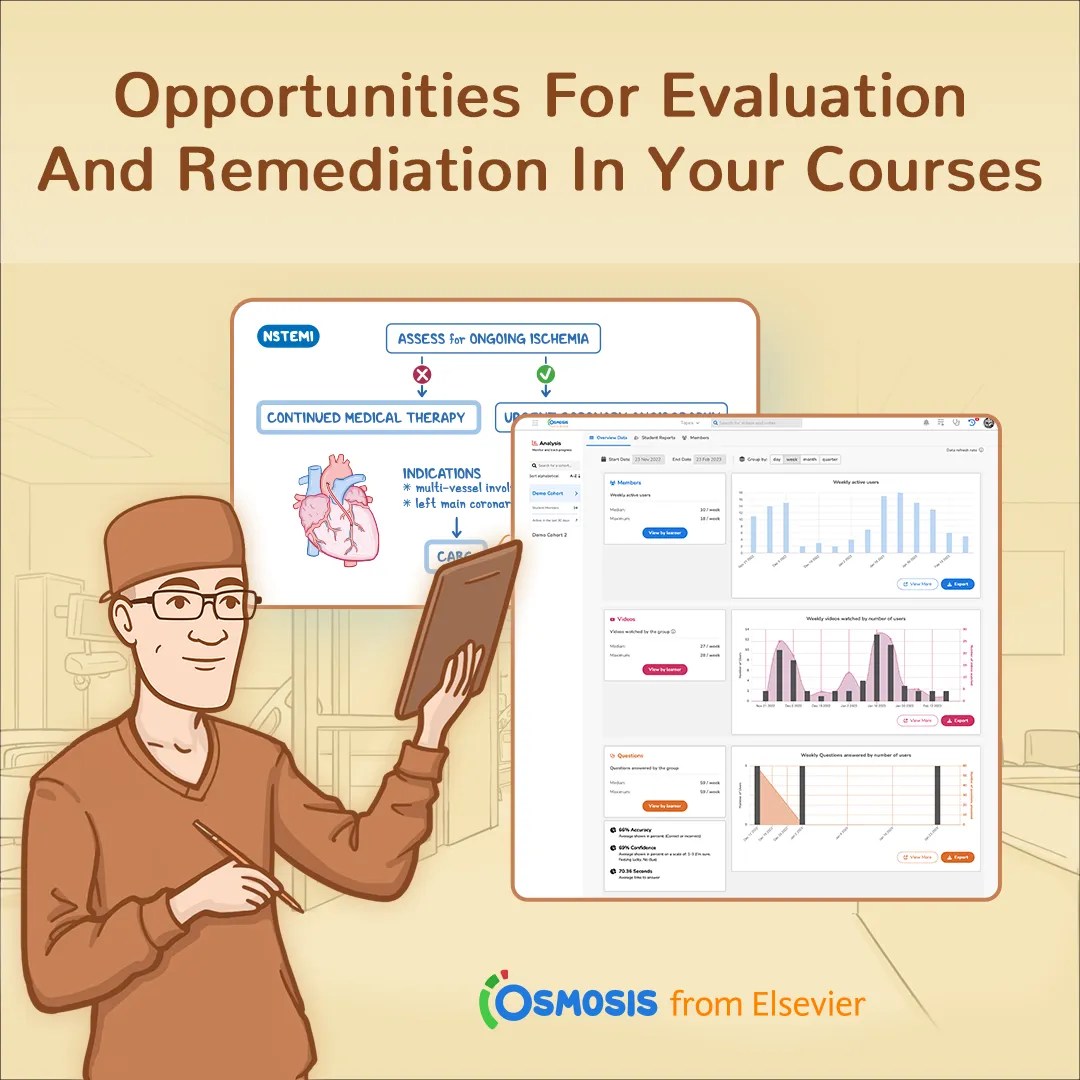
Opportunities For Evaluation and Remediation in Your Courses
— Updated:
Identifying and supporting at-risk students in healthcare education is crucial for increasing their chances of success and preparing them for the demands of the profession. Educators face the challenge of recognizing struggling students early, providing effective interventions, and fostering a supportive learning environment. This article explores strategies for evaluation and…
-
How to Pay for Medical, Nursing, or Health Care Training Programs
— Updated:
Facing the rising costs of medical or nursing education? Learn about scholarships, grants, federal and private loans, and budgeting strategies to finance your healthcare training.
-
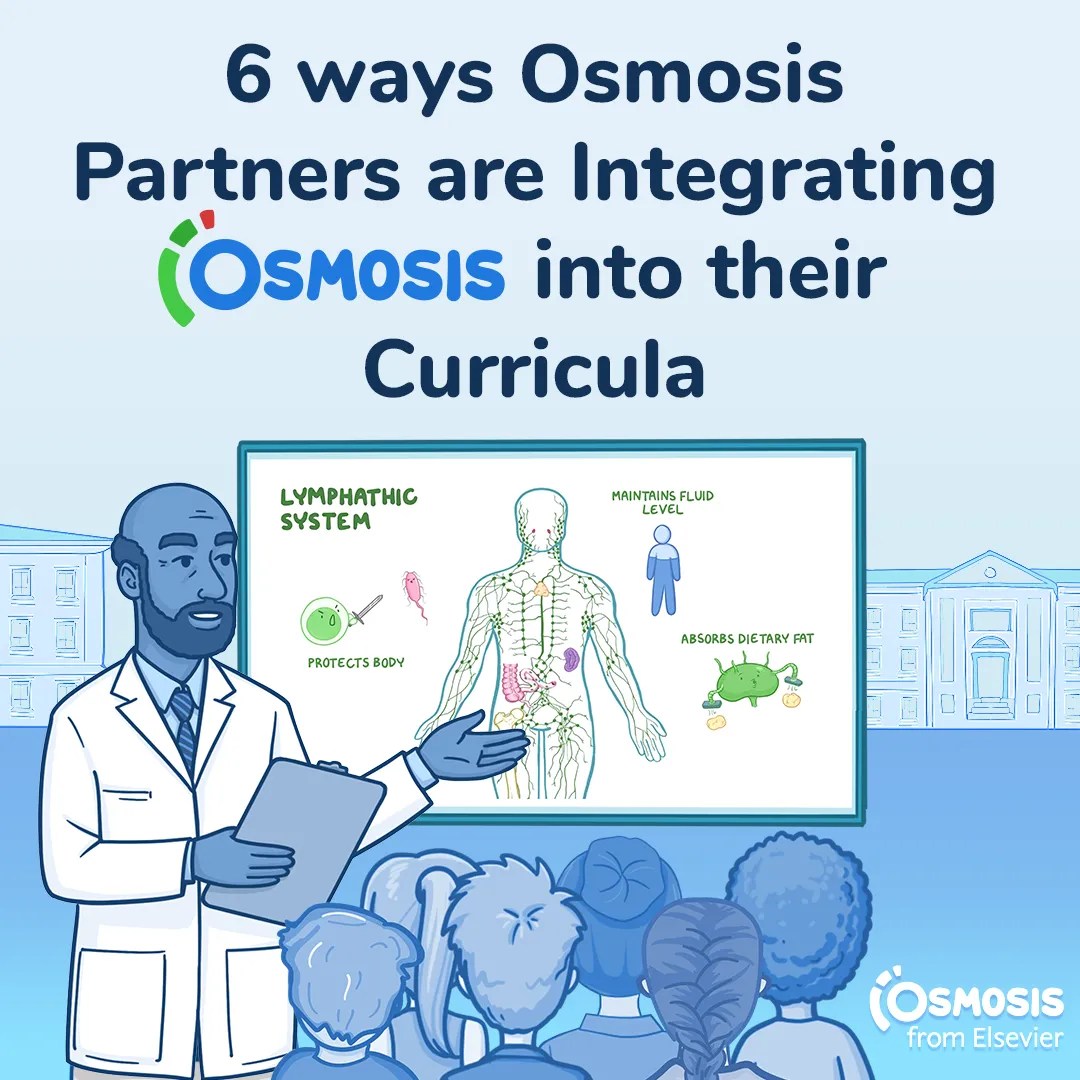
Six Ways University Partners Are Integrating Osmosis Into Their Curricula
— Updated:
Explore six key methods to incorporate Osmosis resources into healthcare curricula—from self-directed learning and formative assessments to flipped classrooms and remediation support.
-
What Makes a Great Educator? Some Frontline Medical Education Insights
— Updated:
About a decade ago, I took a leap of faith by leaving Johns Hopkins Medical School to start Osmosis, a platform aimed at transforming medical education. Fast forward to today, I find myself back at Hopkins, not only as a student but as someone who has seen firsthand the impact…
-
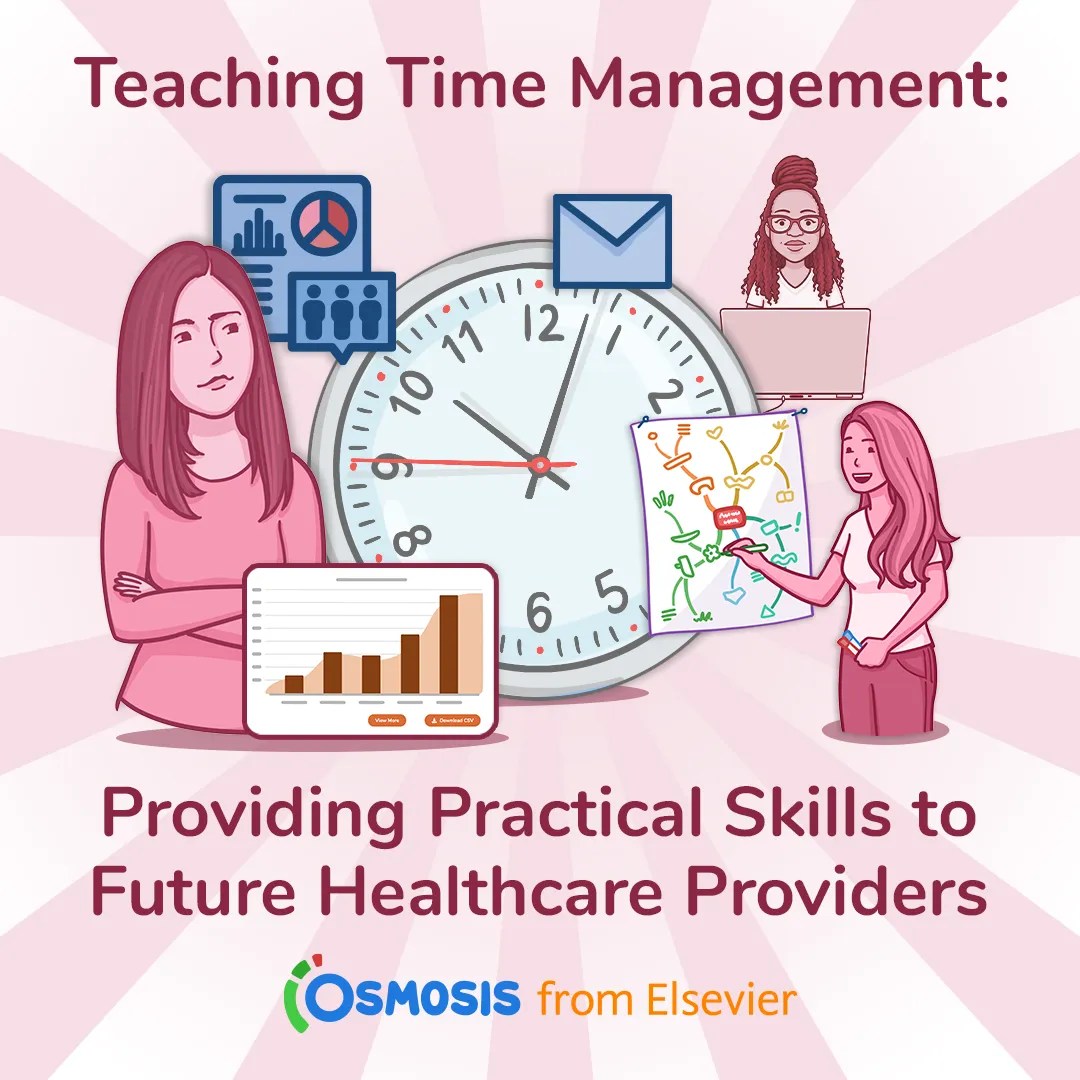
Teaching Time Management: Providing Practical Skills for Future Healthcare Providers
— Updated:
Successful time management is crucial in healthcare because it directly impacts patient outcomes and the overall quality of care. In a fast-paced and dynamic environment, healthcare professionals must efficiently allocate their time to prioritize patient needs, adhere to protocols, maintain accurate records, and more. Part of the educator’s role is to increase…
-

How to Design Clinical Assessments For Healthcare Students
— Updated:
Clinical learning assessment is essential to guarantee that future healthcare practitioners deliver safe and proficient care. Through apt clinical assessments, educators contribute to shaping a skilled and versatile healthcare workforce. This ensures that students not only grasp medical theories but also acquire the practical skills needed for success. Explore various…
-
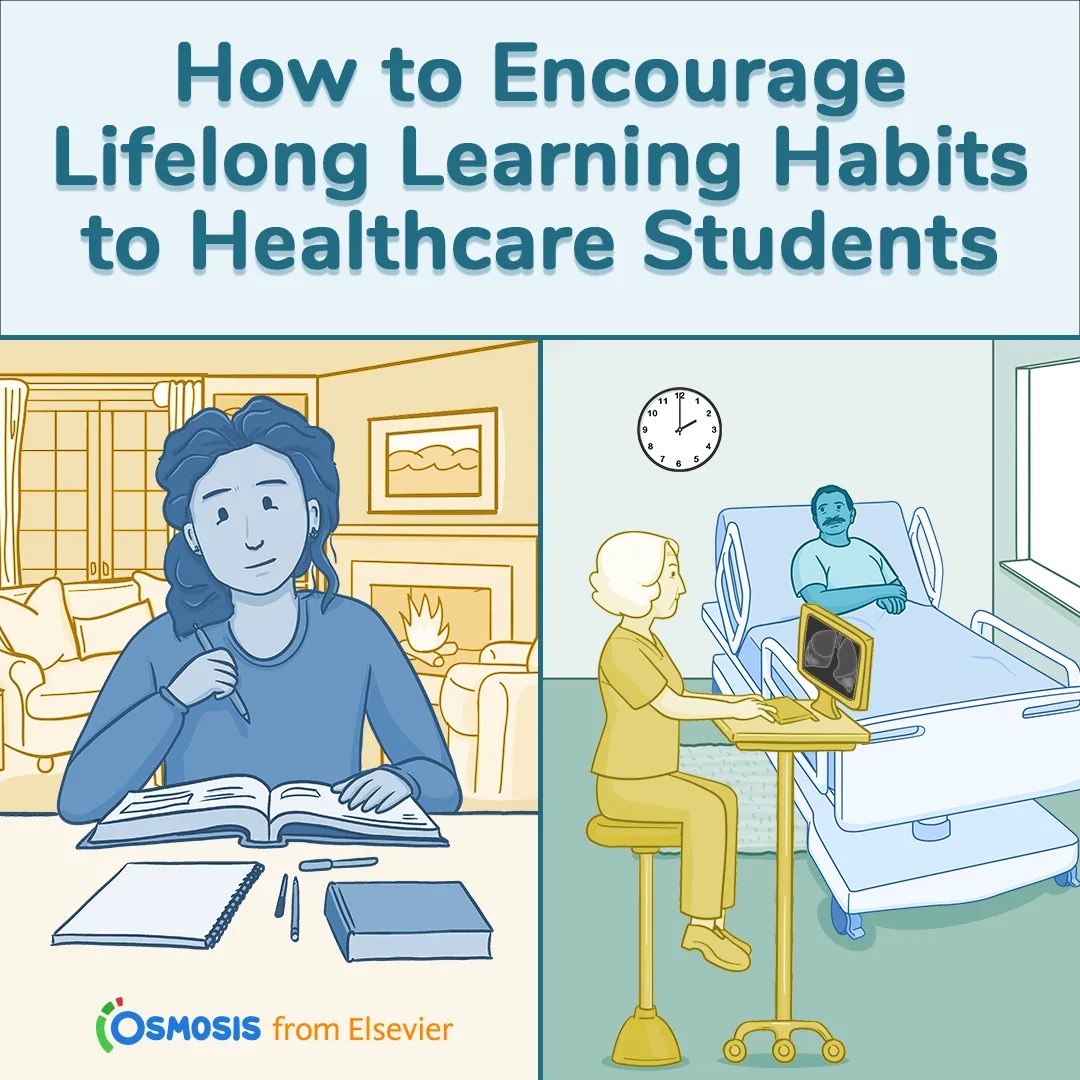
How to Encourage Lifelong Learning Habits to Healthcare Students
— Updated:
In an era of rapid advancements, professionals must embrace continuous education to navigate their complex roles effectively. From groundbreaking medical technologies to emerging treatments, the healthcare sector is a dynamic field that demands constant adaptation. Therefore, lifelong learning in healthcare professions is a necessity to stay at the forefront of…
-
Supporting Professional Identity Development in Healthcare Students
— Updated:
When a new group of students enters your classroom, each of them brings a unique set of beliefs, experiences, backgrounds, and identities with them. Therefore, professional identity development in health profession students begins as early as day one of school and should be fostered throughout their education and beyond. According…
-
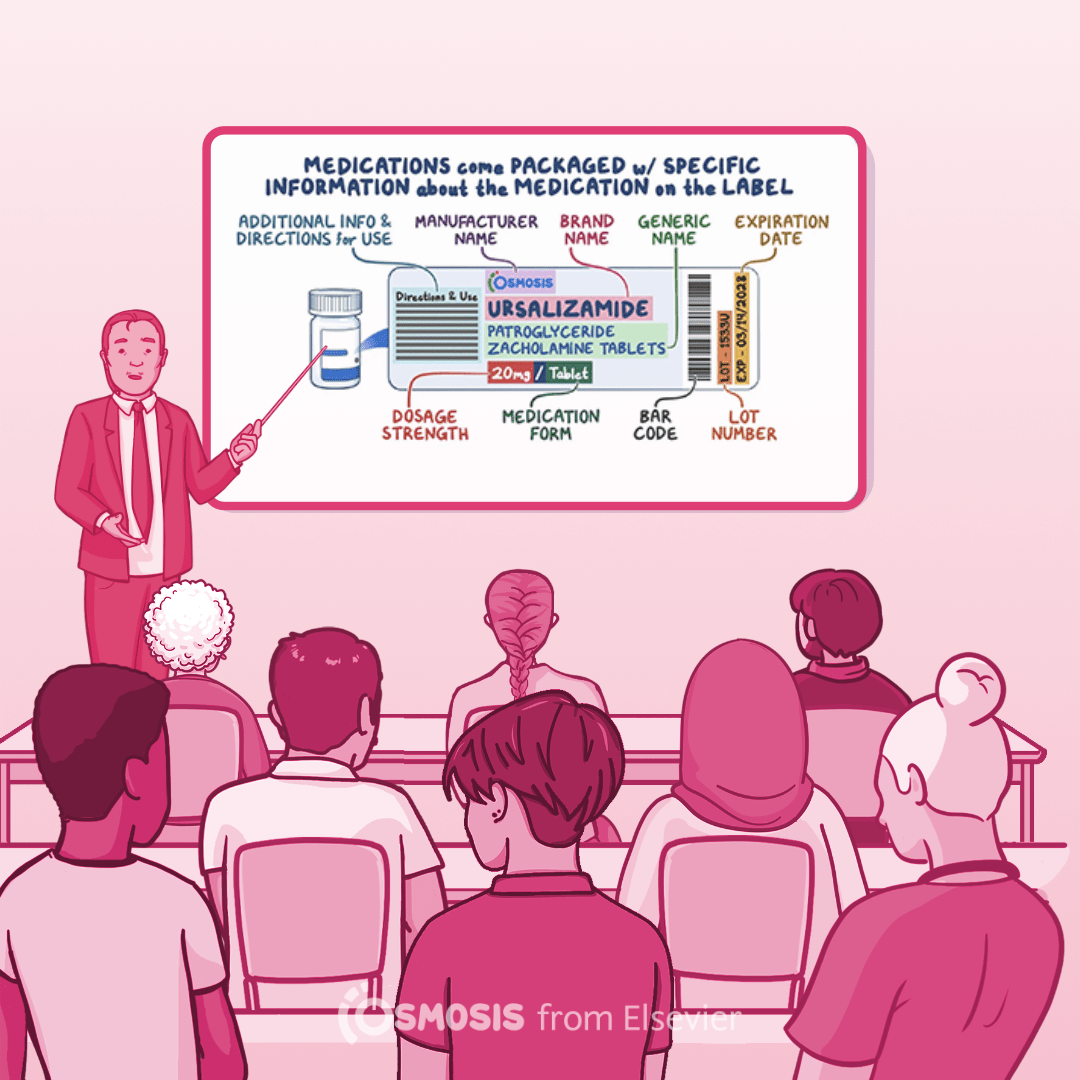
A Helpful List of Nursing Education Conferences
— Updated:
Looking to choose the right nursing conferences this year? Discover top nursing events designed for students, educators, and leaders to expand skills, explore new teaching strategies, and build meaningful professional connections across the nursing field.
-
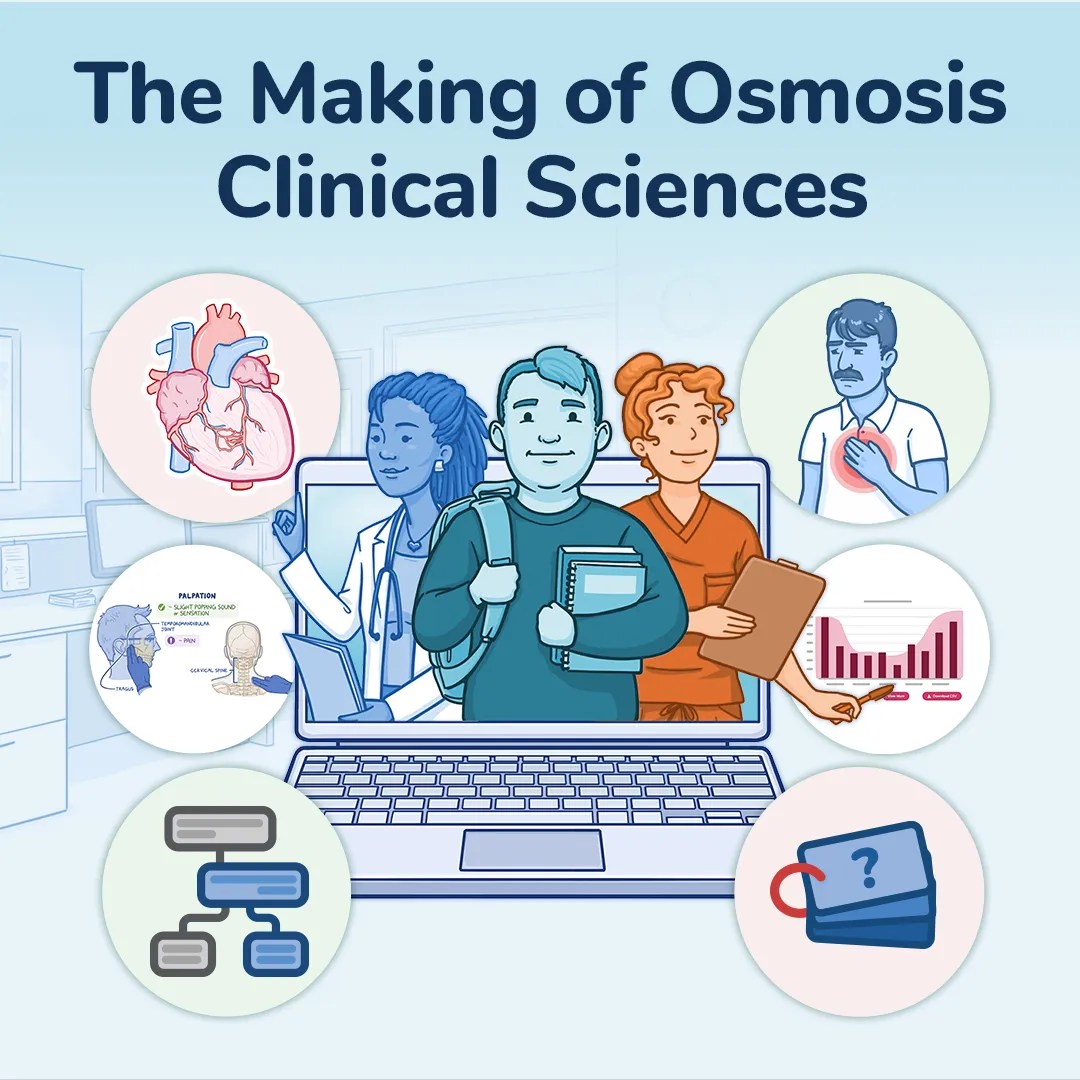
The Making of Osmosis Clinical Sciences
— Updated:
To support students from day one to patient one, and beyond, the Osmosis from Elsevier Clinical Sciences library was designed to teach learners how to think clinically. Join us as we dive into the creation process and discover the dedication and expertise behind this collection of clinical videos, decision-making trees, and…
-
A Helpful List of Major Medical Education Conferences
— Updated:
Ready to advance your career in healthcare? Our updated guide to medical conferences is here to help you connect with peers, explore innovative advancements, and share your research. Whether you’re a student, faculty member, or administrator, these events provide invaluable networking and professional development opportunities tailored to your goals. Notable…
-
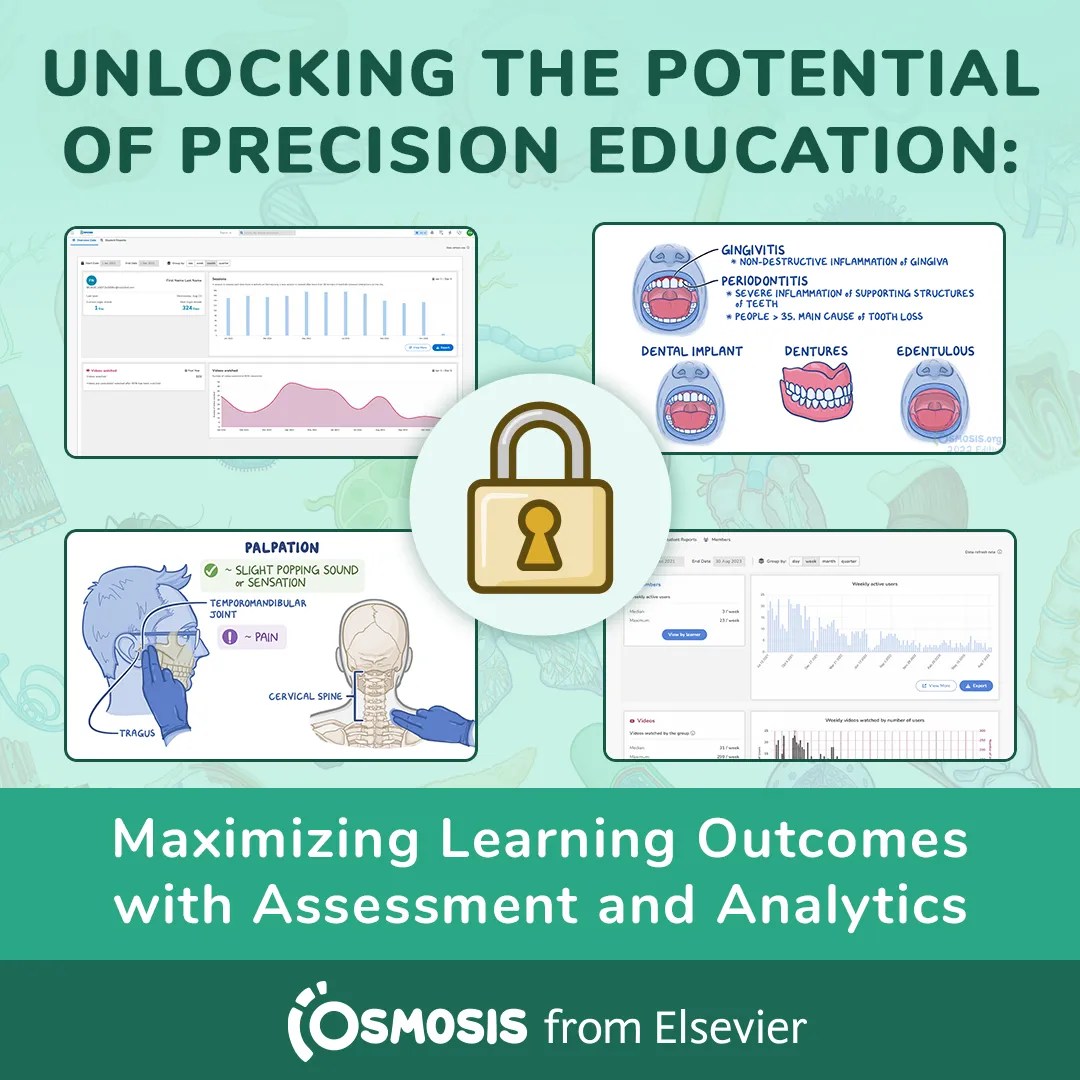
Unlocking the Potential of Precision Education: Maximizing Learning Outcomes with Assessment and Analytics
— Updated:
In today’s Osmosis blog, Dr. Sean Tackett discusses the evolution of precision education and how educators can leverage assessment and analytics to boost learning outcomes. There’s no question that everyone is different, from our genes to our environments. These shape how our neurons connect with one another, and by the…
-
Unlocking the Secrets of Success: Effectively Evaluating Your Course or Program
— Updated:
In today’s Osmosis blog, Dr. Sean Tackett addresses how to evaluate a course or program by explaining how to design an effective framework and highlighting how to avoid missing important issues. We all have blind spots. Recently, when working with colleagues on an article about “blind spots” in medical…
-
The Power of Quizzing: Benefits, Challenges, and How to Implement a Plan
— Updated:
Explore the benefits and challenges of quizzing in healthcare education. Learn how to implement effective quizzes to improve retention and student performance.
-
Empathy, Psychological Safety, and Confidence in the Return to Classroom-Based Learning
— Updated:
In today’s Osmosis by Elsevier blog, Dr. Amin Azzam addresses the challenges of returning to the classroom during the post-pandemic era, emphasizing the need for psychological safety, clear communication with learners, and the importance of empathy. I’m writing this during the busy “back-to-school” season in both my personal and professional…
-
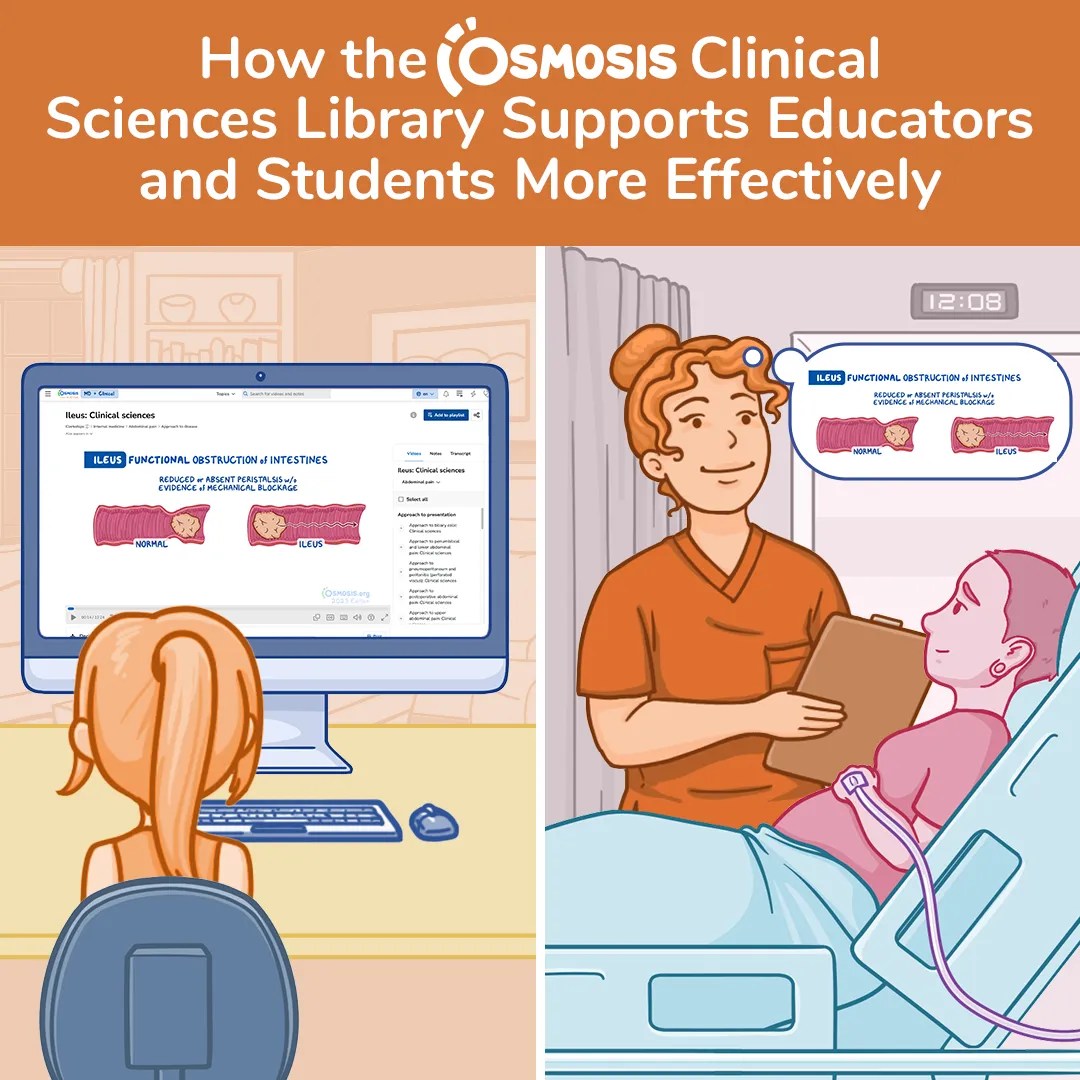
How the Osmosis Clinical Sciences Library Supports Educators and Students More Effectively
— Updated:
In today’s Osmosis blog, we’re introducing educators to the Osmosis Clinical Sciences library, a new and valuable resource during the transition to clinical rotations. Discover how our new content fosters engaged and effective learning. As medical students transition from preclinical studies into their clinical years in medical school, they begin…
-
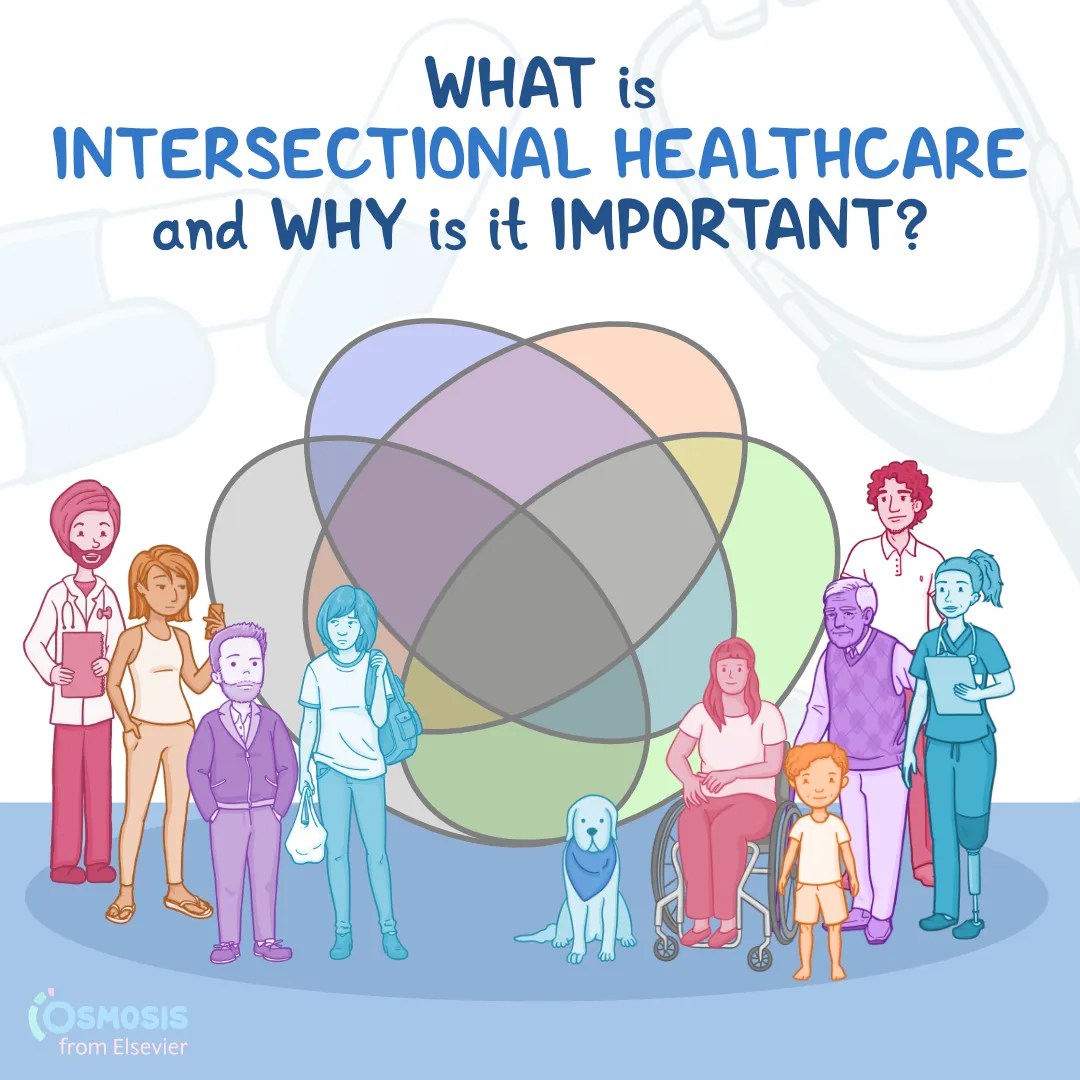
What Is Intersectional Healthcare and Why Is It Important?
— Updated:
Learn how intersectionality shapes patient experiences and how healthcare providers can deliver more equitable, respectful, and effective care.
-
How to Incorporate Osmosis Tools Into Your In-person Classes
— Updated:
Discover effective strategies to incorporate Osmosis videos, quizzes, and analytics into your classroom. Enhance student participation, facilitate discussions, and monitor progress easily.
-
How Supporting Wikipedia Editors is Helping Improve Trust in Science
— Updated:
Dr. Amin Azzam, MD, MA, Health Sciences Clinical Professor at the UCSF School of Medicine, Director of Open Learning Initiatives and Lead Faculty Advisor at Osmosis, shares his expertise on the importance of Wikipedia editing, how it can help fight medical misinformation, and how it can improve the public’s trust…
-
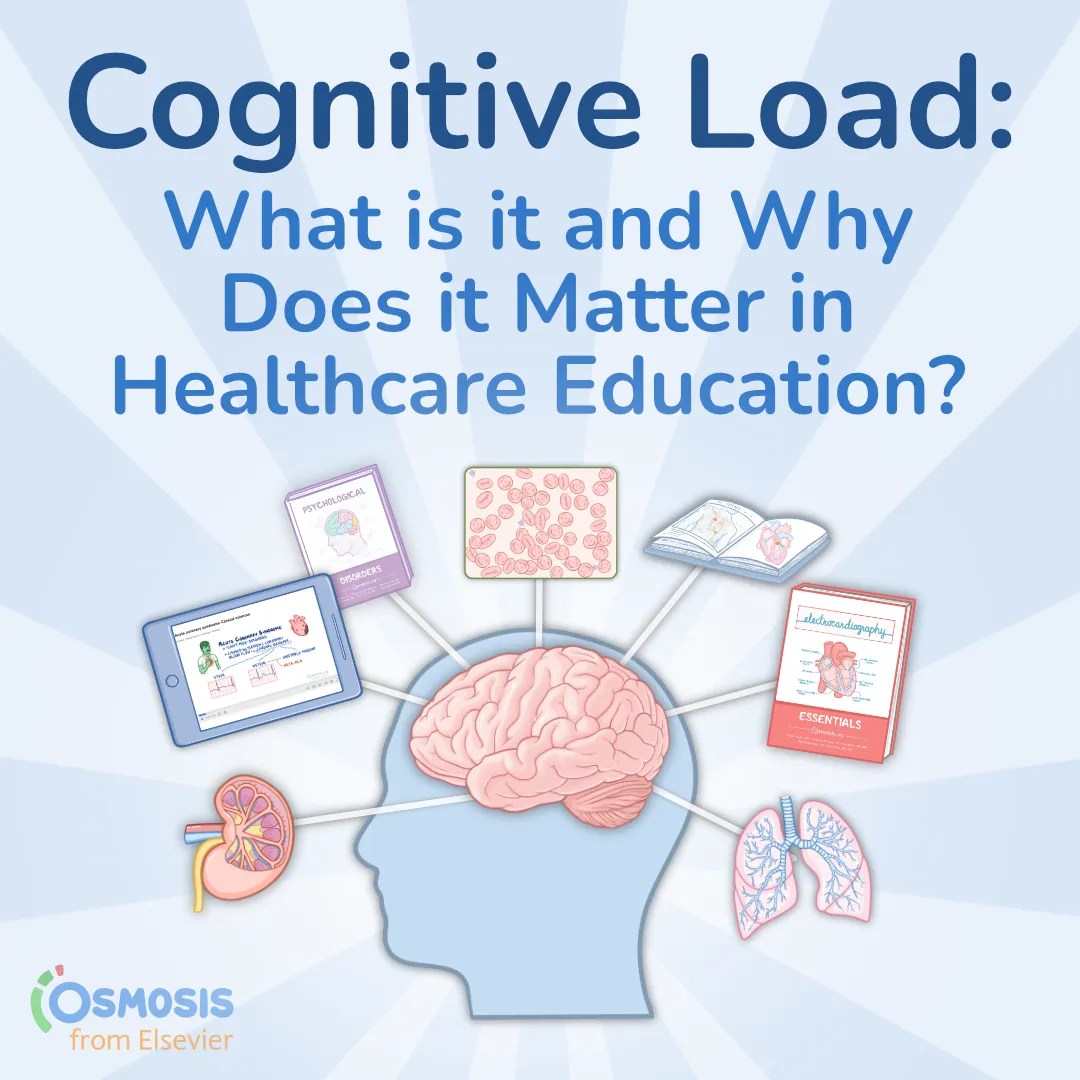
Cognitive Load: What is it and why does it matter in healthcare education?
— Updated:
Explore how cognitive load affects learning in healthcare education and learn strategies to reduce overload for improved student retention and understanding.
-
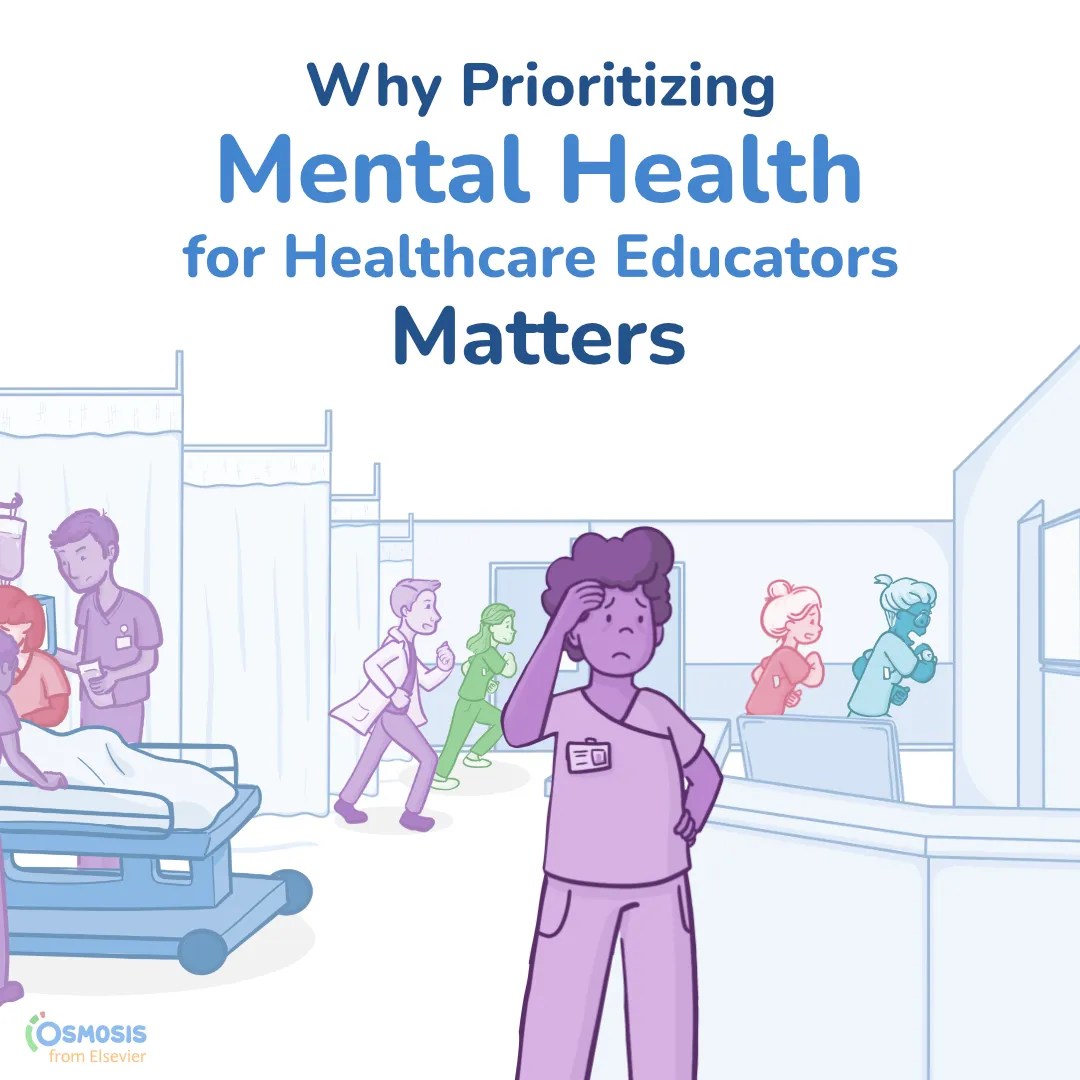
Why Prioritizing Mental Health for Healthcare Educators Matters
— Updated:
Due to the demanding nature of their work, healthcare educators are at a higher risk of burnout, depression, anxiety, and other mental health challenges. On today’s Osmosis blog, we’re discussing the state of mental health in healthcare, the long-term effects on patient care, and ways to support the mental well-being…
-
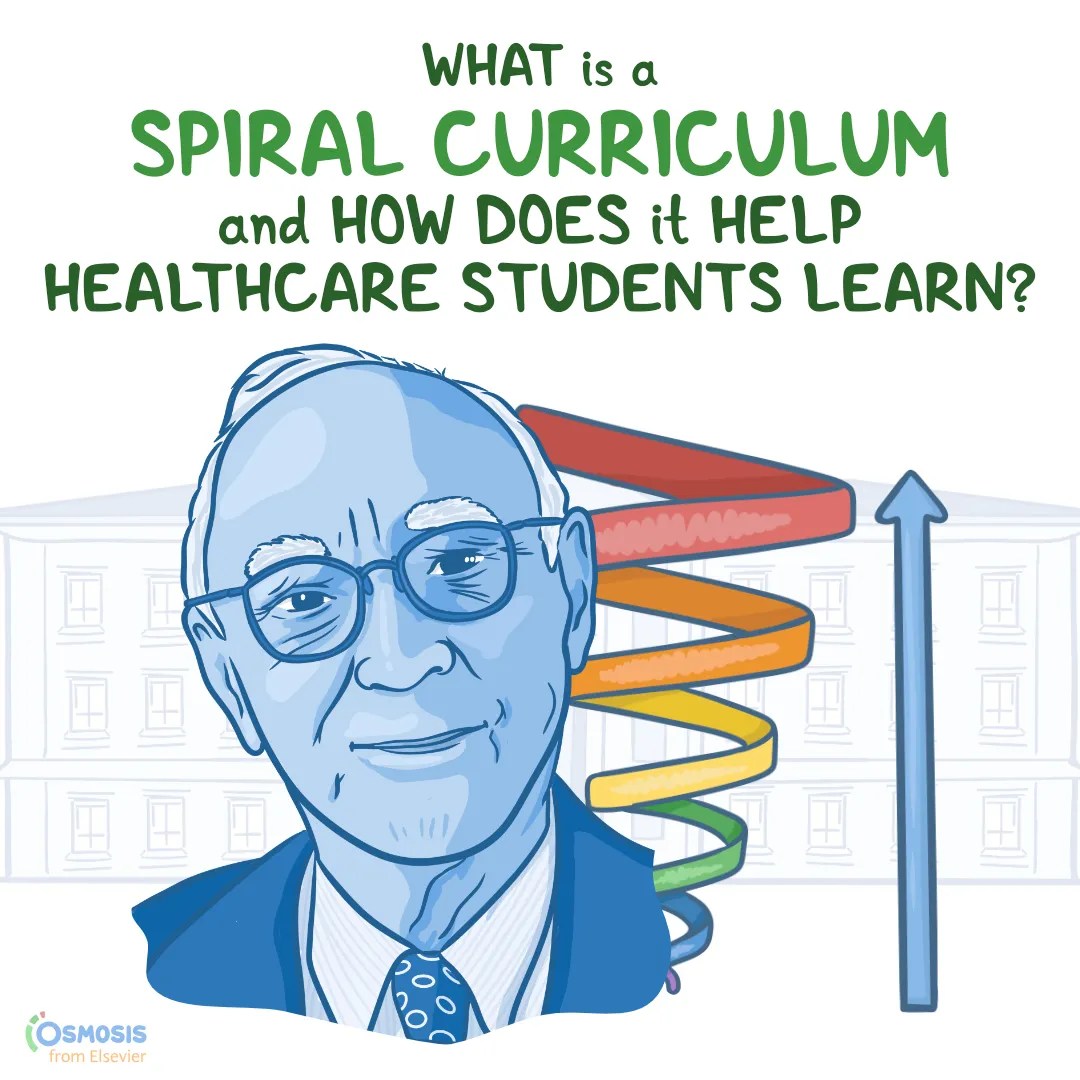
What Is a Spiral Curriculum and How Does It Help Healthcare Students Learn?
— Updated:
Discover the spiral curriculum learning approach, its benefits for healthcare students, and strategies for effective implementation in medical, nursing, and health professional programs.
-
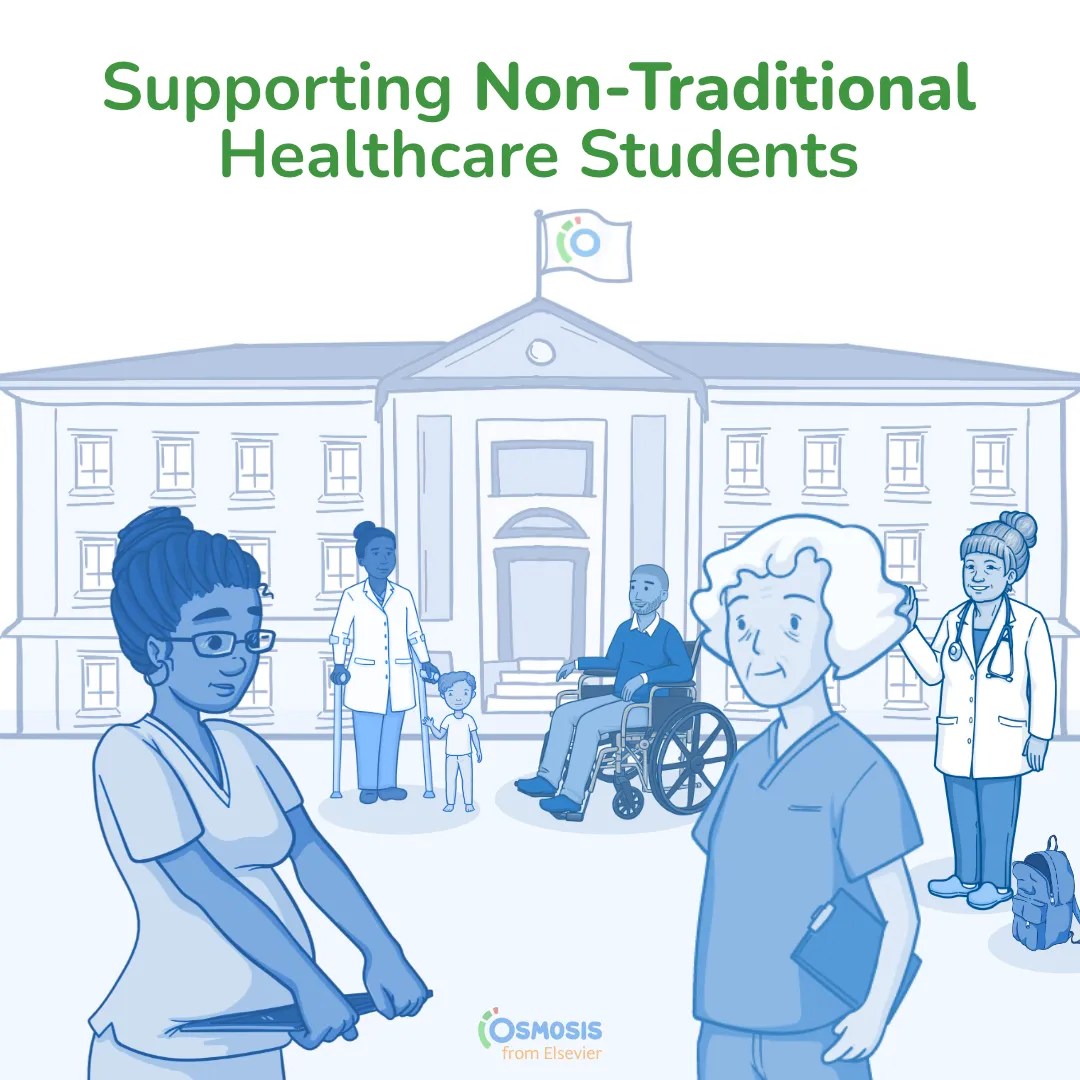
How to Support Non-Traditional Healthcare Students in the Classroom
— Updated:
Going to medical school is tough, but imagine doing it with children or after years away from school! Today on the Osmosis blog, we’re discussing non-traditional healthcare students, the unique values they bring to the classroom, and how faculty can help them excel. Non-traditional healthcare students diversify the medical field,…
-
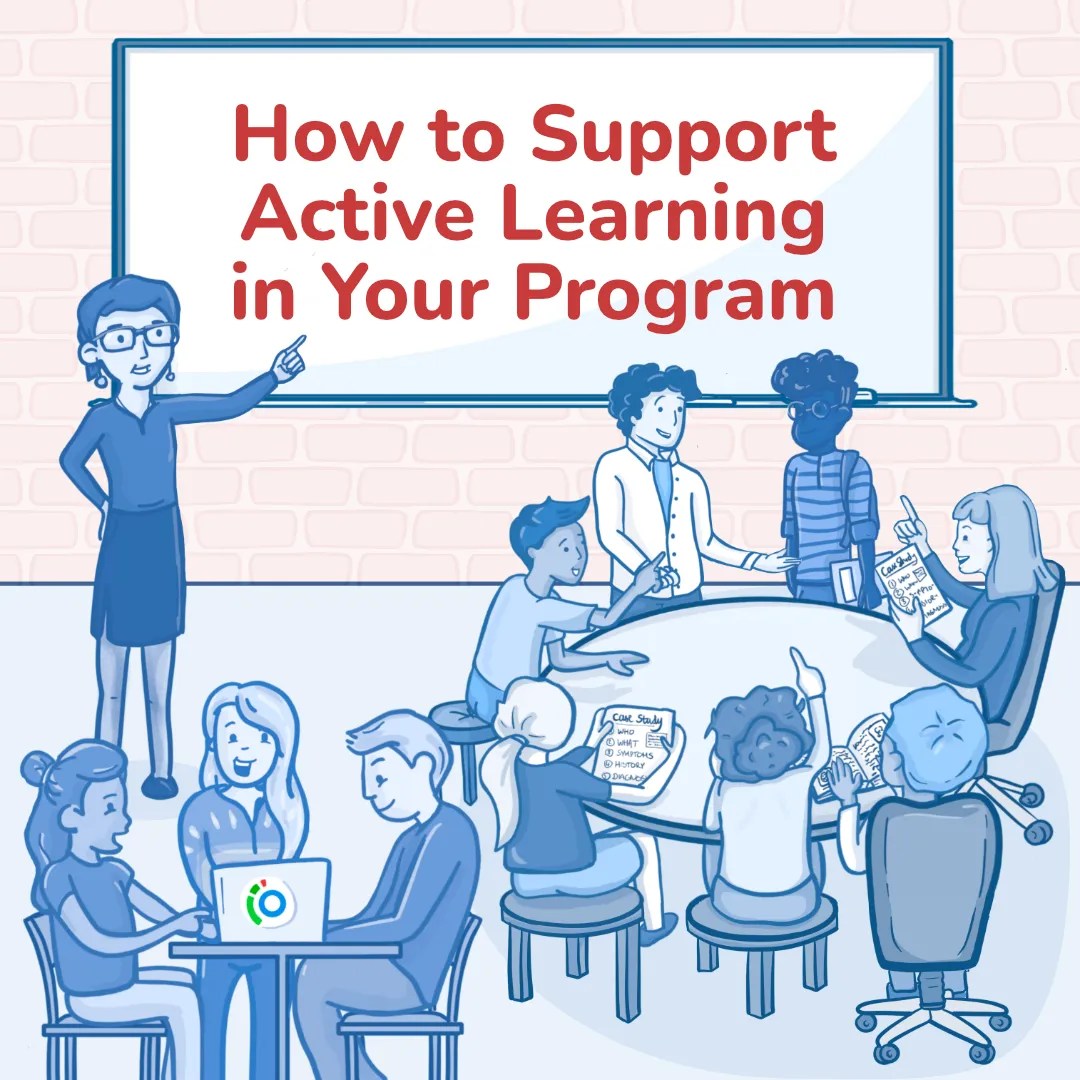
How to Support Active Learning in Your Program
— Updated:
A pedagogical technique highlighted by Charles Bonwell and James Eison in their book, “Active Learning: Creating Excitement in the Classroom,” active learning is centered around the active involvement of students in the learning process instead of listening passively to achieve better learning outcomes. Let’s look at some effective active learning strategies in today’s…
-
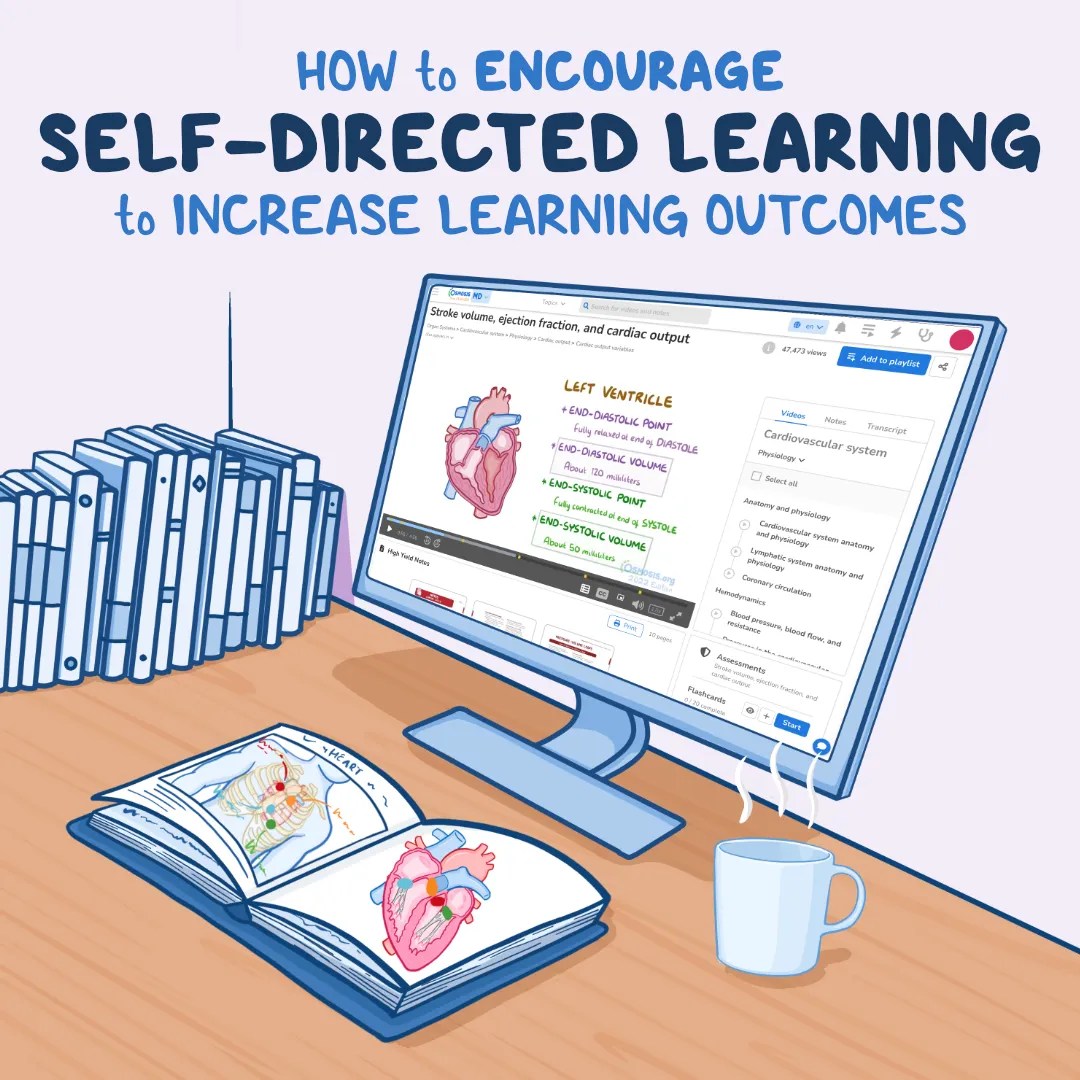
How to Encourage Self-Directed Learning to Increase Learning Outcomes
— Updated:
A well-established education practice that’s evolved over the years, self-directed learning involves giving students the opportunity to manage their learning experience. Let’s take a look at some effective self-directed learning strategies in today’s Osmosis blog. Self-directed learning provides students with the agency to construct their knowledge, often in partnership with…
-
Identifying At-Risk Students Using Osmosis
— Updated:
Identifying learners who are at risk can be a tricky task, but educators whose students use Osmosis can take a look at the analytics for their students’ use of the tool to help determine if they’re struggling. Learn how to identify and keep your students on-task in our newest blog…
-
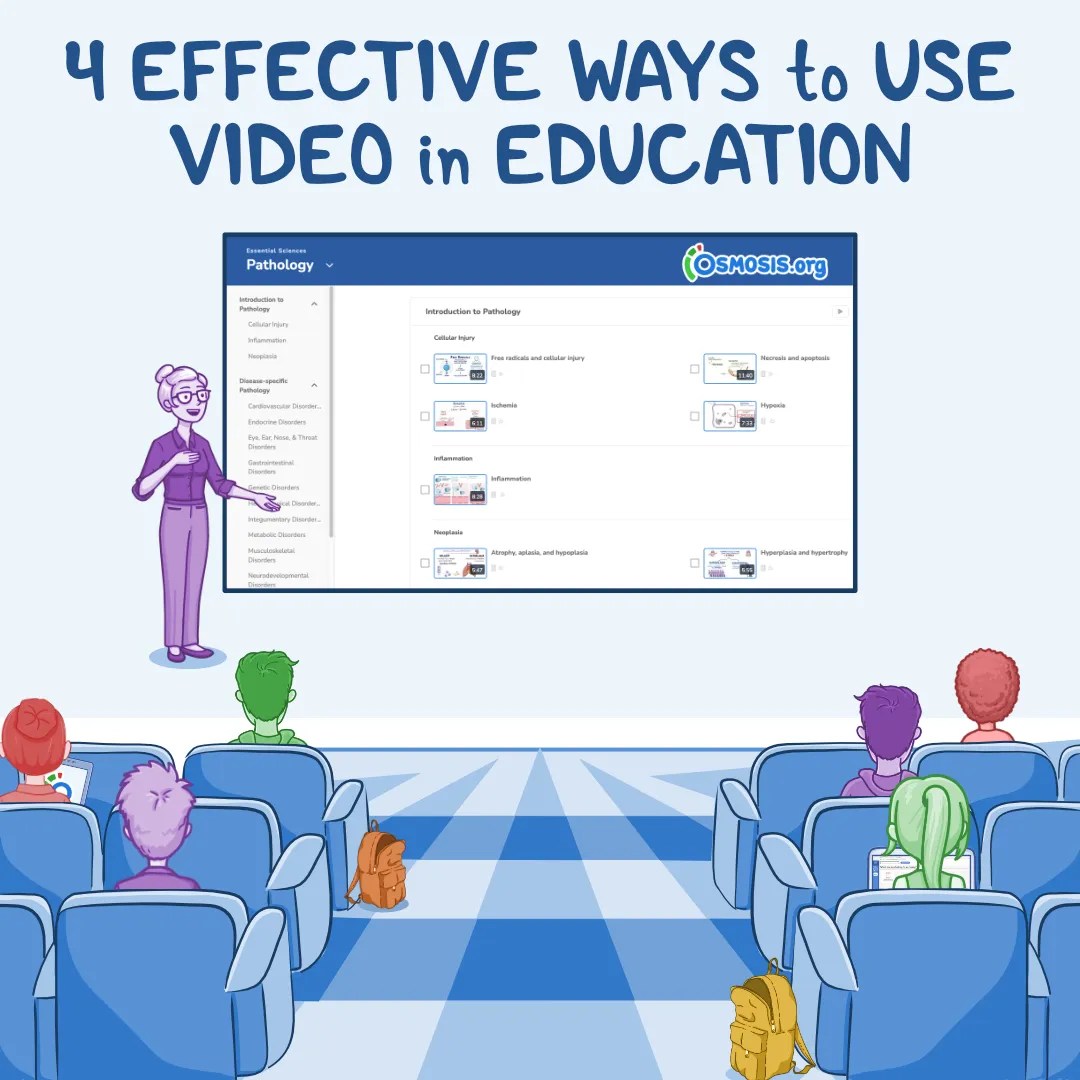
4 Effective Ways to Use Videos in Education
— Updated:
Educators use multiple strategies to engage students in their coursework, including lectures, presentations, class discussions, projects, and videos. Videos are an effective and convenient medium, offering instructors the means to engage their students before, during, and even after class. Videos make learning more accessible to students, including neurodiverse learners, by…