
Today’s NCLEX-RN® question of the day focuses on Sickle cell anemia. Do you know the answer? Let’s find out!
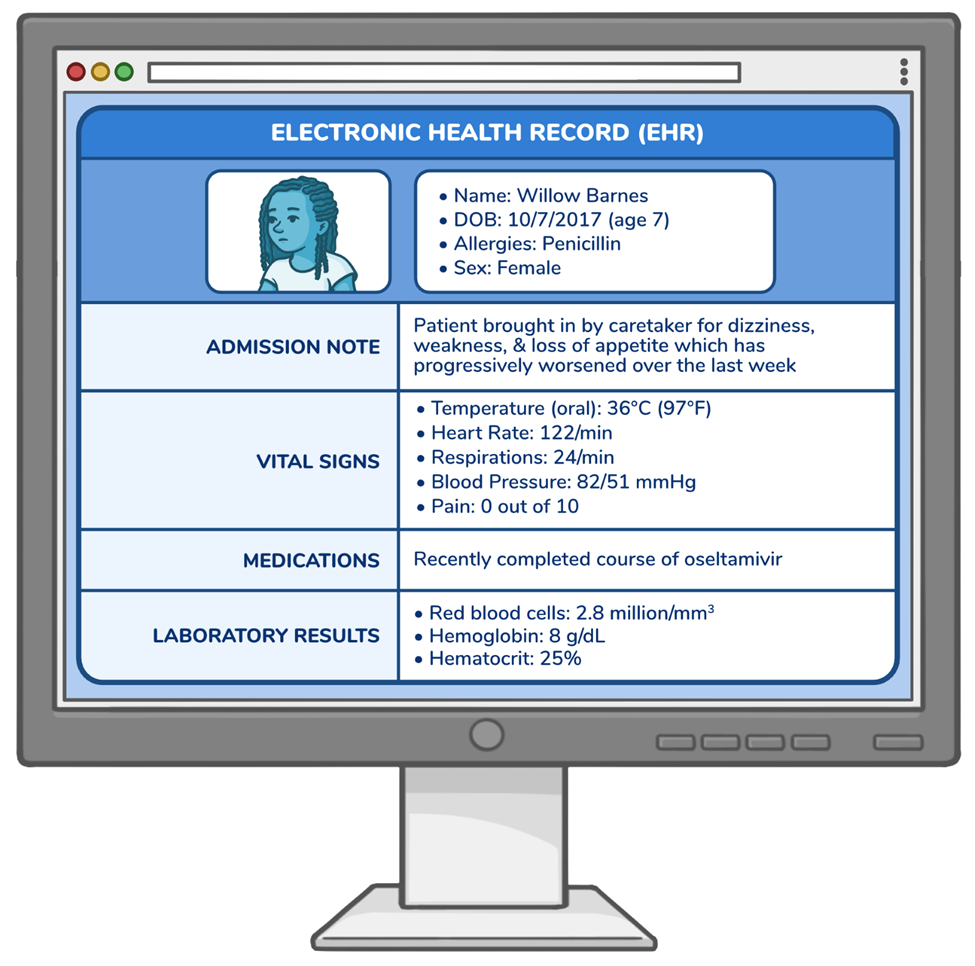
The nurse in the pediatric emergency department is caring for a child with sickle cell anemia. Based on the clinical findings, which sickle cell crisis is this patient most likely experiencing?
A. Vaso-occlusive crisis
B. Sequestration crisis
C. Hyperhemolytic crisis
D. Aplastic crisis
Scroll down for the correct answer!
Check out our NCLEX-RN Study Plan Guide!
The correct answer to today’s NCLEX-RN® Question is…
D. Aplastic crisis
Rationale: Given this patient’s clinical findings and recent diagnosis of influenza (which can be inferred due to recent treatment with oseltamivir), it is most likely that they are experiencing aplastic crisis. This occurs when the bone marrow temporarily ceases erythropoiesis despite the need for new red blood cells (RBCs). Aplastic crises are typically preceded by a viral infection, like influenza, that shuts down the bone marrow leading to profound anemia and hypoxia manifesting as fatigue, weakness, dizziness, and tachycardia.
Main Takeaway
Sickle cell anemia is a genetic condition resulting in red blood cells (RBCs) that are sickle-shaped, inflexible, and easily destroyed. Individuals with sickle cell anemia can have intermittent episodes of extensive sickling, called crises. These crises can be categorized as vaso-occlusive, aplastic, sequestration, and hyperhemolytic. A vaso-occlusive crisis occurs when the sickled RBCs clump together and block vascular blood flow, resulting in inflammation, vasoconstriction, tissue ischemia, and necrosis, which causes intense pain and organ damage. Aplastic crises occur when the bone marrow temporarily ceases erythropoiesis despite the need for new RBCs. Aplastic crises are typically preceded by a viral infection that shuts down the bone marrow leading to profound anemia and hypoxia manifesting as fatigue, weakness, dizziness, and tachycardia. Sequestration crises occur when large numbers of sickled RBCs pool in the spleen. This can lead to a reduced circulating blood volume manifesting as hypovolemia, shock, and even death. Lastly, hyperhemolytic crises occur when there is excessive destruction of RBCs precipitated by certain infections or medications. It manifests with fever and jaundice. Given this patient’s findings and recent influenza treatment with oseltamivir, it is mostly likely they are experiencing aplastic crisis.
Incorrect Answer Explanations
A. Vaso-occlusive crisis
Rationale: Given this patient’s clinical findings, it is not likely that they are experiencing vaso-occlusive crisis. A vaso-occlusive crisis occurs when the sickled red blood cells (RBCs) clump together and block vascular blood flow, resulting in inflammation, vasoconstriction, tissue ischemia, and necrosis, which causes intense pain and organ damage.
B. Sequestration crisis
Rationale: Given this patient’s clinical findings, it is not likely that they are experiencing sequestration crisis. Sequestration crises occur when large numbers of sickled red blood cells (RBCs) pool in the spleen. This can lead to a reduced circulating blood volume manifesting as hypovolemia, shock, and even death.
C. Hyperhemolytic crisis
Rationale: Given this patient’s clinical findings, it is not likely that they are experiencing hyperhemolytic crisis. Hyperhemolytic crises occur when there is excessive destruction of red blood cells (RBCs) precipitated by certain infections or medications. Although this patient did recently have an infection, this crisis usually manifests with fever and jaundice.
Want to learn more about this topic?
Watch the Osmosis video: Sickle-cell disease: Nursing Process (ADPIE)

Get your free trial now to find out why millions of current and future clinicians and caregivers love learning by Osmosis.
Leave a Reply