Anthrax: Nursing
Introduction0:00–0:25
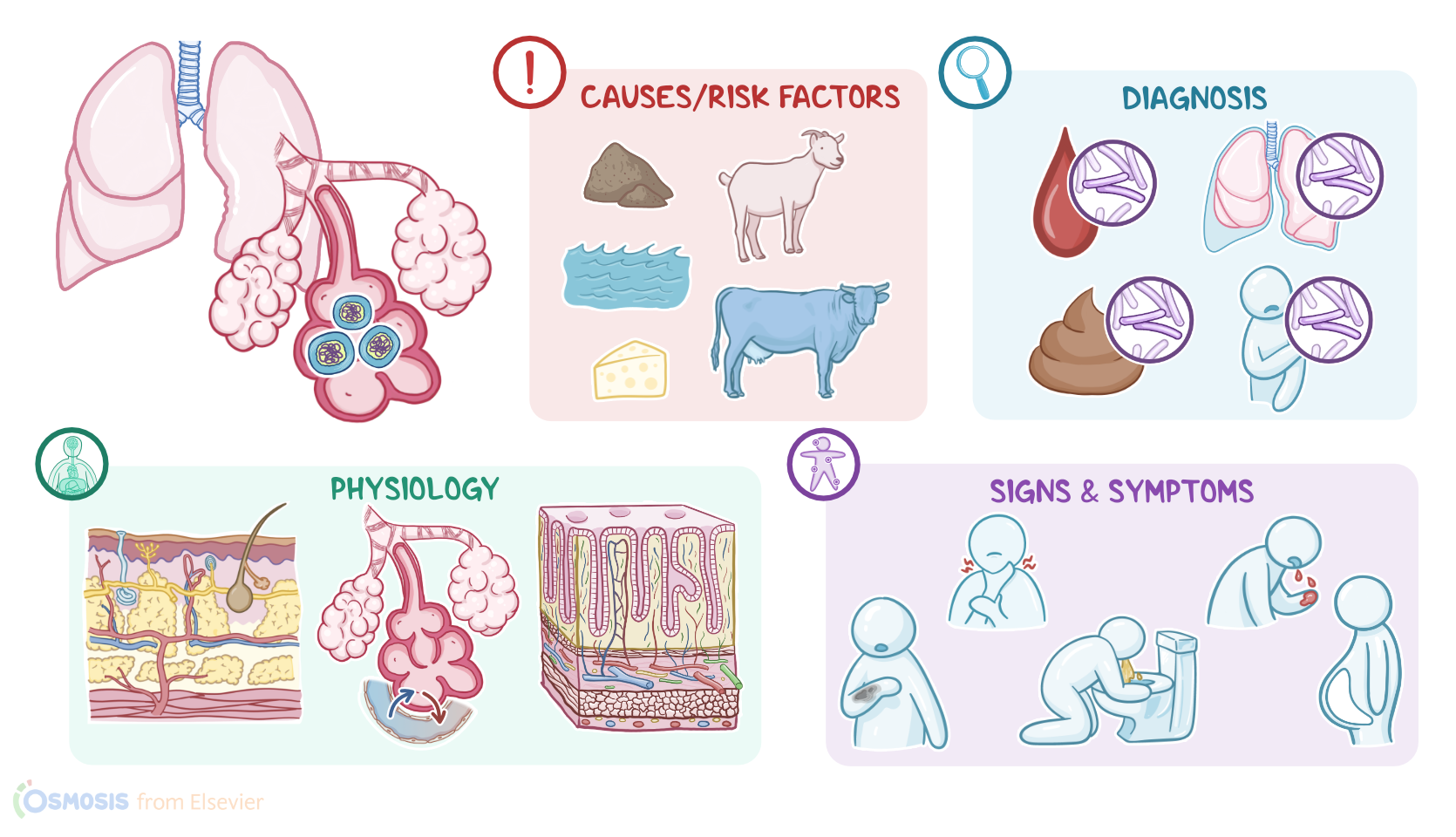
Anthrax is a zoonotic disease caused by Bacillus anthracis, which is a Gram positive, rod-shaped bacterium, which primarily enters the body through the skin, lungs, gastrointestinal tract, and through direct injection.
Infection with Bacillus anthracis is associated with high mortality.Now, first, let’s cover some basic physiology of the skin.
Physiology0:25–2:22
The most superficial layer of the skin is the epidermis, which is in close contact with the outside world and primarily serves as a protection from foreign pathogens.
Next up is the dermis, which is made up of connective tissue that contains blood vessels, lymphatics, nerve endings, as well as immune cells, like macrophages and dendritic cells.
These cells represent innate immunity and they are first on the scene when a pathogen breaches the skin and enters the body.
Finally, the deepest layer of the skin is called hypodermis and is primarily made up of adipose tissue.Now, let’s switch our focus to the anatomy of the respiratory tract.
When we breathe in, the air flows through the nasal and oral cavity into the pharynx and larynx, down into the trachea or windpipe.
Alveolar ducts open up into alveolar sacs, which are small grape-like groups of alveoli where the gas exchange takes place.
Within the alveoli, there are immune cells called alveolar macrophages, which help clean the alveolar space from foreign substances but also fight pathogens that make it to the lungs.
Finally, let’s cover the basic histology of the gastrointestinal tract, starting with the outermost layer, which is called the adventitia or serosa.
Next up are the muscularis externa and the submucosa; and finally, the innermost layer is called the mucosa. Moreover, the mucosa secretes mucus, digestive enzymes, and absorbs nutrients from the gastrointestinal lumen.The cause of anthrax is Bacillus anthracis, which primarily infects domestic animals, such as sheep, cattle, and goats.
Causes & risk factors2:22–3:11
The bacteria can undergo endosporulation and develop spores, which are the most resistant forms of the bacteria. Spores can contaminate soil, food, water, as well as animal products.Important risk factors for Bacillus anthracis infection include eating undercooked meat; living in rural or agricultural areas; and working with animals or animal products, so those most at risk are farmers, veterinary workers, but also other individuals who come in close contact with animal wool, skin, and hides.
It also has been used as a bioterrorism agent.Now, the pathology of anthrax varies, depending on the organ system that is infected.
Pathology3:11–5:14
First, let’s start with cutaneous anthrax which occurs when spores of Bacillus anthracis come in contact with an open wound or other break in the skin.
Here, spores germinate and give rise to the active bacteria, which produce the anthrax toxin. The anthrax toxin locally damages the surrounding tissue, eventually causing skin ulceration and edema.
On the other hand, in inhalation anthrax, the person inhales spores and they eventually end up within the lung alveoli. Next, alveolar macrophages engulf the spores and transport them to regional mediastinal lymph nodes.
But when macrophages fail to contain the infection, the spores germinate, produce the anthrax toxin, and cause local tissue destruction, including hemorrhagic mediastinitis.Then there’s gastrointestinal anthrax, which most commonly occurs when a person ingests undercooked meat that contains spores.
Once in the gastrointestinal tract, spores once again start to germinate, producing active bacteria that secrete the anthrax toxin.
As a result, there’s local destruction of the gastrointestinal mucosa that can eventually lead to ulcerations and bleeding.
Finally, injection anthrax occurs when an individual injects spore-contaminated heroin. The anthrax spores are injected directly into the body, and once toxin is produced, it leads to local tissue damage as well as gastrointestinal or central nervous system manifestations.
Complications of Bacillus anthracis infection include hemorrhagic mediastinitis, gastrointestinal bleeding, pleural effusion, and respiratory failure, meningitis, septic shock, and even death.Now, clinical manifestations of cutaneous anthrax usually appear 1 to 10 days after the inoculation with spores.
Clinical manifestations5:14–7:22
The most important clinical feature is a pruritic papular lesion that typically progresses to a painless ulcer surrounded by small vesicles and blisters.
Over time, the lesion becomes necrotic with a black center. At this point, it’s called eschar and it’s surrounded by non-pitting edema.
This type of anthrax is also known as woolsorter's disease, and it’s characterized by nonspecific clinical manifestations, such as fever, malaise, nausea, and vomiting.On the flip side, respiratory features usually include dyspnea and nonproductive cough, as well as stridor from an obstructed airway.
Bacillus anthracis can affect any part of the gastrointestinal system, from the mouth to the rectum. Clients with oropharyngeal anthrax typically present with regional lymphadenopathy and dysphagia; while clients with intestinal anthrax, usually complain of nausea, vomiting, diarrhea, as well as fever.
In severe cases, intestinal anthrax can cause acute clinical manifestations, such as bloody diarrhea, hematemesis, and ascites, which refers to the accumulation of fluid in the peritoneal cavity.
Finally, injection anthrax typically presents with local tissue edema, cellulitis and tissue necrosis, but can progress to shock, meningitis, or cerebral bleeds.
Diagnosis7:22–8:02
Diagnosis of anthrax usually starts with the client’s history, physical assessment, and routine blood test like a CBC and blood chemistries.
Imaging methods, such as X-ray and CT scan, could show pleural effusions or a widened mediastinum. The diagnosis is confirmed by detecting the presence of the bacteria in the blood, pleural fluid, stool, or at the site of infection.
This can be done through microscopy of infected fluid, such as skin lesions or cerebrospinal fluid; as well as microbial cultures or PCR testing.Treatment of anthrax typically includes IV antibiotics.
Treatment8:02–8:33
Supportive care is also important, which typically includes rest, fluids, and medications like analgesics, and antipyretics.Alright, let’s talk about the care you’ll provide for a client diagnosed with cutaneous anthrax.
Management of care8:33–10:27
Your priority goals of care are to prevent the spread of infection, assist with treating the infection, and monitor for complications.Begin by placing your client in a private room, and use standard precautions, such as gloves and a gown when caring for your client.
Then, assess your client’s lesions, noting the size and location; perform wound care; and cover the lesions with the prescribed dressing.
Be sure to dispose of all contaminated dressings, clothing, and linens in a biohazard bag. Also remember that alcohol based products do not kill spores, so be sure to wash your hands with soap and water after providing care.
Lastly, assist the healthcare team with determining how your client was exposed to the organism, and ensure the local healthcare authorities and the Centers for Disease Control and Prevention have been notified.
Now, after you have collected a sample from one of their lesions, send it to the lab for culture, and administer the prescribed IV fluids and antibiotics to treat the infection.
During care, monitor your client closely for complications by initiating continuous pulse oximetry, checking their vital signs, and assessing their neurological status.
Immediately report to the healthcare provider if your client develops signs of meningitis, including headache, lethargy, confusion, or stiff neck.
Assist with lumbar puncture to collect a sample of cerebrospinal fluid, and administer the prescribed medications, including antibiotics, antitoxins, corticosteroids, and analgesics.
Okay, moving on to client and family teaching. First, teach your client that anthrax is a serious infectious disease caused by a bacterium, and that cutaneous anthrax is contracted when the bacterial spores are introduced into the skin through cuts, abrasions, or other areas of impaired skin integrity.
General client & family teaching10:27–11:58
Discuss the plan of care including the prescribed medications, and provide time to answer any questions they may have. Also talk to them about the importance of keeping all follow-up appointments with their healthcare provider for continued monitoring and care.Next, be sure to let your client know that cutaneous anthrax is not typically spread through person-to-person contact, so reassure them that they do not need to be isolated from their friends and family.
On the other hand, caution them that anthrax can be passed to others through touching lesions, handling contaminated wound dressings, or touching contaminated surfaces.
So, remind them of the importance of wearing gloves during wound care, engaging in frequent hand hygiene, and using a hypochlorite solution to sanitize surfaces and other objects that could be contaminated.
Finally, instruct your client to seek immediate medical attention if they experience any new symptoms, including headache, lethargy, confusion, or a stiff neck; gastrointestinal symptoms, or difficulty breathing.
All right, as a quick recap…. Anthrax is caused by Bacillus anthracis, which primarily enters the body through the skin, lungs, gastrointestinal tract, and through direct injection.
Review11:58–14:05
Infection with Bacillus anthracis is associated with high mortality. Anthrax primarily affects animals such as sheep, cattle, and goats, but the bacterium can undergo endosporulation to form spores that contaminate soil, food, water, and animal products.
Risk factors of contracting anthrax include eating undercooked meat, living in an agricultural area, and having a job that involves working with animals or animal products, such as being a farmer or veterinary worker.
Bacillus anthracis has also been used as a bioterrorism agent. Now, manifestations of anthrax can differ based on the organ system affected.
Cutaneous anthrax causes pruritic papular lesion which can can progress to an ulcer that becomes necrotic, while inhalation anthrax may have nonspecific manifestations such as fever and malaise or respiratory manifestations such as dyspnea, cough, or stridor.
Gastrointestinal anthrax can cause symptoms such as diarrhea, while oropharyngeal anthrax can present with manifestations such as regional lymphadenopathy and dysphagia.
Injection anthrax typically presents with local tissue damage. Diagnosis is based on the client’s history, physical examination, laboratory tests, and imaging; and is confirmed by detecting the bacteria in bodily fluids.
Treatment includes antibiotics, antitoxins, and supportive care. Goals of nursing care include preventing the spread of infection, assisting in treating the infection, and monitoring for complications.
Finally, client and family teaching centers on infection control measures at home, and when to seek medical attention.
| ANTHRAX | ||
| KEY POINTS | NOTES | |
| DEFINITION |
| |
| PHYSIOLOGY |
| |
| CAUSES AND RISK FACTORS |
| |
| PATHOPHYSIOLOGY |
| |
| SIGNS AND SYMPTOMS |
| |
| DIAGNOSIS |
| |
| TREATMENT |
| |
| MANAGEMENT OF CARE |
| |
| PATIENT AND FAMILY TEACHING |
| |
- "Medical-Surgical Nursing" Elsevier (2020)
- "Saunders Comprehensive Review for the NCLEX-RN Examination" Saunders (2019)
- "Saunders Comprehensive Review for the NCLEX-RN Examination" Saunders (2016)
- "Study Guide for the Core Curriculum for Oncology Nursing" Saunders (2019)
- "What Is Anthrax?" Pathogens (2022)
- "Current Status and Trends in Prophylaxis and Management of Anthrax Disease" Pathogens (2020)
- "Anthrax toxin component, Protective Antigen, protects insects from bacterial infections" PLOS Pathogens (2020)
No notes for this video yet
Try adding a note below