Dependent adult abuse: Nursing
Dependent adult abuse is the intentional mistreatment of dependent adults, which refers to anyone over the age of 18 who is unable to carry out daily activities or protect their rights due to physical or mental limitations. Most often, the abuse occurs at the hands of caregivers like their family members, partners, or institution workers, and can take place either at home or in long-term care facilities.
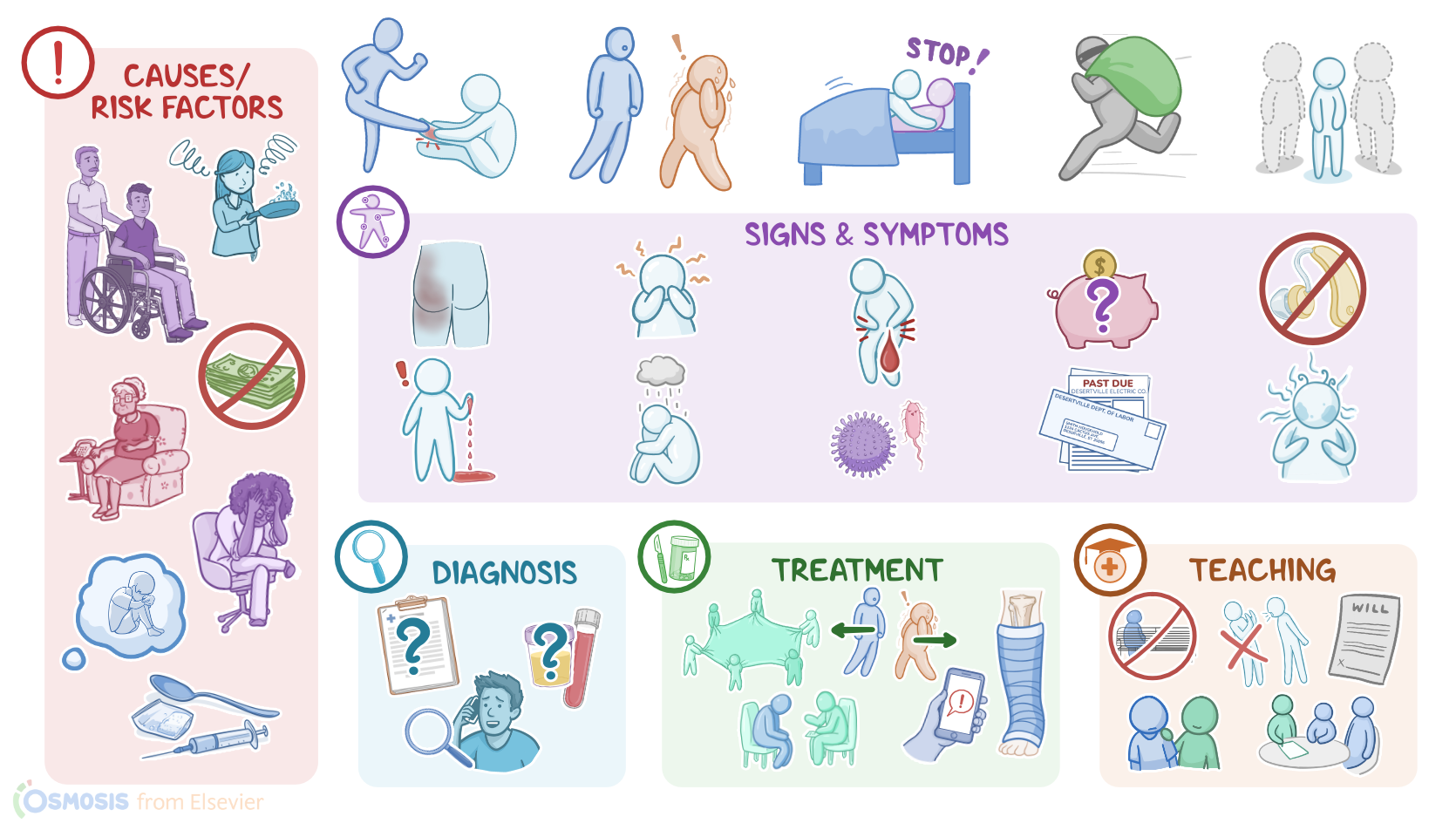
Abuse can be classified into a few different types. First is physical abuse, which refers to inflicting pain or injury through physical force like slapping, kicking, or pushing. Next, emotional abuse refers to inflicting mental pain and inducing fear through threats, humiliation, or social isolation. Sexual abuse refers to non-consensual or forced sexual activities like molesting or touching. And financial abuse is the misuse of the client’s resources and property by concealing money, stealing, or forcing them to sign contracts.
In addition, a particular type of dependent adult abuse is neglect, where the caregiver fails to provide for basic needs, including food, water, clothing, shelter, and medical care, either intentionally or unintentionally. Neglect can also occur in the form of abandonment, where the dependent adult is intentionally left behind at a medical care facility.
Now, important factors that can increase the risk of a dependent adult experiencing abuse or neglect include advanced age, as well as depending heavily on the caregiver due to physical limitations like mobility issues, or mental limitations like psychiatric conditions.
There are also factors that increase the risk of a caregiver committing dependent adult abuse or neglect. These include stress and caregiver burnout, lack of bond with the dependent adult, psychiatric conditions, and substance use disorder. Other risk factors include low socioeconomic status and being financially dependent on the dependent adult, as well as prior history of domestic violence or abuse in the family, and social isolation.
Now, several complications can arise from abuse and neglect of dependent adults, including mental health conditions like post-traumatic stress disorder, as well as decreased quality of life, severe physical injury, inadequate treatment of chronic diseases, and even death.
Clients experiencing physical abuse may present with injuries like bruises, lacerations, sprains, fractures, or dislocations. The injuries are usually seen in multiple sites, especially in covered-up areas like the gluteal or genital areas and upper thighs. A tell-tale sign of physical abuse is repeated injuries, typically in different stages of healing.
Clients experiencing emotional abuse typically experience anxiety and fear of being left alone with the caretaker, withdrawal, depression, and confusion. Those experiencing sexual abuse can have difficulty walking or sitting, vaginal and anal tears, and bleeding. They may also have clinical manifestations of sexually transmitted diseases, such as rashes or ulcers in the genital area.
Clients subjected to financial abuse might be confused, and have incorrect or no knowledge of their finances. They are often unable to pay bills, live below their means, and may find their valuables or resources missing and suddenly transferred from their name.
Finally, neglected clients may present with an unkempt appearance, poor hygiene, inappropriately dressed, and missing assistive devices like hearing aids and glasses. They are often thin and frail from malnourishment, and dehydrated. Finally, they may have pressure injuries and be in dire need of medical or dental treatments.
Dependent adult abuse often comes to light due to reports of abuse from the one experiencing abuse or an observer like neighbors. The diagnosis can typically be confirmed based on the client’s history and physical assessment. To assist with diagnosis, several screening tools have been developed, focusing on questions that assess for potential mistreatment. These screening tools can include the Elder Abuse Suspicion Index or EASI, the Brief Abuse Screen for the Elderly or BASE, the Caregiver Abuse Screen or CASE, and the Emergency Department Elder Mistreatment Assessment Tool for Social Workers or ED-EMATS.
| DEPENDENT ADULT ABUSE | ||
| KEY POINTS | NOTES | |
| DEFINITION |
| |
| CLASSIFICATION |
| |
| CAUSES AND RISK FACTORS |
| |
| COMPLICATIONS |
| |
| SIGNS AND SYMPTOMS |
| |
| DIAGNOSIS |
| |
| TREATMENT |
| |
| MANAGEMENT OF CARE |
| |
| PATIENT AND FAMILY TEACHING |
| |
No notes for this video yet
Try adding a note below