Irritable bowel syndrome (IBS): Nursing
Introduction0:00–0:38
Irritable bowel syndrome, or IBS for short, is a condition characterized by irregular intestinal motility. Based on the associated symptoms it can fall into three groups: IBS - C, which is associated with constipation; IBS - D, which is associated with diarrhea; IBS - M, which is mixed, meaning that it is associated with alternating bouts of constipation and diarrhea; and IBS unclassified, meaning the IBS can’t be classified into one of the other subtypes.All right, now, let’s zoom into the wall of the intestine, which is made up of four layers.
Physiology0:38–1:57
The outermost layer is called serosa or adventitia and is a connective tissue that binds the intestine to the surrounding structures.
Next is the muscular layer, which houses three smooth muscle layers. These muscles contract and relax in a rhythmic way to produce wave-like movements of the intestines, called peristalsis, which propel the food down the gastrointestinal tract.
The contractions of these muscles are controlled by a mini nervous system that lies within the walls of the intestines. Typically, this system works on its own, but it is also affected by the sympathetic and parasympathetic nervous systems.
After that is the submucosa, which consists of a dense layer of tissue that contains blood vessels, lymphatics, and nerves.
And finally, there’s the innermost layer, called the mucosa, which consists of simple columnar epithelium spanned by goblet cells.
This mucosa forms invaginations called colonic crypts or glands.Now, there isn’t a single cause of irritable bowel syndrome, but rather it’s a multifactorial disease, meaning that there’s a combination of risk factors and dietary triggers.
Causes & risk factors1:57–3:26
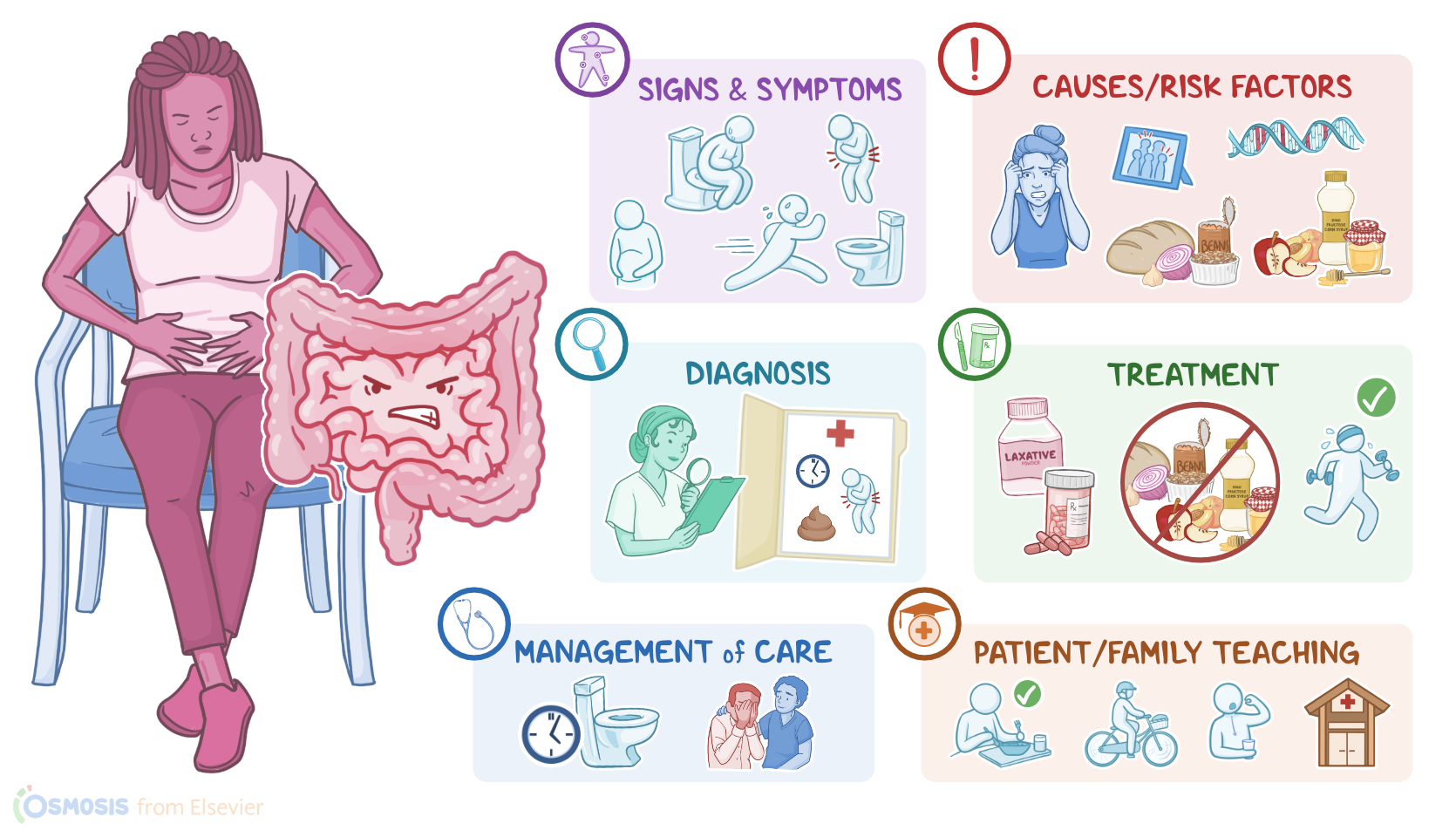
These include genetic predisposition and family history, as well as an age below 50, or being assigned female at birth. Additional risk factors include gastrointestinal conditions, such as previous gastrointestinal infections, alterations in the fecal microflora, hypersensitivity of visceral receptors in the wall of the gut; as well as psychological conditions, such as stress, anxiety, post-traumatic stress disorder or PTSD, and depression.
On the other hand, the main dietary triggers include carbohydrates like fermentable oligosaccharides, disaccharides, monosaccharides, and polyols, also known as FODMAPs, which are poorly absorbed in the small intestine and tend to ferment in the colon.
FODMAPs can be found in foods such as dairy products, certain fruits like apples, avocados or cherries; garlic and onions; beans and legumes; wheat; and sweeteners like honey, high fructose corn syrup, and sugar alcohols.All right, now, regardless of what triggers the disease, there is an alteration in the gastrointestinal motility, causing the food to pass quickly through the intestines, leading to diarrhea.
Pathology3:26–3:50
In other cases, these impulses may also decrease intestinal motility, causing constipation. Typically, clients with irritable bowel syndrome present with changes in bowel habits, including constipation, diarrhea, or both.
Clinical manifestations3:50–4:19
They may also experience recurrent abdominal pain which often improves with bowel movement, as well as bloating, and mucous in the stool.
In addition, non-gastrointestinal symptoms are often present, including headache, sleep issues, and fatigue. The diagnosis of irritable bowel syndrome is mainly based on the client’s history and physical assessment.
Diagnosis4:19–4:57
Specifically, there’s a set of criteria, known as Rome IV criteria,which looks at timing and frequency of symptoms, presence of abdominal pain, as well as a change in stool frequency and change in stool shape.
Additional diagnostic tests such as colonoscopy can be also used to rule out other disorders, like colorectal cancer; as well as abdominal X-rays to check for stool accumulation.
Now, the treatment of IBS focuses on relieving the symptoms associated with each type of IBS. For example, constipation in IBS - C can be treated with fiber supplements, such as bulk-forming agents like psyllium, in addition to laxatives like polyethylene glycol, or gastrointestinal agents like lubiprostone, or linaclotide.
Treatment4:57–6:07
On the other hand, diarrhea in IBS - D can be treated with antidiarrheal medications like loperamide. Also, medications that reduce motility, like eluxadoline, and antispasmodic medications, like hyoscyamine, are often used.
In mixed types of IBS, clients may take laxatives or antidiarrheals as needed. Finally, there are certain medications that are often used to support clients with any type of IBS, including rifaximin for bloating, eluxadoline for abdominal pain, and tricyclic antidepressants for associated mood symptoms.All right, let’s look at the nursing care you’ll provide for a client with IBS.
Management and care6:07–7:47
Your priority nursing goals are to promote regular bowel elimination, provide psychosocial support, and improve your client’s quality of life.
First, weigh your client and assess their vital signs. Then, perform an abdominal assessment, noting any distension, bloating, or pain; also ask your client about their usual stool characteristics, frequency, and if they notice any bleeding with elimination.
Immediately report to the healthcare provider if your client presents with unusual symptoms, such as a fever, weight loss, or rectal bleeding.
Next, ask your client about how they are coping with their symptoms, other life stressors, and the extent of their social support networks.
Immediately report if the client exhibits signs of depression or suicidal ideation. In addition, be sure to provide reassurance to your client, and refer them to counseling as needed.Now, if your client with IBS-C has not responded to fiber supplements, administer PEG, as ordered.
On the other hand, if your client has IBS-D, report to the healthcare provider right away if your assessment findings include dry mucous membranes, dizziness, or fatigue, and be prepared to administer IV fluids and antidiarrheal or antispasmodic medications as ordered.All right, let’s move onto client and family teaching.
General client and family teaching7:47–9:46
Explain how certain factors tend to trigger IBS. Then, encourage your client to keep a diary of their symptoms, diet, and episodes of stress, in order to identify their unique IBS triggers so they can avoid them.
Also teach them about the importance of following a low-FODMAP diet, which includes avoiding milk and milk products, high fructose foods like apples, pears, honey, and corn syrup; gas-producing foods like cauliflower, broccoli, and cabbage; artificial sweeteners like sorbitol; wheat or rye products, and onions, garlic, legumes, and nuts.
Also provide them with a list of foods that are usually better for clients with IBS. Advise your client to drink at least 2 liters of water daily, and to engage in regular physical activity, as tolerated.
If your client’s primary symptom is constipation, instruct them to take prescribed fiber supplements, as directed. Lastly, teach them about any prescribed medications, and how to take them as directed.
Next, talk with your client about some strategies that can help to reduce feelings of stress and anxiety, including yoga, meditation, and relaxation techniques; and suggest joining a local IBS support group.
Finally, stress the importance of notifying their healthcare provider right away if their symptoms don’t resolve or if they get worse; if they have symptoms of anemia, such as fatigue, activity intolerance, or shortness of breath; or they experience any worrisome symptoms like severe abdominal pain and cramping, or rectal bleeding.
Review9:46–11:01
All right, as a quick recap… Irritable bowel syndrome, or IBS for short, is a condition characterized by irregular intestinal motility, resulting in either constipation or diarrhea, or alternating bouts of both.
IBS is a multifactorial disease, meaning that there’s a combination of risk factors and dietary triggers. Diagnosing IBS is done through a history and physical assessment, using Rome IV criteria, which looks at timing and frequency of symptoms, presence of abdominal pain, as well changes in stool frequency and shape.
Treatment focuses on relieving the symptoms associated with each type of IBS, which can include prescribed medications, combined with dietary modifications such as elimination of FODMAPs and gas-producing foods, as well as increasing physical activity.
Nursing care includes promoting regular bowel elimination,
| IRRITABLE BOWEL SYNDROME | ||
| KEY POINTS | NOTES | |
| DEFINITION |
| |
| PHYSIOLOGY |
| |
| CAUSES AND RISK FACTORS |
| |
| PATHOPHYSIOLOGY |
| |
| SIGNS AND SYMPTOMS |
| |
| DIAGNOSIS |
| |
| TREATMENT |
| |
| MANAGEMENT OF CARE |
| |
| PATIENT AND FAMILY TEACHING |
| |
No notes for this video yet
Try adding a note below