Multiple myeloma: Nursing
Introduction0:00–0:16
Multiple myeloma, also called plasma cell myeloma, is a condition in which there’s a malignant proliferation of plasma cells in the bone marrow.
This further affects the bones and eventually destroys them. First, let’s look at the physiology of the bone marrow and plasma cells.
Physiology0:16–1:08
The main function of the bone marrow is to transform hematopoietic stem cells into all types of blood cells, like red blood cells, platelets, and white blood cells, which include lymphocytes.
Plasma cells, specifically, develop from B-lymphocytes, or B-cells, which are key cells of the adaptive immune response.
In the bone marrow, B-cells mature and acquire a set of diverse B-cell receptors. Afterwards, they are sent to the lymphoid tissue, like the lymph nodes and the spleen, where they encounter various antigens.
By meeting different types of antigens, B-cells are activated and specialize into antibody-secreting plasma cells that are able to fight off infections.
Causes & risk factors1:08–1:57
Now, the cause of multiple myeloma is still unknown. However, some evidence suggests that genetic abnormalities in oncogenes, which are genes involved in the uncontrolled proliferation of cancer cells, can play a role in the development of multiple myeloma.
However, there are some known risk factors for developing multiple myeloma, which include age above 60 years old; a past medical or family history of plasma cell tumors; exposure to radiation or organic chemicals, like benzene, herbicides and insecticides; as well as some professions with increased exposure to environmental toxins, like firefighters.
Finally, viral infections that impair the immune system, like an HIV infection, are also a risk factor for multiple myeloma.
Pathology1:57–3:18
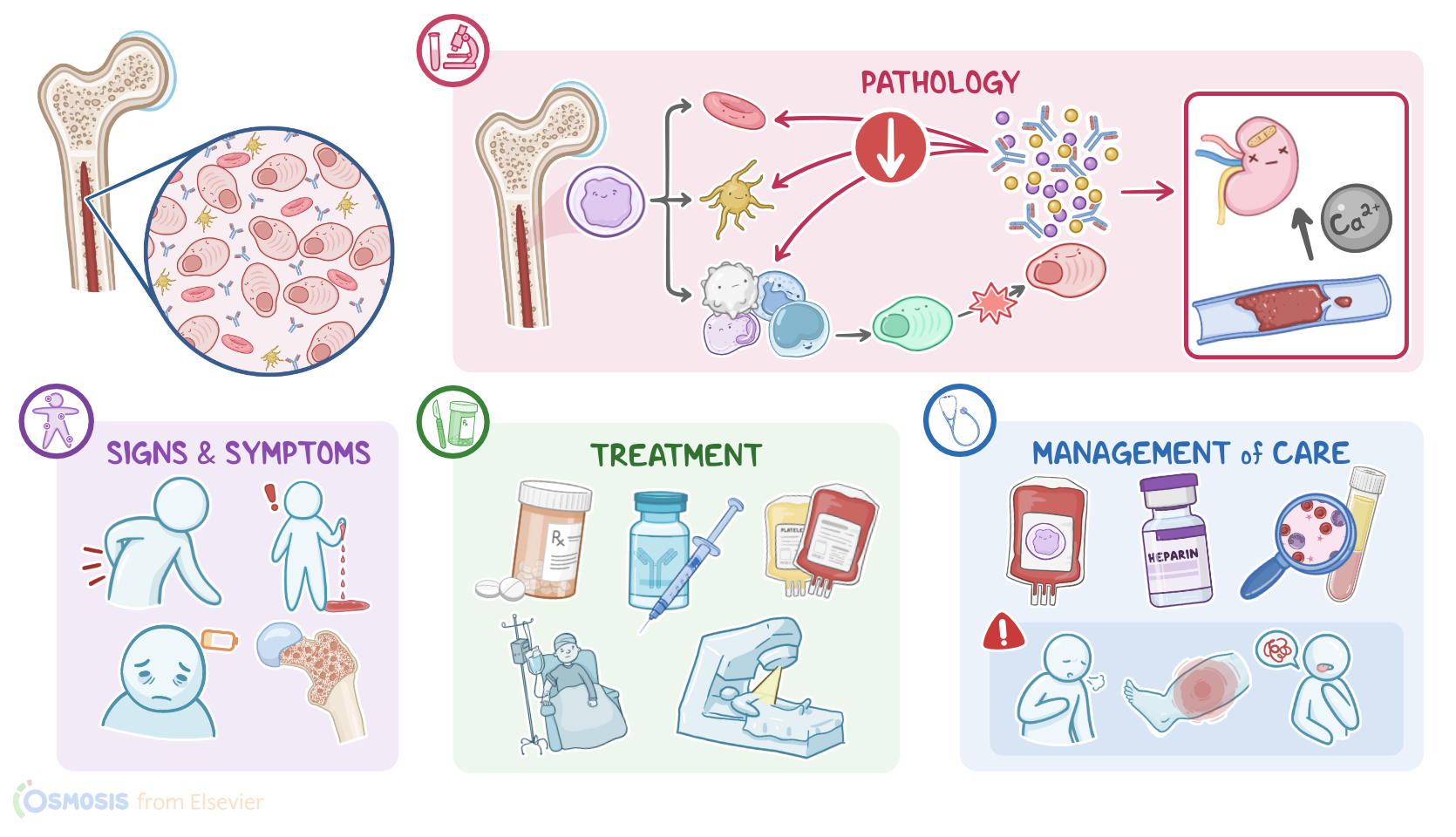
Okay, now let’s look at the pathology of multiple myeloma, which starts with excess production of abnormal plasma cells in the bone marrow.
These abnormal plasma cells produce monoclonal antibodies, called M proteins, which are ineffective at fighting off infections.
Some of the M proteins accumulate in the bone marrow. and lowers the production of normal red, white cells and platelets, resulting in pancytopenia.
At the same time, when abnormal plasma cells proliferate, it reduces the number of normal plasma cells, which affects the body’s natural immune response even more, so there’s an increased risk of infections.
Some monoclonal antibodies are released into the blood where they can cause end organ damage. Bence-Jones protein, which is the light chain portion of the M protein, can accumulate in the kidneys and cause renal damage.
On the other hand, excess plasma cell production also leads to increased production of proinflammatory cytokines, like interleukins, that play a role in bone destruction.
Clinical manifestations3:18–4:46
Bone destruction leads to hypercalcemia and pathological bone fractures. Abnormal plasma cells can also make their way into the circulation, where they can cause hyperviscosity syndrome, meaning unusually thick blood, which poses a high risk of thrombosis.
Now, let’s switch gears and look at the clinical manifestations of multiple myeloma. Remember that this condition develops slowly, so in early stages, there’s often no symptoms; therefore this phase is sometimes also called “smoldering” multiple myeloma.
Active multiple myeloma is when symptoms develop, with the most common symptom being skeletal pain, which usually affects the lumbar spine, but can also affect the pelvis or ribs.
Clients can also develop osteopenia and fractures, as well as signs and symptoms of hypercalcemia, including anorexia, confusion, constipation, polyuria, or cardiac arrhythmias.
Sometimes, there can be signs of spinal cord compression like back pain, decreased height, weakness, numbness or dysesthesias in the extremities.
As a consequence of pancytopenia, the client can present with fatigue, malaise, frequent infections or bleeding. Hyperviscosity syndrome is classically associated with a triad of findings that include spontaneous bleeding, commonly from the nose and gums, visual disturbances such as blurry vision or vision loss, and neurological findings like headache, confusion and peripheral neuropathy.
Diagnosis4:46–5:56
Sometimes, signs and symptoms of heart failure can also occur. The diagnosis of multiple myeloma starts with the client’s history and physical assessment.
Lab tests include a complete blood count which shows pancytopenia. Biochemistry tests show hypercalcemia and a high level of M proteins.
When the kidneys are also affected, there’s a high creatinine level and the urine sample shows the presence of light chain M proteins.
Treatment5:56–6:15
Normally, the serum kappa/lambda ratio is between 0.26 and 1.65. With multiple myeloma, this ratio is usually abnormal, so either lower or higher than normal.
Additionally, when the ratio is over 100, that signifies a risk of end-organ disease associated with multiple myeloma. Other tests include a bone marrow biopsy, which shows excessive monoclonal plasma cells.
Treatment6:15–6:58
Imaging studies such as a whole-body CT, MRI or PET scan, can identify osteolytic bone lesions, fractures or bone marrow infiltrations.
Finally, the diagnosis of active multiple myeloma is based on the CRAB criteria, where C stands for hypercalcemia, R stands for renal failure, A stands for anemia, and B for the presence of bone lesions.
Management and care6:58–10:50
Treatment of multiple myeloma involves prophylaxis of bone fractures with bisphosphonates, which can also help with bone pain.
Supportive management includes treating anemia or pancytopenia using blood and platelet transfusions or erythropoietin-stimulating factors.
However, the ultimate goal of management is to slow down the disease progression. This can be done using corticosteroids, chemotherapy, radiotherapy, or immunotherapy.
Finally, hematopoietic stem cell transplantation can be done, and surgery can be necessary for complications like fractures or bone compression.
Alright, let's discuss the management of care for a client with multiple myeloma. Your goals of care include providing supportive care for disease-related symptoms and managing pain.Now, as you provide care, keep in mind that your client is at a higher risk of developing fractures, so begin by instituting fall precautions, and provide skeletal support when you are assisting them with position changes or ambulating.
Next, perform a pain assessment to determine the location, quality, severity and timing of the pain as well as any factor that provokes or relieves their pain.
Administer the prescribed analgesic as well as a bisphosphonate to help slow bone damage in addition to reducing bone pain.
Report to the health care provider if your client has symptoms of a vertebral compression fracture which includes back pain, paresthesia, or altered reflexes; along with signs of lumbar vertebral involvement, including weakness in the legs and bowel or bladder incontinence.
Then, assist your client to a stable position and prepare them for further evaluation and possible therapeutic radiotherapy or vertebroplasty, as indicated.Next, review your client’s serum calcium level, and report if your client’s serum calcium is elevated or if your assessments reveal confusion, lethargy, anorexia, nausea, or muscle weakness, and administer the prescribed IV isotonic saline and corticosteroids.
Be sure to also monitor their fluid balance and renal function tests; and report indications of renal tubular damage, including increased serum creatinine, elevated urinary albumin, decreased GFR, reduced creatinine clearance, as well as changes in their urinary output.
Adjust the IV flow rate and administer diuretics as prescribed ; continue to monitor their renal function closely, and implement the ordered dosage adjustments to their primary treatment regimen.
Also monitor for infection by assessing your client’s temperature and CBC, and assessing common sites of infection, including their respiratory system and urinary tract.
General client and family teaching10:50–13:45
Notify the health care provider if your assessments include a decreasing neutrophil count, fever, dysuria, sputum production, or chest tightness.
Collect cultures of blood and urine and administer the prescribed antibiotics. Then, review your client’s hemoglobin and hematocrit, and assess your client for signs of anemia.
Report to the healthcare provider if your client is experiencing symptoms like tachycardia, shortness of breath, and reduced hemoglobin levels.
Administer the prescribed erythropoiesis-stimulating therapy; or If a blood transfusion is required, administer leukocyte-reduced packed RBCs.For therapeutic anticoagulation, administer the prescribed low molecular weight heparin, and immediately report any signs of deep vein thrombosis or pulmonary embolism.
Finally, if your client will be undergoing an autologous stem cell transplant, begin induction therapy with the prescribed chemotherapeutic regimen, which will then be followed by blood stem cell collection after 3 to 4 months.
During therapy, monitor your client for chemotherapy-related toxicities, including dermatologic, gastrointestinal, and cardiac toxicities, as well as peripheral neuropathy, fatigue and venous thromboembolism, and intervene per protocol.
Okay, let’s move on to client and family teaching. Begin by explaining how multiple myeloma is a type of cancer that affects the cells in the bone marrow that produce antibodies.
Then review the plan of care as well their prescribed medications, instructing them to take each medication exactly as directed.
Lastly, remind them to keep all of their appointments for chemotherapy, radiation, and follow-up visits with their healthcare provider, and encourage them to join a local multiple myeloma support group.Next, teach them about how they can care for themselves at home to manage symptoms of multiple myeloma.
Let them know that any bone pain they experience can be addressed with the analgesics and bisphosphonates, as well as the chemotherapy aimed at slowing the growth of the malignant cells.
Review13:45–15:26
Encourage them to stay as active in their daily activities as possible, to engage in activities like short walks, but to avoid vigorous activity or activities that cause pain; and to avoid lifting anything heavier than 10 pounds or 4.5 kg.
Instruct them to contact their healthcare provider right away if they experience an increase in bone pain, especially if they have sudden severe back pain.Also teach them how the disease and its treatments can damage their kidneys, and teach them that they should always drink enough fluids to keep their urine a pale yellow color; and stress the importance of avoiding NSAIDs or any other medication without first checking with their healthcare provider.
Also remind them they should not have IV contrast dye for any imaging test. Instruct them to contact their healthcare provider right away if they have problems like a decrease in the amount of
| MULTIPLE MYELOMA | ||
| KEY POINTS | NOTES | |
| DEFINITION |
| |
| PHYSIOLOGY |
| |
| CAUSES AND RISK FACTORS |
| |
| PATHOLOGY |
| |
| CLINICAL MANIFESTATIONS |
| |
| DIAGNOSIS |
| |
| TREATMENT |
| |
| MANAGEMENT OF CARE |
| |
| PATIENT AND FAMILY TEACHING |
| |
No notes for this video yet
Try adding a note below