Perinatal depression: Nursing
Introduction0:00–0:19
Perinatal depression, also known as major depressive disorder with peripartum onset, and previously known as postpartum depression, is a type of depressive disorder that most often occurs during pregnancy or during the four weeks following delivery.Now, let’s quickly review the physiology of some hormonal fluctuations that take place in the perinatal period.
Physiology0:19–1:04
During pregnancy, the placenta releases a couple of hormones, including human placental lactogen, estrogen, and progesterone; while the pituitary gland releases prolactin, among others.
All these hormones travel through the bloodstream to their specific areas of action to regulate specific body functions.
During labor, the pituitary gland secretes another hormone called oxytocin, which stimulates uterine muscle contractions to facilitate delivery.
Once the baby’s delivered, these hormones start rapidly decreasing. Now, the exact cause of perinatal depression isn’t understood, but it’s likely related to changes in hormone levels, as well as an imbalance of GABA, serotonin, dopamine, and glutamate.
Causes & risk factors1:04–2:07
All of these are neurotransmitters that help regulate mood, reward-motivated behavior, appetite, and sleep. These changes come along with the emotional and physical stress that can accompany the birth of a child.
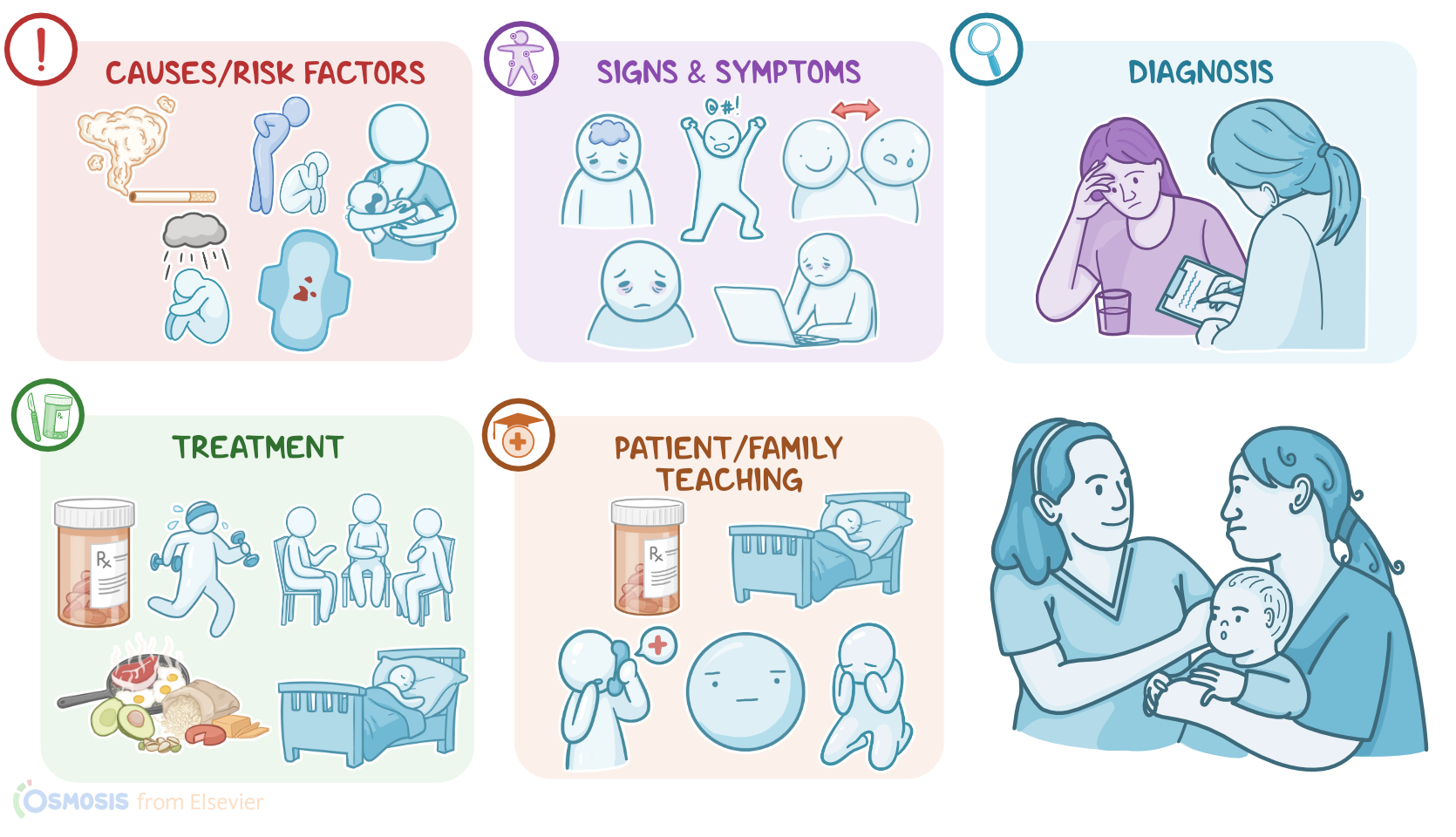
Now, the main risk factors for perinatal depression seem to include having a family or personal history of trauma, such as sexual abuse, as well as a history of depression, premenstrual syndrome, or premenstrual dysphoric disorder.
Clients who are younger than 25; single; or who have an unwanted pregnancy; as well as those who struggle with stressful life events before or after delivery; have inadequate social or financial support; those who smoke; or have difficulty breastfeeding, also seem to be at an increased risk.So, pathology-wise, the exact mechanism that leads to perinatal depression is not clear.
Pathology2:07–2:46
It is thought that clients who develop perinatal depression have an increased sensitivity to the normal hormonal fluctuations that occur during the perinatal period.
This, alongside the psychological changes of having a baby, such as anxiety, fatigue, and sleep deprivation, can all play a role in the pathology of perinatal depression.
Finally, in some clients, perinatal depression can resolve spontaneously or with treatment; while less frequently, it could progress to chronic depressive disorder.Clinical manifestations of perinatal depression typically include feelings of extreme sadness, hopelessness or irritability, associated with anhedonia, which means a diminished interest in everyday activities that used to be really pleasurable.
Clinical manifestations2:46–4:28
Clients might also present either with an increase or decrease in appetite, which can lead to weight gain or loss. Other symptoms include sleeping too much or too little; lack of energy and feeling extremely tired; difficulty concentrating; psychomotor retardation, or slowing down of a person’s thoughts and a reduction in physical movement; emotional lability, feelings of worthlessness; excessive guilt; and finally recurrent thoughts of death or suicide.
With perinatal depression, symptoms last for at least two weeks, significantly impair daily functioning, and may negatively affect both the birthing parent, the baby, and attachment and bonding.
Perinatal depression should be differentiated from postpartum blues, which is way more common, and may cause milder feelings of depressed mood, mood swings, irritability, crying outbursts, and lethargy or fatigue; which typically resolve within two weeks after delivery.
These symptoms are in contrast to brief psychotic disorder with peripartum onset, which is another mood disorder that can occur in the perinatal period, albeit less frequently.
Symptoms include illusions, hallucinations, as well as suicidal ideation, or thoughts of harming their baby. Now, the diagnosis of perinatal depression primarily involves the client’s history and physical assessment.
Diagnosis4:28–5:33
Screening for this condition should be done in all individuals in the perinatal period, and this can be done through the PHQ-9 depression questionnaire, or the Edinburgh Postnatal Depression Scale.
Next, for diagnosis clients must meet certain criteria that are outlined in the diagnostic and statistical manual for mental disorders, the fifth edition, or DSM-5 for short, where perinatal depression is classified as a type of major depressive disorder.
It’s also important to distinguish between perinatal depression and some of the usual complaints during the perinatal period, such as exhaustion, low libido, and changes in sleeping patterns and eating habits.
Laboratory tests can be also performed, in certain cases, to rule out organic causes of depression. For example, serum TSH levels and anti-thyroid peroxidase antibodies can be determined to rule out postpartum thyroiditis.
Treatment5:33–6:18
Now, treatment of perinatal depression can be very challenging. Milder cases can be managed with psychotherapy, including cognitive behavioral therapy, as well as healthy lifestyle changes, like increasing the level of physical activity, as well as practicing meditation, yoga, deep-breathing exercises, and acupuncture.
In this case, medication is usually not necessary. For more severe cases, medications like serotonin reuptake inhibitors or SSRIs, such as fluoxetine and sertraline and norepinephrine reuptake inhibitors, or SNRIs, like venlafaxine can be used.Alright, let’s look at the nursing care you’ll be providing for a client after delivery.
Management and care6:18–7:43
Priority nursing goals are to promote caregiver-baby attachment and encourage infant and self-care.First, establish a positive and nurturing care environment for your client and baby.
While providing care, assess your client's psychosocial status, noting the degree of fatigue, mood, emotional lability, and interest in caring for their baby.
Assess their interactions with their baby. Observe if they look at their baby, maintain eye contact, if they touch and talk to the baby, and if they appropriately interpret their baby’s cues.
Also be sure to model appropriate infant care, and reinforce positive caregiving behaviors. Encourage them to engage with their partner, family members, and friends for emotional and physical support.
Finally, determine if your client has any significant risk factors for perinatal depression, and whether they have adequate sources of support.
Report to the healthcare provider right away if you notice the client has decreased involvement with the baby, if they are emotionally withdrawn, if they seem unable to meet the baby’s needs, if they are isolated and are without adequate support, or if you notice any other indications that your client needs additional support and intervention.Alright, now let’s talk about client and family education.
General client and family teaching7:43–9:09
Begin by providing individualized teaching on baby and self-care, as well as how to self-administer any prescribed medications.
Talk about typical postpartum recovery, newborn sleep-wake cycles, and encourage your client to lessen fatigue by resting whenever their baby sleeps.
Remind them to stay well hydrated and eat a healthy diet to help their body recover from childbirth. Lastly, assist them with breastfeeding if desired, and be sure they have a lactation consult referral to help build their confidence in breastfeeding.
Then, be sure to validate the significant change in life that comes with having a new baby, and let them know that ambivalence, as well as having emotional ups and downs are normal at this time.
Reassure them that these feelings usually resolve within a couple of weeks, and let them know that talking to family and friends about how they are feeling, and joining local support groups can be helpful.
Then, explain that feeling emotionless, sad, irritable, or anxious for more than two weeks is not normal, and if they continue to experience feelings like this or feel unable to care for themselves and their baby, instruct them to contact their healthcare provider right away.
Review9:09–10:29
Also stress the importance of seeking emergency medical treatment if they have feelings of hurting themselves, their baby, or others.Alright, as a quick recap, perinatal depression is a condition characterized by depression that occurs during pregnancy or in the weeks after childbirth.
While the exact cause of perinatal depression is unknown, it is thought to be multifactorial, and one possible factor could be increased sensitivity to changing hormone and neurotransmitter levels after childbirth.
Symptoms of perinatal depression include anxiety, sadness, fatigue, and irritability that causes functional impairment along with a decrease in mother-child attachment and bonding.
This differs from the baby blues, which is less severe and subsides within 2 weeks of giving birth. Perinatal depression is diagnosed through a history and physical assessment, as well as depression screening tools.
Treatment can include psychotherapy, promoting exercise, a healthy diet, and sleep, as well as antidepressants like
| PERINATAL DEPRESSION | ||
| KEY POINTS | NOTES | |
| DEFINITION |
| |
| PHYSIOLOGY |
| |
| CAUSES AND RISK FACTORS |
| |
| PATHOPHYSIOLOGY |
| |
| SIGNS AND SYMPTOMS |
| |
| DIAGNOSIS |
| |
| TREATMENT |
| |
| MANAGEMENT OF CARE |
| |
| PATIENT AND FAMILY TEACHING |
| |
No notes for this video yet
Try adding a note below