Causes of bleeding diathesis can be classified into two types: acquired causes, which can develop throughout one’s lifetime, or congenital causes, which are present at birth.
Acquired causes include vascular problems, low platelet counts, vitamin K deficiency, increased platelet destruction, kidney failure, liver disease, anticoagulant therapy, and an acquired clotting factor antibody. Vascular problems refer to issues with the blood vessels, which can lead to increased bleeding. Platelets and vitamin K play important roles in the coagulation process, and a deficiency of either can impair clotting. Because platelets are key to coagulation, disorders that result in increased destruction of platelets -- such as autoimmune thrombocytopenia (ITP), systemic lupus erythematosus, disseminated intravascular coagulation (DIC), thrombotic thrombocytopenic purpura (TTP), and hypersplenism -- are risk factors for bleeding diathesis. Similarly, chronic kidney disease may undermine platelet functioning which can subsequently hinder clotting. Regarding liver disease, the liver is responsible for crea†ting specific clotting proteins, and liver disease can decrease production of these proteins. Anticoagulant medications, such as heparin and warfarin, which are often used to reduce the risk of heart attacks or strokes, intentionally weaken the blood’s ability to clot. Finally, an acquired clotting antibody occurs when the body’s immune system attacks the clotting proteins, resulting in low levels of the specific clotting protein and reduced coagulation.
On the other hand, congenital disorders that may cause bleeding diathesis include Bernard-Soulier syndrome, Glanzmann thrombasthenia, Ehlers-Danlos syndrome, and DiGeorge syndrome. Impaired wound healing is a common occurrence in both Bernard-Soulier syndrome and Glannzman thrombasthenia. Meanwhile, Ehlers-Danlos syndrome, which affects the connective tissue and underlying vessels, typically causes the individual to have very thin skin, increasing the likelihood of blood vessel rupture and bruising. DiGeorge syndrome is a disorder that typically results in developmental delays, frequent infections, heart problems, and cleft palate, but it may also affect the individual’s ability to clot.
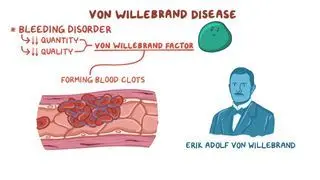
Some congenital causes of bleeding diathesis may also be inherited, or genetically passed down from parents to their children. These causes include von Willebrand Disease and hemophilia, both of which are coagulation disorders. Von Willebrand Disease is the most common inherited bleeding disorder, and it is characterized by significantly low levels of the von Willebrand factor, which is a protein that typically assists in the clotting process. Meanwhile, hemophilia is characterized by a lack of a certain clotting factor, which results in excessive bleeding.