
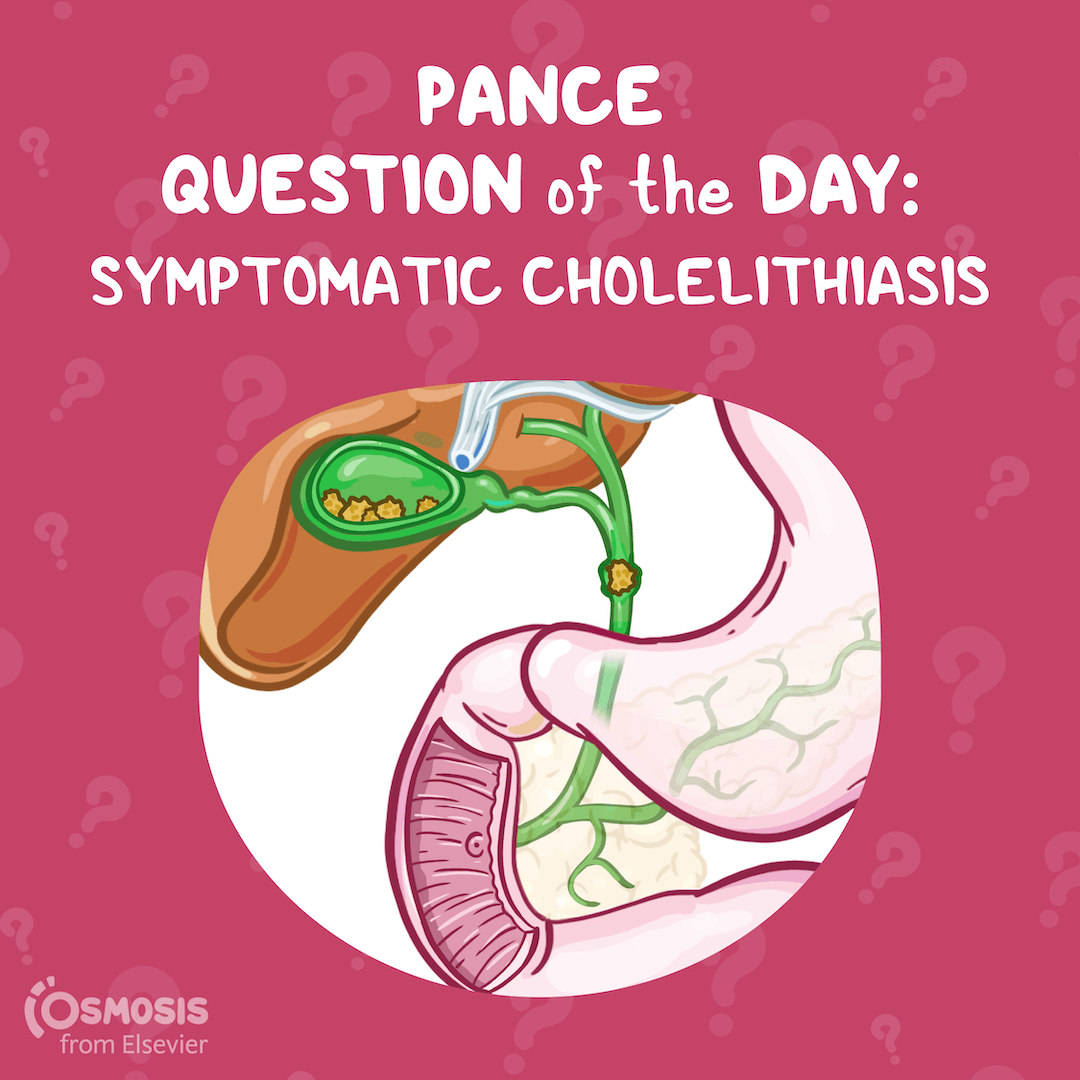
Prepare for the PANCE® with this postoperative clinical scenario involving a patient with shortness of breath and a dry cough two days after laparoscopic cholecystectomy. Can you determine the most appropriate preventive measure? Let’s find out!
A 55-year-old man with no past medical history is admitted to the hospital for treatment of symptomatic cholelithiasis. The patient undergoes an uncomplicated laparoscopic cholecystectomy. On post-op day two, the patient develops shortness of breath and a dry cough, requiring supplemental oxygen. Temperature is 38.0 ºC (100.4 ºF), pulse is 84/min, blood pressure is 126/82 mmHg, respiratory rate is 16/min, and oxygen saturation is 99% on two liters of oxygen via nasal cannula.
Lung auscultation demonstrates decreased breath sounds at the left base without wheezing, rales or rhonchi. Laboratory results are shown below. Chest radiograph shows opacification over the left lower lobe with a slightly elevated left hemidiaphragm and preserved left costophrenic angle.
Which of the following would have been the most appropriate measure to prevent his current condition?
| Serum Test | Result | Reference Range |
| White blood cell count | 8,500/mm3 | 4,500-11,000/mm3 |
| Procalcitonin | 0.08 ng/mL | <0.1 ng/mL |
| C-reactive protein | 0.2 mg/dL | <0.8 mg/dL |
A. Early ambulation and incentive spirometry
B. Flutter valve use after surgery
C. Postoperative empiric antibiotics
D. Mechanical ventilation overnight following surgery
E. Avoiding intraoperative IV fluid administration
Scroll down to find the answer!
The correct answer to today’s PANCE® Question is…
A. Early ambulation and incentive spirometry
Correct: See Main Explanation.
Incorrect Answer Explanations
B. Flutter valve use after surgery
Incorrect: A flutter valve is useful for helping patients clear mucus secretions. It is most useful in patients with significant mucus production, or patients with chronically impaired mucus clearance (e.g., COPD, cystic fibrosis, muscular dystrophy).
C. Postoperative empiric antibiotics
Incorrect: Empiric antibiotics would be appropriate if pneumonia were suspected, either aspiration or hospital-acquired. This patient has a fever, but his history of recent abdominal surgery and normal labs make pneumonia less likely than non-obstructive atelectasis.
D. Mechanical ventilation overnight following surgery
Incorrect: Patients should be extubated immediately after surgery unless they are unstable or have an incredibly high risk for post-extubation respiratory failure. This patient has no reason to remain intubated following surgery, and there is no indication to use this as a preventative measure for the development of atelectasis.
E. Avoiding intraoperative IV fluid administration
Incorrect: IV fluids are frequently given during surgery, and this patient has no history of CHF or other reason to limit IV fluid administration. This patient’s history is consistent with atelectasis, and the preserved costophrenic angle rules out any clinically significant pleural effusion, Therefore, limiting intraoperative fluid administration would not have prevented atelectasis in this patient.
Main Explanation
This patient with postoperative shortness of breath, dry cough, and hypoxemia likely developed postoperative atelectasis of the left lung. Atelectasis refers to partial or complete collapse of a portion of the lung resulting in poor aeration (ventilation) and gas exchange. It is common in hospitalized patients, especially following intra-abdominal or intra-thoracic surgery. Most patients develop atelectasis in small portions of the lung or in a specific lobe, though a complete collapse of a lung can occur (e.g., endobronchial tumor, massive hemothorax, mucus plugging). Atelectasis usually presents with dry cough and shortness of breath, and depending on severity can cause hypoxemia. In the early postoperative period, atelectasis can cause a mild (“low-grade”) fever. It is important to rule out pneumonia or other causes of postoperative fever as well.
Atelectasis can often be prevented by encouraging deep breathing. All patients undergoing intra-abdominal surgery should start using an incentive spirometer as soon as possible to encourage deep breathing. Patients should ambulate early when appropriate. Whenever possible, patients should be encouraged to sit up in bed or get out of bed and sit up in a chair to help prevent atelectasis of dependent portions of the lung. Pain should be controlled so that patients can take deep breaths (while avoiding oversedation). Flutter valves can be used to help break up mucus secretions in patients with chronically impaired mucus clearance. In patients with significant mucus production, chest physiotherapy, and nebulized hypertonic saline are frequently used. Atelectasis causing hypoxemia should be treated with oxygen, and in some cases, continuous positive airway pressure. If respiratory failure occurs secondary to atelectasis intubation and mechanical ventilation may be required.
Major Takeaway
Atelectasis commonly occurs in hospitalized patients, especially after surgery, and presents with shortness of breath, dry cough, and often hypoxemia. Incentive spirometry and early ambulation should be encouraged in all post-operative patients to prevent atelectasis, unless there are contraindications.
Want to learn more about this topic?
Review this Osmosis Answer page: Cholelithiasis
References
- Peroni DG, Boner AL. Atelectasis: mechanisms, diagnosis and management. Paediatr Respir Rev. 2000 Sep;1(3):274-8. doi: 10.1053/prrv.2000.0059. PMID: 12531090.
- Restrepo RD, Braverman J. Current challenges in the recognition, prevention and treatment of perioperative pulmonary atelectasis. Expert Rev Respir Med. 2015 Feb;9(1):97-107. doi: 10.1586/17476348.2015.996134. Epub 2014 Dec 26. PMID: 25541220.

Want more PANCE®-style practice questions? Try Osmosis by Elsevier today! Access your free trial and discover why millions of current and future clinicians and caregivers love learning by Osmosis.
Leave a Reply