
Category: Questions of the Day
-
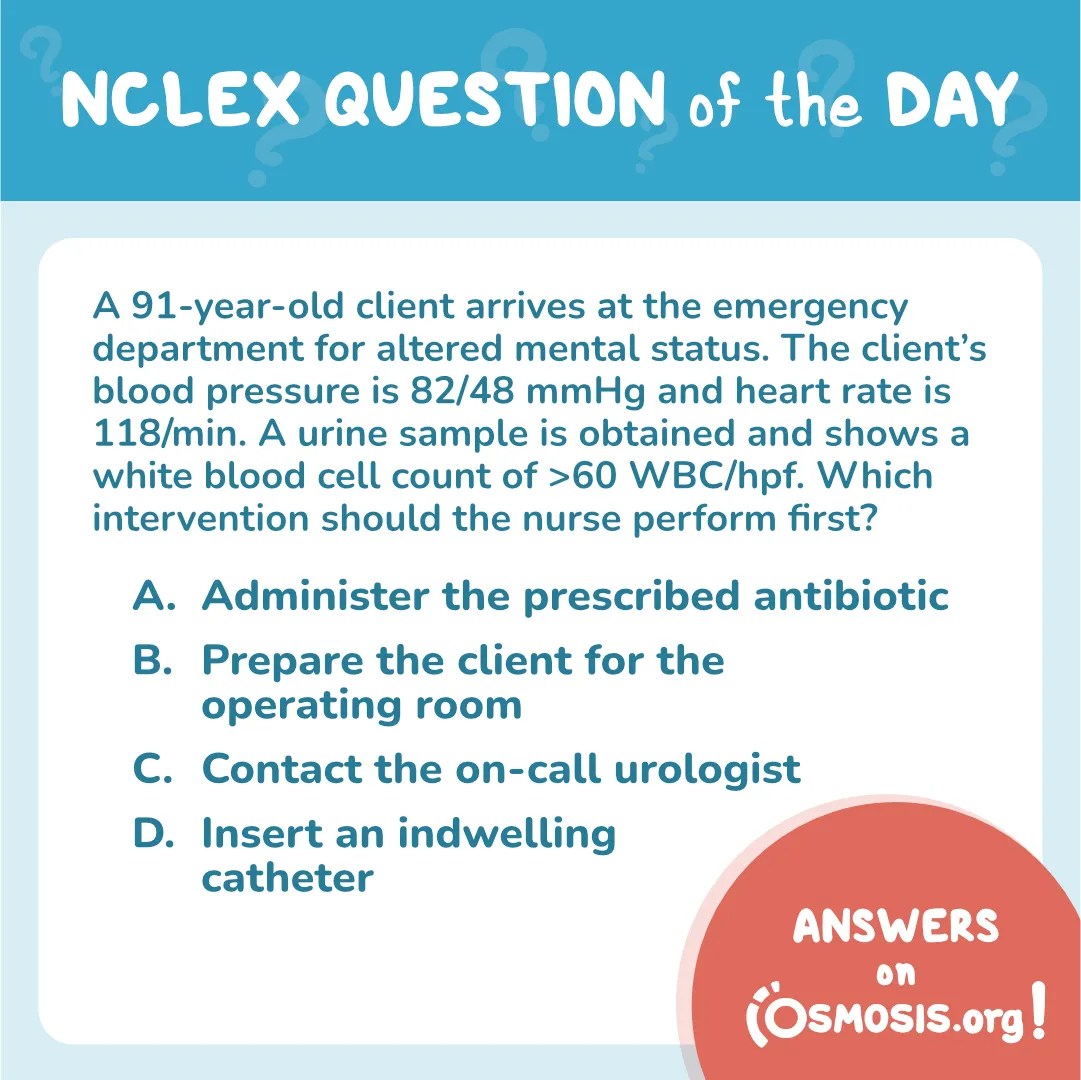
NCLEX-RN® Question of the Day: Altered mental state with high white blood count
— Updated:
An older adult presents with altered mental status, hypotension, and laboratory findings suggestive of infection. Can you identify the highest-priority nursing intervention in this NCLEX-style clinical scenario?
-
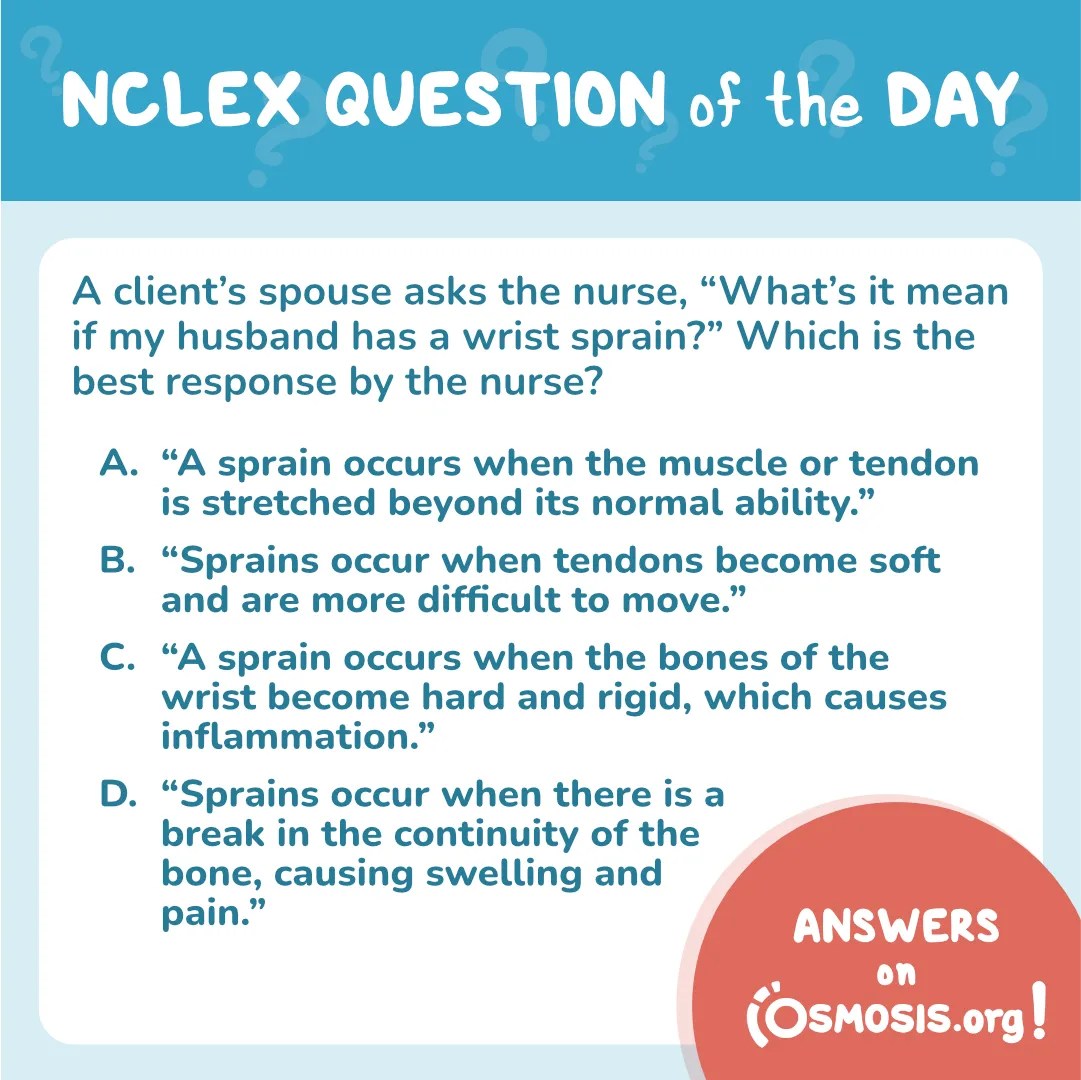
NCLEX-RN® Question of the Day: Wrist sprain
— Updated:
Today’s NCLEX-RN® question of the day focuses on a nurse’s best response about a question regarding wrist sprain. Can you figure it out? A client’s spouse asks the nurse, “What’s it mean if my husband has a wrist sprain?” Which is the best response by the nurse? A. “A sprain…
-
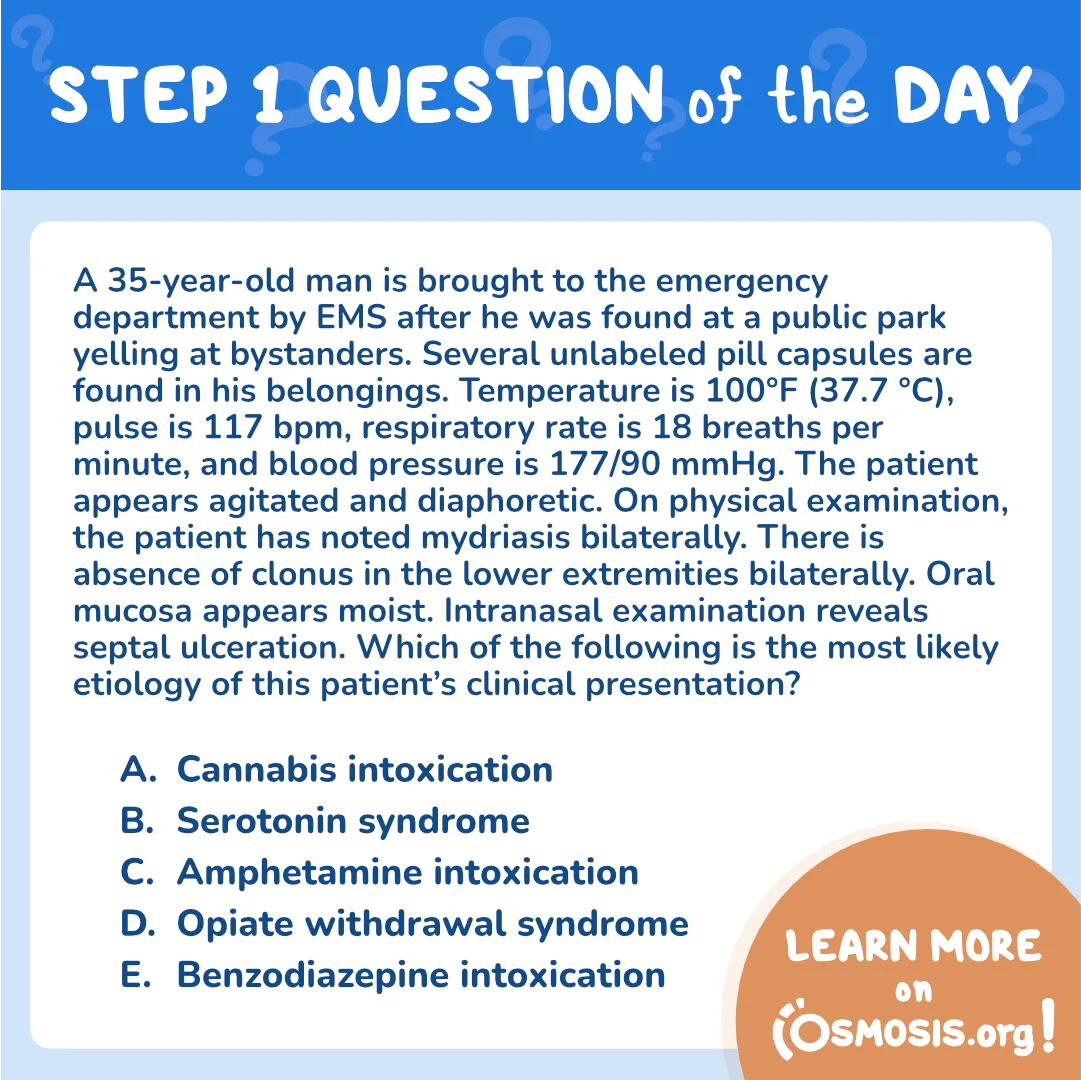
USMLE® Step 1 Question of the Day: Stimulant Intoxication and Withdrawal
— Updated:
This week, we are sharing another USMLE® Step 1-style practice question to test your knowledge of medical topics. Today’s case focuses on a 35-year-old-man who has a temperature is 100°F (37.7 °C), pulse is 117 bpm, respiratory rate is 18 breaths per minute, and blood pressure is 177/90 mmHg. The patient…
-
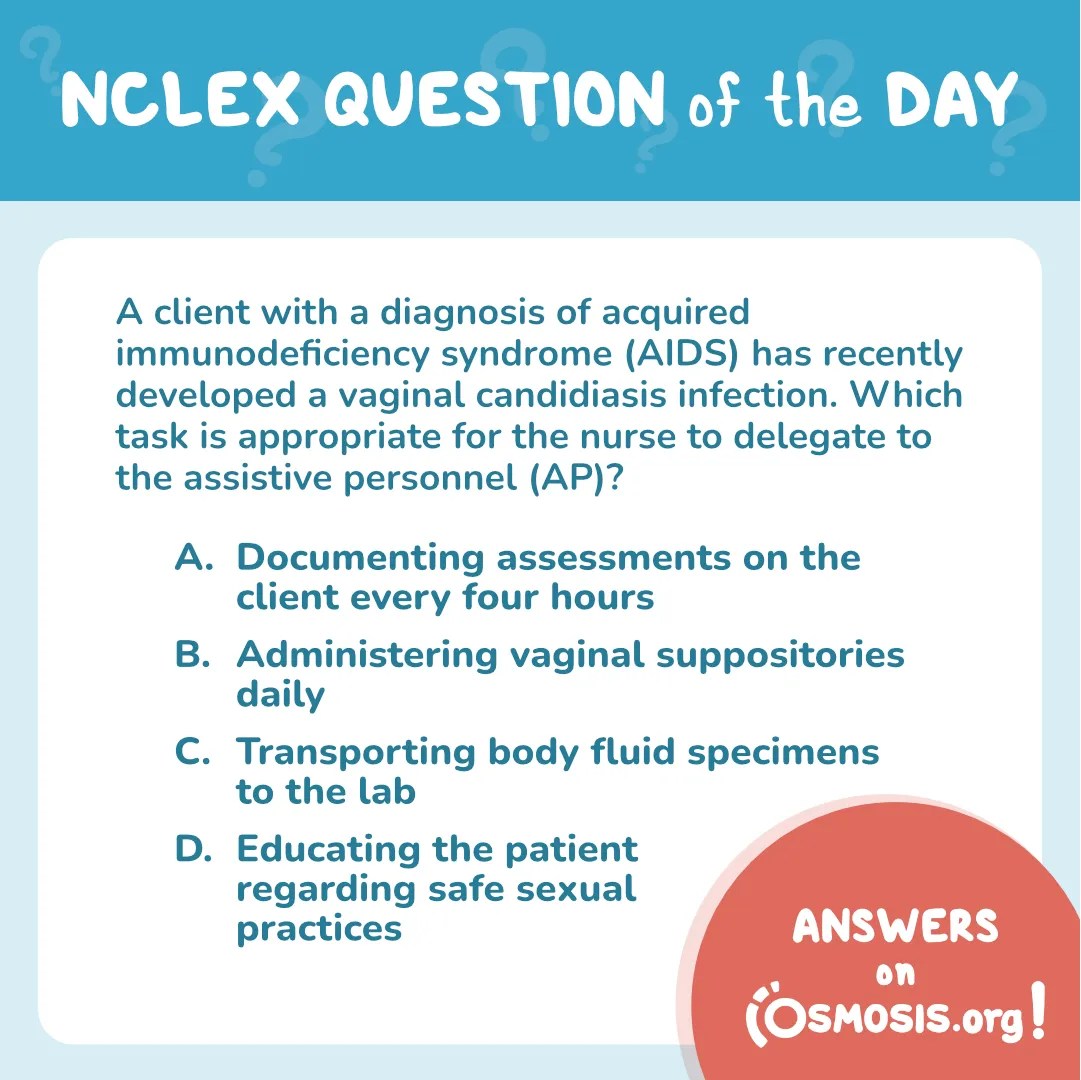
NCLEX-RN® Question of the Day: Vaginal candidiasis infection tasks for assistive personnel
— Updated:
Today’s NCLEX-RN® question of the day focuses on a nurse who is delegating a task to the assistive personnel regarding a client with vaginal candidiasis infection. Can you figure it out? A client with a diagnosis of acquired immunodeficiency syndrome (AIDS) has recently developed a vaginal candidiasis infection. Which task…
-
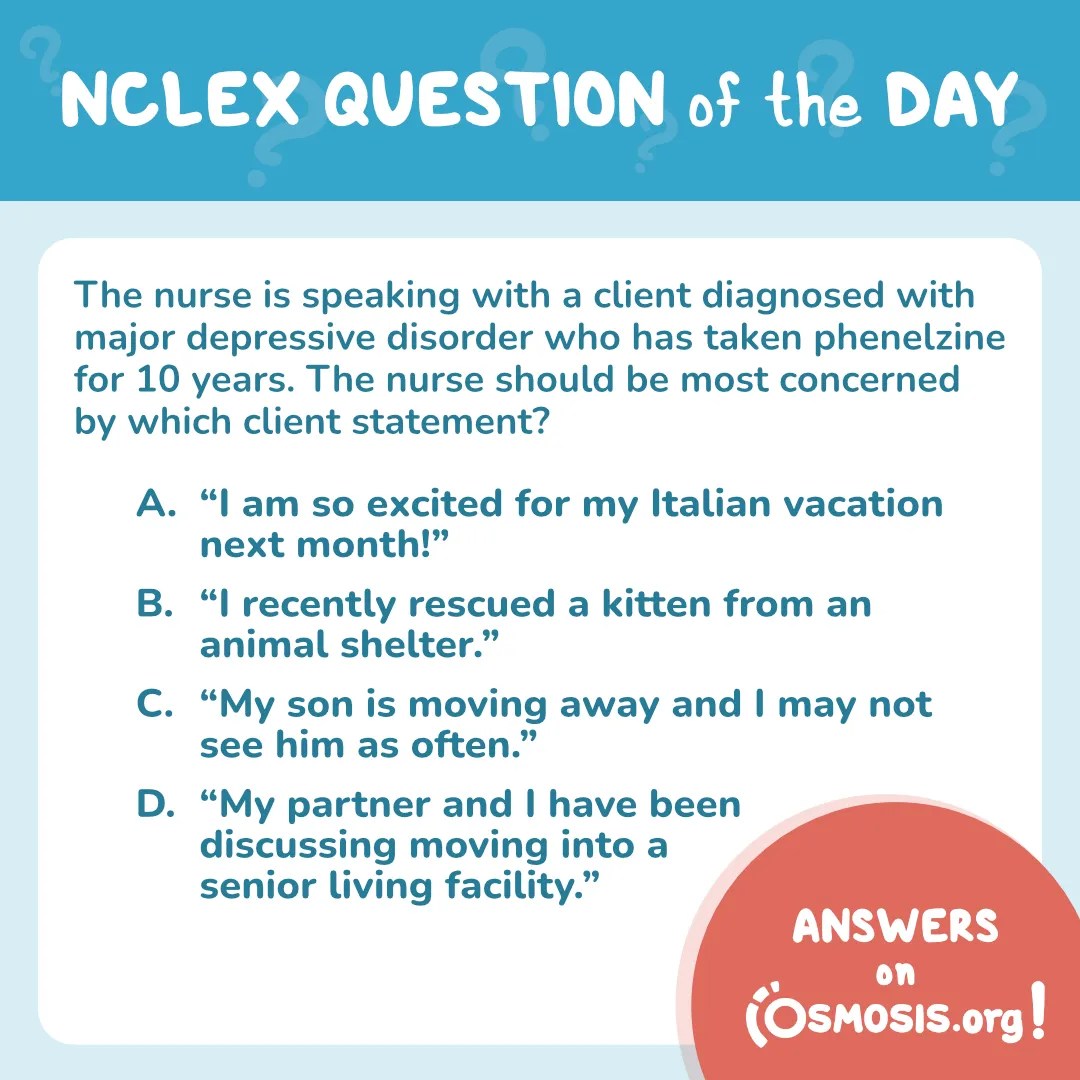
NCLEX-RN® Question of the Day: Phenelzine client teachings
— Updated:
Today’s NCLEX-RN® question of the day focuses on a nurse who is speaking with a client diagnosed with major depressive disorder who has taken phenelzine. Can you figure it out? The nurse is speaking with a client diagnosed with major depressive disorder who has taken phenelzine for 10 years. The…
-
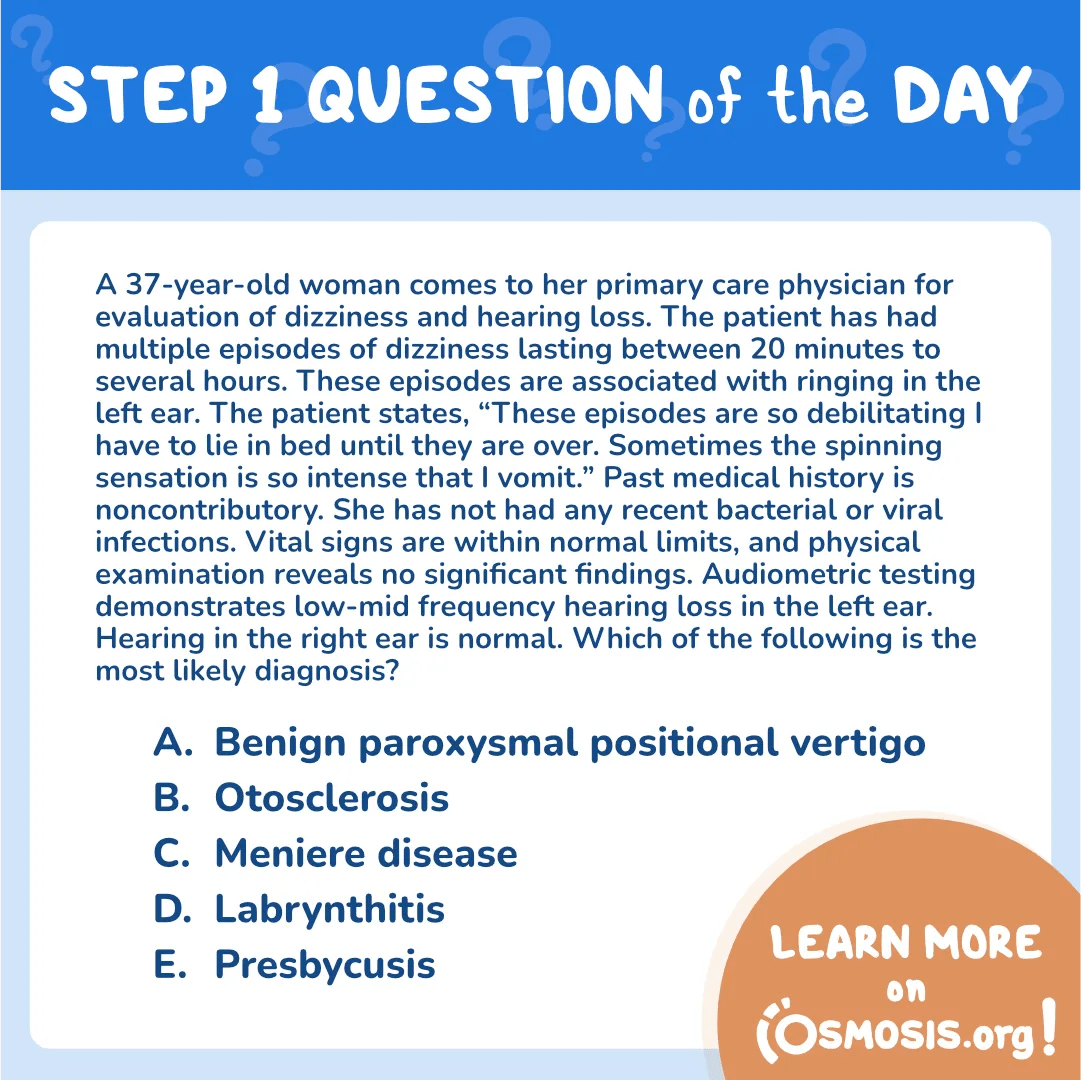
USMLE® Step 1 Question of the Day: Meniere Disease
— Updated:
This week, we are sharing another USMLE® Step 1-style practice question to test your knowledge of medical topics. Today’s case focuses on a 37-year-old woman who has had multiple episodes of dizziness lasting between 20 minutes to several hours. These episodes are associated with ringing in the left ear. Can you figure…
-
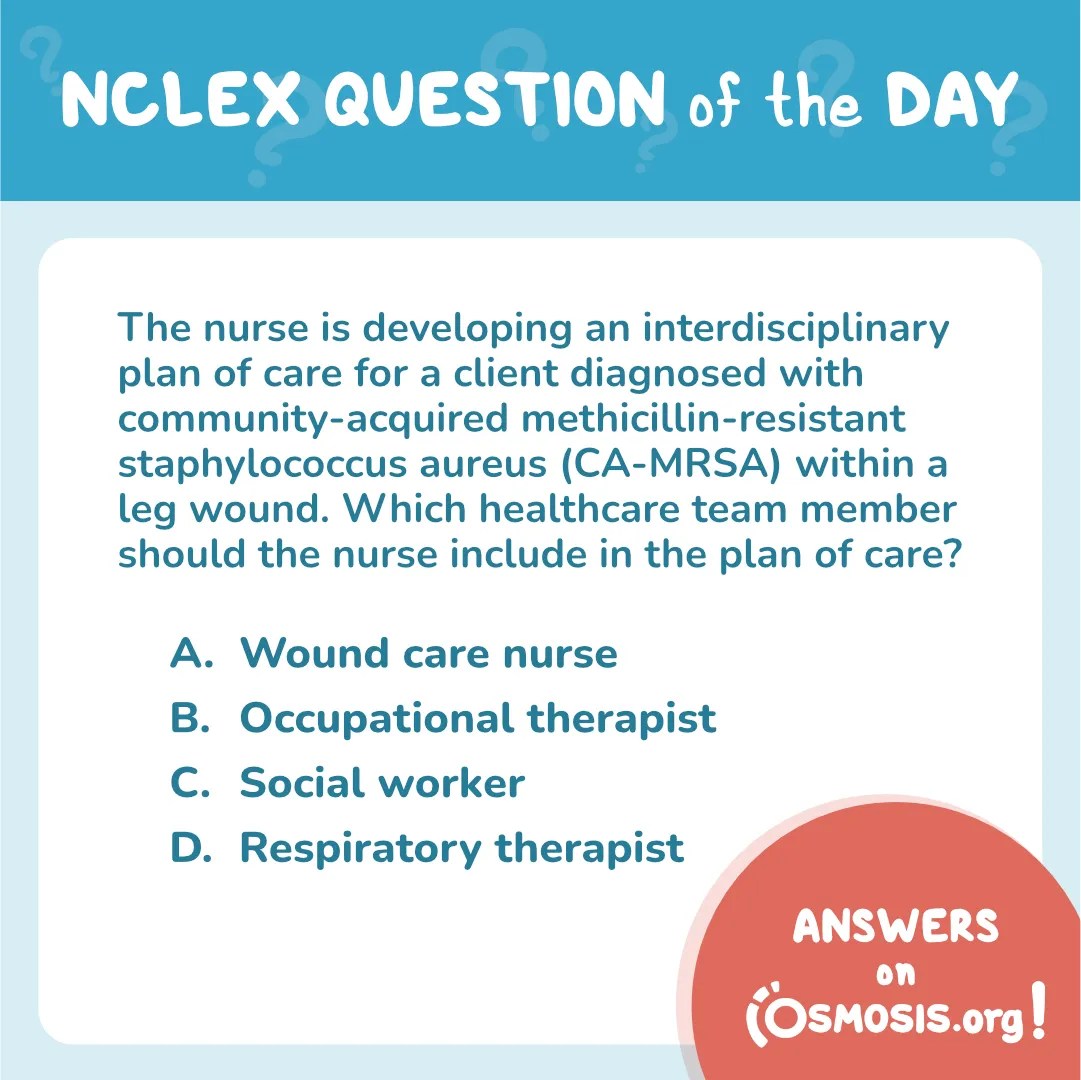
NCLEX-RN® Question of the Day: Interdisciplinary care plan
— Updated:
Today’s NCLEX-RN® question of the day focuses on a nurse who is creating an interdisciplinary plan of care for a client. Can you figure it out? The nurse is developing an interdisciplinary plan of care for a client diagnosed with community-acquired methicillin-resistant staphylococcus aureus (CA-MRSA) within a leg wound. Which healthcare…
-
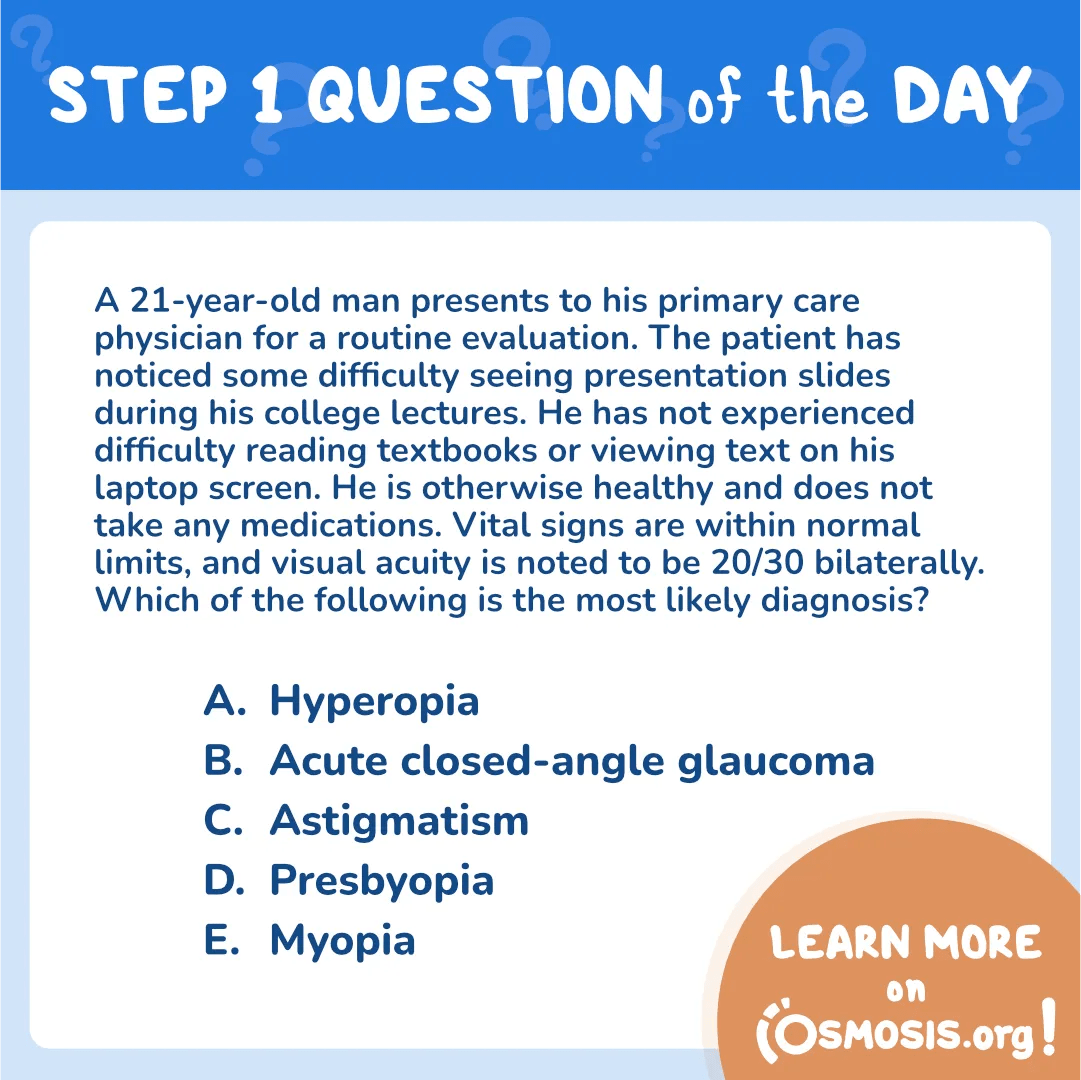
USMLE® Step 1 Question of the Day: Refractive Errors
— Updated:
This week, we are sharing another USMLE® Step 1-style practice question to test your knowledge of medical topics. Today’s case focuses on a 21-year-old man who has noticed some difficulty reading textbooks or viewing text on his laptop screen. Can you figure it out? A 21-year-old man presents to his primary care…
-
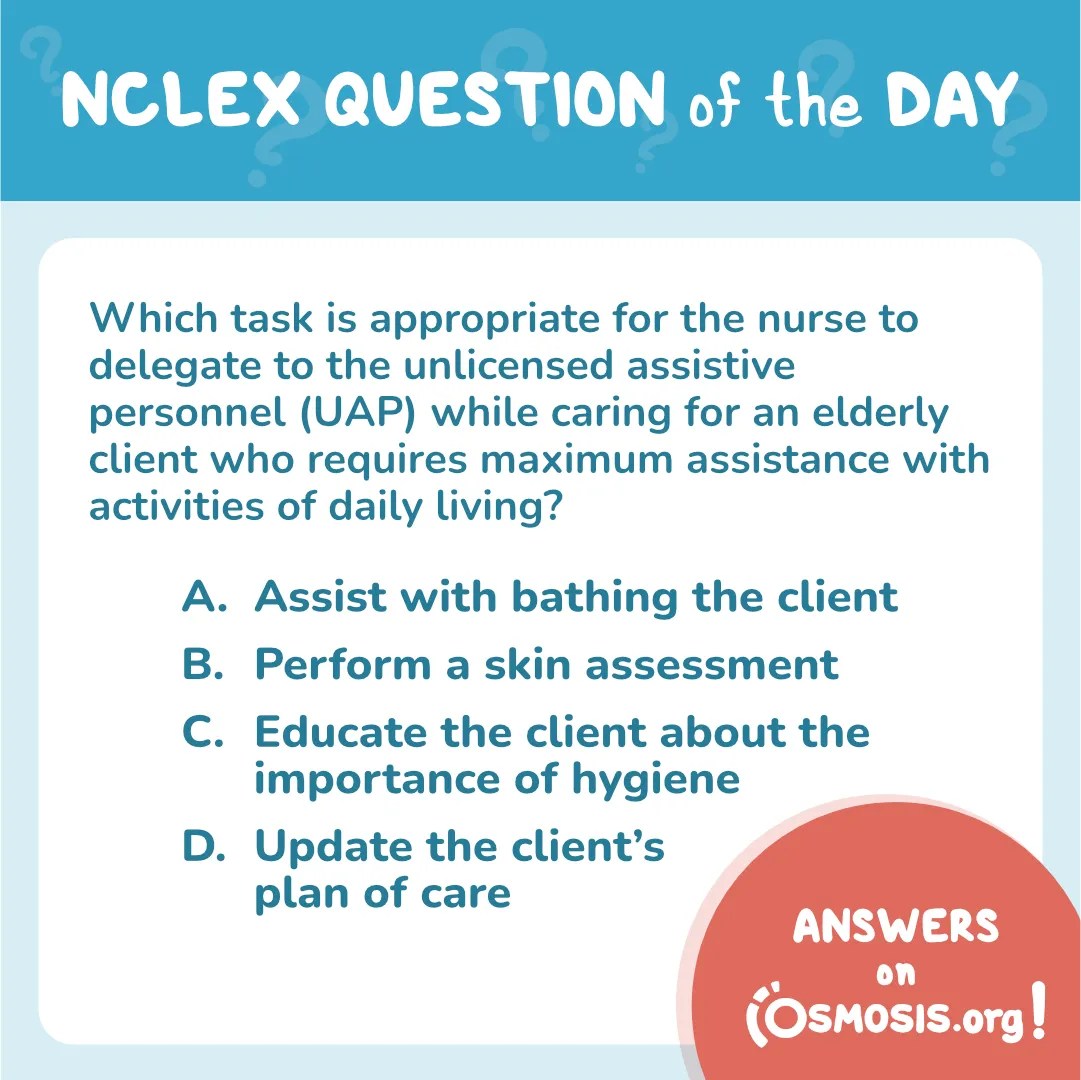
NCLEX-RN® Question of the Day: Unlicensed assistive personnel (UAP) appropriate activities
— Updated:
Today’s NCLEX-RN® question of the day focuses on delegating to unlicensed assistive personnel while caring for an elderly patient. Can you figure it out? Which task is appropriate for the nurse to delegate to the unlicensed assistive personnel (UAP) while caring for an elderly client who requires maximum assistance with activities…
-
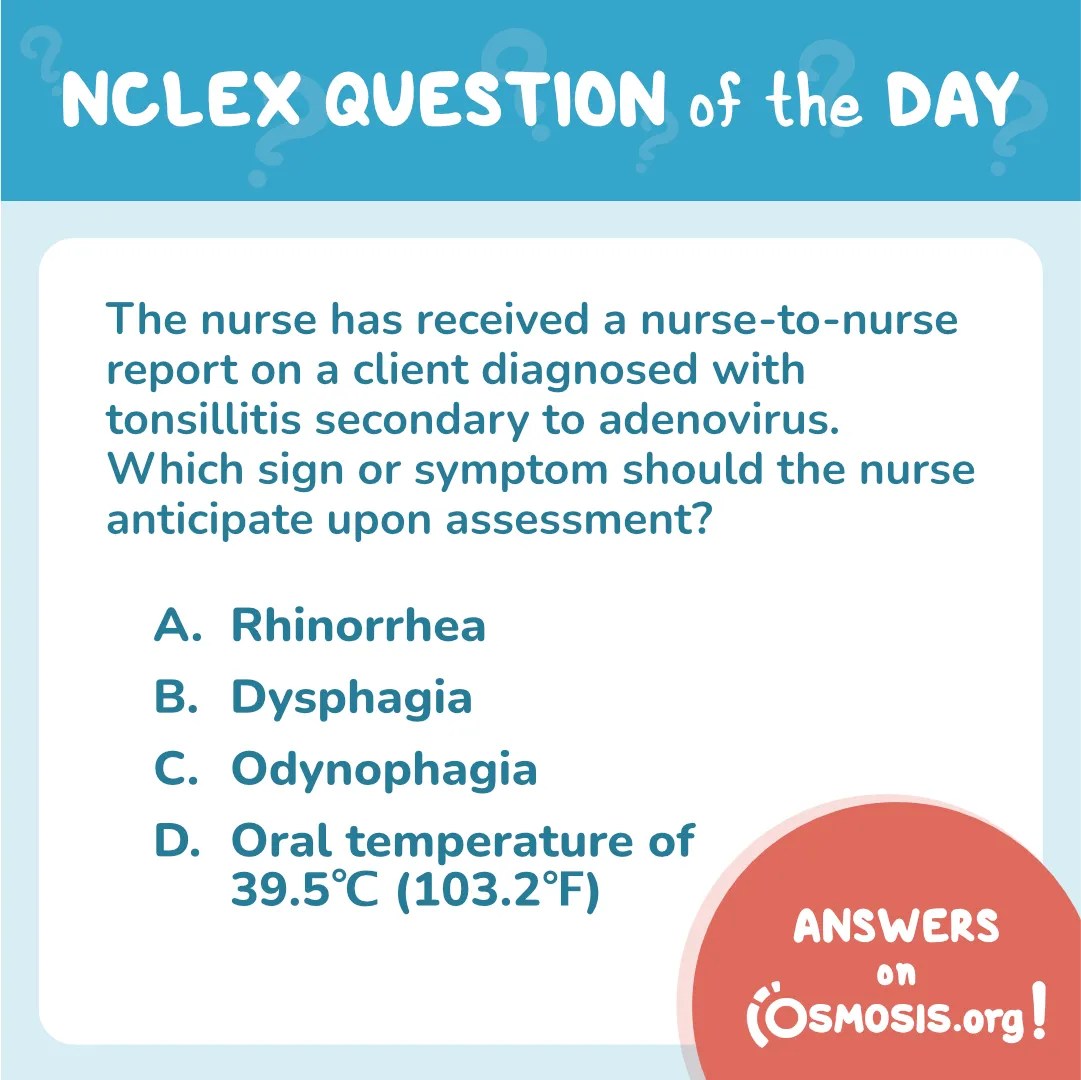
NCLEX-RN® Question of the Day: Tonsillitis secondary to adenovirus
— Updated:
Today’s NCLEX-RN® question of the day focuses on a client diagnosed with Tonsillitis Secondary to Adenovirus. Can you figure it out? The nurse has received a nurse-to-nurse report on a client diagnosed with tonsillitis secondary to adenovirus. Which sign or symptom should the nurse anticipate upon assessment? A. Rhinorrhea B.…
-
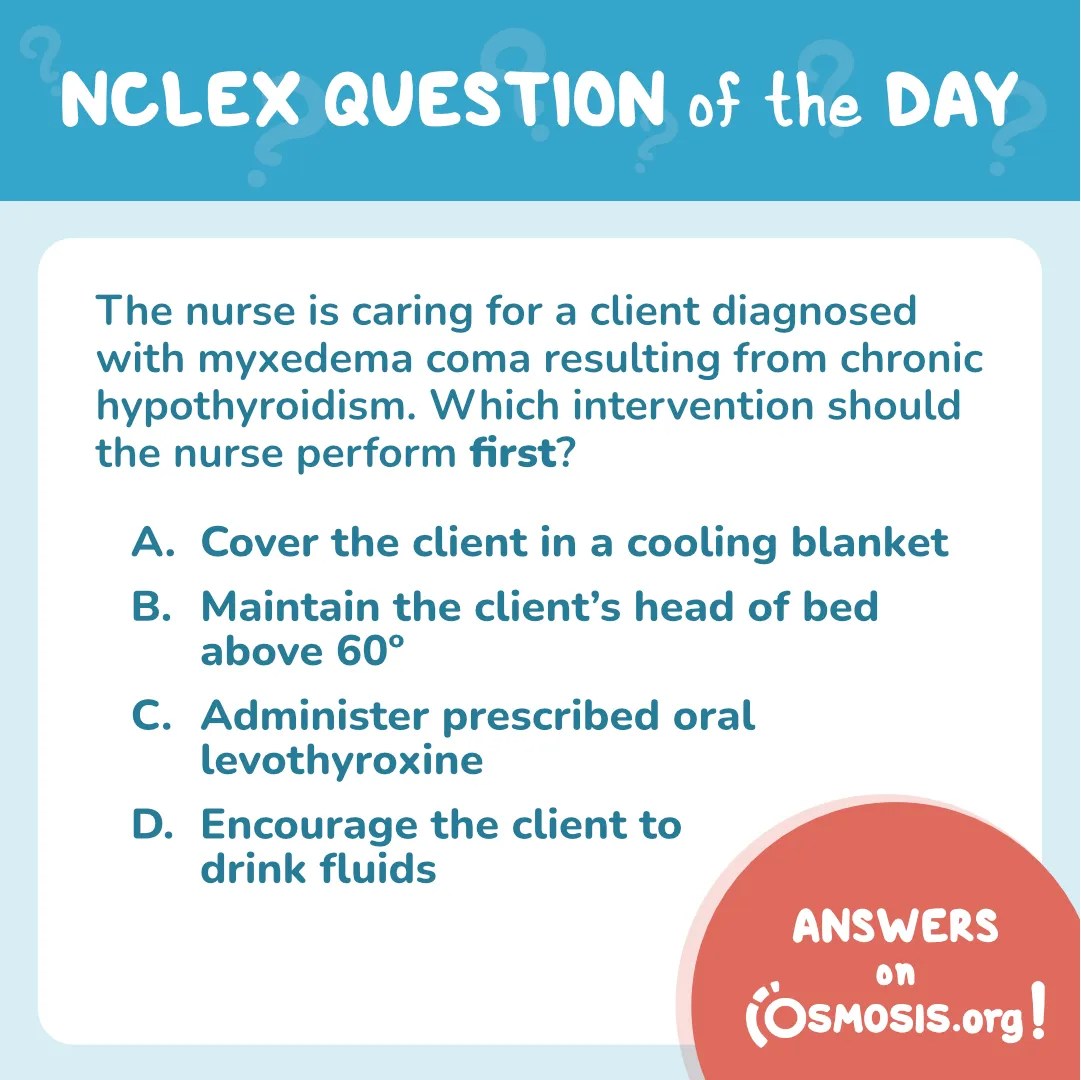
NCLEX-RN® Question of the Day: Chronic hypothyroidism
— Updated:
Which nursing intervention should be performed first for a client with myxedema coma to ensure airway safety and support breathing?
-
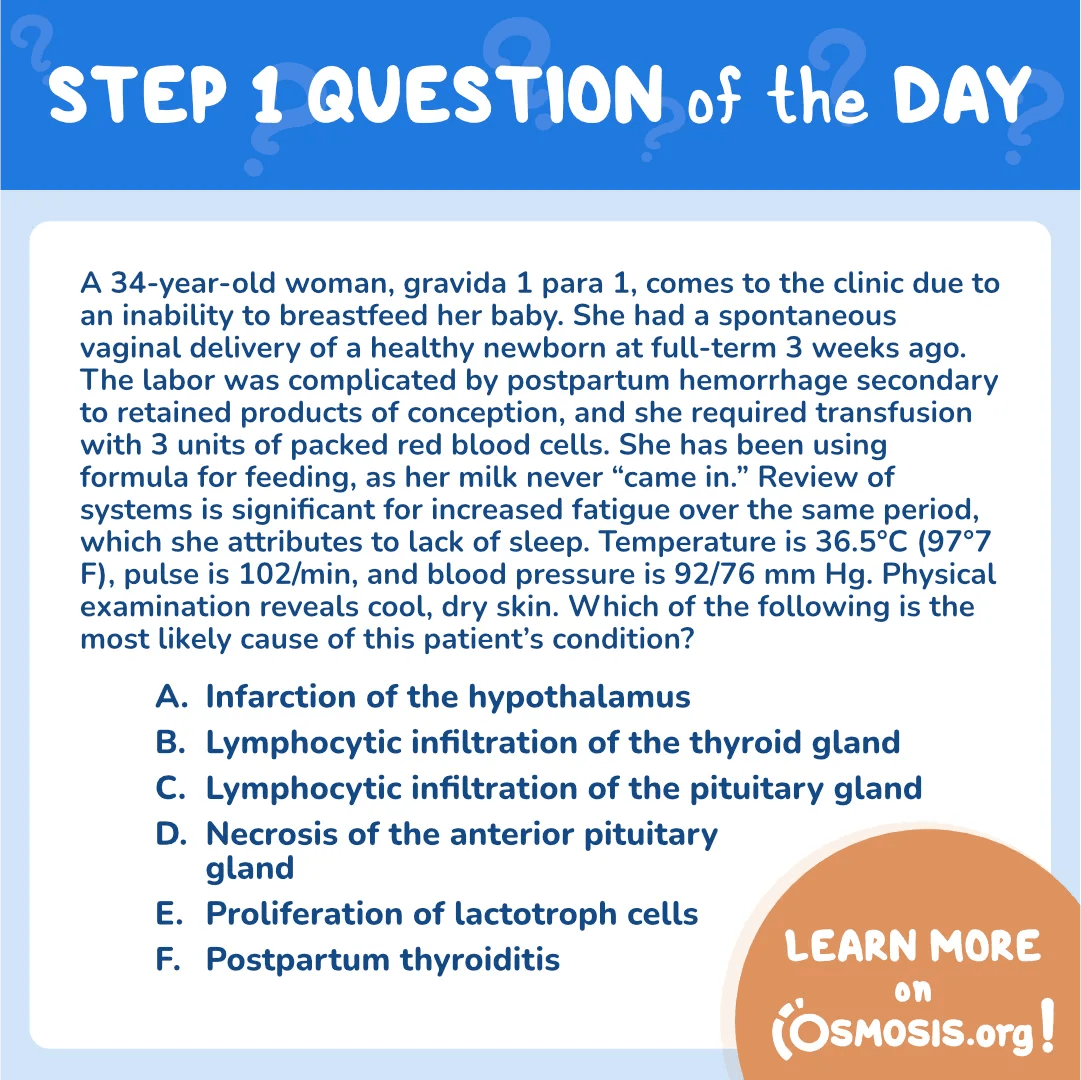
USMLE® Step 1 Question of the Day: Sheehan Syndrome
— Updated:
This week, we are sharing another USMLE® Step 1-style practice question to test your knowledge of medical topics. Today’s case involves a 34-year-old woman with an inability to breastfeed her baby. Can you figure it out? A 34-year-old woman, gravida 1 para 1, comes to the clinic due to an inability to…
-
NCLEX-RN® Question of the Day: Reye syndrome risk
— Updated:
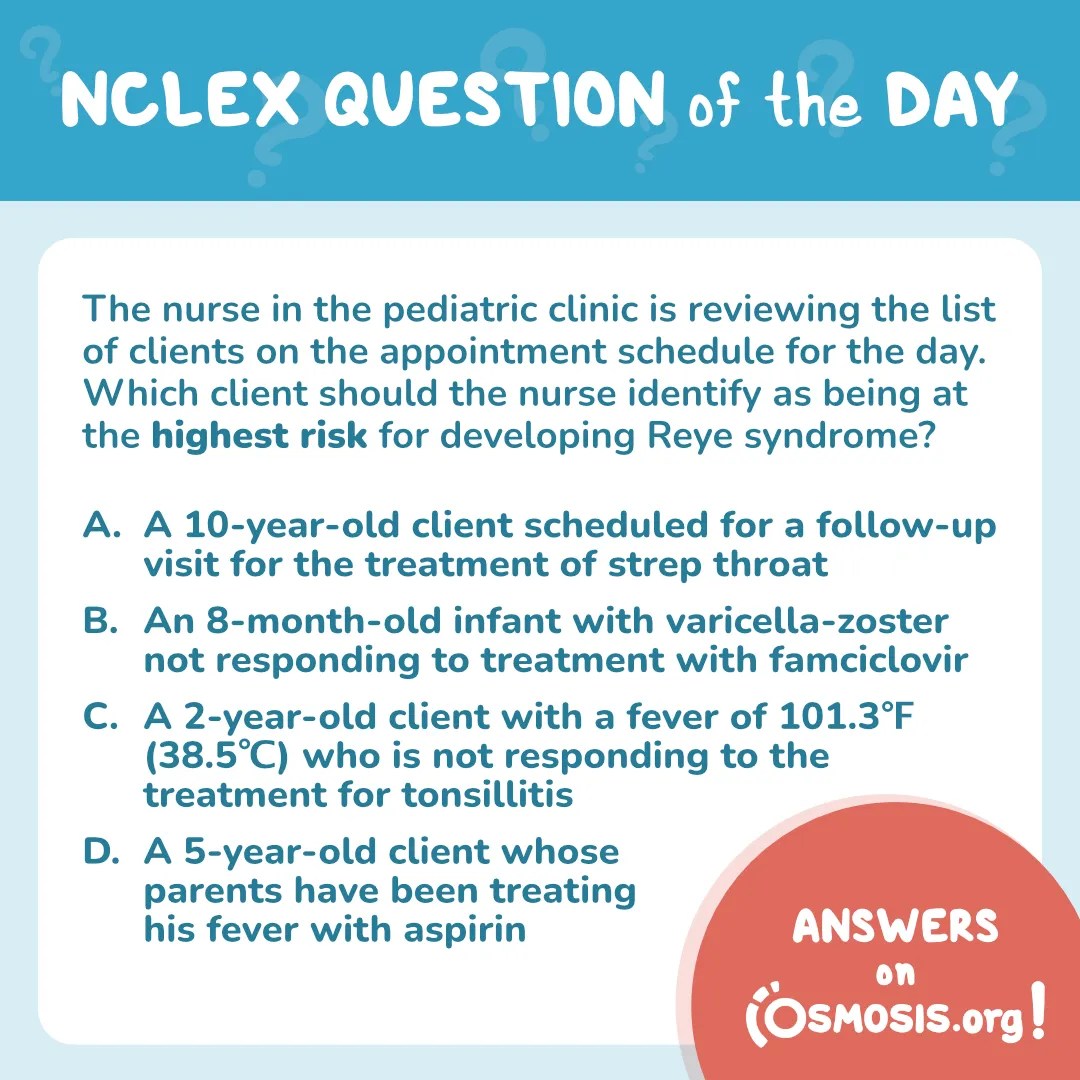
Today’s NCLEX-RN® question of the day focuses on risk factors associated with the development of Reye syndrome. Can you figure it out? The nurse in the pediatric clinic is reviewing the list of clients on the appointment schedule for the day. Which client should the nurse identify as being at…
-
USMLE® Step 1 Question of the Day: Adrenal Insufficiency
— Updated:
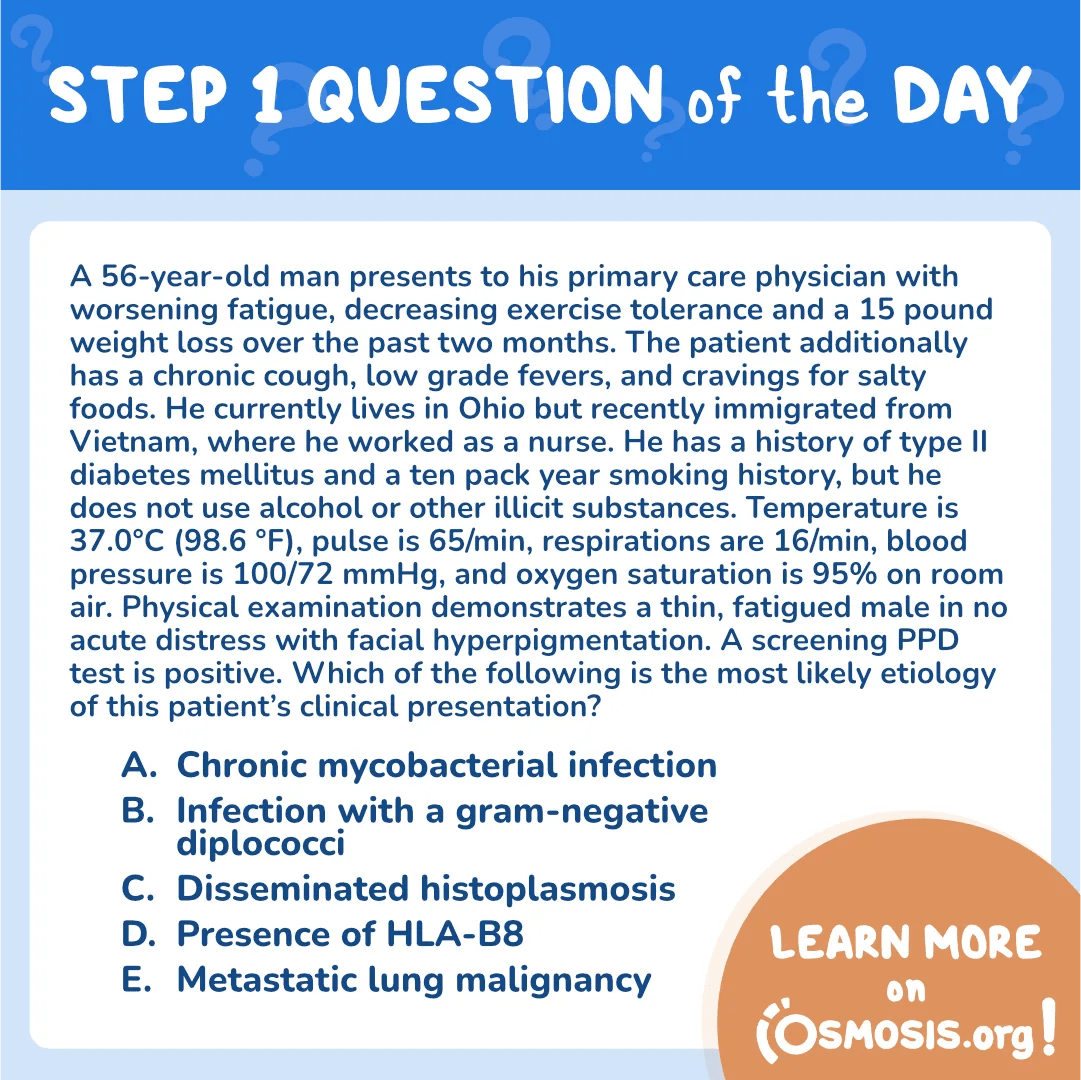
This week, we are sharing another USMLE® Step 1-style practice question to test your knowledge of medical topics. Today’s case focuses on a 56-year-old man who has recently immigrated from Vietnam. He experiences worsening fatigue and decreasing exercise tolerance. Can you figure it out? A 56-year-old man presents to his primary care…
-
NCLEX-RN® Question of the Day: Perinatal depression risk screening
— Updated:
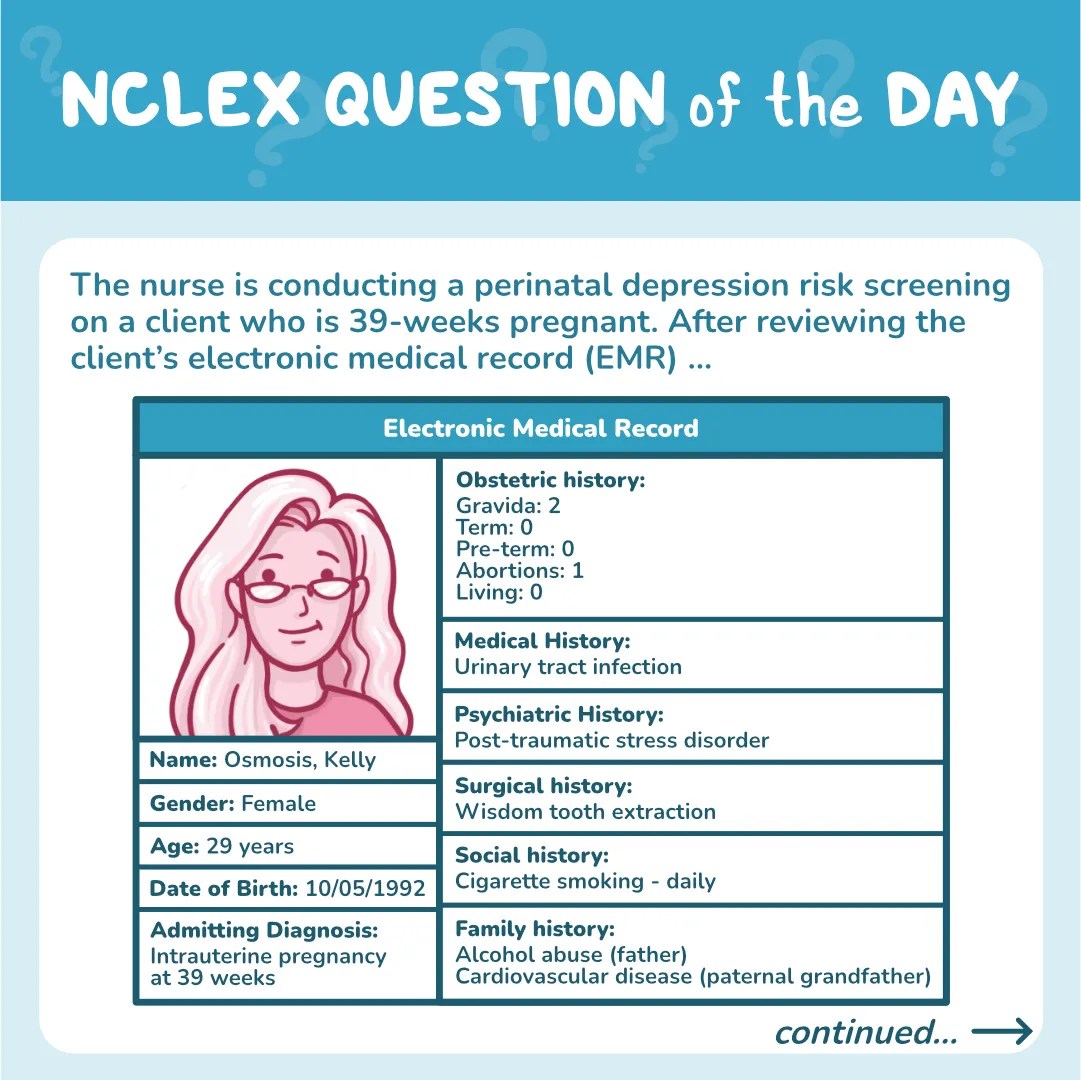
Today’s NCLEX-RN® question of the day focuses on risk factors for developing perinatal depression. The nurse is conducting a perinatal depression risk screening on a client who is 39-weeks pregnant. After reviewing the client’s electronic medical record (EMR), which finding should the nurse identify as a risk factor for developing…
-
USMLE® Step 1 Question of the Day: Increased Urination and Thirst
— Updated:
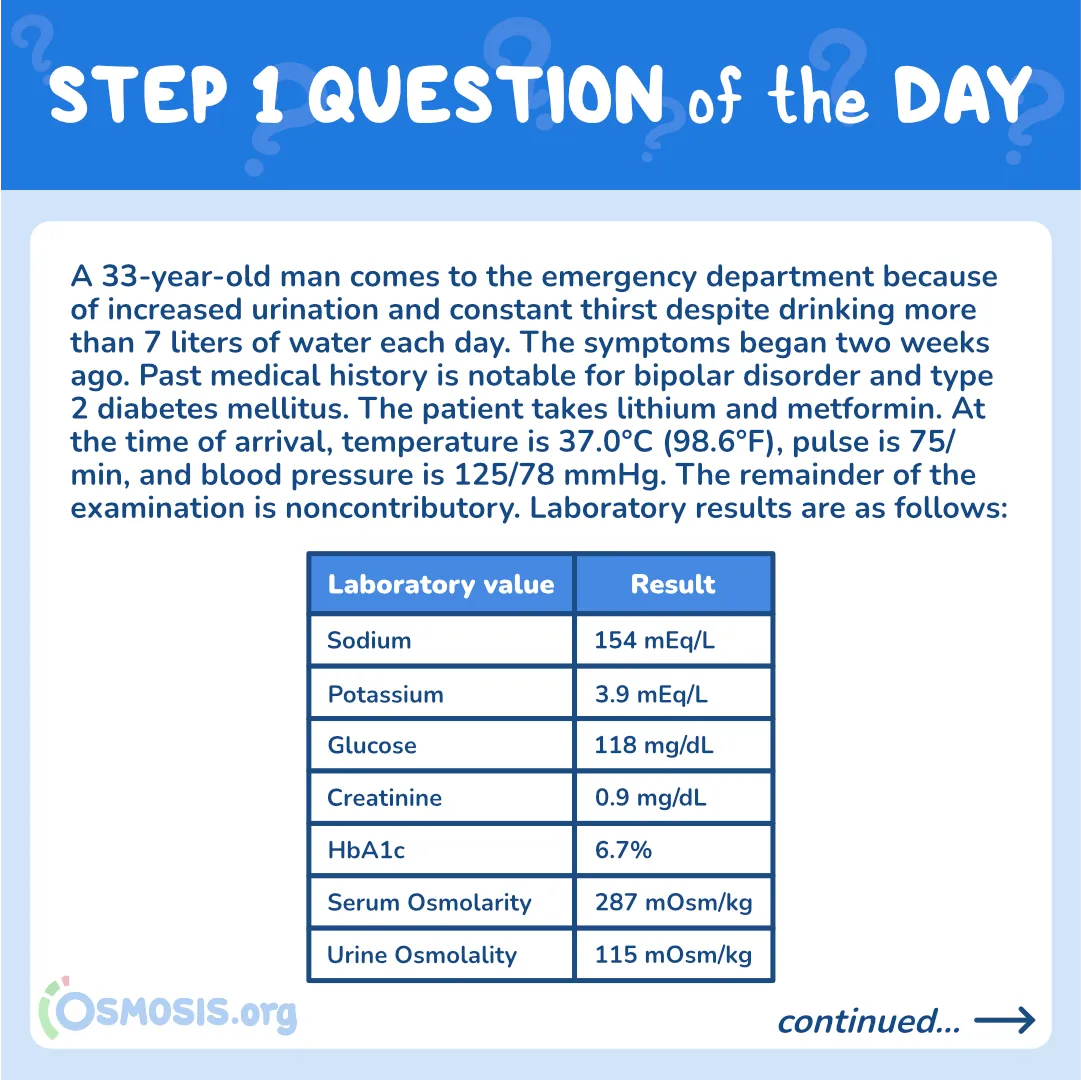
This week, we are sharing another USMLE® Step 1-style practice question to test your knowledge of medical topics. Today’s case involves a 33-year-old man with increased urination and constant thirst. Can you figure it out? A 33-year-old man comes to the emergency department because of increased urination and constant thirst despite drinking…
-
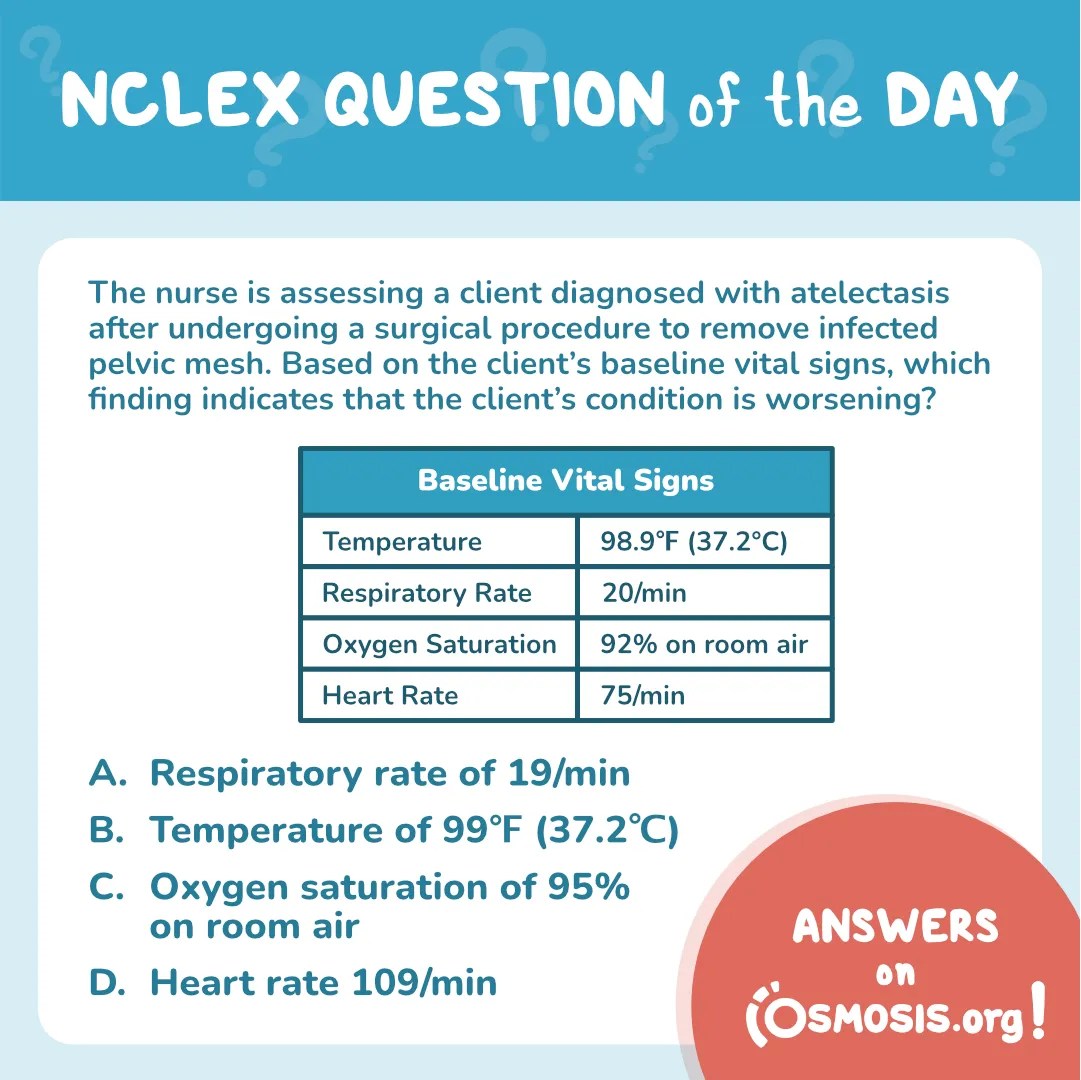
NCLEX-RN® Question of the Day: Atelectasis after removal of pelvic mesh
— Updated:
Today’s NCLEX-RN® question of the day focuses on the client’s baseline vital signs after surgery. Can you figure it out? The nurse is assessing a client diagnosed with atelectasis after undergoing a surgical procedure to remove infected pelvic mesh. Based on the client’s baseline vital signs, which finding indicates that the…
-
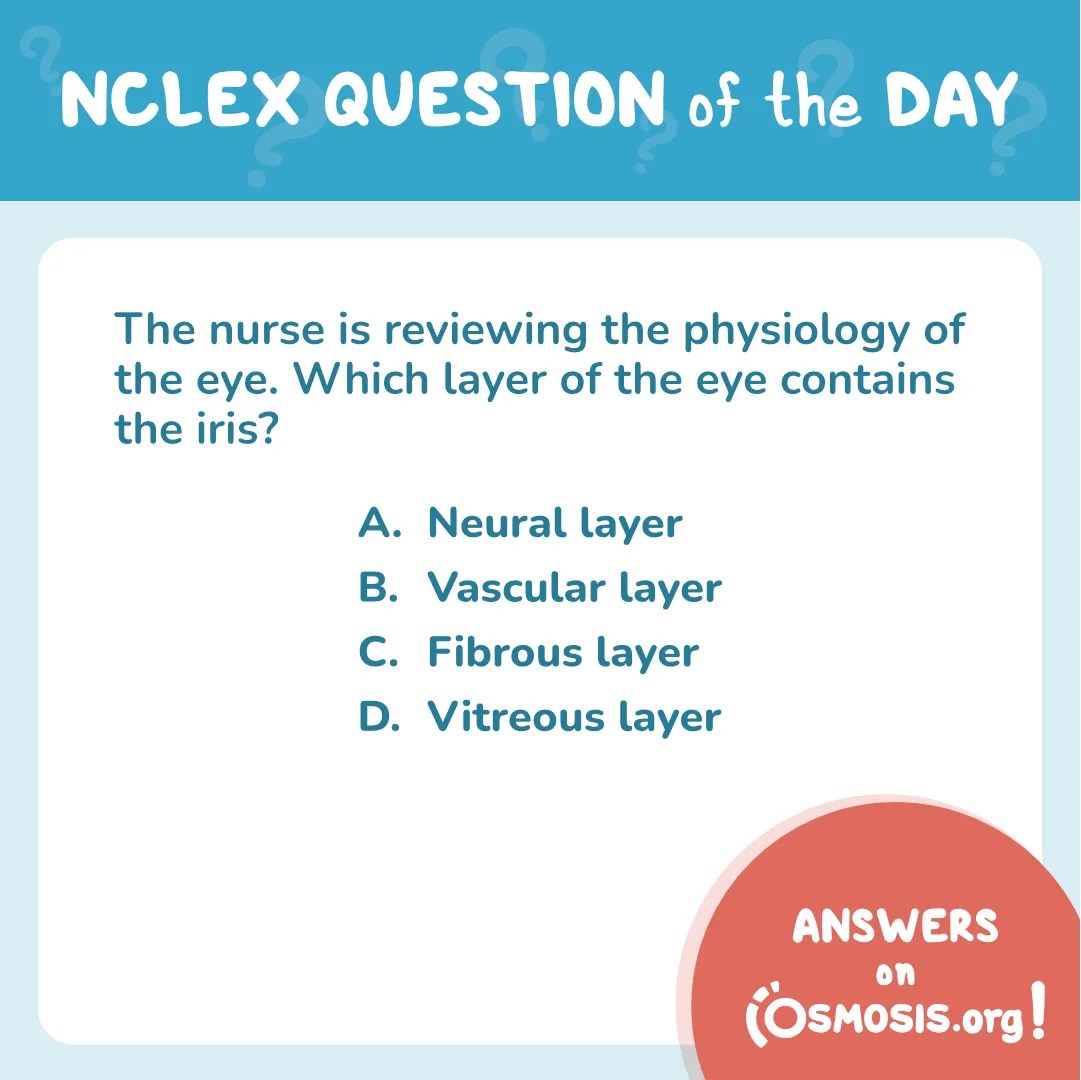
NCLEX-RN® Question of the Day: Physiology of the eye
— Updated:
Today’s NCLEX-RN® question of the day focuses on the physiology of the eye. The nurse is reviewing the physiology of the eye. Which layer of the eye contains the iris? A. Neural layer B. Vascular layer C. Fibrous layer D. Vitreous layer Scroll down for the correct answer! Check out our NCLEX-RN Study…
-
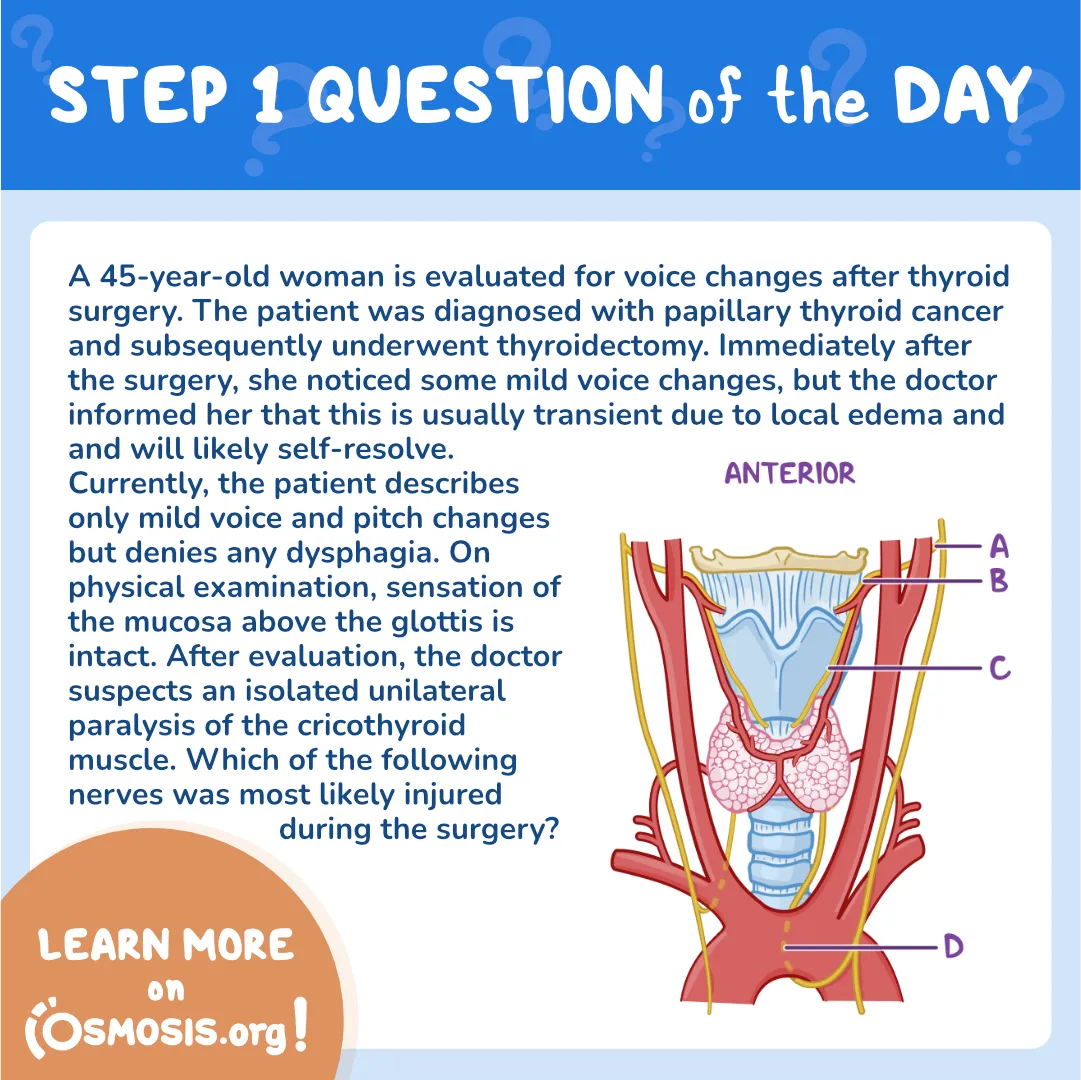
USMLE® Step 1 Question of the Day: Thyroid Surgery Complications
— Updated:
Enhance your USMLE® Step 1 exam preparation with a clinical case. A patient develops voice changes after thyroid surgery. Learn which nerve injury is most likely and how it presents clinically.
-
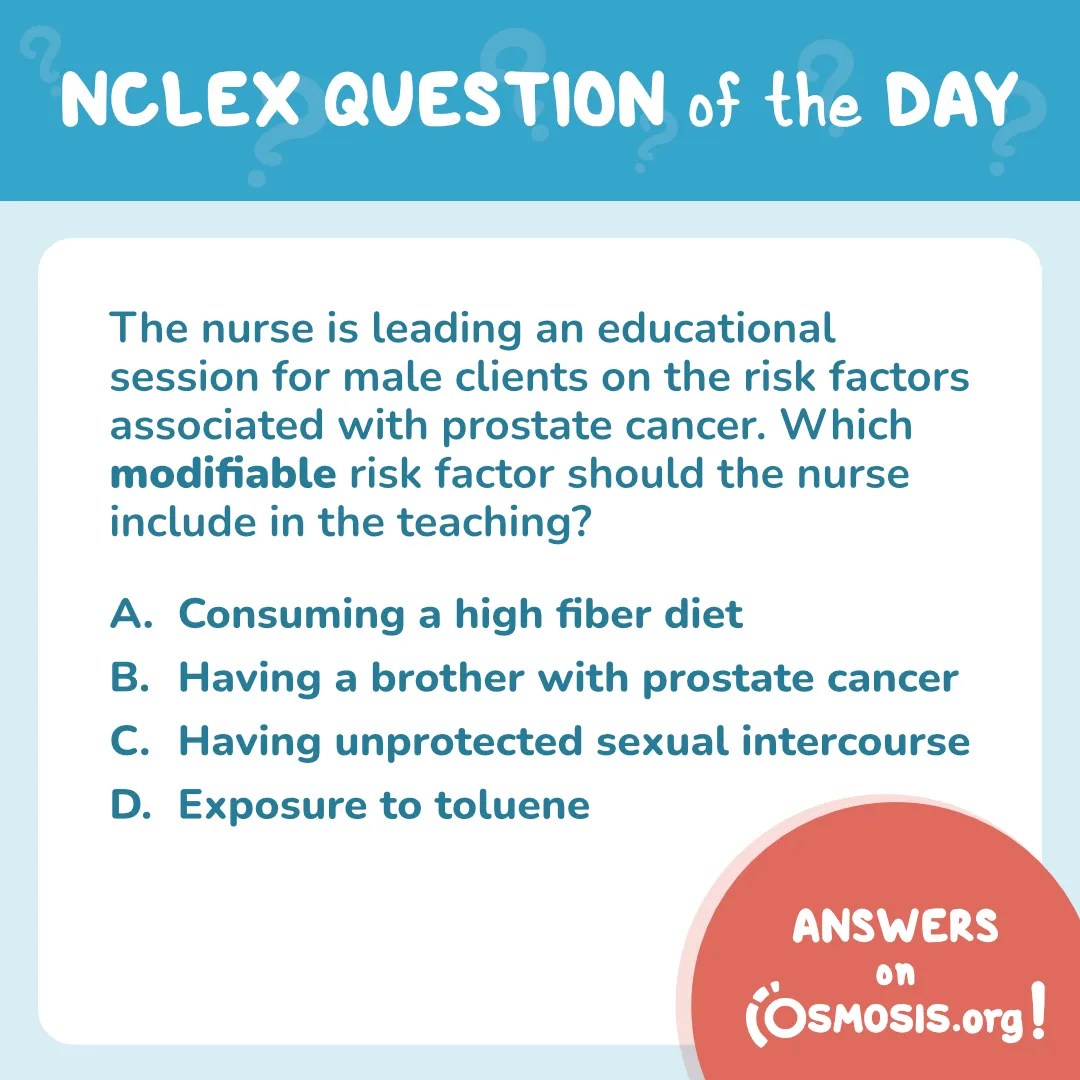
NCLEX-RN® Question of the Day: Modifiable risk factors for prostate cancer
— Updated:
Today’s NCLEX-RN® question of the day focuses on modifiable risk factors associated with prostate cancer. Can you figure it out? The nurse is leading an educational session for male clients on the risk factors associated with prostate cancer. Which modifiable risk factor should the nurse include in the teaching? A. Consuming a high fiber diet…
-
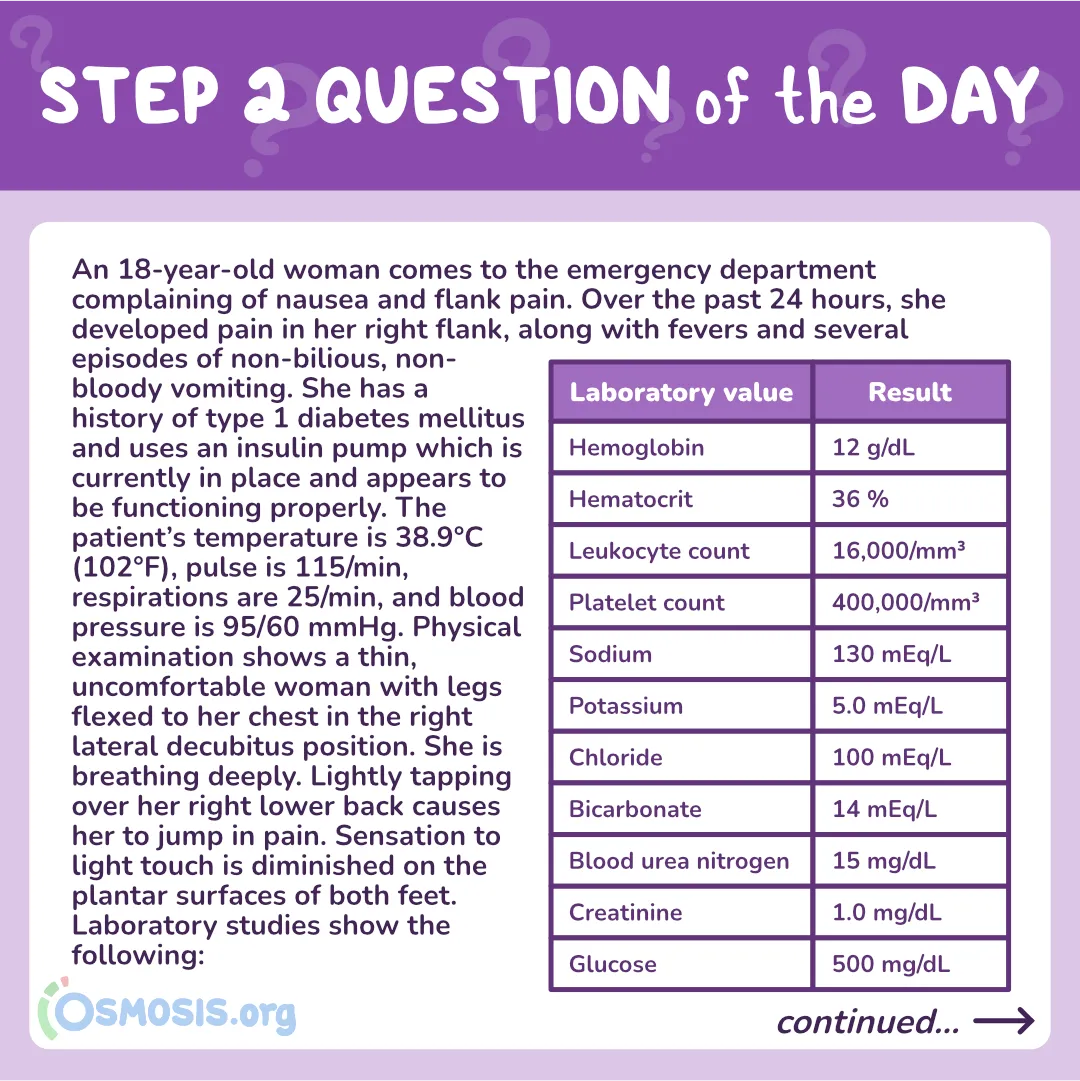
USMLE® Step 2 CK Question of the Day: Diabetic Ketoacidosis (DKA)
— Updated:
An 18-year-old with type 1 diabetes presents with nausea and flank pain. Explore the key lab findings and learn which electrolyte is vital to replenish in this DKA case.
-
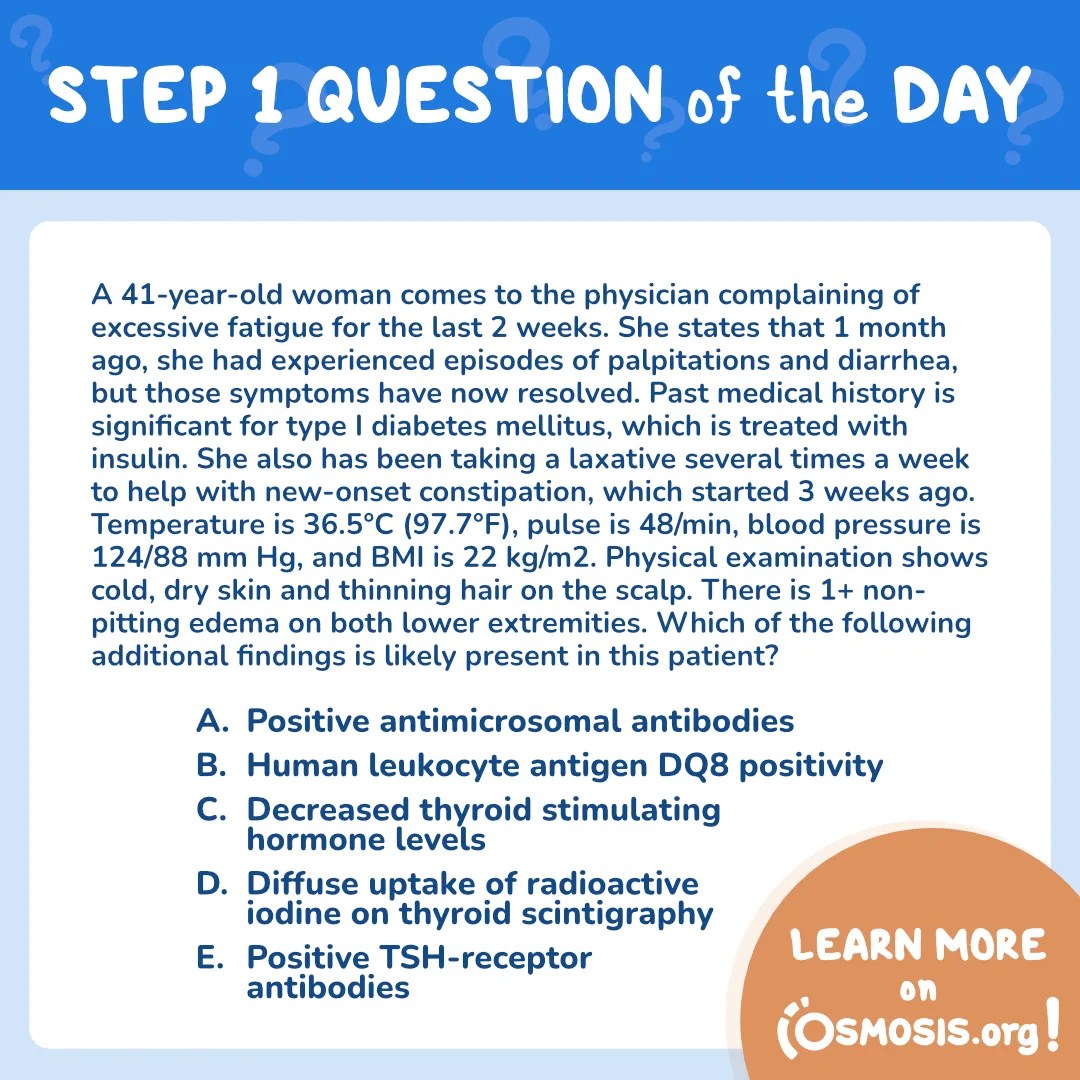
USMLE® Step 1 Question of the Day: Excessive Fatigue and Constipation
— Updated:
This week, we are sharing another USMLE® Step 1-style practice question to test your knowledge of medical topics. Today’s case involves a 41-year-old woman with excessive fatigue and constipation. Can you figure it out? A 41-year-old woman comes to the physician complaining of excessive fatigue for the last 2 weeks. She…
-
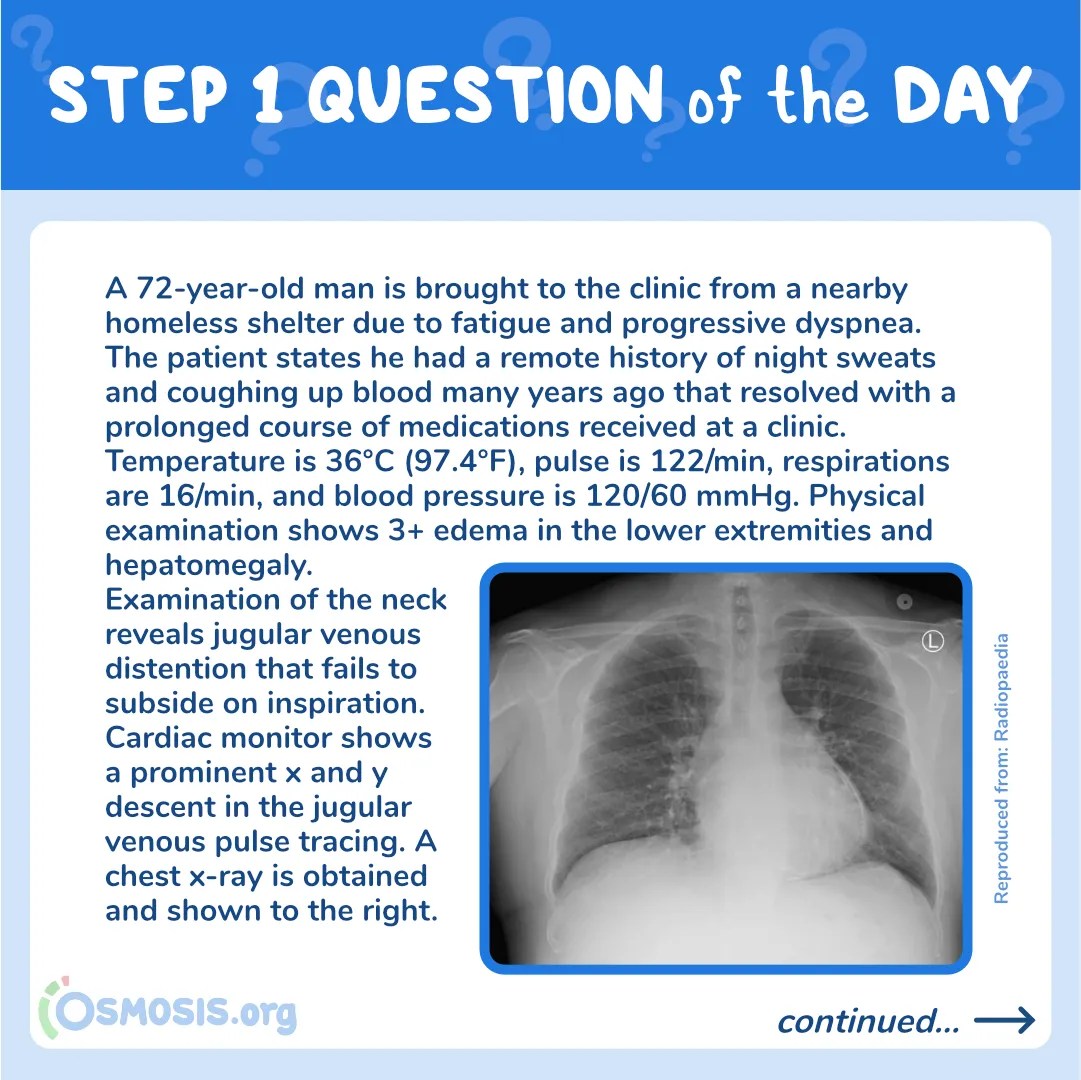
USMLE® Step 1 Question of the Day: Fatigue and Progressive Dyspnea
— Updated:
This week, we are sharing another USMLE® Step 1-style practice question to test your knowledge of medical topics. Today’s case focuses on a 72-year-old man with fatigue and progressive dyspnea. Physical examination shows 3+ edema in the lower extremities and hepatomegaly. Can you figure it out? A 72-year-old man is brought to…
-
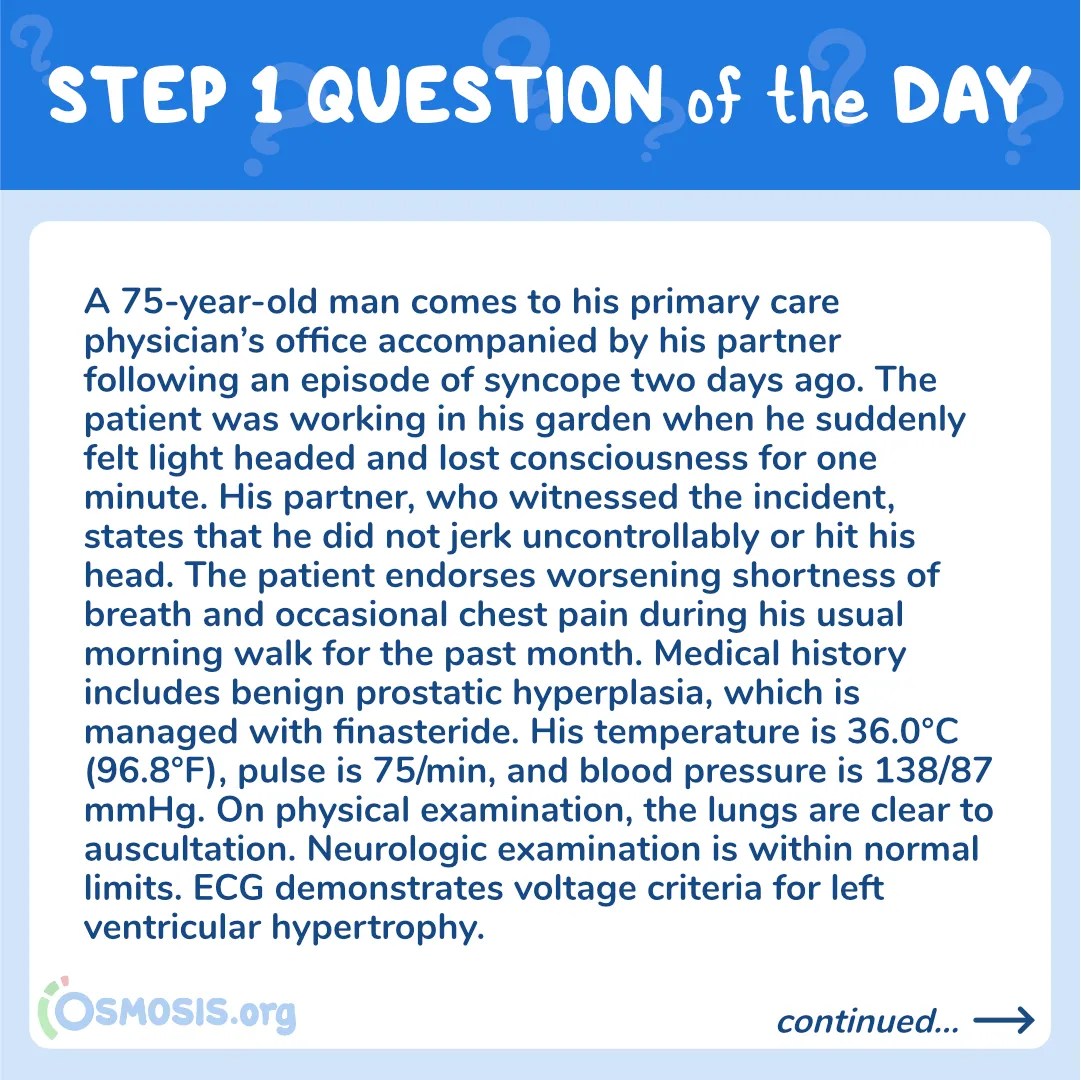
USMLE® Step 1 Question of the Day: Episode of Syncope
— Updated:
This week, we are sharing another USMLE® Step 1-style practice question to test your knowledge of medical topics. Today’s case involves a 75-year-old man who lost consciousness for one minute following an episode of syncope two days ago. Can you figure out in which area cardiac auscultation will most likely reveal a…
-
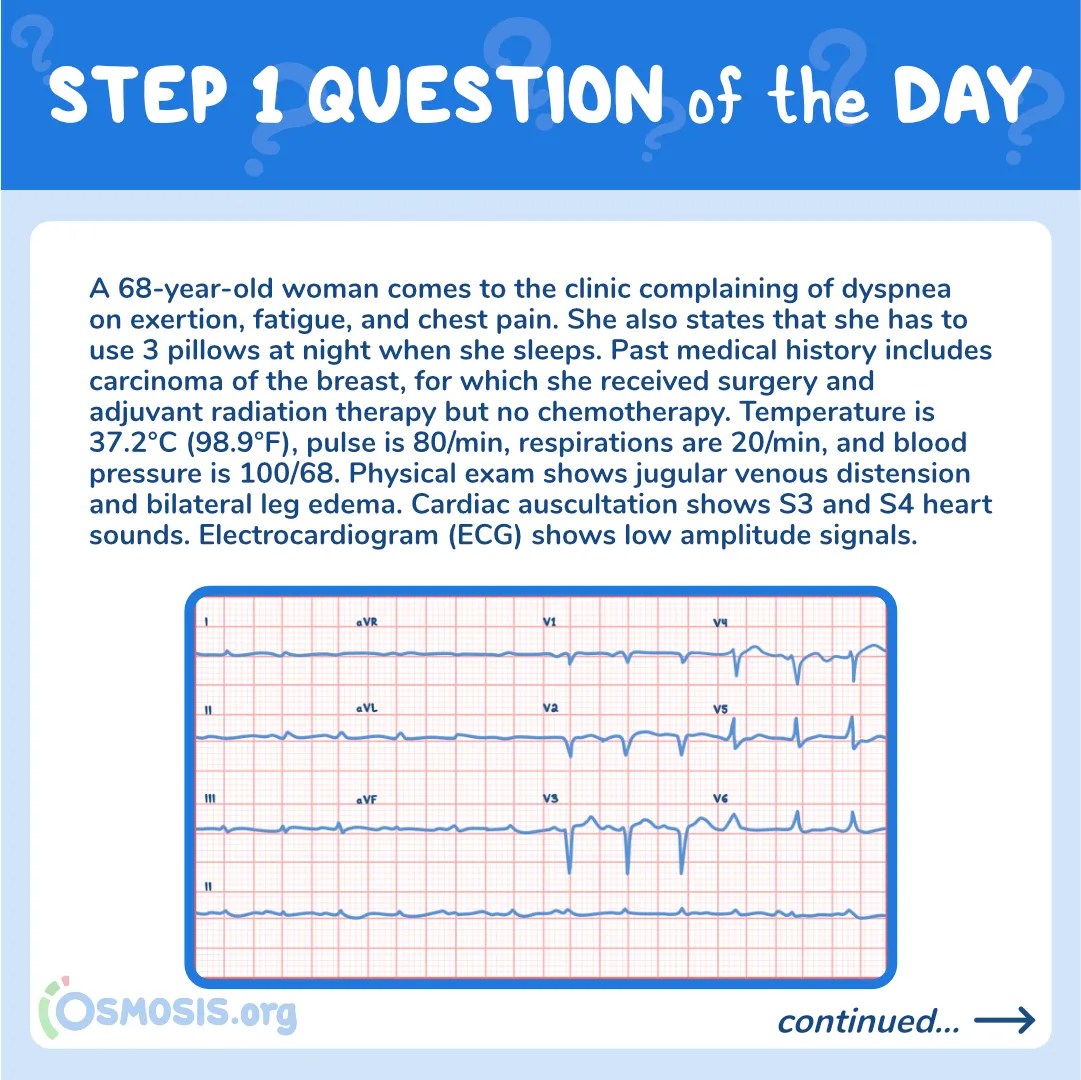
USMLE® Step 1 Question of the Day: Dyspnea on Exertion and Fatigue
— Updated:
This week, we are sharing another USMLE® Step 1-style practice question to test your knowledge of medical topics. Today’s case focuses on a 68-year-old woman complaining of dyspnea on exertion, fatigue, and chest pain. Past medical history includes carcinoma of the breast. Can you figure this one out? A 68-year-old woman…
-
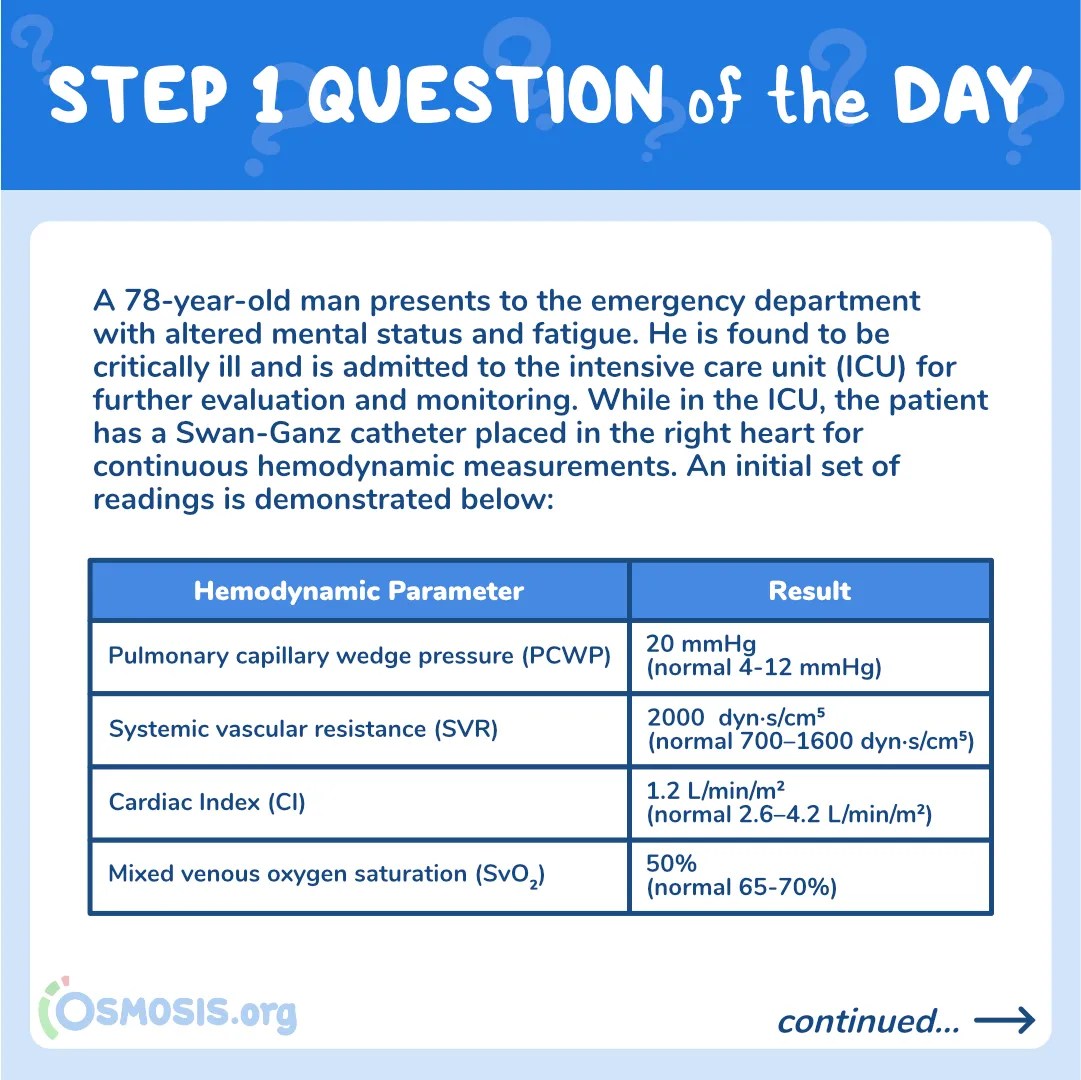
USMLE® Step 1 Question of the Day: Altered Mental State
— Updated:
Analyze Swan-Ganz catheter hemodynamics in a critically ill patient with elevated PCWP and SVR, low cardiac index, and low SvO2. What’s the cause?
-
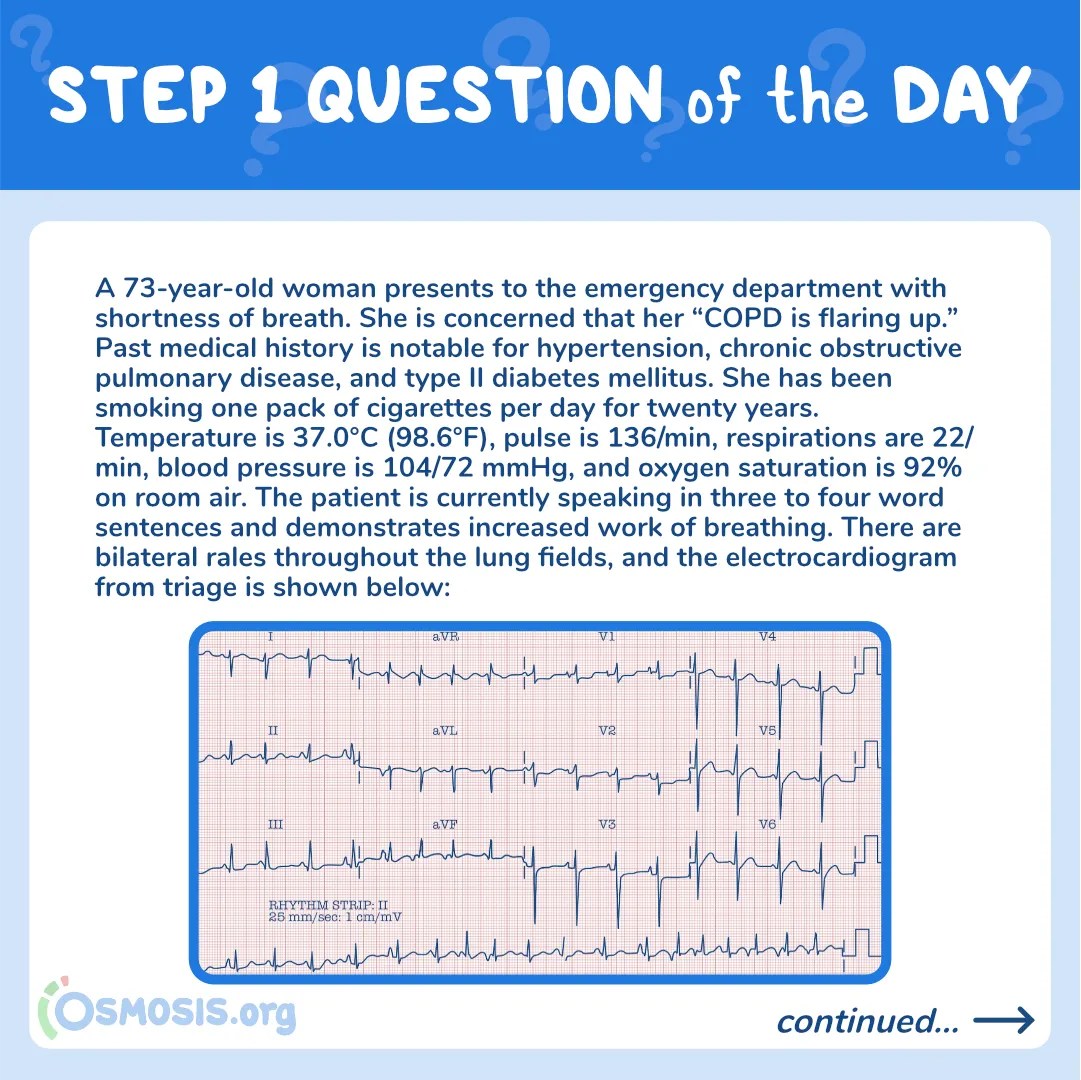
USMLE® Step 1 Question of the Day: Shortness of Breath
— Updated:
This week, we are sharing another USMLE® Step 1-style practice question to test your knowledge of medical topics. Today’s case focuses on a 73-year-old woman with shortness of breath. Past medical history is notable for hypertension, chronic obstructive pulmonary disease, and type II diabetes mellitus. Can you figure it out? A 73-year-old…
-

NCLEX-RN® Question of the Day: Venous insufficiency
— Updated:
Today’s NCLEX-RN® question of the day focuses on a client diagnosed with venous insufficiency. Can you figure it out? The nurse is interviewing a client diagnosed with venous insufficiency. Which of the following statements by the client is consistent with this diagnosis? A. “My feet are always cold, and I can’t…
-
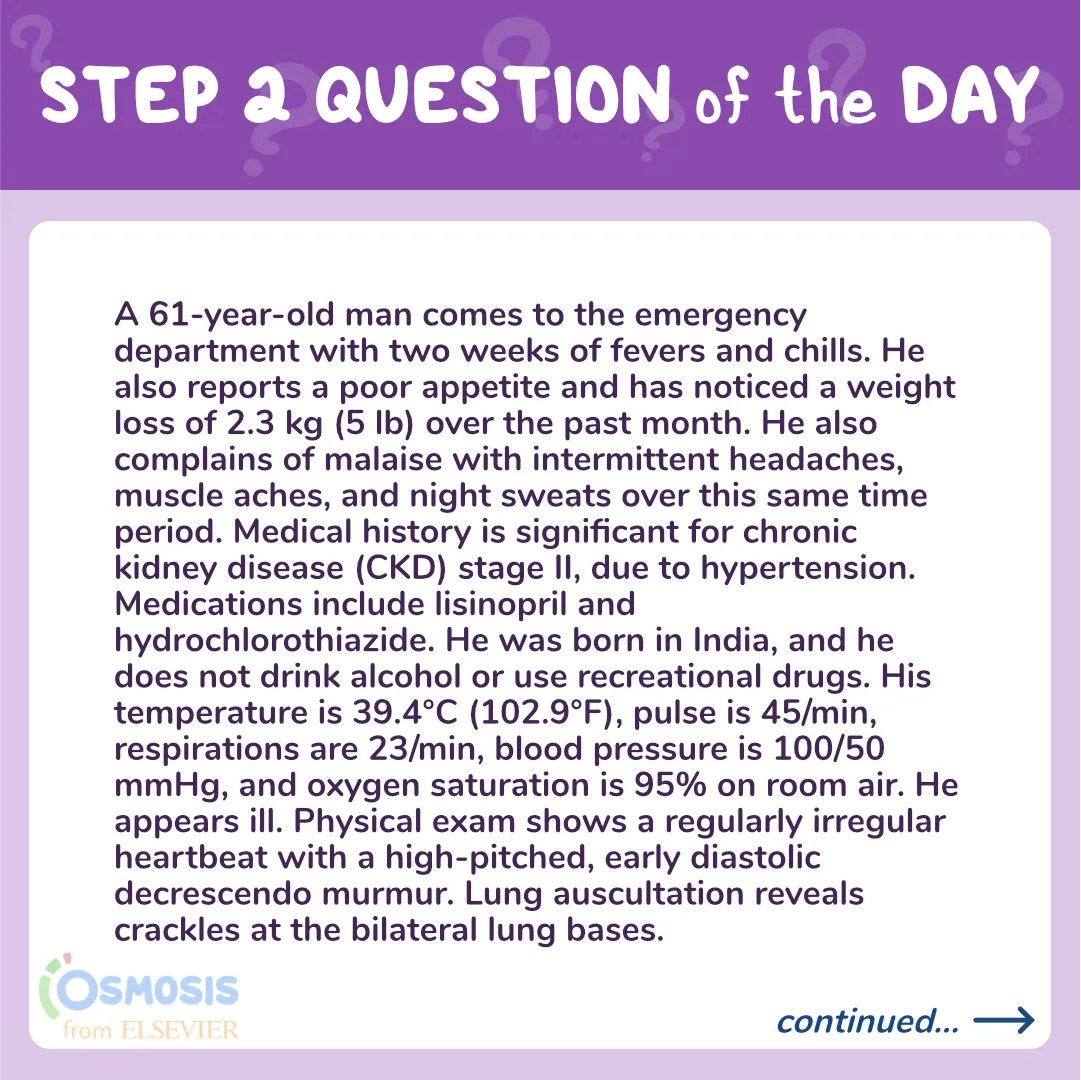
USMLE® Step 2 CK Question of the Day: Second Degree Mobitz type II AV block
— Updated:
Enhance your USMLE® Step 2 CK exam prep with this clinical case involving a 66-year-old woman with left-sided weakness and symptoms suggestive of cardiac issues. Test your clinical knowledge and improve your diagnostic skills for effective patient care!
-
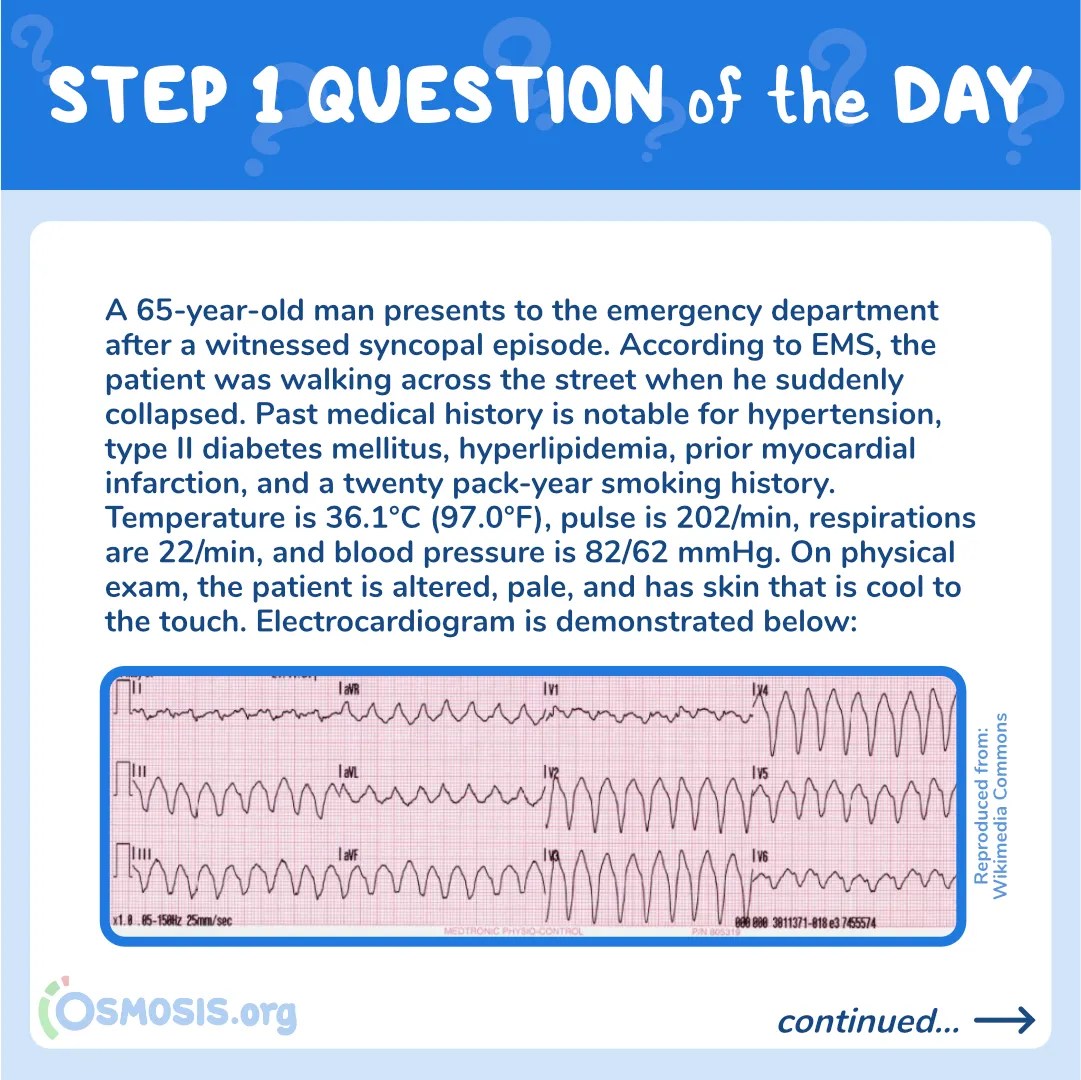
USMLE® Step 1 Question of the Day: Syncopal Episode
— Updated:
This week, we are sharing another USMLE® Step 1-style practice question to test your knowledge of medical topics. Today’s case involves a 65-year-old man who suddenly collapsed when crossing the street. An electrocardiogram is demonstrated below. Can you figure out which pathophysiologic process is likely the result of this cardiac activity? A…