-
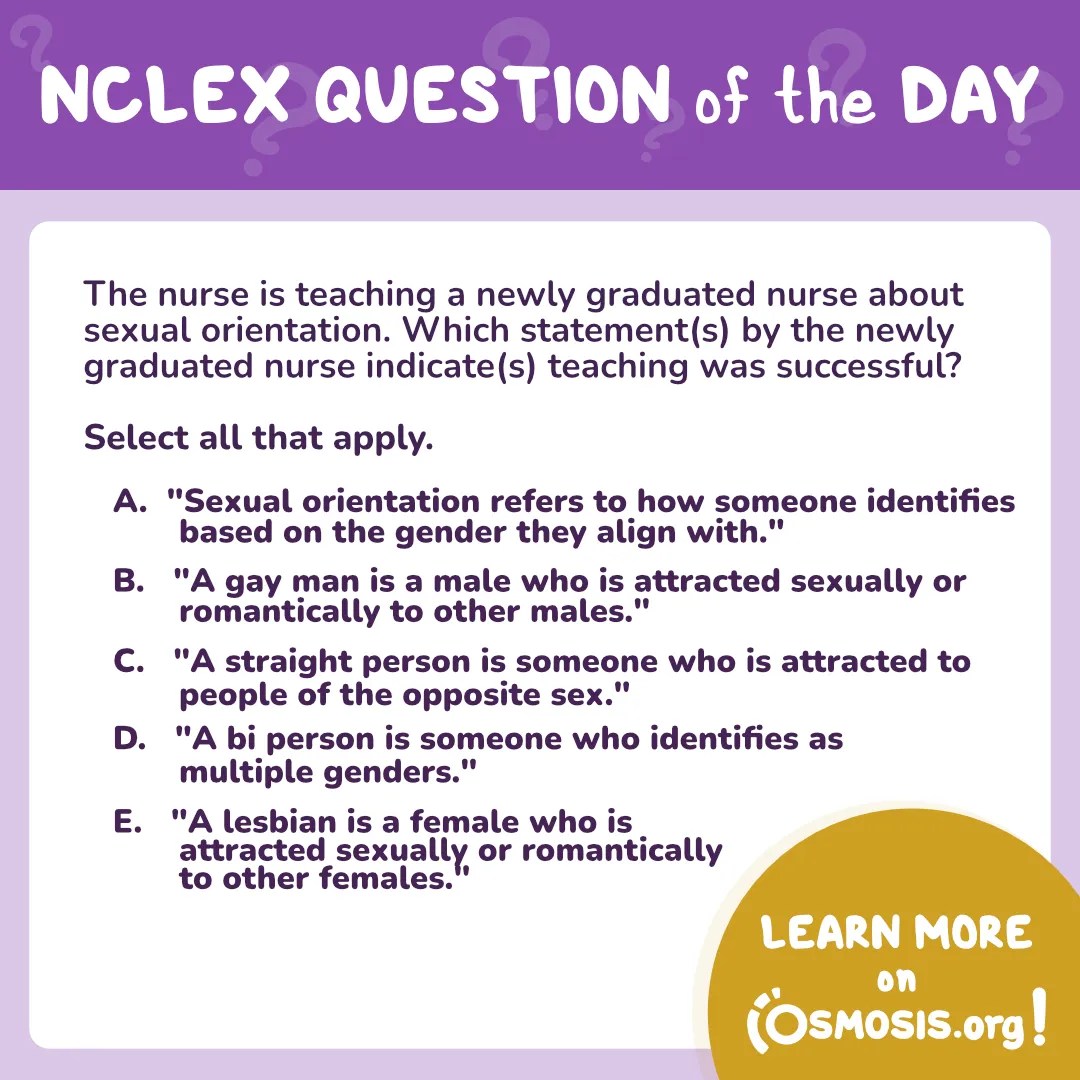
NCLEX-RN® Question of the Day: Sexual orientation
— Updated:
—
Today’s NCLEX-RN® question of the day focuses on a nurse who is teaching a newly graduated nurse about sexual orientation. Which statement(s) by the newly graduated nurse indicate(s) teaching was successful? Can you figure it out? The nurse is teaching a newly graduated nurse about sexual orientation. Which statement(s) by…
-
The Year in Review: Top Moments of 2023 at Osmosis from Elsevier
— Updated:
—
This year’s been a transformative one for our team, marked by an unprecedented amount of collaboration, innovation, and growth. With Elsevier leading the way, our work has propelled us to new heights as we continue our mission to empower clinicians and caregivers worldwide. Together, we’ve reached several important milestones and…
-
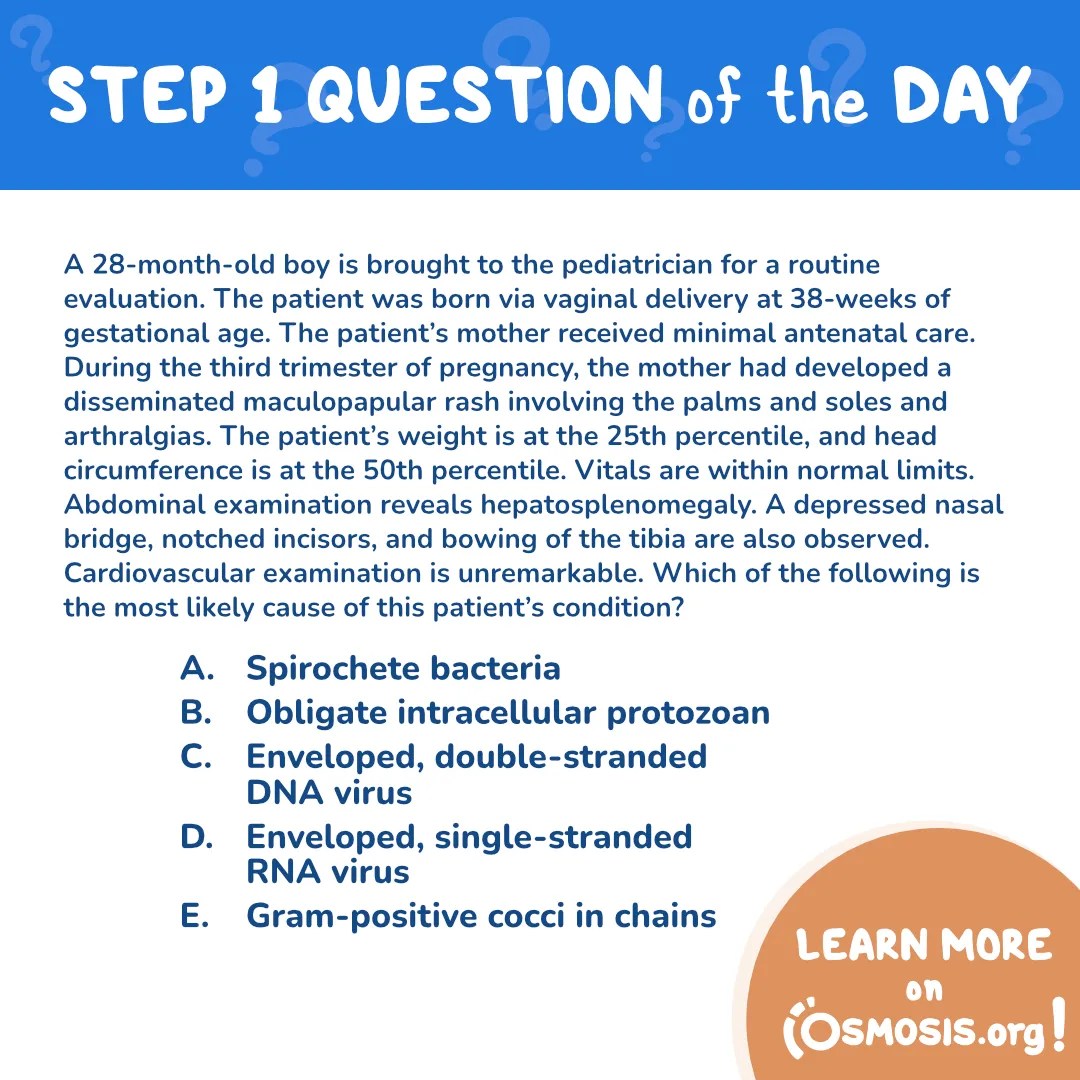
USMLE® Step 1 Question of the Day: Maternal infection
— Updated:
—
This week, we are sharing another USMLE® Step 1-style practice question to test your knowledge of medical topics. Today’s case focuses on a 28-month-old with unusual clinical features. Can you identify the most likely cause behind the disseminated rash, hepatosplenomegaly, and distinctive facial and skeletal abnormalities?Test your diagnostic skills with…
-
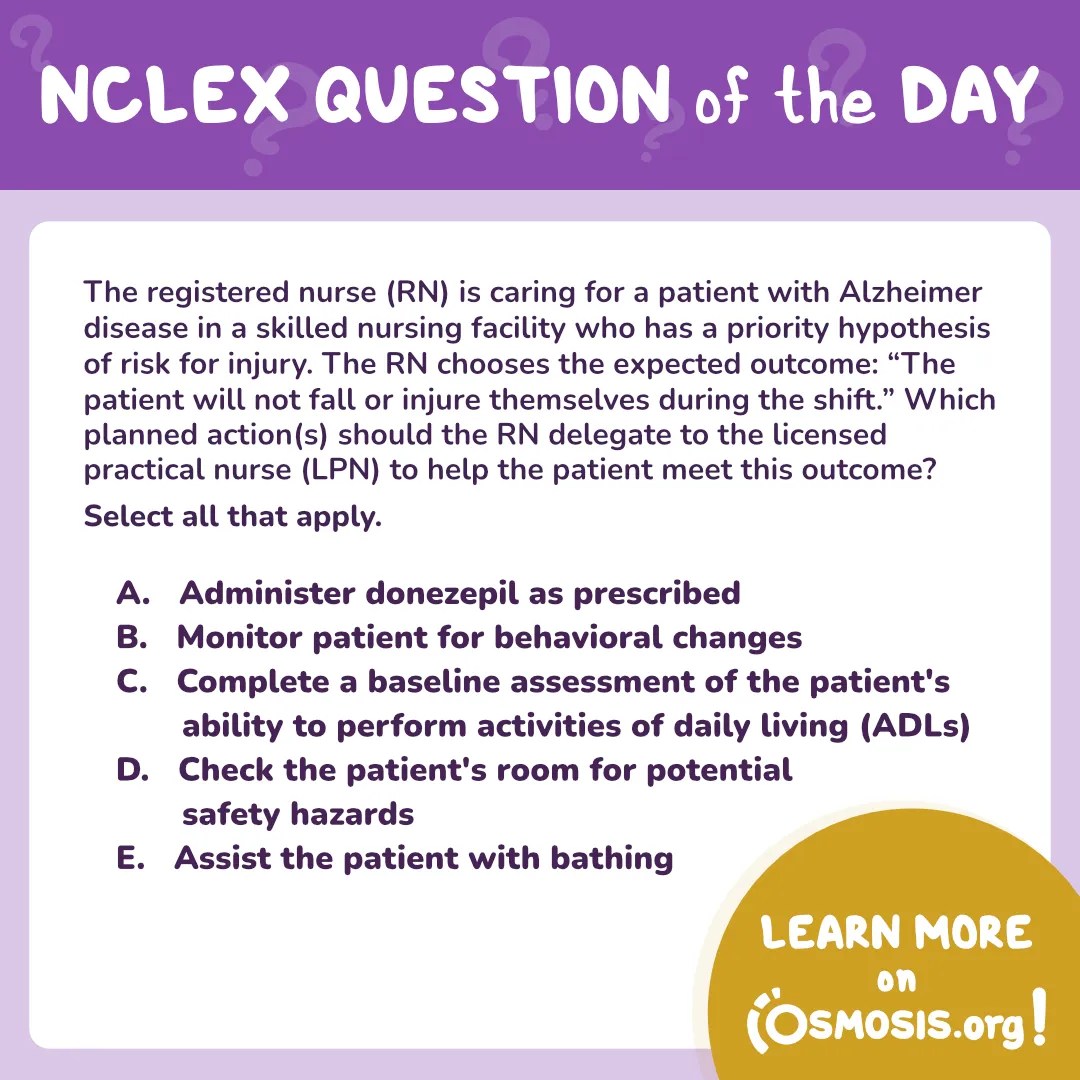
NCLEX-RN® Question of the Day: Alzheimer disease
— Updated:
—
Today’s NCLEX-RN® question of the day focuses on a registered nurse who is caring for a patient with Alzheimer disease prioritizes addressing the hypothesis of a risk for injury. With the targeted goal of preventing falls or injuries during the shift, what specific tasks can the RN delegate to the…
-
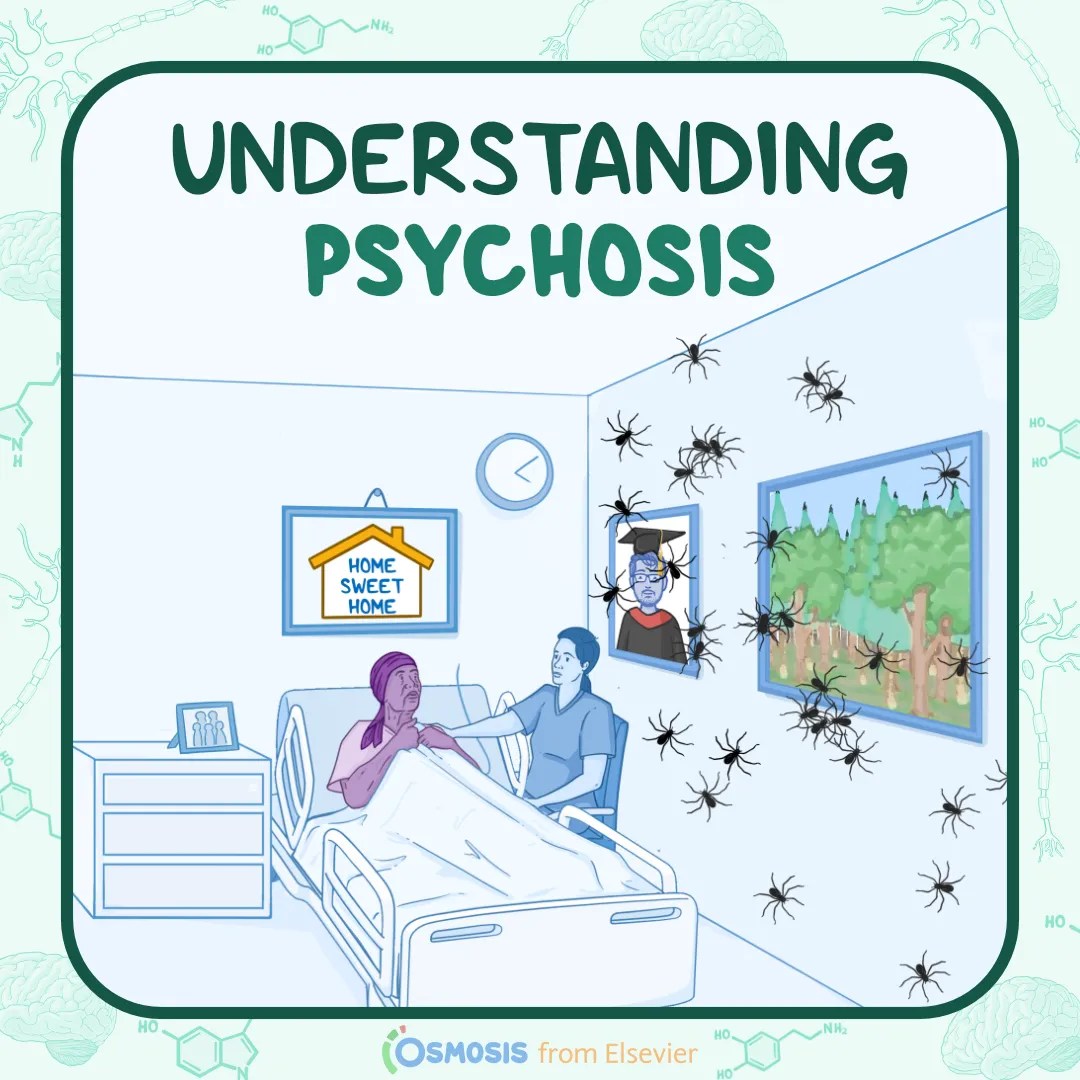
Understanding Psychosis: A helpful guide for health professionals
— Updated:
—
In today’s Osmosis from Elsevier blog, we’re exploring the impact and causes of psychosis, its diverse symptoms, and the importance of early intervention. Learn how to recognize, support, and reduce stigma as a clinician, caregiver, or family member. Imagine if how you perceive reality changed radically, with a disconnect in…
-
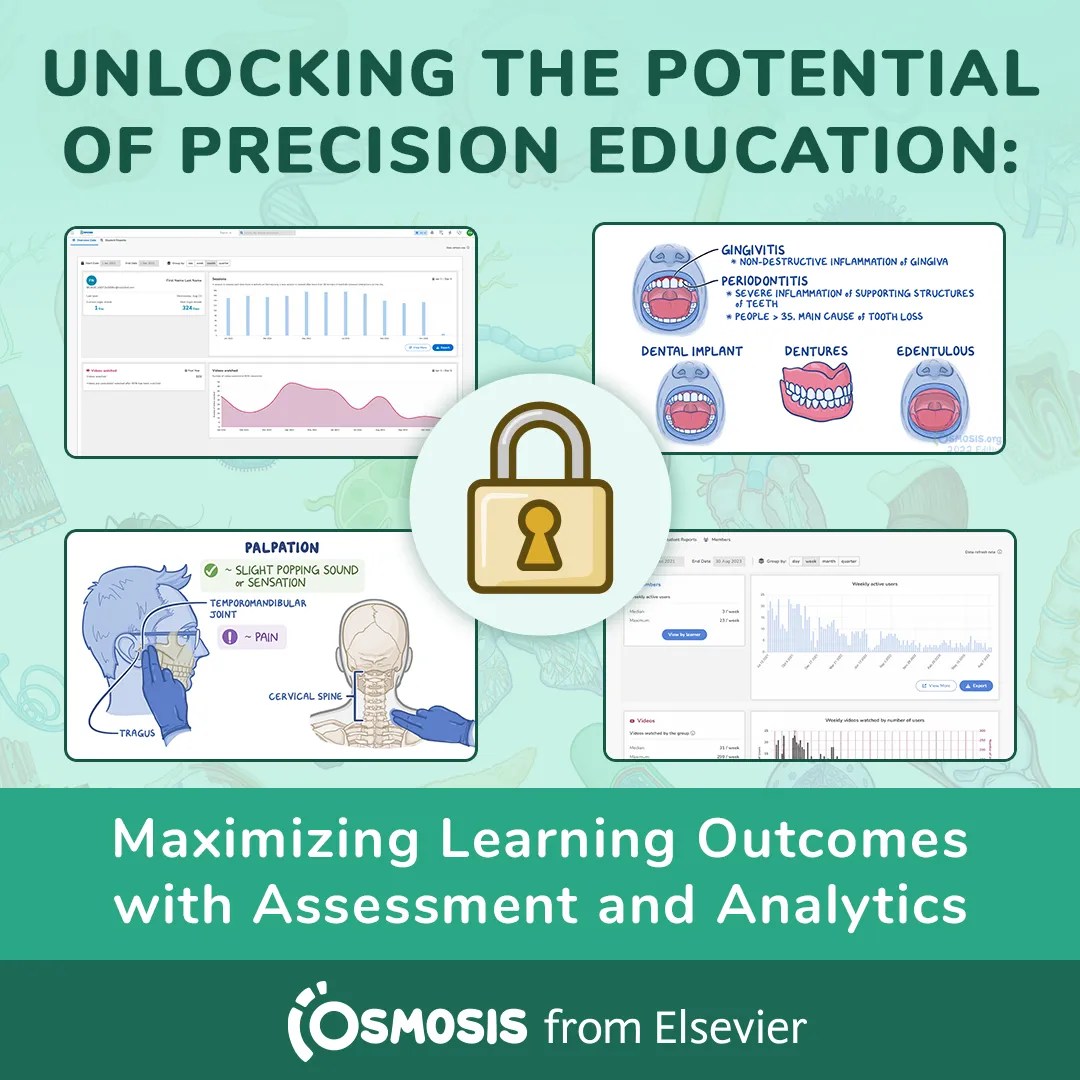
Unlocking the Potential of Precision Education: Maximizing Learning Outcomes with Assessment and Analytics
— Updated:
—
In today’s Osmosis blog, Dr. Sean Tackett discusses the evolution of precision education and how educators can leverage assessment and analytics to boost learning outcomes. There’s no question that everyone is different, from our genes to our environments. These shape how our neurons connect with one another, and by the…
-
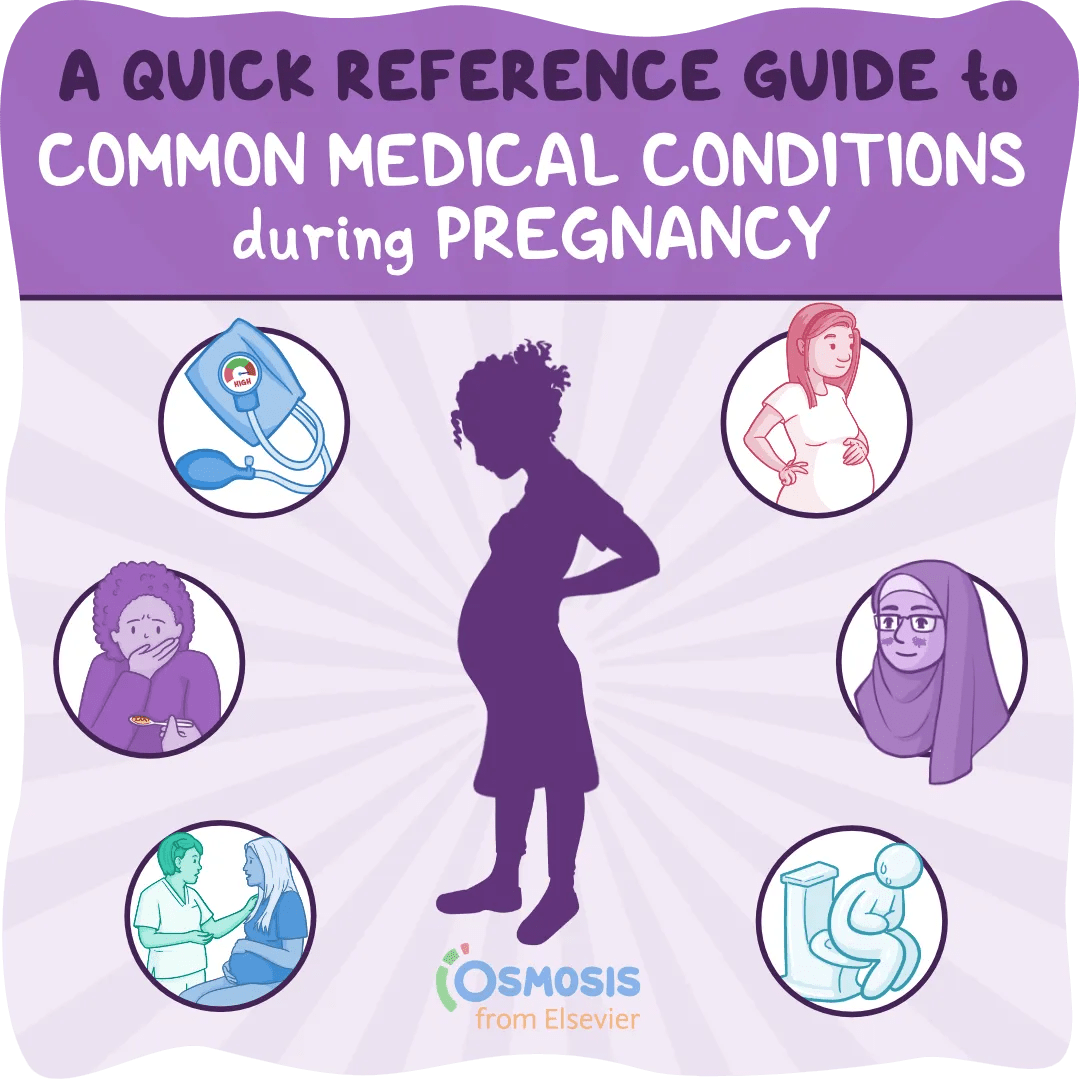
A Quick Reference Guide to Common Conditions Associated with Pregnancy
— Updated:
—
In today’s Osmosis from Elsevier blog, we’re exploring common pregnancy conditions – nausea, skin changes, constipation, and supine hypotension – along with the causes of those conditions, their symptoms, and effective treatments. Pregnancy, typically spanning about forty weeks or nine months, is (quite literally) a transformative experience involving adaptions the…
-
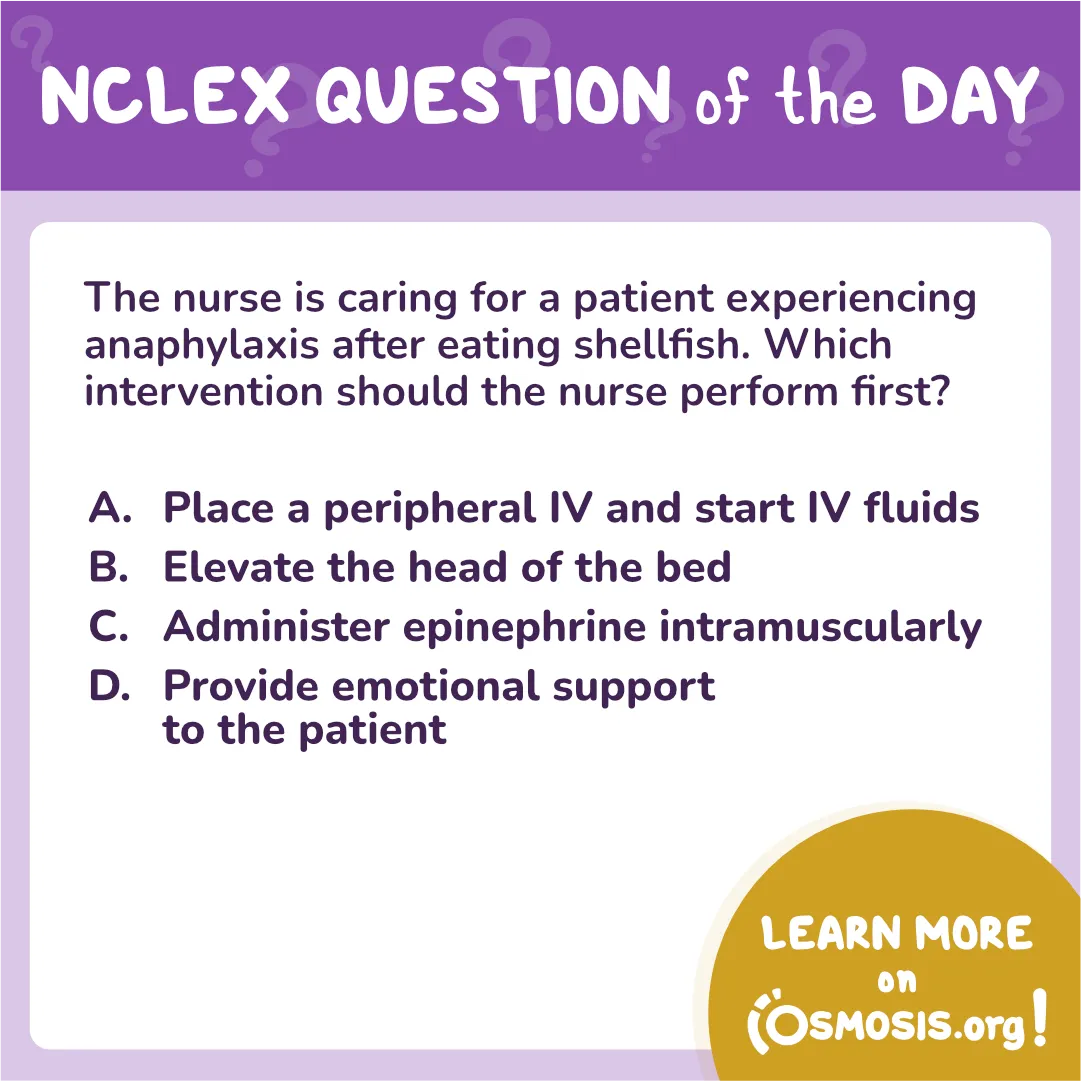
NCLEX-RN® Question of the Day: Anaphylaxis
— Updated:
—
Today’s NCLEX-RN® question of the day focuses on a nurse who is tending to a patient who has developed anaphylaxis due to shellfish consumption. What is the initial intervention the nurse should prioritize in this situation? Can you figure it out? The nurse is caring for a patient experiencing anaphylaxis after…
-
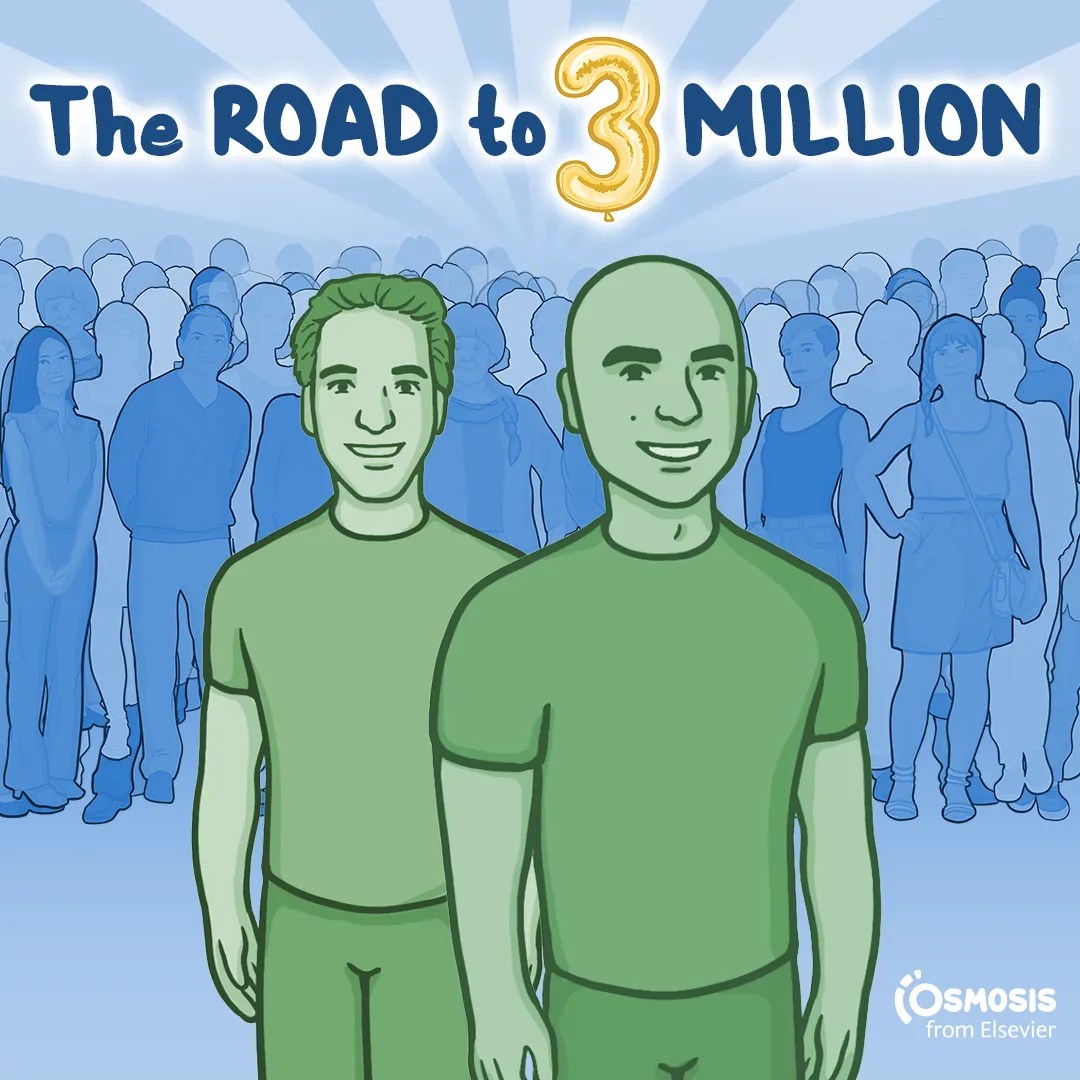
The Road to Three Million: Unleashing the Power of Osmosis from Elsevier
— Updated:
—
We’re happy to announce that Osmosis from Elsevier’s YouTube channel has reached 3 million subscribers! This isn’t just a milestone for us; it’s proof positive that our thriving community of learners is continuing to grow and that we’re a step closer to reaching our ambitious goal of educating one billion people by…
-
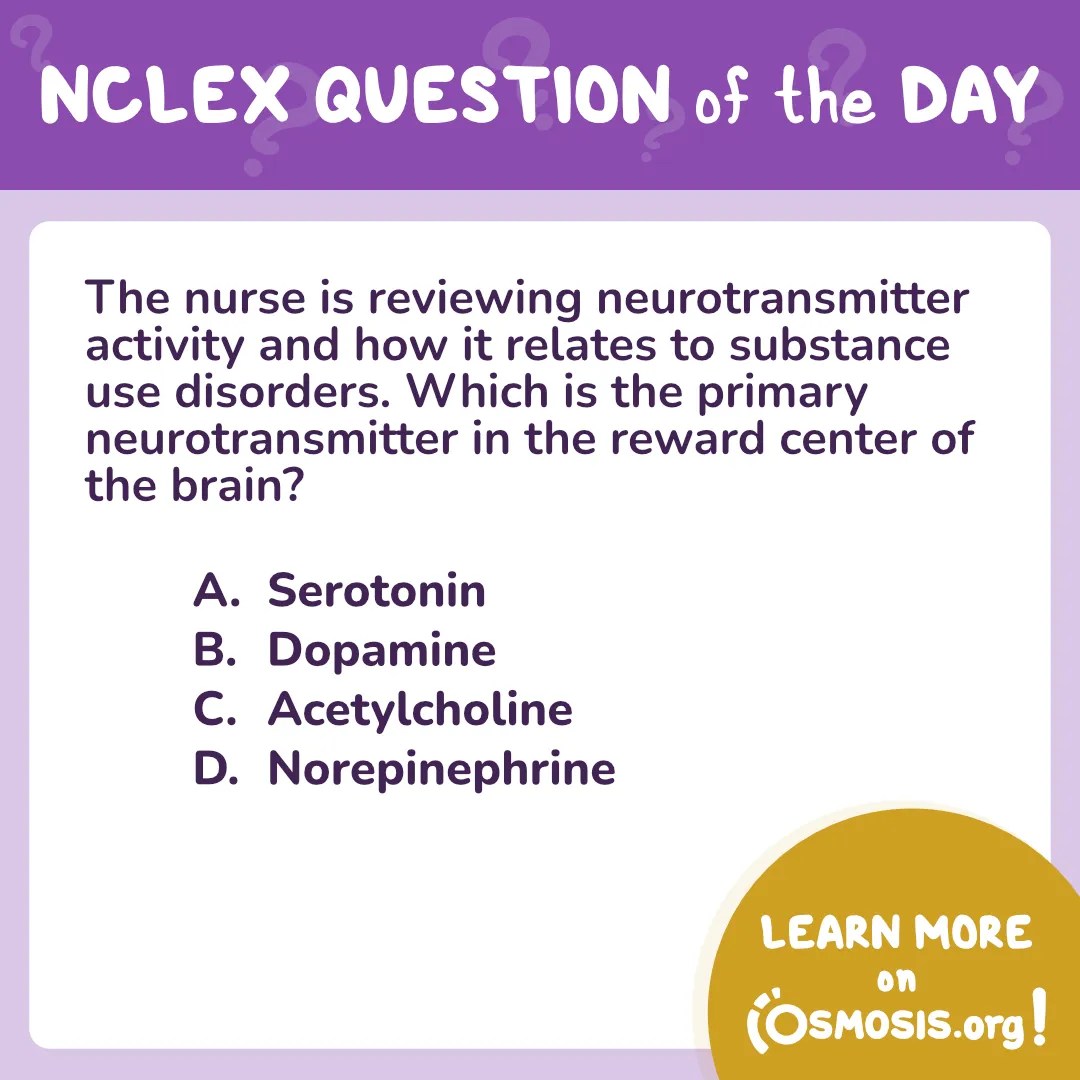
NCLEX-RN® Question of the Day: Neurotransmitter
— Updated:
—
Today’s NCLEX-RN® question of the day focuses on a nurse who is reviewing neurotransmitter activity and how it relates to substance use disorders. Which is the primary neurotransmitter in the reward center of the brain? Can you figure it out? The nurse is reviewing neurotransmitter activity and how it relates to…
-
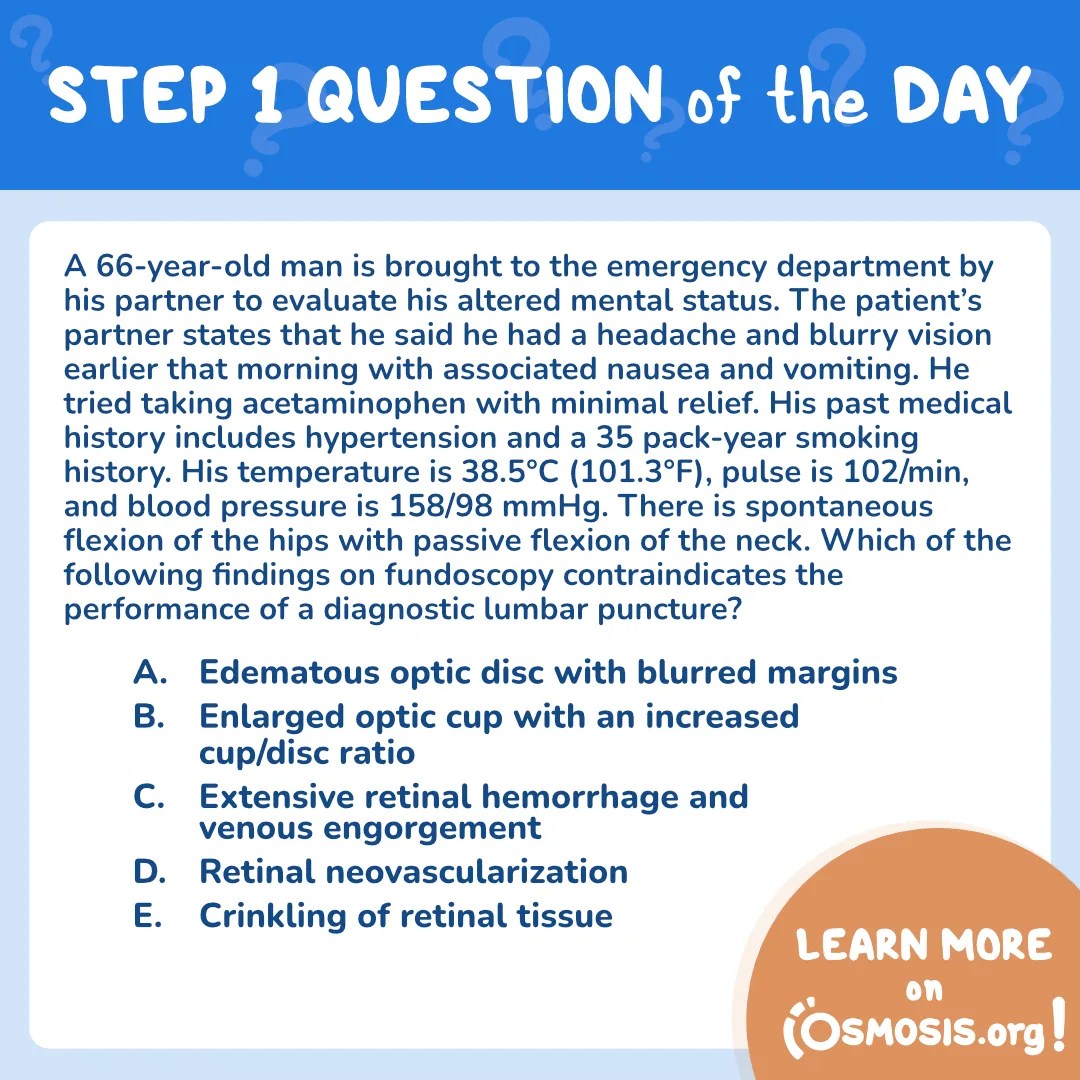
USMLE® Step 1 Question of the Day: Fundoscopy findings
— Updated:
—
This week, we are sharing another USMLE® Step 1-style practice question to test your knowledge of medical topics. Today’s case focuses on a 66-year-old man with altered mental status, headache, and more. Can you identify the fundoscopy finding that affects a diagnostic lumbar puncture? Test your diagnostic skills with this USMLE Step 1…
-
Black Health Inequity: A Cry for Equity and Justice for All
— Updated:
—
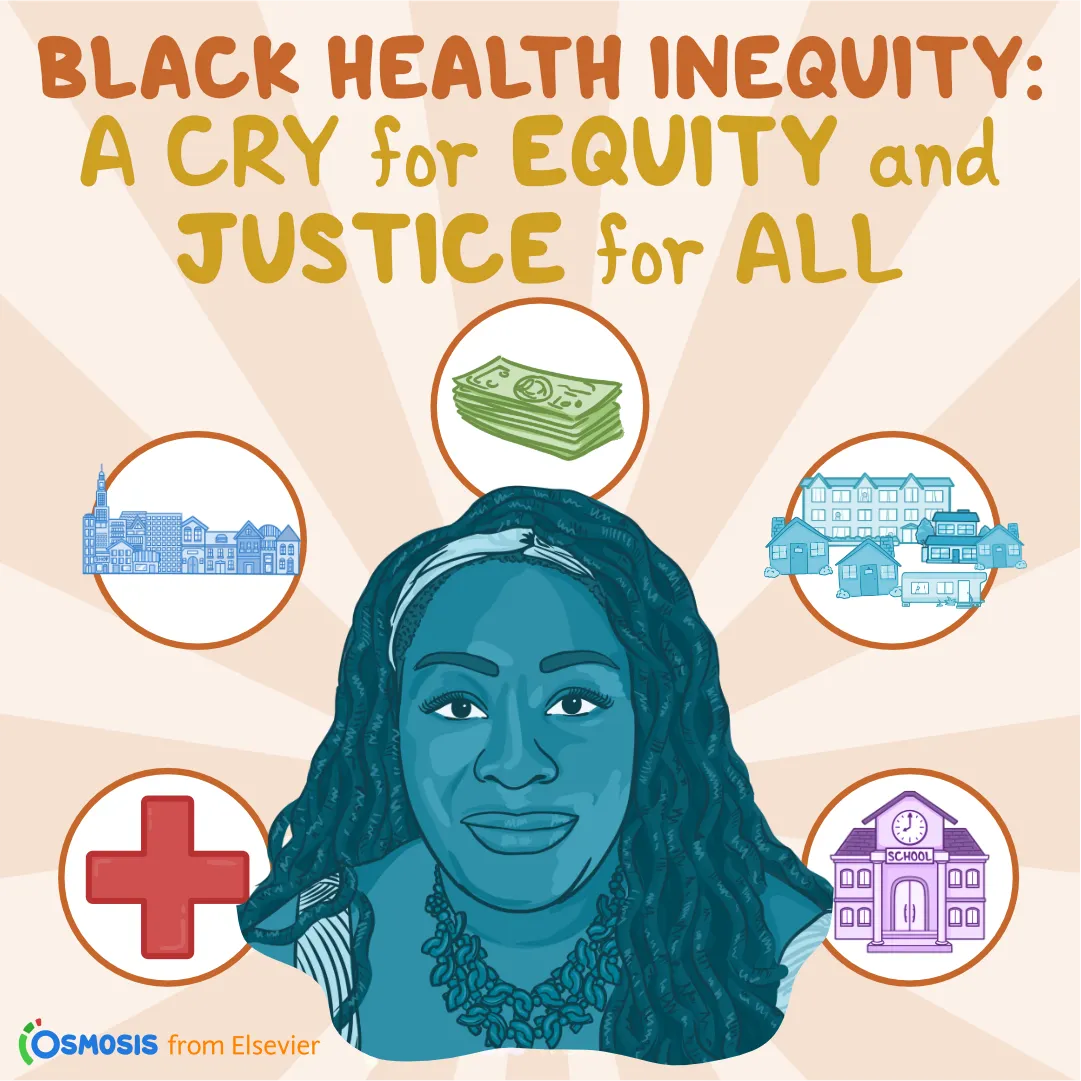
In a guest blog post, Dr. Itunu Johnson-Sogbetun addresses the everyday reality of health inequity for Black communities worldwide, as well as her pioneering work in creating HEAL, Health Equity and Advocacy Learning courses, developed to confront health disparities head-on and guide us to equitable access to healthcare for all.…
-
Working as a Nursing Assistant in a Hospital vs. Nursing Home
— Updated:
—
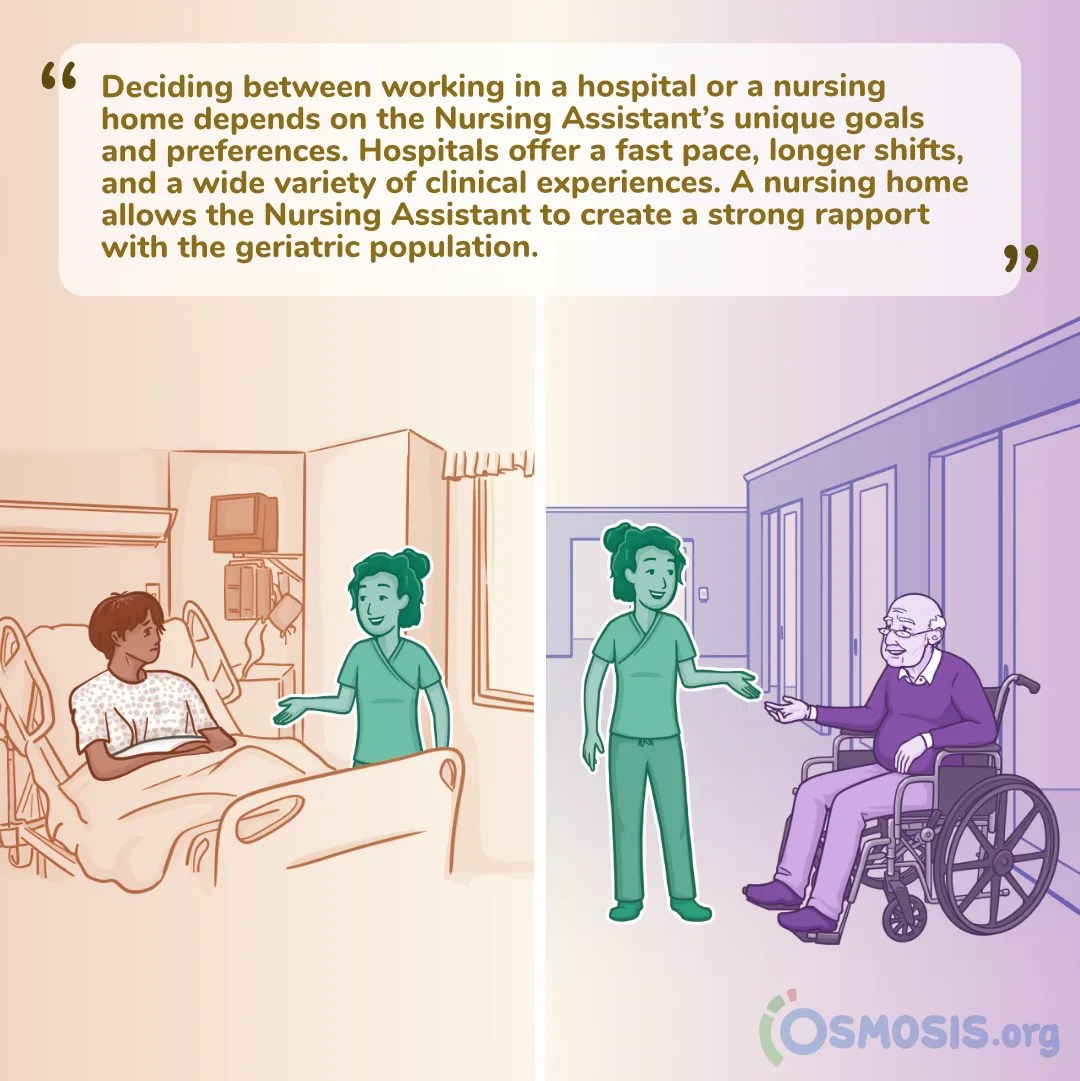
Choosing where to start your Nursing Assistant career? Explore how hospital and nursing home roles differ in pace, responsibilities, and patient care to find your ideal path.
-
OMM® Question of the Day: Occipitoatlantal joint
— Updated:
—
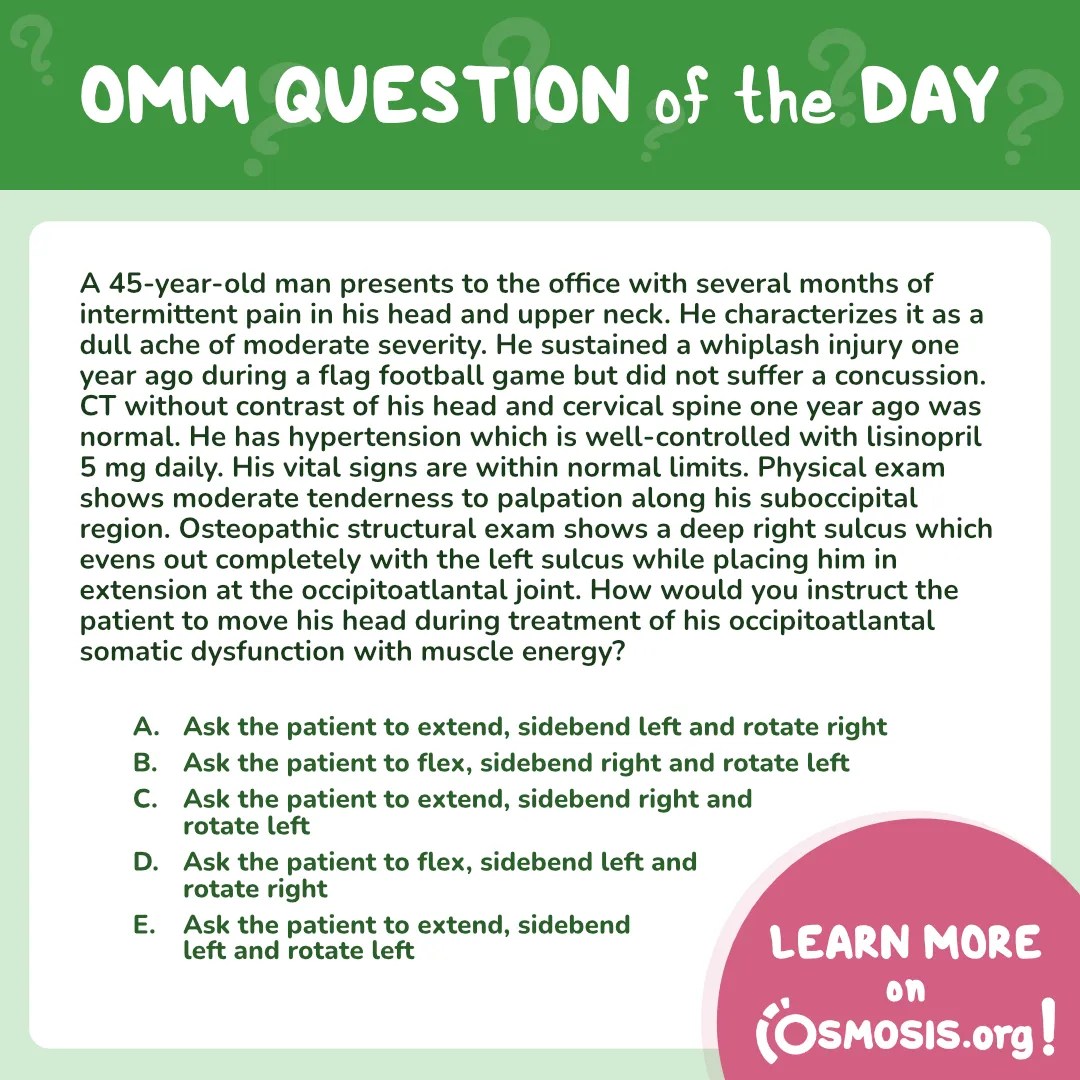
Today’s OMM question involves a 45-year-old man with chronic head and neck pain, attributed to a previous whiplash injury and well-controlled hypertension, seeks medical attention. Physical and osteopathic examinations reveal specific somatic dysfunction at the occipitoatlantal joint. To address this, the patient is instructed to move his head in a…
-
NCLEX-RN® Question of the Day: Poison exposure
— Updated:
—
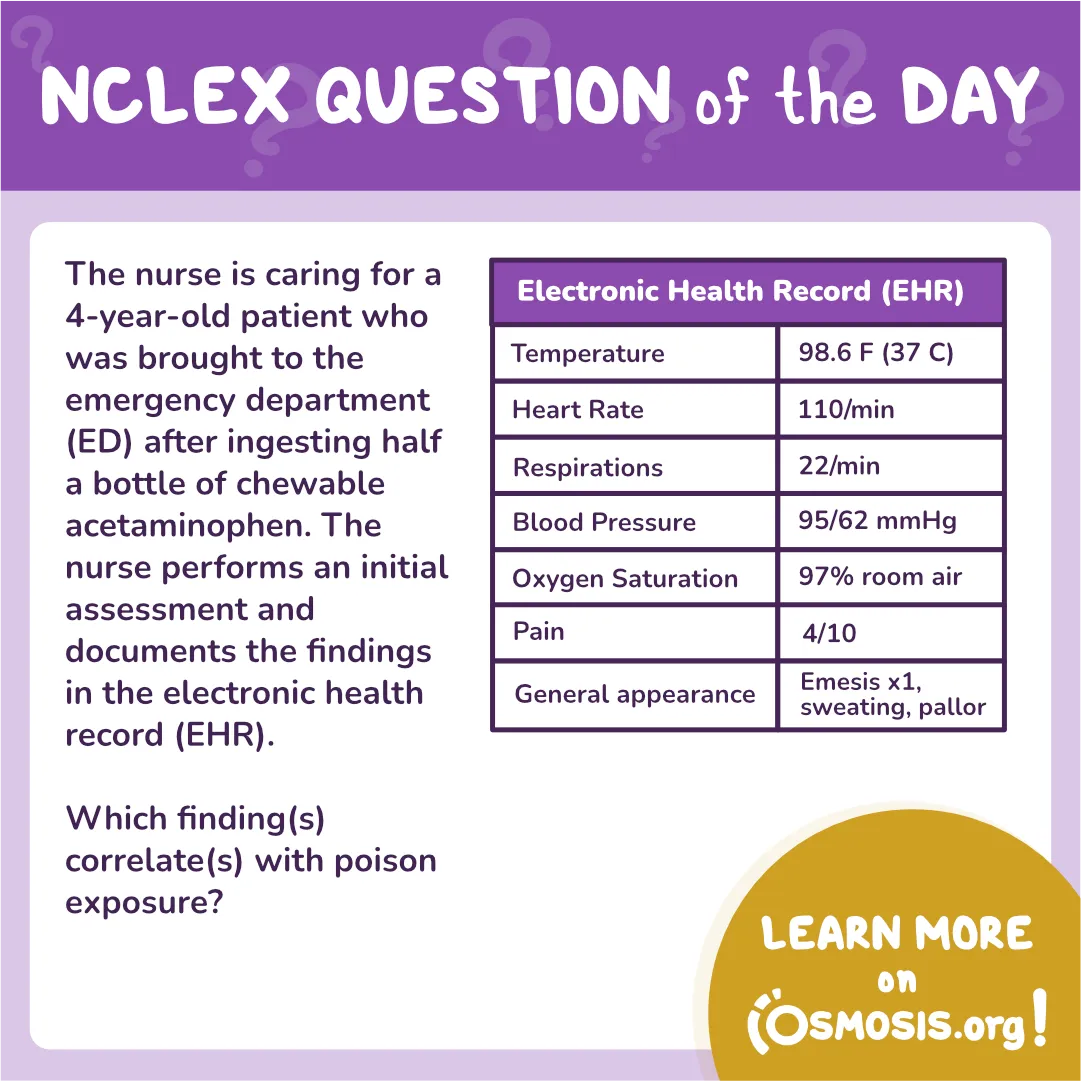
Today’s NCLEX-RN® question of the day focuses on a nurse who is assessing a 4-year-old patient who ingested half a bottle of chewable acetaminophen and documenting the findings in the EHR, what specific findings should the nurse look for that correlate with poison exposure? Can you figure it out? The nurse…
-
A Quick Guide to Using the Osmosis Suite for Aspiring Nurse Practitioners
— Updated:
—
What’s the new Osmosis by Elsevier Clinical Sciences library? Designed to strengthen your clinical decision-making skills, the Clinical Sciences library from Osmosis by Elsevier provides hundreds of clinically-focused videos, helpful decision-making trees, new board-style questions, and expert-reviewed, patient-centered content. Clinical Sciences videos are paired with evidence-based decision-making trees that guide you through differential diagnoses, identify the correct diagnosis…
-
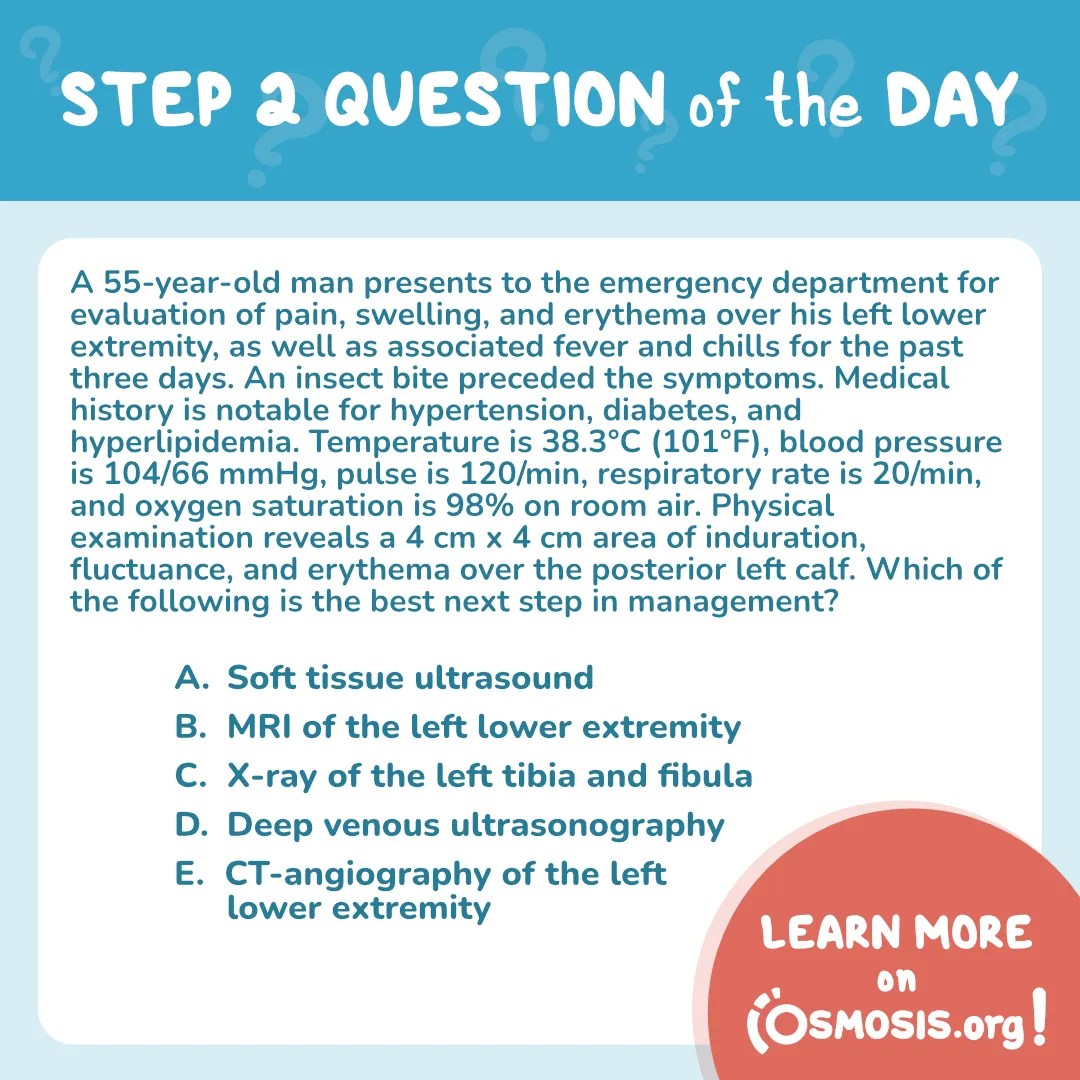
USMLE® Step 2 Question of the Day: Insect bite
— Updated:
—
We’re back with a USMLE® Step 2 CK Question of the Day! Today’s case involves a 55-year-old man with a history of hypertension, diabetes, and hyperlipidemia presents to the emergency department with pain, swelling, and redness in his left leg, accompanied by fever and chills for three days following an insect…
-
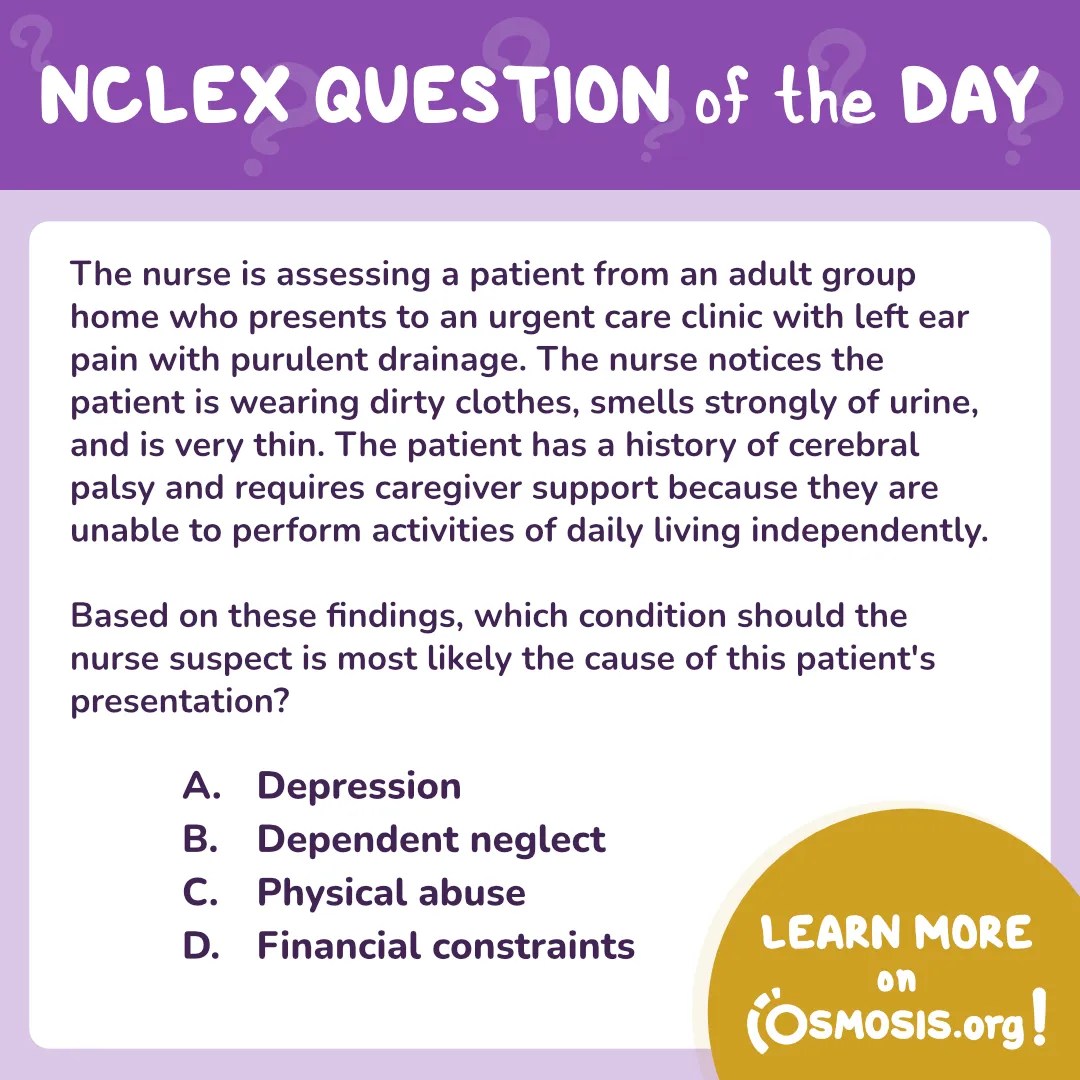
NCLEX-RN® Question of the Day: Left ear pain
— Updated:
—
Today’s NCLEX-RN® question of the day focuses on a nurse who is assessing a patient with left ear pain and purulent drainage, resides in an adult group home, and displays poor hygiene and thinness. The patient has a history of cerebral palsy and requires caregiver assistance for daily activities. Given…
-
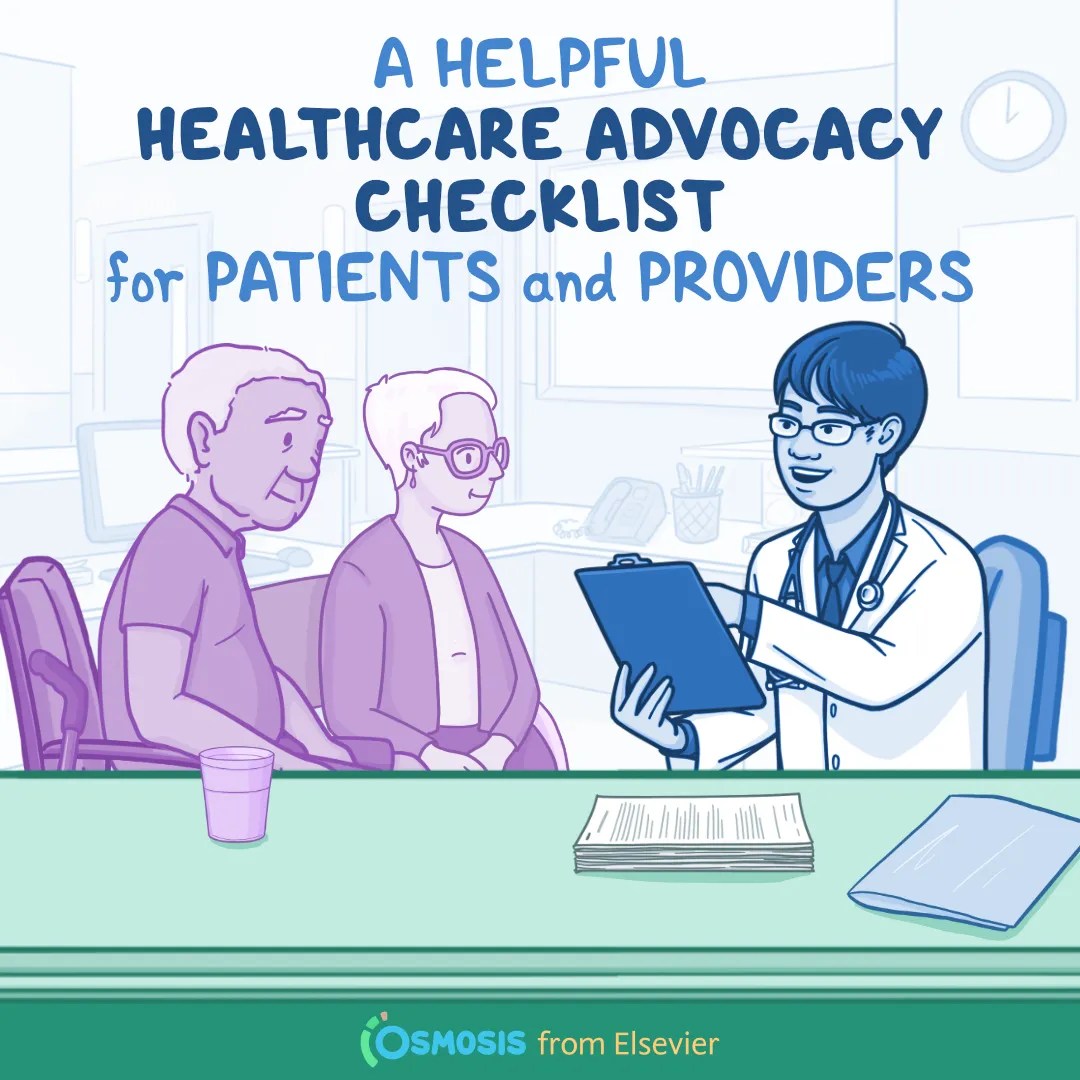
Healthcare Advocacy Checklist for Patients and Providers
— Updated:
—
In today’s Osmosis blog, we’re sharing a patient advocacy checklist developed by Dr. Maria Pfrommer, filled with helpful advice on everything from communicating effectively with your care team to understanding insurance. When patients and their families face challenging medical diagnoses, there are a number of proactive steps they can take to navigate the…
-
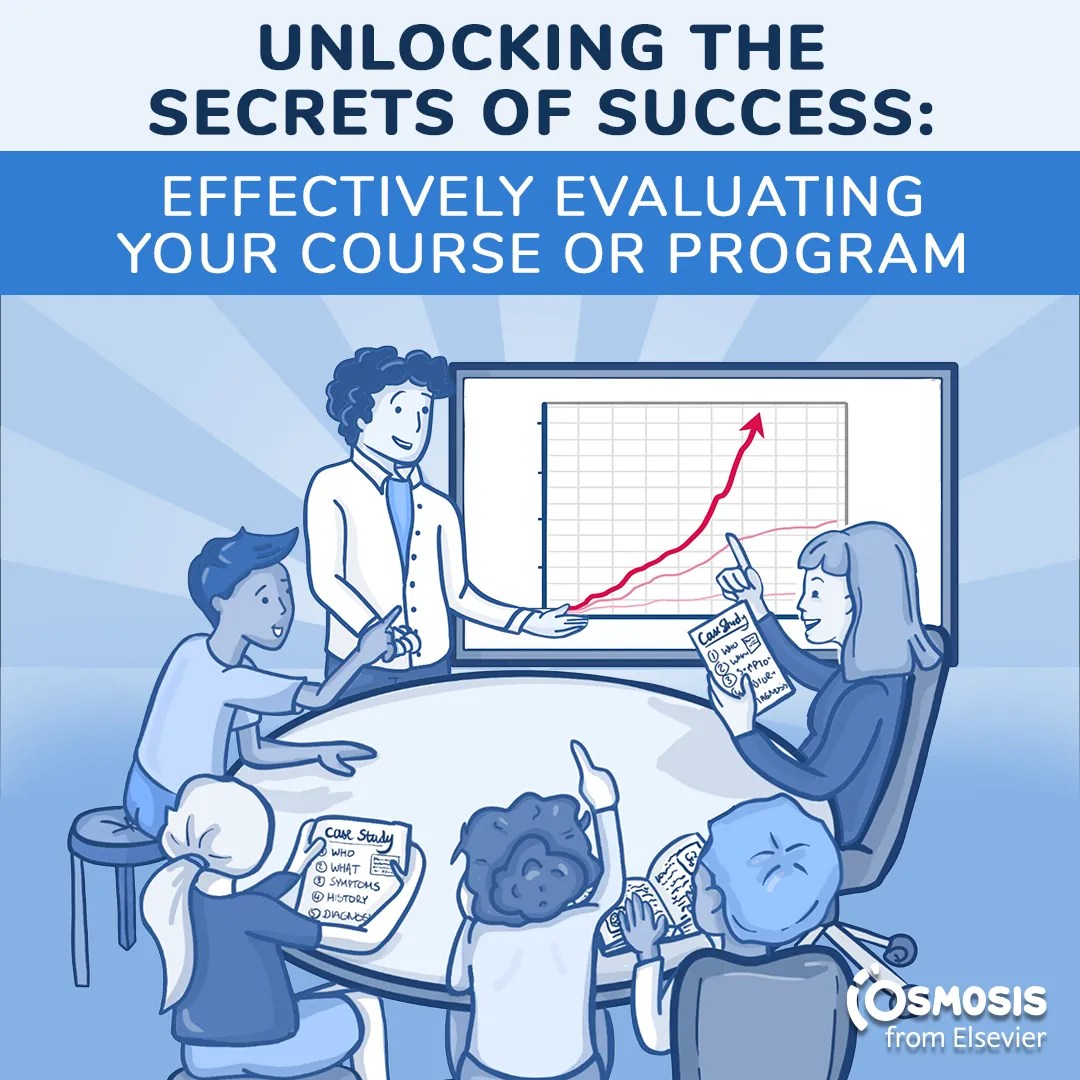
Unlocking the Secrets of Success: Effectively Evaluating Your Course or Program
— Updated:
—
In today’s Osmosis blog, Dr. Sean Tackett addresses how to evaluate a course or program by explaining how to design an effective framework and highlighting how to avoid missing important issues. We all have blind spots. Recently, when working with colleagues on an article about “blind spots” in medical…
-
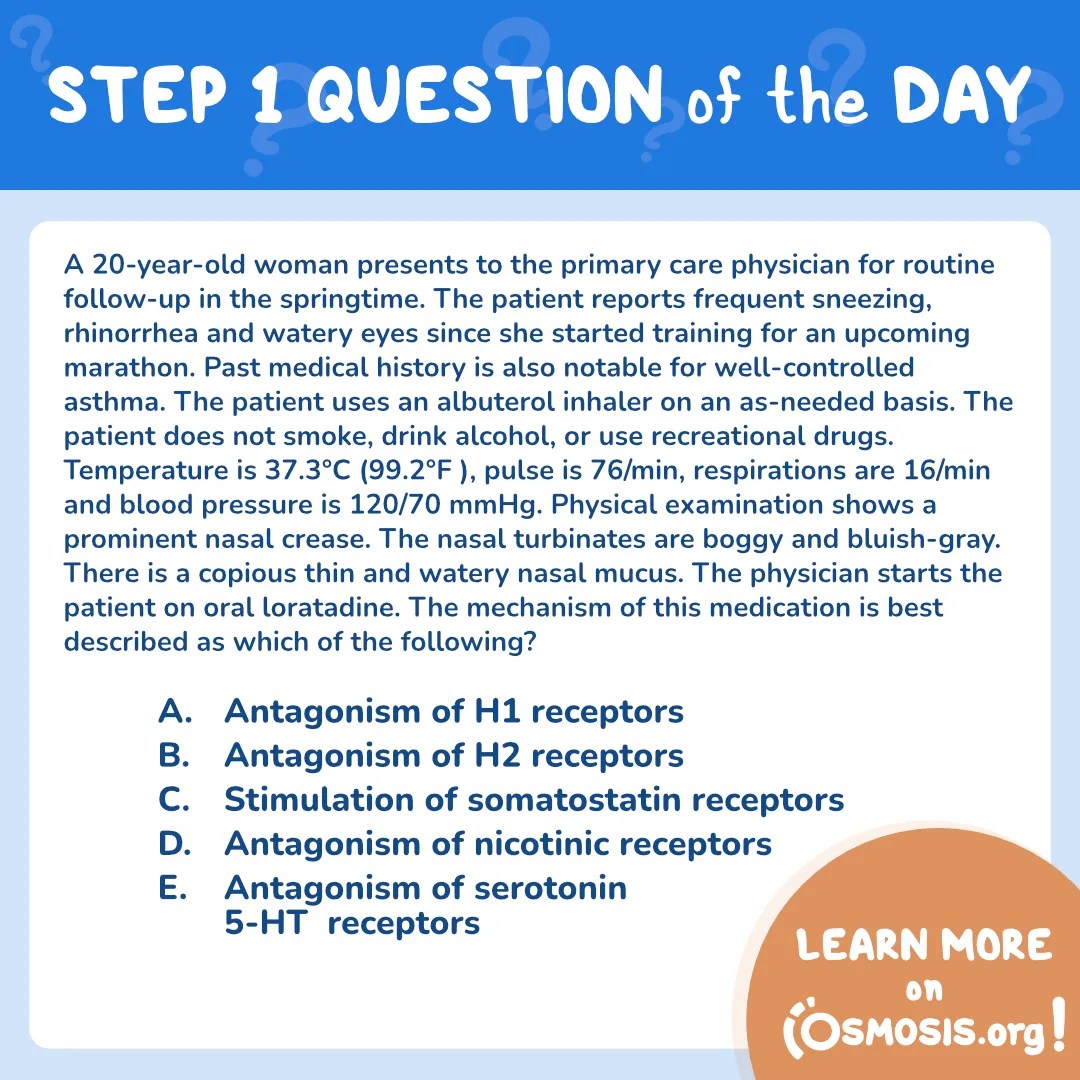
USMLE® Step 1 Question of the Day: Oral loratadine
— Updated:
—
This week, we are sharing another USMLE® Step 1-style practice question to test your knowledge of medical topics. Today’s case focuses on a 20-year-old woman with a history of well-controlled asthma presents with springtime allergies while training for a marathon. She experiences sneezing, rhinorrhea, and watery eyes. The physician prescribes loratadine. What is…
-
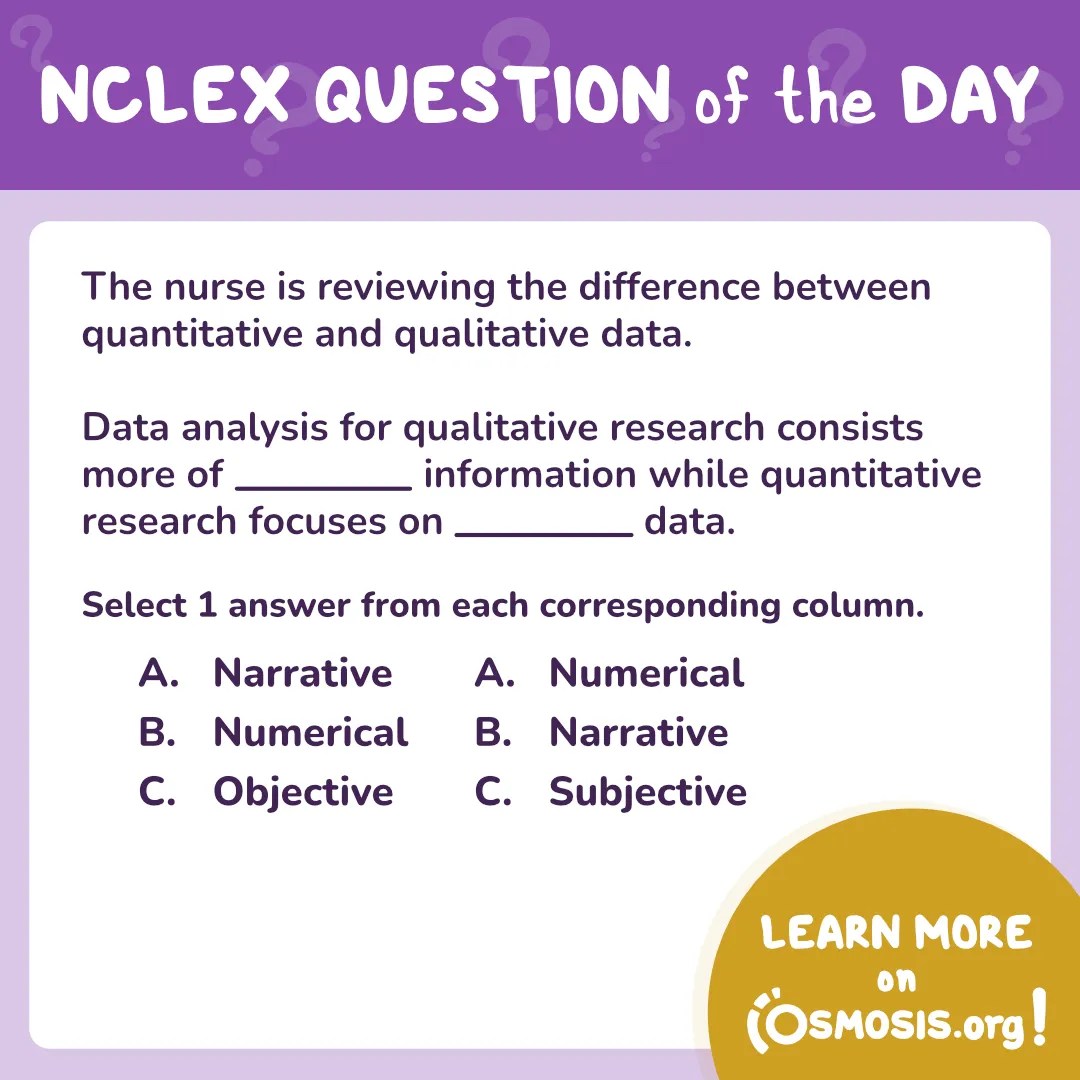
NCLEX-RN® Question of the Day: Data analysis
— Updated:
—
Today’s NCLEX-RN® question of the day focuses on a nurse who is reviewing the difference between quantitative and qualitative data. Can you figure this out? The nurse is reviewing the difference between quantitative and qualitative data. Data analysis for qualitative research consists more of _________ information while quantitative research focuses on…
-
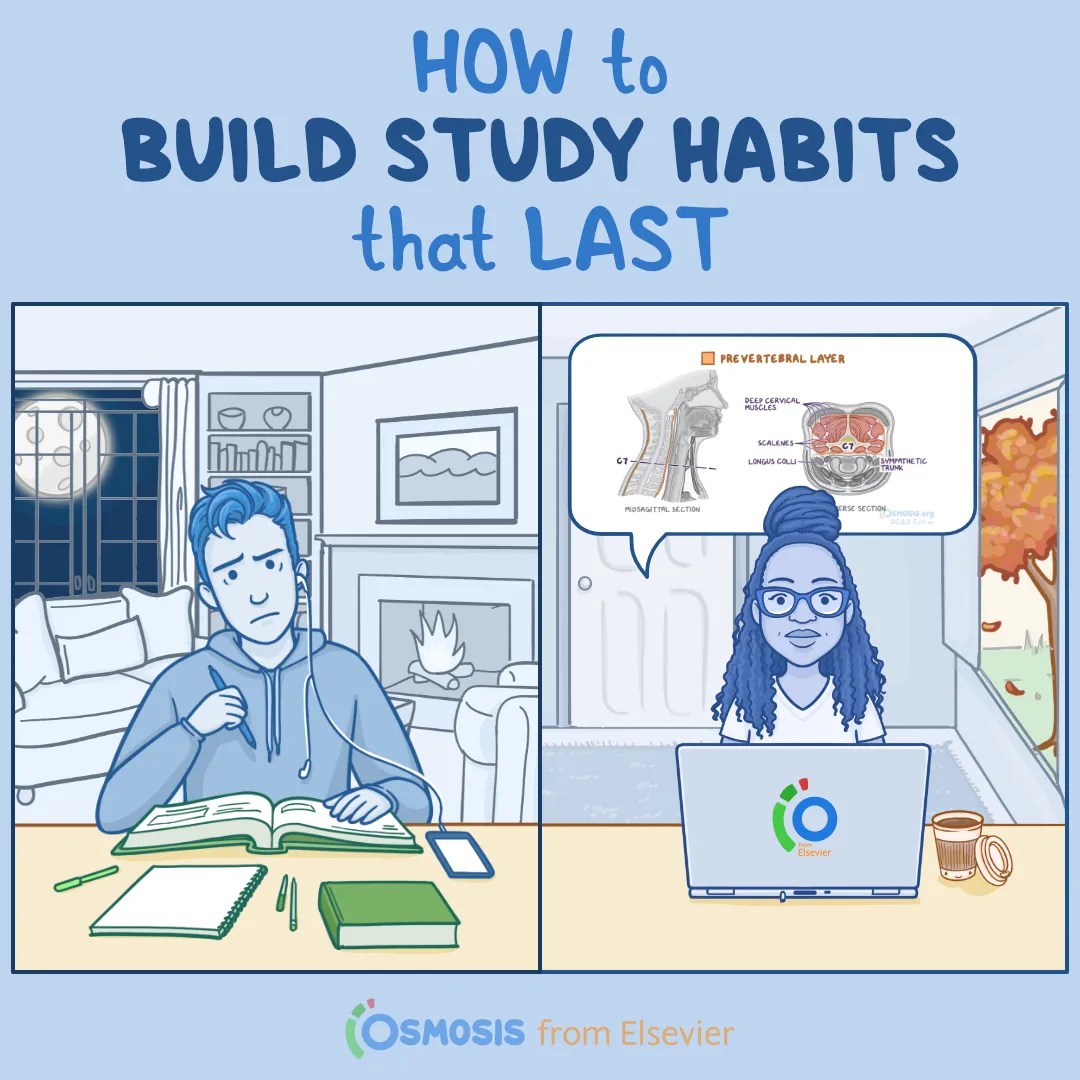
How to Build Study Habits That Last
— Updated:
—
In today’s Osmosis by Elsevier blog, we’re sharing strategies for academic success, how to determine your learning style, and offering hands-on, helpful tips on improving your study habits. We’ve all been there. You do an all-nighter to cram in every possible bit of information, but despite your best efforts, your…
-
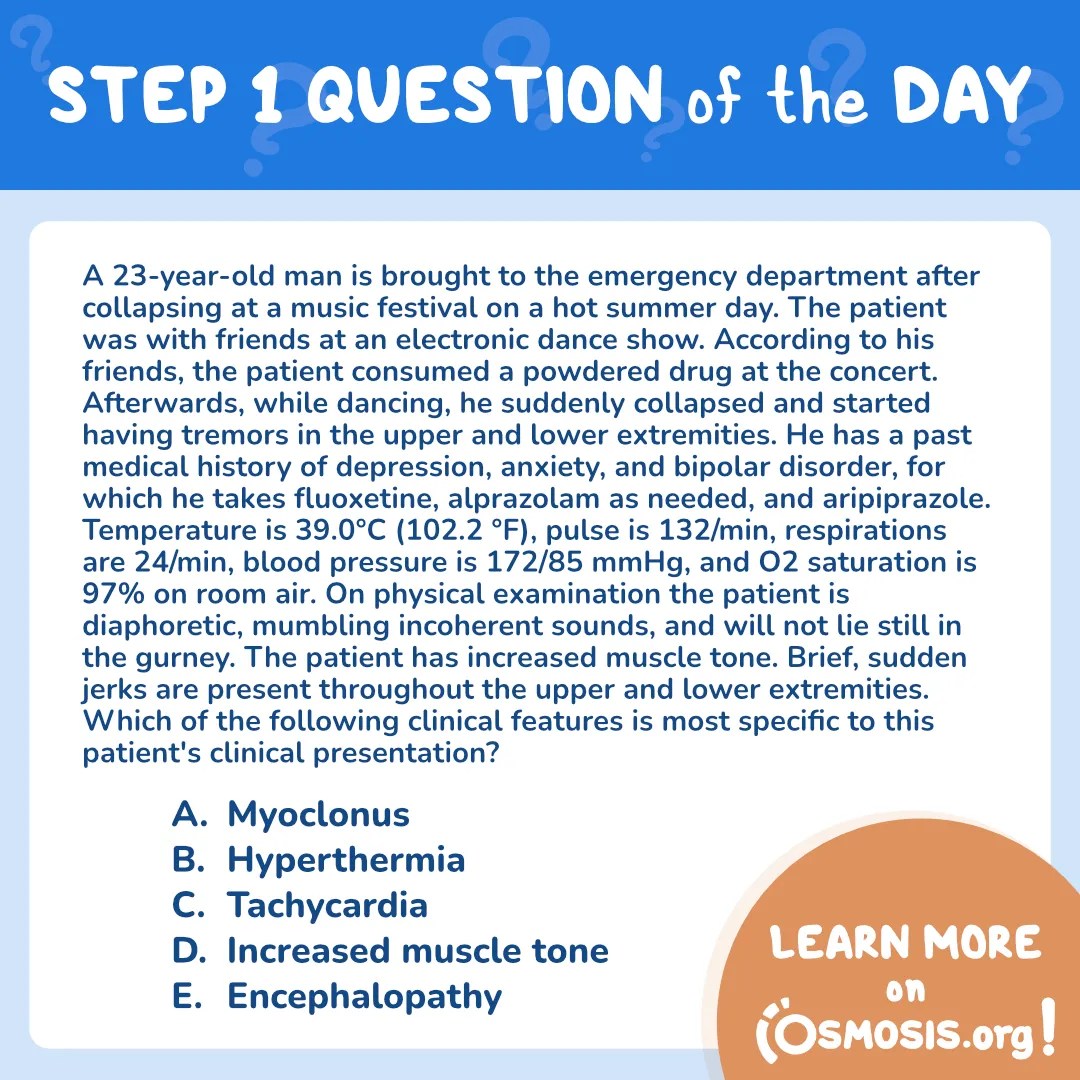
USMLE® Step 1 Question of the Day: Neuroleptic Malignant Syndrome
— Updated:
—
Explore a USMLE® Step 1 clinical case on serotonin syndrome and discover why myoclonus distinguishes it from similar conditions like neuroleptic malignant syndrome.
-
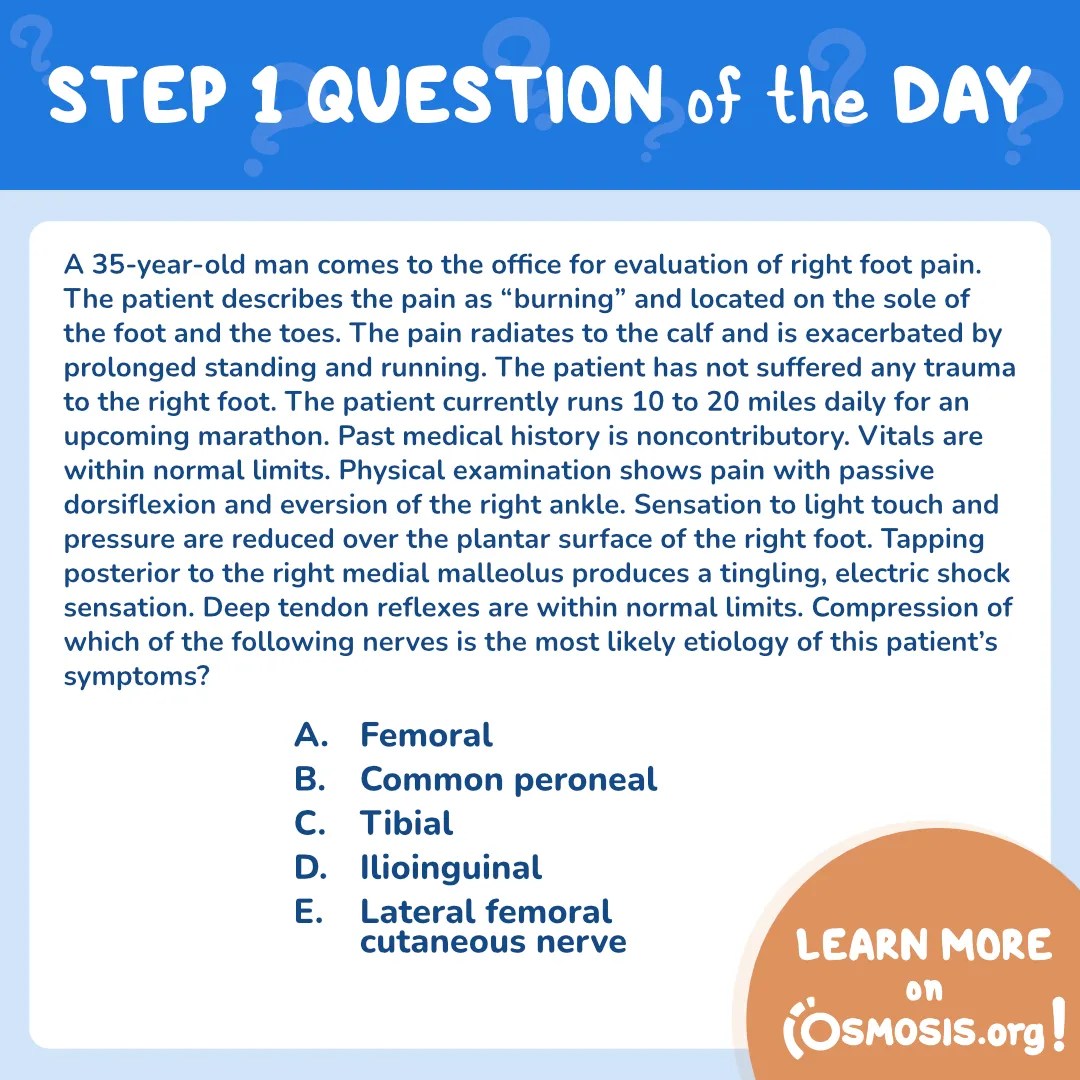
USMLE® Step 1 Question of the Day: Compressed nerve
— Updated:
—
This week, we are sharing another USMLE® Step 1-style practice question to test your knowledge of medical topics. Today’s case focuses on a 35-year-old marathon runner with burning foot pain. Learn how to identify the underlying nerve compression causing his symptoms. Test your diagnostic skills with this USMLE Step 1 question. A 35-year-old…
-
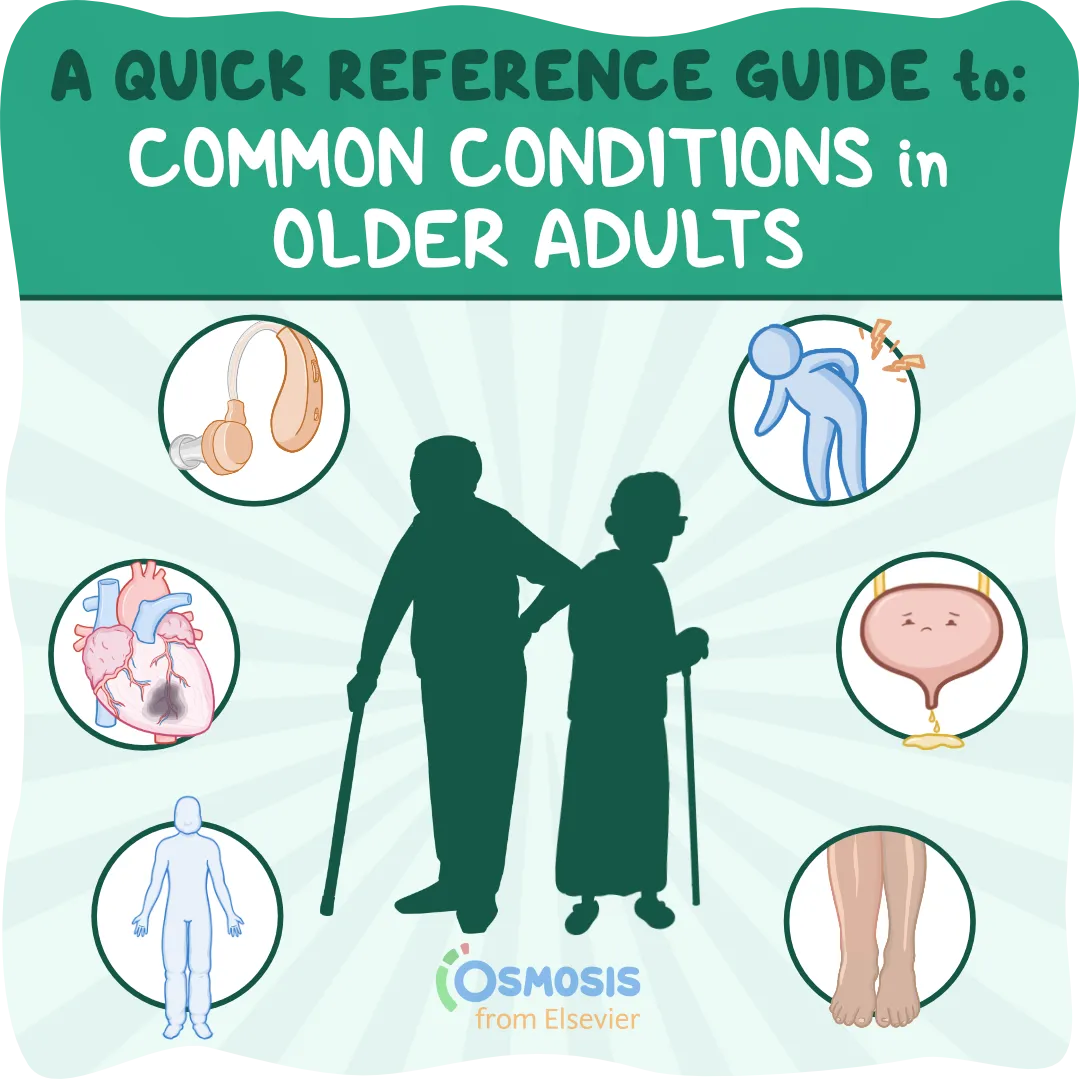
A Quick Reference Guide to Common Conditions in Older Adults
— Updated:
—
Diagnosing common conditions is vital to providing effective care and sustaining a high quality of life for all patients, but it’s especially important as patients age. In today’s Osmosis by Elsevier blog, we’re exploring some of the common conditions that present as we grow older. In the coming decades, the…
-
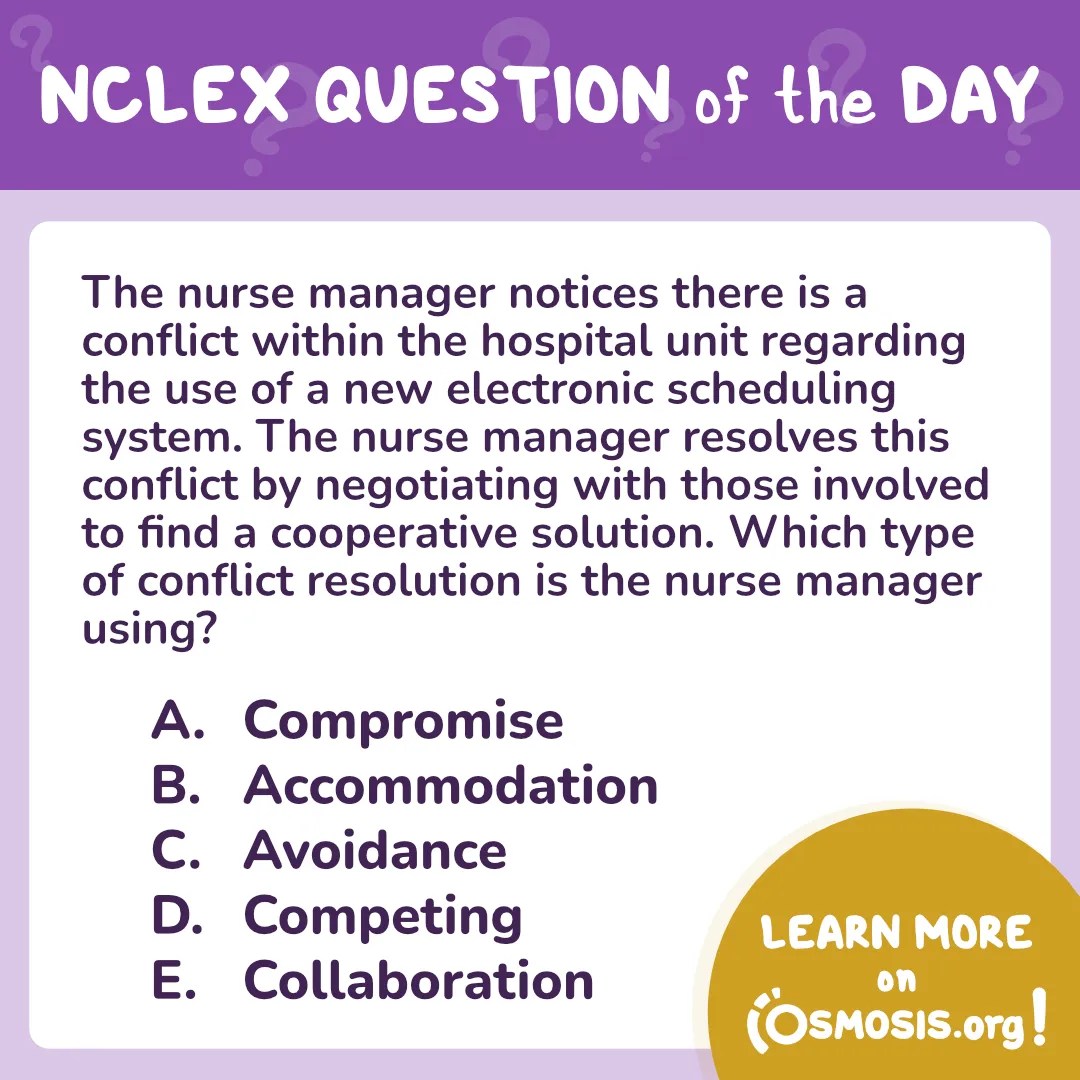
NCLEX-RN® Question of the Day: Conflict resolution
— Updated:
—
Today’s NCLEX-RN® question of the day focuses on a nurse manager who is resolving a conflict regarding the use of a new electronic scheduling system. Which type of conflict resolution is the nurse manager using? Can you figure it out? The nurse manager notices there is a conflict within the hospital…
-
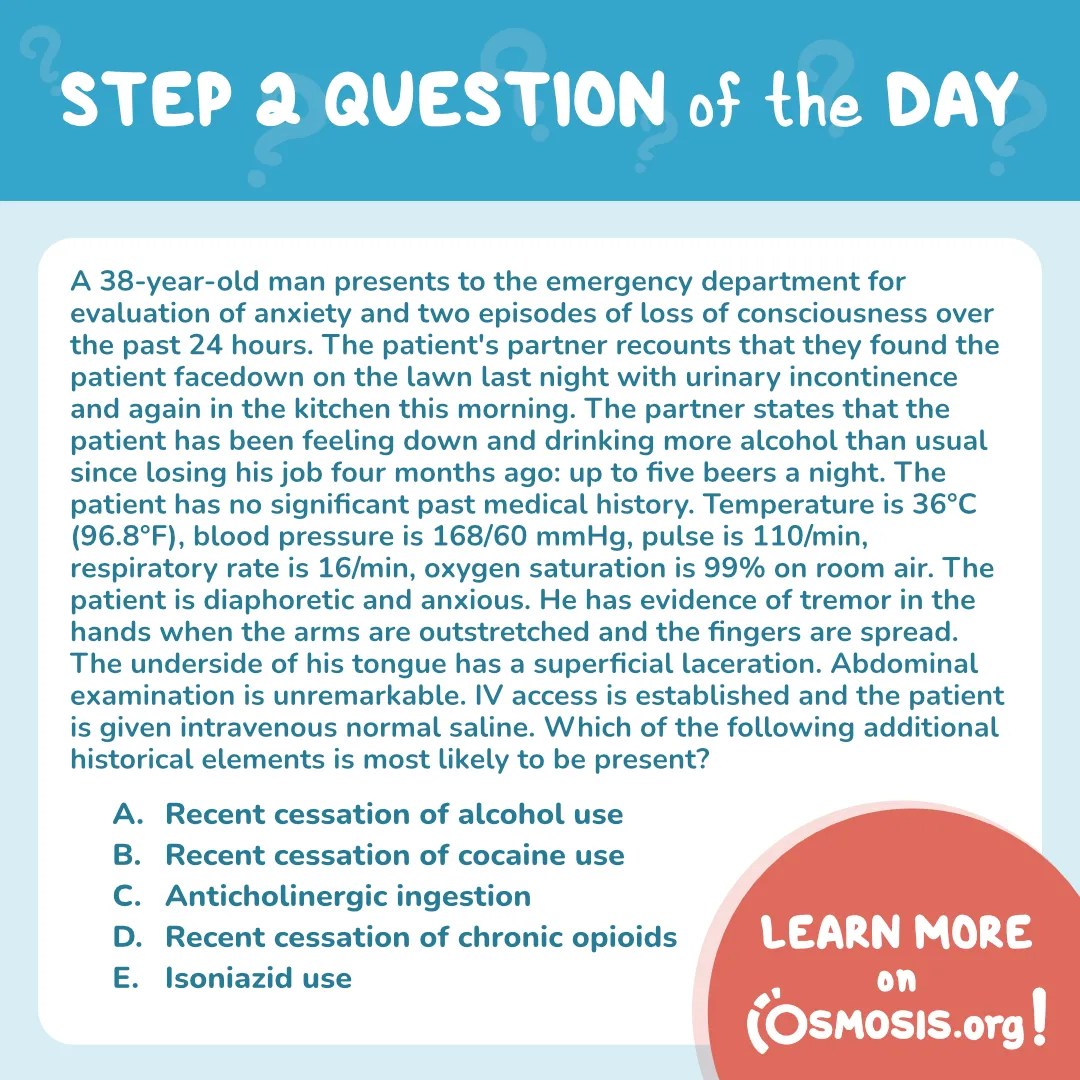
USMLE® Step 2 Question of the Day: Focused history
— Updated:
—
A patient presents with anxiety and recent episodes of loss of consciousness. What is crucial to the patient’s diagnosis and treatment?
-
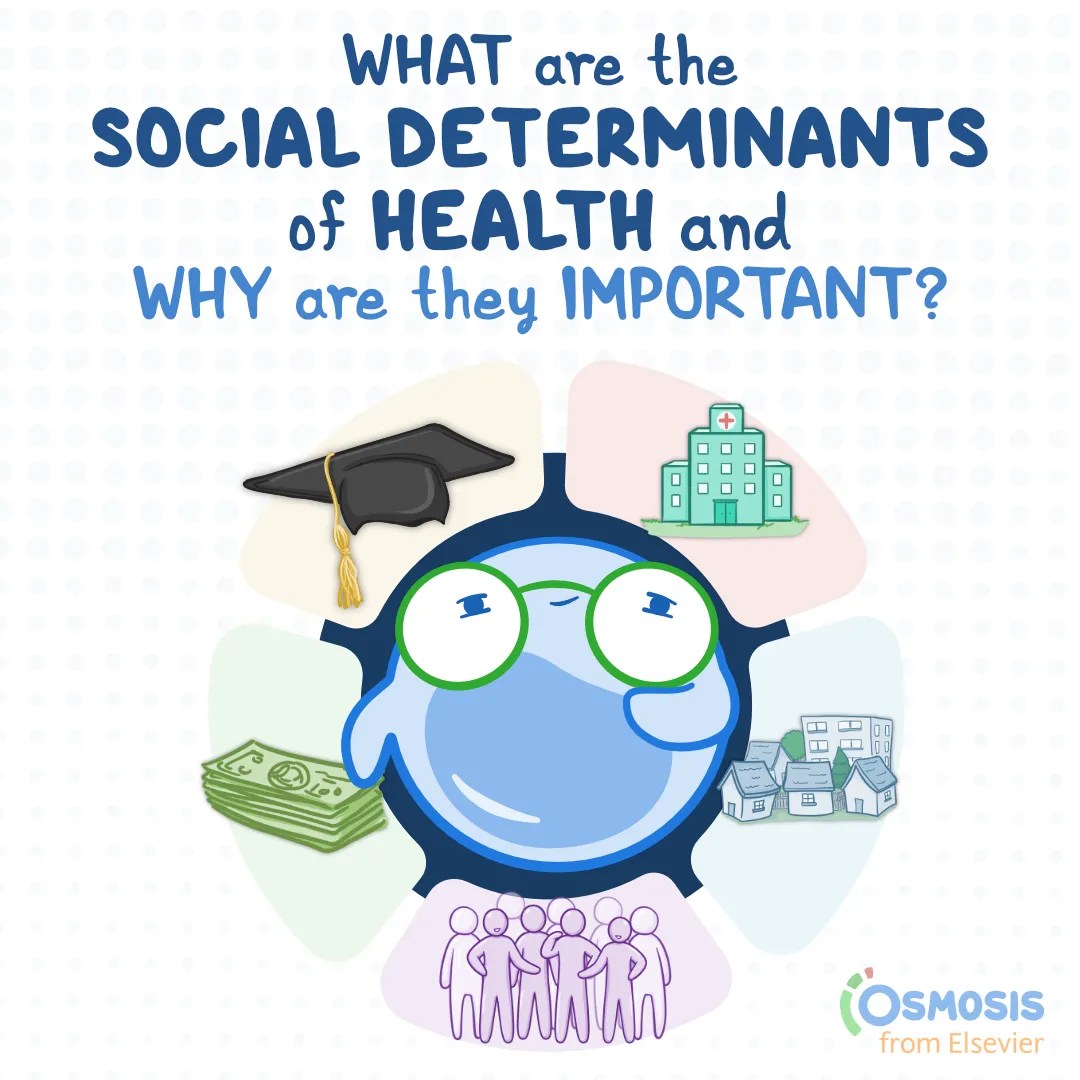
What Are the Social Determinants of Health and Why Are They Important?
— Updated:
—
Discover how social, economic, and environmental factors influence health beyond genetics, shaping disparities and opportunities in healthcare access.
-
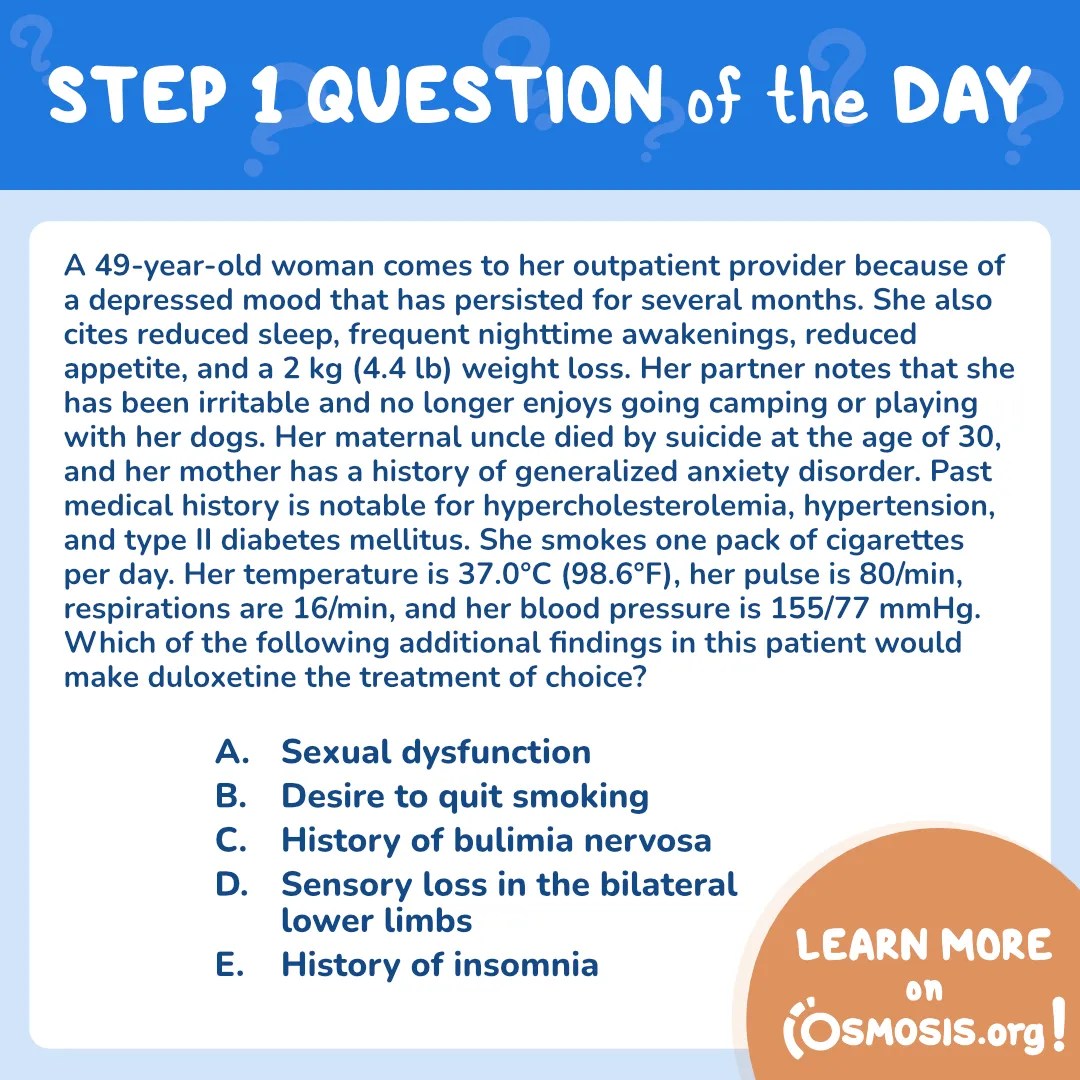
USMLE® Step 1 Question of the Day: Duloxetine
— Updated:
—
This week, we are sharing another USMLE® Step 1-style practice question to test your knowledge of medical topics. Today’s case focuses on a 49-year-old woman battling depression with a family history of mental health issues. Discover the critical factors that may make duloxetine the preferred treatment option for her condition. Get insights into…
-
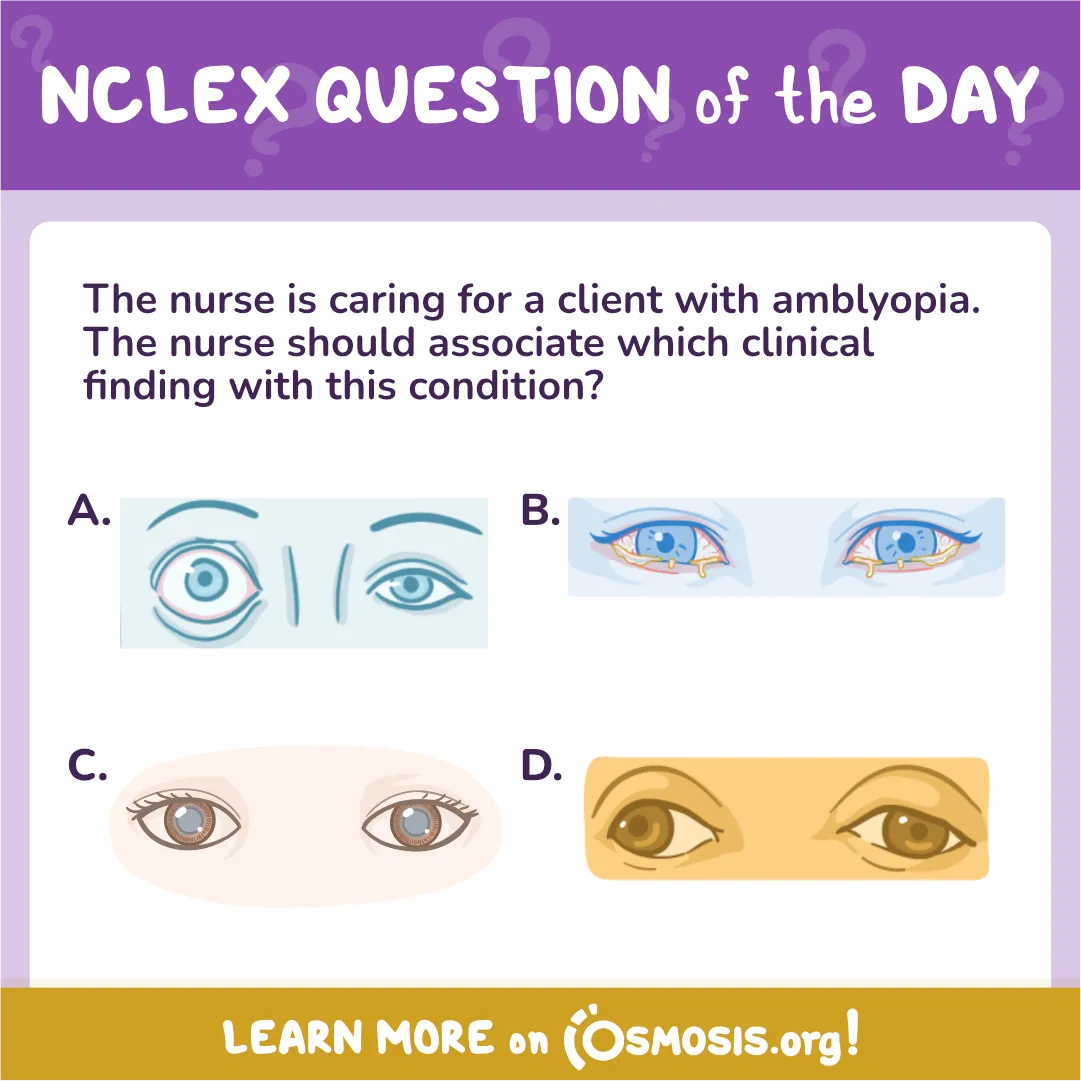
NCLEX-RN® Question of the Day: Amblyopia
— Updated:
—
The nurse is caring for a client with amblyopia. The nurse should associate what clinical finding with this condition? A. B. C. D. Scroll down for the correct answer! The correct answer to today’s NCLEX-RN® Question is… D. Rationale: This image depicts one eye that wanders outward, a typical finding associated…
-
The Top 10 Scariest Medical Diagnoses Throughout History
— Updated:
—
Discover the most feared medical diagnoses in history and the scientific breakthroughs that have changed the landscape of treatment and prevention. From the Black Death to modern challenges like HIV/AIDS, learn how these diseases have shaped public health and the importance of awareness and prevention.