Acute respiratory distress syndrome (ARDS): Nursing
Definitions & Key takeaways
Acute respiratory distress syndrome (ARDS) is a life-threatening lung condition that results in non-compliant lungs and poor blood oxygenation. It is associated with diffuse alveolar and endothelial injury. ARDS can be caused by a number of things, including pneumonia, sepsis, and trauma. Symptoms include shortness of breath, rapid breathing, and blue lips and fingernails.
Nurses play an important role in diagnosing and managing ARDS. They help monitor patients and provide respiratory support. Nurses also play an important role in educating families about this condition and helping them to understand what to expect.
Introduction0:00–0:22
Acute Respiratory Distress Syndrome, or ARDS, is a type of severe respiratory condition characterized by severe lung inflammation and noncardiogenic pulmonary edema.
As a result, there’s decreased lung compliance, leading to hypoxemia and respiratory failure.Now, let’s quickly review the respiratory tract, which can be divided into two regions: the upper respiratory tract and lower respiratory tract.
Physiology0:22–1:34
The upper respiratory tract includes the nose, nasal cavity, the oral cavity, pharynx, epiglottis, larynx, and the upper part of the trachea; while the lower respiratory tract includes the lower part of the trachea, and the lungs containing the bronchi, bronchioles, alveolar ducts, and finally the alveoli.Alveoli are tiny air-filled sacs where most gas exchange occurs, so as we breathe, the inhaled oxygen moves from the alveolar sacs into the blood, while the carbon dioxide moves from the blood into the alveolar sacs to be exhaled.
Now, the alveoli are lined by two types of alveolar epithelial cells, called pneumocytes. The vast majority are type I pneumocytes, which allow oxygen and carbon dioxide to pass through them.
There are also type II pneumocytes scattered around which produce surfactant, an oily secretion that coats the alveoli and prevents their collapse.Now, ARDS is not a primary lung disease, rather it arises as a complication of a systemic injury that causes widespread inflammation which results in damage to the alveolar-capillary membranes within the lung.
Causes & risk factors1:34–2:45
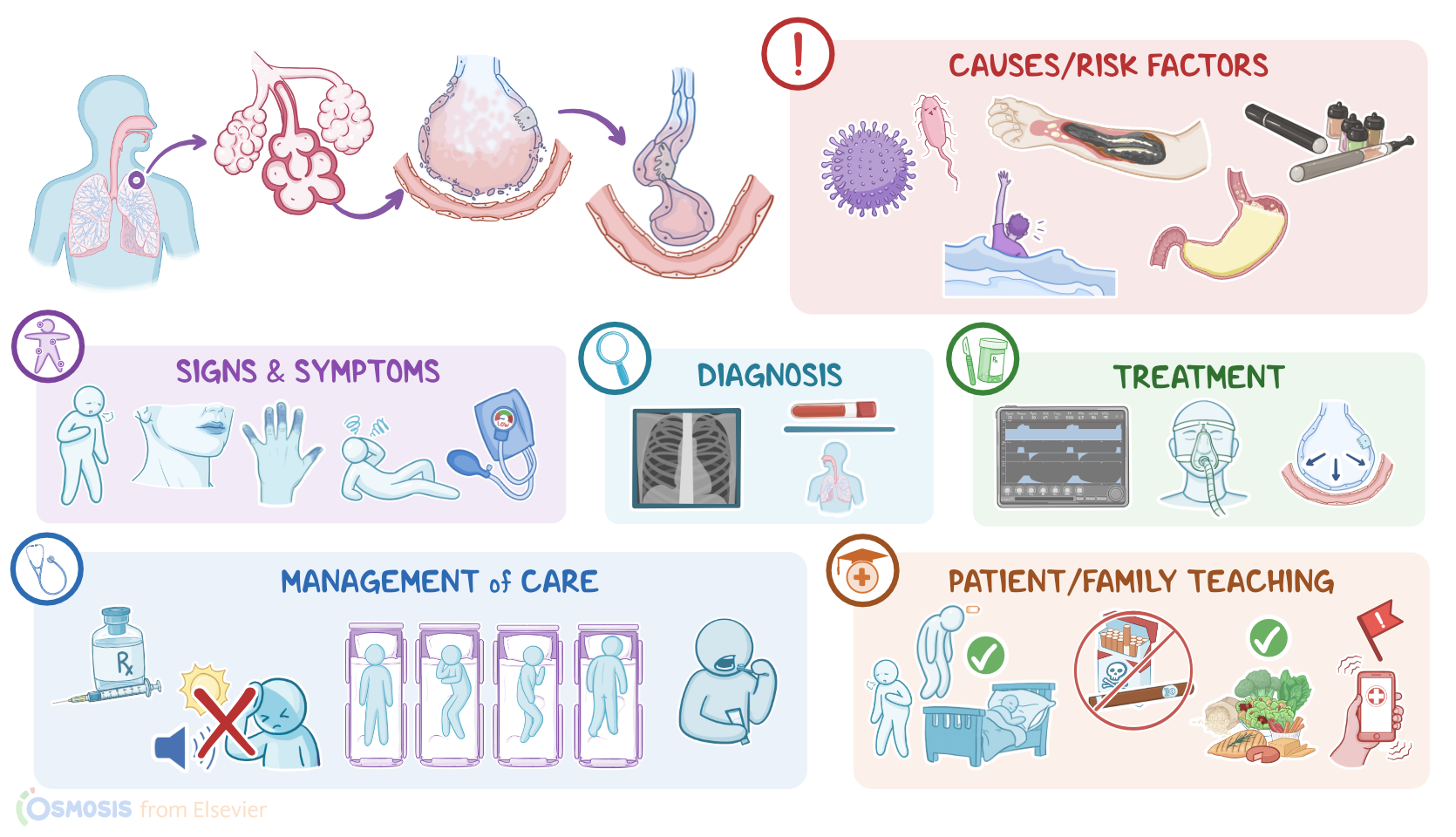
But other injuries include trauma, severe burns, near-drowning, acute pancreatitis, massive blood transfusions, aspiration of gastric contents, and toxic smoke inhalation, as well as vaping-related injury.
The list basically includes any serious injury that directly or indirectly affects the entire body.Risk factors for developing ARDS include tube feeding, difficulty swallowing, a poor gag reflex, or a serious infection, as well as smoking or vaping.Alright, so the pathology of ARDS begins when a pulmonary or systemic injury triggers a severe inflammatory response in the lungs, which in turn causes damage to the alveolar epithelium and capillary endothelium.
Pathology2:45–3:57
As a result, the capillaries become permeable to larger molecules like proteins, which leak into the alveoli, pulling water with them.
The end result is noncardiogenic pulmonary edema. Meanwhile, damaged type II pneumocytes stop producing surfactant, causing alveolar collapse.
These collapsed, fluid-filled alveoli cannot participate in gas exchange, causing non-aerated, stiff, and non-compliant lungs.
This leads to ventilation-perfusion mismatch and shunting, where blood doesn't become oxygenated as it moves through the lungs.
This results in acute, refractory hypoxemia, meaning that the client’s oxygenation does not improve even when they receive higher concentrations of oxygen; and ultimately, clients develop complications like respiratory failure.Clients with ARDS often present with short, shallow, and rapid breathing, as well as intercostal and substernal retraction during inspiration.
In severe cases, they may also experience shortness of breath, cyanosis, and refractory hypoxemia. Additionally, clients can develop hemodynamic instability, which presents as hypotension, tachycardia, or arrhythmias.
Clinical manifestations3:57–4:35
During auscultation of the chest, there are diffuse crackles which is the sound of collapsed alveoli popping open with inspiration.Diagnosis of ARDS involves the client’s history and physical assessment, followed by a chest X-ray, which shows opacities or “white out” in both lungs, which is due to the massive pulmonary edema.
An arterial blood gas test is often also used to measure the lowered partial pressure of arterial oxygen or PaO2 and calculate the P/F ratio.
Diagnosis4:35–5:48
The P/F ratio is the partial pressure of oxygen in the arterial blood, or PaO2, divided by the percent of oxygen in the inspired air, also called the fraction of inspired oxygen or FiO2.
In ARDS, the PF ratio is below 300 mmHg, and the lower this ratio gets, the more severe the ARDS is. And that PaO2 doesn’t rise even if we give extra FiO2, because blood passing by edematous alveoli simply isn’t participating in gas exchange.
Finally, a bronchoscopy or transtracheal aspiration might be performed to obtain sputum cultures and check for a lung infection.Treatment of ARDS depends on the underlying condition, so clients with a bacterial infection generally require antibiotics, while diuretics can be administered to reduce edema.
But because the alveoli are damaged, supportive care for breathing is really important, usually in the form of mechanical ventilation with positive end-expiratory pressure or PEEP.
This is where the pressure in the lungs is kept slightly above atmospheric pressure, even after exhalation, because that helps prevent the alveoli from collapsing.
Treatment5:48–7:35
So, PEEP is set at 5 cm H2O and increased in increments of 3 to 5 mm H2O until oxygenation is adequate. A low tidal volume of about 4 to 8 mL/kg is used to prevent over-inflation of the damaged alveoli.
Also, when possible, the FiO2 is set to 60% or less.For clients with moderate-to-severe ARDS, alternative mechanical ventilation modes such as Airway Pressure Release Ventilation or APRV and High-Frequency Oscillatory Ventilation or HFOV may improve gas exchange.
For clients with severe ARDS, Extracorporeal Membrane Oxygenation or ECMO can be used.Additionally, to decrease the discomfort associated with mechanical ventilation, analgesia or sedation can be given.
Clients who continue breathing asynchronously with mechanical ventilation even after the administration of analgesia or sedation may need a neuromuscular blocking agent like vecuronium, pancuronium, or cisatracurium.Alright, let’s look at the nursing care you’ll be providing for a client with ARDS.
Your priority nursing goals are to improve your client’s pulmonary function, promote effective gas exchange, and prevent complications.If your client needs mechanical ventilation, assist with intubation by ensuring all necessary safety equipment is available, and that analgesics, sedation, and neuromuscular blockade medications are administered as ordered.
Once your client is safely intubated, continue to monitor their oxygenation and ventilation by assessing their respiratory rate, oxygen saturation, oxygen requirements.
Institute lung protective measures to prevent ventilator-induced lung injury, as prescribed, including, lower tidal volumes, lower airway pressures, and increased PEEP.Obtain blood gases as ordered, and maintain goals PaO2 and PaCO2 in order to avoid hyperoxemia and promote the prescribed level of hypercarbia.
Management and care7:35–10:52
Decrease your client’s oxygen consumption by reducing or eliminating stressors, including keeping noise at a minimum; dimming lights; planning your routine nursing care, including bathing, linen changes, weighing, or providing oral care to allow your client periods of uninterrupted rest; as well as controlling fever with antipyretics; and reducing pain and anxiety with analgesia and sedation medications.
Also be sure to reposition your client every two hours, or use a specialty bed to provide continuous lateral rotation therapy; and consider prone positioning when indicated.
As you monitor your client’s hemodynamic status, report to the healthcare provider if your client develops hypotension, persistent hypoxia, high fever, or becomes unresponsive.Additionally, when caring for your client, keep in mind some potential complications.
To prevent ventilator-associated pneumonia, or VAP for short, keep the head of the client’s bed elevated 30 to 45 degrees, practice good hand hygiene, maintain sterile technique when performing endotracheal suctioning, provide thorough oral care, and administer the ordered antibiotics.
To prevent gastric ulcers, administer proton pump inhibitors or PPIs as prescribed, and initiate enteral nutrition as early as possible.
To prevent a venous thromboembolism or VTE, use pneumatic compression devices on the lower extremities, and administer anticoagulation prophylaxis as ordered.
Lastly, to prevent an acute kidney injury or AKI, monitor the client’s fluid intake and output, daily weights, and renal lab results, be mindful of the client’s fluid status, and administer IV fluids and diuretics as ordered.
Finally, coordinate with the multidisciplinary healthcare team and provide interventions to treat the underlying cause of the ARDS, and to coordinate care services after discharge.Okay, let’s move on to client and family teaching.
Begin by explaining that ARDS is a serious respiratory condition that keeps the air sacs in the lungs from working well, making it difficult to get enough oxygen into the blood.
Describe the treatments the client is receiving and how they are designed to help.Now, when your client recovers and is being discharged home, let them know that it may take a while for them to return to their normal activities.
Instruct them to take frequent rest periods during the day, and remind them it is normal to feel fatigue, chest pain, and shortness of breath with exertion after recovering from ARDS.
Remind them of the importance of attending all their follow-up appointments, including physical and pulmonary rehabilitation appointments.
General client and family teaching10:52–12:32
Also, teach them about each of their medications, and instruct them to take the medications as directed.Then let them know about important lifestyle modifications, such as avoiding alcohol, smoking or tobacco products, as well as eating a balanced diet, and getting plenty of sleep and rest.
Be sure to instruct them to immediately seek medical help if they develop problems such as a fever; a cough or shortness of breath; a rapid heart rate; swelling or pain in their legs; chest pain; or if they notice their lips or fingernails turning blue.
Lastly, let your client know that it’s not unusual for their mental health to be affected after spending so much time in the ICU, and stress the importance of contacting their healthcare provider if they have difficulty concentrating or if they feel anxious or depressed.Allright, as a quick recap… Acute Respiratory Distress Syndrome, or ARDS, is a severe respiratory condition characterized by severe lung inflammation, which in turn causes damage to the alveolar epithelium and capillary endothelium.
As a result, clients develop noncardiogenic pulmonary edema and alveolar collapse. This leads to ventilation-perfusion mismatch and shunting, which ultimately results in refractory hypoxemia and respiratory failure.
Treatment of ARDS almost always requires mechanical ventilatory support. Nursing goals are to improve your client’s pulmonary function, promote effective gas exchange, and prevent complications.
Client and family education includes learning about ARDS and treatments, care instructions after discharge, and when to contact the healthcare provider.
stress the importance of contacting their health care provider if they have difficulty concentrating or if they feel anxious or depressed All right as a quick recap acute respiratory distress syndrome or ARDS is a severe respiratory condition characterized by severe lung inflammation which in turn causes damage to the alveolar epithelium and capillary endo helium As a result clients develop non cardiogenic pulmonary edema and alveolar collapse This leads to ventilation perfusion mismatch and shunting which ultimately results in refractory hypoxemia and respiratory failure Treatment of ARDS almost always requires mechanical ventilatory support Nursing goals are to improve your clients Pulmonary function promote effective gas exchange and prevent complications Client and family education includes learning about ARDS and treatments care instructions after discharge and went
Review12:32–13:28
| ACUTE RESPIRATORY DISTRESS SYNDROME (ARDS) | ||
| KEY POINTS | NOTES | |
| DEFINITION |
| |
| PHYSIOLOGY |
| |
| CAUSES AND RISK FACTORS |
| |
| PATHOPHYSIOLOGY |
| |
| SIGNS AND SYMPTOMS |
| |
| DIAGNOSIS |
| |
| TREATMENT |
| |
| MANAGEMENT OF CARE |
| |
| PATIENT AND FAMILY TEACHING |
| |
Notes
| CASE STUDY - ACUTE RESPIRATORY DISTRESS SYNDROME (ARDS) | ||
| KEY POINTS | NOTES | |
| INTRODUCTION |
| |
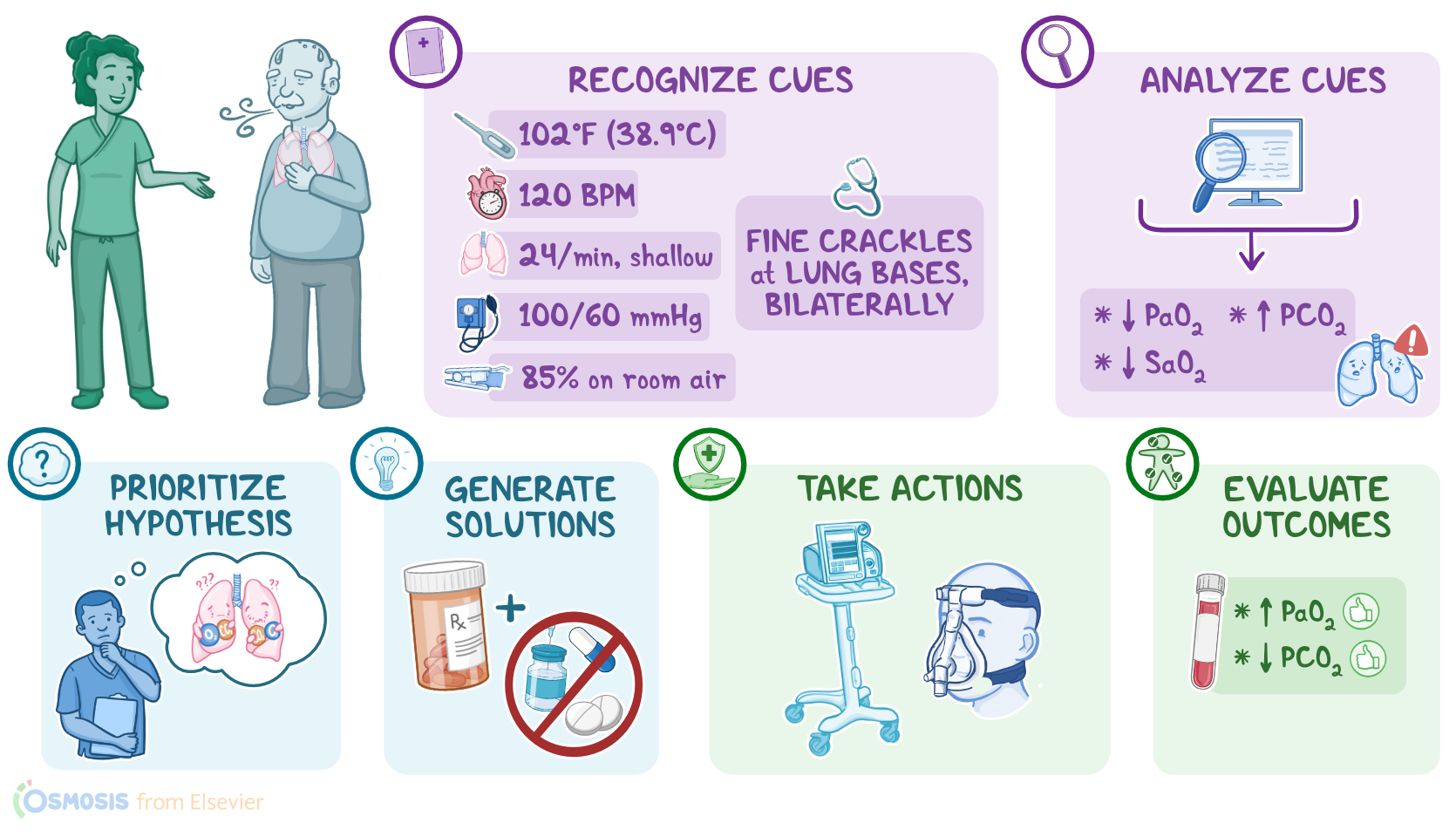
| RECOGNIZING AND ANALYZING CUES |
| |
| PRIORITIZING HYPOTHESES, GENERATING SOLUTIONS, AND TAKING ACTIONS |
| |
| EVALUATING OUTCOMES |
| |
- "Medical-surgical nursing: Concepts for interprofessional collaborative care (10th ed.)" Elsevier (2021)
- "Lewis’s medical-surgical nursing: Assessment and management of clinical problems" Elsevier (2020)
- "Saunders Comprehensive Review for the NCLEX-RN Examination" Elsevier (2018)
- "Mechanical ventilation in ARDS" Critical care nursing quarterly (2019)
- "Advances in the Regulation of Macrophage Polarization by Mesenchymal Stem Cells and Implications for ALI/ARDS Treatment" Frontiers in Immunology (2022)
- "Pathogenesis of Acute Respiratory Distress Syndrome" Seminars in Respiratory and Critical Care Medicine (2019)
- "Management of ARDS – What Works and What Does Not" The American Journal of the Medical Sciences (2021)
No notes for this video yet
Try adding a note below