Arrhythmias - Sinus tachycardia and sinus bradycardia: Nursing
Introduction0:00–0:54
Arrhythmias are irregular heartbeats that occur due to any disturbance in the rate, rhythm, site of origin, or conduction of the cardiac electrical impulse, which can affect the heart's ability to effectively pump blood throughout the body.
In sinus tachycardia and sinus bradycardia, the electrical impulse originates where it should in the sinoatrial node, but the node fires either too fast or too slow.
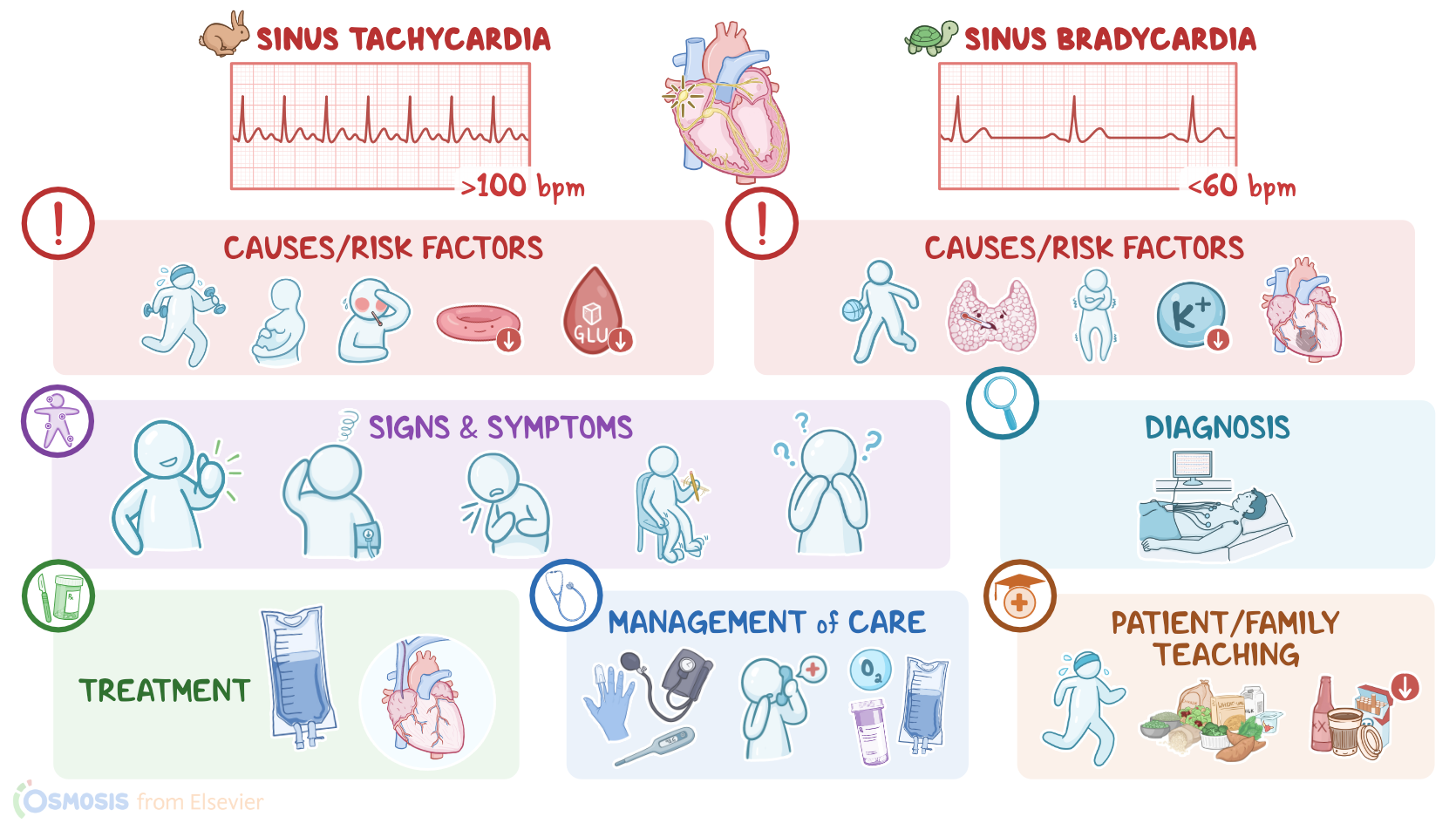
The cardiac rhythm is normal, meaning the beats are spaced evenly apart, but in sinus tachycardia, the heart rate is more than 100 BPM, while in sinus bradycardia, it is less than 60 BPM.
Now, the cardiac conduction system is made up of specialized myocardial cells that can create and transport electrical potential, also called an action potential.
Physiology0:54–3:36
These cells have many special features including automaticity, meaning that they can generate an impulse, excitability, which is the ability to respond to a stimulus by creating an electrical impulse, conductivity meaning they can carry the impulse to other cells, and contractility, which is the ability to shorten the length of their fibers, causing a contraction.
Let's look at the normal electrical conduction pathway in the heart on an ECG which shows how the depolarization wave flows through the heart during each heartbeat.
The normal electrical activity of the heart starts in the sinoatrial node or SA node, which is considered the pacemaker of the heart.
Then the impulse is conducted through the atria, causing depolarization and creating the P wave on an ECG. When the atrial muscle cells get depolarized, they contract, pushing blood from the atria into the ventricles.
From the atria, the impulse goes to the atrioventricular node or AV node, where the impulse propagation speed slows way down.
The interval from the atrial depolarization to just before ventricular depolarization is the PR interval on an ECG. This delay allows the atria to contract while the ventricles fill with blood.
From the AV node, the impulse goes through the bundle of his, then to the right and left bundle branches, and finally through the perkinji fibers which deliver the impulse to the right and left ventricles, causing them to depolarize and is represented by the QRS complex on an ECG.
This triggers simultaneous contraction of both ventricles, pushing blood into the systemic and pulmonary circulations. Finally, the ventricles repolarize to prepare for the next cycle, which allows them to relax and fill with blood called diastole.
And on ECG ventricular repolarization will create a T wave, while the phase between ventricular depolarization and repolarization is represented by the ST segment.
Sometimes immediately after the T wave, there's a U wave, which represents late repolarization of the ventricles. Finally, to figure out the heart rate on an ECG we can count the number of QRS complexes in 6 seconds and multiply that by 10.
Causes & risk factors3:36–5:39
This normally lies between 60 and 100 BPM. The heart rate is mainly regulated by the autonomic nervous system.
Specifically, the sympathetic nervous system increases the heart rate while the parasympathetic nervous system decreases it.
These two systems oppose each other's actions so that a normal heart rate can be maintained under regular circumstances.
Now, let's look at sinus tachycardia, which is typically caused by sympathetic nervous system stimulation or parasympathetic nervous system inhibition.
Sinus tachycardia can be normal during exercise and pregnancy, and can also occur as a physiological response to fear or pain.
Pathological causes include fever, anemia, electrolyte abnormalities, as well as hypoglycemia, hyperthyroidism, hypotension, hypovolemia, and hypoxia.
In addition, caffeine, cocaine, and amphetamine, as well as various medications, can also lead to sinus tachycardia. These include epinephrine, norepinephrine, atropine.
Theophylline, hydralazine, and some over the counter cold medications that contain pseudoephedrine. Finally, withdrawal from alcohol or medications like benzodiazepines can also cause sinus tachycardia.
OK, on the other side of the spectrum, we have sinus bradycardia, which can be caused by parasympathetic nervous system stimulation or sympathetic nervous system inhibition.
Of note, sinus bradycardia can be completely normal in athletes, and it's also normal during sleep. Pathological causes of sinus bradycardia include hypothyroidism, hypothermia, hypokalemia, and inferior wall myocardial infarctions, as well as increased intracranial pressure, which can be due to head trauma, strokes, and brain tumors.
Pathology5:39–7:32
In addition, medications like beta blockers, calcium channel blockers, and opiates can cause sinus bradycardia. Now, the pathology of sinus tachycardia starts with stimulation of the sympathetic system or inhibition of the parasympathetic system, which cause increased firing of impulses from the SA node.
This increases the heart rate above 100 BPM, which initially increases cardiac output. Over time though, a fast heart rate decreases diastolic filling time, which in turn, decreases the stroke volume or the volume of blood the left ventricle pumps with each heartbeat.
At the same time, there's an increased demand for oxygen by cardiac muscle cells, but since the profusion of the myocardium by the coronary arteries occurs during diastole, sinus tachycardia also causes decreased myocardial perfusion.
On the other hand, the pathology of sinus bradycardia often starts with excessive parasympathetic stimulation, which causes decreased firing of impulses from the SA node.
This leads to decreased heart rate, which increases diastolic filling time, which translates to increased coronary perfusion time.
However, since the cardiac output is decreased, there's also decreased coronary perfusion pressure, which, once again, decreases myocardial perfusion.
Clinical manifestations7:32–8:26
In this case though, there's also a decreased demand for oxygen by cardiac muscle cells. Complications linked to both sinus tachycardia and bradycardia include myocardial ischemia or infarction, heart failure, and cardiomyopathy.
Now, in terms of clinical manifestations, these can depend on the degree of tachycardia or bradycardia, and how well the client tolerates the altered heart rate.
So some clients with these arrhythmias are asymptomatic. On the other hand, some can develop hypotension, dizziness, dyspnea, restlessness, confusion, palpitations, and even angina or chest pain.
Peripheral pulse can also be determined clinically by counting the number of pulsations in the radial or carotid artery over the course of a minute.
Diagnosis8:26–9:11
With sinus tachycardia, that number is over 100 BPM, whereas with sinus bradycardia, it's less than 60 BPM. The diagnosis of sinus tachycardia or sinus bradycardia starts with the client's history and physical assessment, followed by a twelve-lead electrocardiogram, which typically shows all the features of a normal ECG pattern.
This means there is a P wave that's normal in shape and duration that precedes every QRS complex, in addition to a normal PR interval and a regular distance between R waves called RR interval.
Treatment9:11–11:08
With sinus tachycardia, the heart rate is between 101 and 180 BPM, whereas with sinus bradycardia, the heart rate is less than 60 BPM.
Now the mainstay of treatment is to address the underlying cause of the arrhythmia when possible. Examples include treating the cause of sympathetic activation, such as giving IV fluid to those with hypovolemic shock, giving antibiotics to those with sepsis, or regulating thyroid function in patients with hyperthyroidism.
Alternatively, hemodynamically stable clients with sinus bradycardia do not require treatment unless there are signs of an underlying condition which should be addressed.
Hemodynamically unstable clients, on the other hand, can be treated with medications such as intravenous atropine, dopamine, or epinephrine.
If the bradycardia persists despite intervention, the next step is transvenous pacing, where a catheter that emits electrical impulse is inserted through a major vein into the heart in order to set the heart rate.
In chronic or severe cases, clients with sinus bradycardia may also require a permanent pacemaker, which overtakes the SA node as the pacemaker of the heart.
All right, let's look at the nursing care you'll provide to a client with sinus tachycardia or sinus bradycardia. Your priority goal is to assist in restoring a normal sinus rhythm.
OK, if your client is diagnosed with sinus tachycardia or sinus bradycardia, work with the team to address the underlying cause and restore normal sinus rhythm.
Management and care11:08–12:40
Determine if the client is hemodynamically stable by assessing vital signs and checking for symptoms of decreased cardiac output.
Report decreased LOC, hypotension, chest pain, tachypnea, shortness of breath, or decreased urinary output to the healthcare provider.
Administer supplemental oxygen, IV fluids, and the prescribed medications as indicated. Now, if your client is diagnosed with sinus tachycardia, take steps to treat the underlying cause as ordered.
On the other hand, if your client is diagnosed with sinus bradycardia, they are not responsive to medication administration and continue to be symptomatic, prepare your client for temporary transcutaneous or transvenous pacing.
Finally, if they remain hemodynamically unstable, prepare them for the insertion of a permanent pacemaker. OK, let's move on to client and family teaching.
Teach your client that these arrhythmias are abnormal heart rates, which make it harder for the heart to pump blood around the body.
Then review the plan of care with them, including procedures and medications, and provide adequate time for them to ask questions.
When they are ready for discharge, teach them how to take their own pulse, and to keep a log of their heart rate to bring with them to their next appointment.
General client and family teaching12:40–14:36
If their arrhythmia was caused by a treatable condition, stress the importance of taking their medication exactly as directed.
Next, talk to your client about lifestyle modifications that can help keep their heart healthy. Encourage them to maintain a healthy weight and to engage in moderate physical exercise regularly as prescribed by their healthcare provider.
Instruct them to eat plenty of fruits, vegetables, and whole grains, as well as lean meats and low fat or fat-free dairy products.
If they need help quitting smoking, provide them with counseling and refer them to resources for support. Also, teach them about relaxation techniques and talk to them about strategies they can use to deal with stressful situations.
Lastly, instruct them to seek medical attention right away if they have become dizzy or if they experience shortness of breath or chest pain.
All right, as a quick recap, sinus tachycardia occurs when the sinoatrial node fires too fast, causing a heart rate of over 100 BPM.
This could be normal during exercise and pregnancy. Other causes include fever, anemia, electrolyte abnormalities, as well as hypoglycemia, hyperthyroidism, hypotension, hypovolemia, and hypoxia.
In addition, caffeine, cocaine, and amphetamine, as well as various medications like epinephrine, or withdrawal from some alcohol and medications like benzodiazepines, can also cause sinus tachycardia.
Review14:36–16:20
On the other hand, sinus bradycardia occurs when the sinoatrial node fires too slowly, causing a heart rate of less than 60 BPM.
This can be normal in athletes or during sleep. Pathological causes of sinus bradycardia include hypothyroidism, hypothermia, hypokalemia, and inferior wall myocardial infarctions, as well as increased intracranial pressure and some medications like beta blockers.
Both sinus tachycardia and sinus bradycardia are often asymptomatic, but some clients can develop hypotension, dizziness, dyspnea, restlessness, confusion, palpitations, and even angina or chest pain.
Diagnosis of sinus tachycardia and bradycardia is done with the help of a twelve-lead ECG and for both, treatment is geared at maintaining hemodynamic stability, as well as identifying and correcting the underlying cause when possible.
The priority nursing goal is to assist in restoring a normal sinus rhythm. General client and family teaching is focused on lifestyle modifications and when to seek medical treatment.
| ARRHYTHMIAS - SINUS TACHYCARDIA AND SINUS BRADYCARDIA | ||
| KEY POINTS | NOTES | |
| DEFINITION |
| |
| PHYSIOLOGY |
| |
| CAUSES AND RISK FACTORS |
| |
| PATHOPHYSIOLOGY |
| |
| SIGNS AND SYMPTOMS |
| |
| DIAGNOSIS |
| |
| TREATMENT |
| |
| MANAGEMENT OF CARE |
| |
| PATIENT AND FAMILY TEACHING |
| |
- "Critical care nursing: Diagnosis and management (10th ed.). ISBN: 978-0-443-11581-3 " Elsevier (2026)
- "Lewis’s Medical-Surgical Nursing: Assessment and Management of Clinical Problems. 12th Edition. ISBN:978-0-323-78961-5 " Elsevier
- "Guyton and Hall Textbook of Medical Physiology. ISBN 978-0323597128 " Elsevier (2020)
- "Mosby’s® Diagnostic and Laboratory Test Reference. 15th edition. ISBN: 978-0-323-67519-2 " Mosby (2020)
- "Saunders Comprehensive Review for the NCLEX-RN. 9th Edition. ISBN: 978-0-323-79530-2 " Saunders (2022)
- "Fundamentals of Nursing. 11th edition. ISBN: 978-0-323-81034-0 " Elsevier (2022)
- "Lewis’s Medical-Surgical Nursing: Assessment and Management of Clinical Problems. 11th Edition. ISBN: 978-0-323-55149-6 " Mosby (2019)
- "Continuous heart rate dynamics preceding in-hospital pulseless electrical activity or asystolic cardiac arrest of respiratory etiology. 179:1-8. " Resuscitation (2022)
No notes for this video yet
Try adding a note below