Congenital heart defects - Acyanotic: Nursing

2,368views

Congenital heart defects - Acyanotic: Nursing

Watch later

Watch later

Arrhythmias - Asystole: Nursing
Arrhythmias - Atrial fibrillation (Afib): Nursing
Arrhythmias - Atrial flutter (Aflutter): Nursing
Arrhythmias - Heart blocks: Nursing
Arrhythmias - Premature atrial contractions (PACs): Nursing
Arrhythmias - Premature ventricular contractions (PVCs): Nursing
Arrhythmias - Sinus tachycardia and sinus bradycardia: Nursing
Arrhythmias - Supraventricular tachycardia (SVT): Nursing
Arrhythmias - Ventricular fibrillation (Vfib): Nursing
Arrhythmias - Ventricular tachycardia (Vtach): Nursing
Arterial embolism: Nursing
Electrocardiogram (ECG) - Normal sinus rhythm (NSR): Nursing
Cardiomyopathy: Nursing
Congenital heart defects - Acyanotic: Nursing
Congenital heart defects - Cyanotic: Nursing
Endocarditis: Nursing
Heart defects that decrease pulmonary blood flow - Nursing considerations & client education: Nursing
Kawasaki disease: Nursing
Myocarditis: Nursing
Pericarditis: Nursing
Shock - Anaphylactic: Nursing
Shock - Cardiogenic: Nursing
Shock - Hypovolemic: Nursing
Shock - Neurogenic: Nursing
Shock - Obstructive: Nursing
Shock - Septic: Nursing
Valvular heart disease: Nursing
Infant of a diabetic mother (IDM): Nursing
Phenylketonuria (PKU): Nursing
Alpha-1 adrenergic blockers: Nursing pharmacology
Alpha-2 adrenergic agonists: Nursing pharmacology
Angiotensin II receptor blockers (ARBs): Nursing pharmacology
Angiotensin-converting enzyme (ACE) inhibitors: Nursing pharmacology
Antiarrhythmics: Nursing pharmacology
Antihyperlipidemics - Fibrates: Nursing pharmacology
Antihyperlipidemics - Miscellaneous: Nursing pharmacology
Antihyperlipidemics - Statins: Nursing pharmacology
Beta-adrenergic blockers: Nursing pharmacology
Calcium-channel blockers: Nursing pharmacology
Cardiac glycosides: Nursing pharmacology
Direct-acting vasodilators: Nursing pharmacology
Nitrates: Nursing pharmacology
Sympathomimetic medications: Nursing pharmacology
Adrenal insufficiency (Addison disease): Nursing
Cushing syndrome and Cushing disease: Nursing
Hyperparathyroidism: Nursing
Hyperpituitarism: Nursing
Hypoparathyroidism: Nursing
Hypopituitarism: Nursing
Amblyopia: Nursing
Cataracts: Nursing
Detached retina: Nursing
Hearing impairment and otosclerosis: Nursing
Legal blindness: Nursing
Macular degeneration: Nursing
Meniere disease: Nursing
Pharyngitis: Nursing
Retinoblastoma: Nursing
Strabismus: Nursing
Cleft lip and palate: Nursing
Geriatric considerations - Sensory: Nursing
Otitis media: Nursing
Epistaxis: Nursing process (ADPIE)
Eye injury: Nursing process (ADPIE)
Glaucoma: Nursing process (ADPIE)
Tonsillitis: Nursing process (ADPIE)
Antiglaucoma medications: Nursing pharmacology
Eye anesthetics: Nursing pharmacology
Mydriatics and cycloplegics: Nursing pharmacology
Ophthalmic anti-inflammatories and anti-infectives: Nursing pharmacology
Biliary atresia: Nursing
Cholecystitis: Nursing
Cholelithiasis: Nursing
Colorectal cancer: Nursing
Diarrhea: Nursing
Diverticular disease: Nursing
Esophageal cancer: Nursing
Gastric cancer: Nursing
Hepatitis: Nursing
Inflammatory bowel disease - Crohn disease and ulcerative colitis: Nursing
Intestinal obstruction: Nursing
Irritable bowel syndrome (IBS): Nursing
Jaundice: Nursing
Laryngeal cancer: Nursing
Liver cancer: Nursing
Pancreatic cancer: Nursing
Esophageal atresia and tracheoesophageal fistula: Nursing
Geriatric considerations - Gastrointestinal: Nursing
Hirschsprung disease: Nursing
Hyperemesis gravidarum: Nursing
Necrotizing enterocolitis: Nursing
Omphalocele and gastroschisis: Nursing
Appendicitis: Nursing process (ADPIE)
Celiac disease: Nursing process (ADPIE)
Cirrhosis: Nursing process (ADPIE)
Gastroesophageal reflux disease (GERD): Nursing process (ADPIE)
Hiatal hernia: Nursing process (ADPIE)
Pancreatitis: Nursing process (ADPIE)
Peptic ulcer disease (PUD): Nursing process (ADPIE)
Antacids: Nursing pharmacology
Antidiarrheals: Nursing pharmacology
Antiemetics: Nursing pharmacology
Antispasmodics (GI): Nursing pharmacology
Gallstone-dissolving agents: Nursing pharmacology
Gastric mucosal protective agents: Nursing pharmacology
Histamine H2 antagonists: Nursing pharmacology
Laxatives: Nursing pharmacology
Medications for hepatic encephalopathy: Nursing pharmacology
Pancreatic enzyme replacements: Nursing pharmacology
Proton pump inhibitors (PPIs): Nursing pharmacology
Treatment for Helicobacter pylori: Nursing pharmacology
Weight loss medications: Nursing pharmacology
Bladder tumors: Nursing
Chronic kidney disease (CKD): Nursing
Dialysis care: Nursing
Epididymitis: Nursing
Glomerulonephritis: Nursing
Nephrotic syndrome: Nursing
Polycystic kidney disease (PKD): Nursing
Prostate cancer: Nursing
Pyelonephritis: Nursing
Renal and urinary calculi: Nursing
Renal cancer: Nursing
Testicular cancer: Nursing
Urinary retention: Nursing
Bladder exstrophy: Nursing
Circumcision: Nursing
Cryptorchidism: Nursing
Enuresis: Nursing
Geriatric considerations - Urinary: Nursing
Hypospadias and epispadias: Nursing
Acute kidney injury (AKI): Nursing process (ADPIE)
Benign prostatic hyperplasia (BPH): Nursing process (ADPIE)
Urinary incontinence - Stress: Nursing process (ADPIE)
Urinary tract infections (UTIs): Nursing process (ADPIE)
Antispasmodics (GU): Nursing pharmacology
Cholinergic therapy (GU): Nursing pharmacology
Diuretics - Osmotic and carbonic anhydrase inhibitors: Nursing pharmacology
Diuretics - Thiazide, thiazide-like, loop, and potassium-sparing diuretics: Nursing pharmacology
Anemia - Aplastic: Nursing
Anemia - Iron-deficiency: Nursing
Anemia - Macrocytic: Nursing
Arterial blood gas (ABG) - Overview: Nursing
Arterial blood gas (ABG) - Metabolic acidosis: Nursing
Arterial blood gas (ABG) - Metabolic alkalosis: Nursing
Arterial blood gas (ABG) - Respiratory acidosis: Nursing
Arterial blood gas (ABG) - Respiratory alkalosis: Nursing
Blood cultures: Nursing
Cardiac biomarkers - Creatine kinase (CK): Nursing
Cardiac biomarkers - Troponin: Nursing
Coagulation studies - Partial thromboplastin time (PTT): Nursing
Complete blood count (CBC) - Hemoglobin and hematocrit: Nursing
Complete blood count (CBC) - Platelets: Nursing
Complete blood count (CBC) - Red blood cells (RBC): Nursing
Complete blood count (CBC) - White blood cells (WBC) and differential: Nursing
Complete metabolic panel (CMP) - Blood urea nitrogen (BUN) and creatinine (Cr): Nursing
Complete metabolic panel (CMP) - Chloride: Nursing
Complete metabolic panel (CMP) - Estimated glomerular filtration rate (eGFR): Nursing
Complete metabolic panel (CMP) - Glucose: Nursing
Complete metabolic panel (CMP) - Liver function tests (LFT): Nursing
Complete metabolic panel (CMP) - Potassium: Nursing
Complete metabolic panel (CMP) - Sodium: Nursing
Complete metabolic panel (CMP) - Total protein: Nursing
Disseminated intravascular coagulation (DIC): Nursing
Multiple myeloma: Nursing
Neutropenia: Nursing
Polycythemia: Nursing
Thalassemia: Nursing
Thrombocytopenia: Nursing
Hemolytic disease of the fetus and newborn: Nursing
Hemolytic uremic syndrome: Nursing
Hemophilia: Nursing process (ADPIE)
Leukemia: Nursing process (ADPIE)
Sickle cell disease: Nursing process (ADPIE)
Anticoagulants - Direct thrombin and factor Xa inhibitors: Nursing pharmacology
Anticoagulants - Heparin: Nursing pharmacology
Anticoagulants - Warfarin: Nursing pharmacology
Antihyperlipidemics - Bile acid sequestrants and cholesterol absorption inhibitors: Nursing pharmacology
Antiplatelet agents: Nursing pharmacology
Blood products: Nursing pharmacology
Hematopoietic growth factors: Nursing pharmacology
Hemostatics: Nursing pharmacology
Iron preparations: Nursing pharmacology
Thrombolytics: Nursing pharmacology
Autoimmunity: Nursing
Human immunodeficiency virus (HIV) and acquired immunodeficiency syndrome (AIDS): Nursing
Hypersensitivity reactions - Type I: Nursing
Hypersensitivity reactions - Type II: Nursing
Hypersensitivity reactions - Type III: Nursing
Hypersensitivity reactions - Type IV: Nursing
Immune response - Adaptive: Nursing
Immune response - Innate: Nursing
Immunodeficiency disorders - Primary: Nursing
Immunodeficiency disorders - Secondary: Nursing
Inflammatory process: Nursing
Scleroderma: Nursing
Sjögren syndrome: Nursing
Systemic lupus erythematosus (SLE): Nursing
Toxic shock syndrome (TSS): Nursing
Erythema infectiosum (Fifth disease): Nursing
Fever: Nursing
Infectious mononucleosis: Nursing
Mumps (Parotitis): Nursing
Neonatal sepsis: Nursing
Pertussis: Nursing
Poliomyelitis: Nursing
Postpartum infections: Nursing
Roseola (Exanthem subitum): Nursing
Rubella (German measles): Nursing
Rubeola (Measles): Nursing
Smallpox: Nursing
Zika virus: Nursing
Anaphylaxis: Nursing process (ADPIE)
Lyme disease: Nursing process (ADPIE)
Rheumatoid arthritis (RA): Nursing process (ADPIE)
Antirejection immunosuppressants: Nursing pharmacology
Biologic agents: Nursing pharmacology
Disease-modifying therapy for multiple sclerosis: Nursing pharmacology
Immunoglobulins: Nursing pharmacology
Immunomodulators: Nursing pharmacology
Immunosuppressants for autoimmune diseases: Nursing pharmacology
Non-biologic disease-modifying antirheumatic drug (DMARD) therapy: Nursing pharmacology
Vaccines: Nursing pharmacology
Acne: Nursing
Animal and snake bites: Nursing
Burn injury: Nursing
Cutaneous fungal infections: Nursing
Erysipelas and cellulitis: Nursing
Folliculitis, carbuncles, and furuncles: Nursing
Herpes simplex virus (HSV): Nursing
Herpes zoster: Nursing
Impetigo: Nursing
Insect stings and bites: Nursing
Pediculosis and scabies: Nursing
Psoriasis: Nursing
Rocky Mountain spotted fever (RMSF): Nursing
Skin cancer - Basal cell carcinoma, squamous cell carcinoma, and melanoma: Nursing
Urticaria: Nursing
Geriatric considerations - Integumentary: Nursing
Atopic dermatitis: Nursing process (ADPIE)
Frostbite: Nursing process (ADPIE)
Methicillin-resistant Staphylococcus aureus (MRSA): Nursing process (ADPIE)
Pressure injury: Nursing process (ADPIE)
Antibiotics - Topical: Nursing pharmacology
Antifungals - Topical: Nursing pharmacology
Corticosteroids - Topical: Nursing pharmacology
Debridement agents: Nursing pharmacology
Keratolytics: Nursing pharmacology
Medications for acne vulgaris: Nursing pharmacology
Biology of cancer: Nursing
Palliative and hospice care: Nursing
Postmortem care and considerations: Nursing
Postoperative care: Nursing
Preoperative care: Nursing
Amputation: Nursing
Bone tumors: Nursing
Carpal tunnel syndrome: Nursing
Herniated intervertebral disc: Nursing
Hip fractures: Nursing
Muscular dystrophies - Duchenne and Becker: Nursing
Myasthenia gravis: Nursing
Osteoarthritis: Nursing
Osteomyelitis: Nursing
Osteoporosis: Nursing
Paget disease of bone: Nursing
Craniosynostosis: Nursing
Developmental dysplasia of the hip: Nursing
Juvenile idiopathic arthritis: Nursing
Scoliosis: Nursing
Acute compartment syndrome: Nursing process (ADPIE)
Fractures: Nursing process (ADPIE)
Gout: Nursing process (ADPIE)
Musculoskeletal injuries: Nursing process (ADPIE)
Acetylcholinesterase inhibitors for myasthenia gravis: Nursing pharmacology
Analgesics: Nursing pharmacology
Skeletal muscle relaxants: Nursing pharmacology
Altered level of consciousness (LOC): Nursing
Amyotrophic lateral sclerosis (ALS): Nursing
Bell palsy: Nursing
Brain tumors: Nursing
Cerebral palsy: Nursing
Encephalitis: Nursing
Guillain-Barré syndrome: Nursing
Head injury: Nursing
Hemorrhagic stroke - Intracranial hemorrhage (ICH) and subarachnoid hemorrhage (SAH): Nursing
Epidural and subdural hematoma: Nursing
Huntington disease: Nursing
Increased intracranial pressure (ICP): Nursing
Intracranial aneurysm: Nursing
Migraines: Nursing
Multiple sclerosis (MS): Nursing
Physiology of pain: Nursing
Spinal cord injury (SCI): Nursing
Thermoregulation : Nursing
Delirium: Nursing
Dementia: Nursing
Brachial plexus injury: Nursing
Neurological assessment - Neonate: Nursing
Neural tube defects: Nursing
Thermoregulation - Neonate: Nursing
Meningitis: Nursing process (ADPIE)
Parkinson disease: Nursing process (ADPIE)
Seizure disorder: Nursing process (ADPIE)
Stroke: Nursing process (ADPIE)
Trigeminal neuralgia: Nursing process (ADPIE)
Antiepileptics: Nursing pharmacology
Medications for Alzheimer disease: Nursing pharmacology
Medications for migraines: Nursing pharmacology
Buerger disease: Nursing
Raynaud phenomenon: Nursing
Peripheral arterial disease (PAD): Nursing process (ADPIE)
Peripheral venous disease (PVD): Nursing process (ADPIE)
Cervical cancer: Nursing
Contraception - Barrier methods: Nursing
Contraception - Hormonal methods: Nursing
Contraception - Natural methods: Nursing
Contraception - Permanent methods: Nursing
Endometriosis: Nursing
Genital warts: Nursing
Infertility: Nursing
Ovarian cancer: Nursing
Syphilis: Nursing
Gestational trophoblastic disease: Nursing
Precocious puberty: Nursing
Breast cancer: Nursing process (ADPIE)
Candidiasis: Nursing process (ADPIE)
Gonorrhea and chlamydia: Nursing process (ADPIE)
Pelvic inflammatory disease (PID): Nursing process (ADPIE)
Acute respiratory distress syndrome (ARDS): Nursing
Anthrax: Nursing
Aspergillosis: Nursing
Atelectasis: Nursing
Chest tube care: Nursing
COVID-19: Nursing
Cystic fibrosis: Nursing
Flail chest: Nursing
Influenza: Nursing
Lung cancer: Nursing
Pleural effusion: Nursing
Pleurisy: Nursing
Pneumothorax and hemothorax: Nursing
Pulmonary contusion: Nursing
Pulmonary edema: Nursing
Rib fracture: Nursing
Rupture of diaphragm: Nursing
Sarcoidosis: Nursing
Tuberculosis (TB): Nursing
Bronchopulmonary dysplasia (BPD): Nursing
Congenital diaphragmatic hernia: Nursing
Geriatric considerations - Respiratory: Nursing
Neonatal respiratory distress syndrome (NRDS): Nursing
Asthma: Nursing process (ADPIE)
Bacterial pneumonia: Nursing process (ADPIE)
Bronchiolitis and respiratory syncytial virus (RSV): Nursing process (ADPIE)
Carbon monoxide poisoning: Nursing process (ADPIE)
Chronic obstructive pulmonary disease (COPD): Nursing process (ADPIE)
Epiglottitis: Nursing process (ADPIE)
Foreign body aspiration and upper airway obstruction: Nursing process (ADPIE)
Laryngotracheobronchitis (LTB) and croup: Nursing process (ADPIE)
Smoke inhalation injury: Nursing process (ADPIE)
Venous thromboembolism (VTE): Nursing process (ADPIE)
Antihistamines: Nursing pharmacology
Bronchodilators: Nursing pharmacology
Corticosteroids - Inhaled: Nursing pharmacology
Leukotriene modifiers: Nursing pharmacology
Mast cell stabilizers - Inhaled: Nursing pharmacology
Medications to control airway secretions: Nursing pharmacology
Oxygen therapy: Nursing pharmacology
Respiratory stimulants: Nursing pharmacology
Antepartum assessment - Fetus: Nursing
Assessment of gestational age: Nursing
Assessment - Postpartum: Nursing
Health history: Nursing
Physical assessment - Abdomen: Nursing
Physical assessment - Anus, rectum, and prostate: Nursing
Physical assessment - Comprehensive: Nursing
Physical assessment - Cranial nerves: Nursing
Physical assessment - Ears: Nursing
Physical assessment - Eyes: Nursing
Physical assessment - Female reproductive system: Nursing
Physical assessment - Heart and neck vessels: Nursing
Physical assessment - Lymphatic system: Nursing
Physical assessment - Male reproductive system: Nursing
Physical assessment - Mental status: Nursing
Physical assessment - Musculoskeletal system: Nursing
Physical assessment - Neonate: Nursing
Physical assessment - Neurological system: Nursing
Physical assessment - Nose, mouth, and throat: Nursing
Physical assessment - Overview: Nursing
Physical assessment - Peripheral vascular system: Nursing
Physical assessment - Skin, hair, and nails: Nursing
Physical assessment - Thorax and lungs: Nursing
Chronic disease: Nursing
Code of ethics: Nursing
Core measures: Nursing
Genomics - DNA mutations: Nursing
Genomics - DNA structure: Nursing
Genomics - Ethical, legal, and social implications (ELSI): Nursing
Genomics - Mendelian genetics: Nursing
Genomics - Pharmacogenomics: Nursing
Health and illness models: Nursing
Health literacy: Nursing
Healthcare costs: Nursing
Health promotion and illness prevention: Nursing
Integrative and alternative therapies: Nursing
Quality management: Nursing
Standards and methods of documentation: Nursing
Applying antiembolic stockings and sequential compression devices: Clinical skills notes
Blood pressure: Clinical skills notes
Pulse: Clinical skills notes
Administering an enema: Clinical skills notes
Bladder and bowel training: Clinical skills notes
Collecting a stool specimen: Clinical skills notes
Monitoring fluid intake and output: Clinical skills notes
Oropharyngeal suctioning: Clinical skills notes
Routine ostomy care: Clinical skills notes
Collecting a urine specimen: Clinical skills notes
Condom catheters: Clinical skills notes
Performing urine testing: Clinical skills notes
Removing indwelling catheters: Clinical skills notes
Urinary catheters and routine indwelling catheter care: Clinical skills notes
Applying dressings and bandages: Clinical skills notes
Donning and doffing personal protective equipment: Clinical skills notes
Hand hygiene: Clinical skills notes
Introduction to vital signs: Clinical skills notes
Medical and surgical asepsis: Clinical skills notes
Standard and transmission-based precautions: Clinical skills notes
Types of personal protective equipment: Clinical skills notes
Assisting clients with ambulation: Clinical skills notes
Assistive devices for ambulation: Clinical skills notes
Repositioning clients: Clinical skills notes
Transferring clients: Clinical skills notes
Body temperature: Clinical skills notes
Chest physiotherapy: Clinical skills notes
Incentive spirometry: Clinical skills notes
Measuring peak expiratory flow rate: Clinical skills notes
Measuring respiration: Clinical skills notes
Pulse oximetry: Clinical skills notes
Tracheostomy suctioning: Clinical skills notes
Vital signs - Blood pressure (BP): Nursing skills
Vital signs - Pulse: Nursing skills
Hygiene - Gastric and intestinal tube care: Nursing skills
Hygiene - Oral care: Nursing skills
Hygiene - Ostomy care: Nursing skills
Hygiene - Perineal care: Nursing skills
Nutrition - Enteral: Nursing skills
Nutrition - Oral: Nursing skills
Nutrition - Parenteral: Nursing skills
Hygiene - Urinary catheter care: Nursing skills
Hygiene - Bathing: Nursing skills
Infection prevention and control - Precautions and personal protective equipment (PPE): Nursing skills
Medical asepsis: Nursing skills
Surgical asepsis and sterile technique: Nursing skills
Immobility - Positioning and alignment: Nursing skills
Mobility - Ambulation: Nursing skills
Mobility - Assistive devices: Nursing skills
Vital signs - Pain: Nursing skills
Vital Signs - Temperature: Nursing skills
Care of an intubated client: Nursing skills
Oxygenation - Oxygen therapy: Nursing skills
Vital signs - Oxygen saturation (SpO2): Nursing skills
Vital signs - Respirations: Nursing skills
Geriatric considerations - Psychosocial: Nursing
Age-related physiological changes: Nursing process (ADPIE)
Geriatric considerations - Medications: Nursing
Evidence-based practice (EBP): Nursing
Informatics: Nursing
Disaster management: Nursing
Legal issues: Nursing
Quality and safety: Nursing
The research process: Nursing
Developing a research problem and hypothesis: Nursing
Research designs: Nursing
Research - Conducting a literature review: Nursing
Research - Sampling: Nursing
Research - Levels of measurement: Nursing
Research - Critical appraisal: Nursing
Research - Data analysis: Nursing
Research - Data collection: Nursing
Research - Dissemination: Nursing
Research - Ethics: Nursing
Types of data
Probability
Mean, median, and mode
Range, variance, and standard deviation
Standard error of the mean (Central limit theorem)
Normal distribution and z-scores
Paired t-test
Two-sample t-test
Hypothesis testing: One-tailed and two-tailed tests
One-way ANOVA
Two-way ANOVA
Repeated measures ANOVA
Chi-squared test
Correlation
Study designs
Case-control study
Cohort study
Randomized control trial
Clinical trials
Sample size
Placebo effect and masking
Bias in performing clinical studies
Bias in interpreting results of clinical studies
Information bias
Prevention
Sensitivity and specificity
Vaccination and herd immunity
Modes of infectious disease transmission
Outbreak investigations
Disease surveillance
Free radicals and cellular injury
Necrosis and apoptosis
Ischemia
Hypoxia
Inflammation
Atrophy, aplasia, and hypoplasia
Hyperplasia and hypertrophy
Metaplasia and dysplasia
Oncogenes and tumor suppressor genes
Aneurysms
Aortic valve disease
Atherosclerosis and arteriosclerosis: Pathology review
Atrial septal defect
Cardiac and vascular tumors: Pathology review
Cor pulmonale
Dyslipidemias: Pathology review
Heart failure
Heart failure: Pathology review
Mitral valve disease
Patent ductus arteriosus
Pulmonary embolism
Pulmonary hypertension
Vasculitis: Pathology review
Ventricular septal defect
Adrenal masses: Pathology review
Multiple endocrine neoplasia: Pathology review
Neuroendocrine tumors of the gastrointestinal system: Pathology review
Pituitary tumors: Pathology review
Thyroid nodules and thyroid cancer: Pathology review
Eye conditions: Inflammation, infections and trauma: Pathology review
Eye conditions: Retinal disorders: Pathology review
Nasal, oral and pharyngeal diseases: Pathology review
Vertigo: Pathology review
Diverticulosis and diverticulitis
Encopresis
Esophageal disorders: Pathology review
Gastrointestinal bleeding: Pathology review
Intussusception
Malabsorption syndromes: Pathology review
Angelman syndrome
Down syndrome (Trisomy 21)
Edwards syndrome (Trisomy 18)
Ehlers-Danlos syndrome
Fragile X syndrome
Klinefelter syndrome
Leukodystrophy
Marfan syndrome
Myotonic dystrophy
Neurofibromatosis
Osteogenesis imperfecta
Patau syndrome (Trisomy 13)
Prader-Willi syndrome
Sickle cell disease (NORD)
Turner syndrome
Blood transfusion reactions and transplant rejection: Pathology review
Metabolic acidosis
Metabolic alkalosis
Non-hemolytic normocytic anemia: Pathology review
Platelet disorders: Pathology review
Respiratory acidosis
Respiratory alkalosis
Thrombosis syndromes (hypercoagulability): Pathology review
Pigmentation skin disorders: Pathology review
Papulosquamous and inflammatory skin disorders: Pathology review
Vesiculobullous and desquamating skin disorders: Pathology review
Galactosemia
Glucose-6-phosphate dehydrogenase (G6PD) deficiency
Hyperlipidemia
Hypertriglyceridemia
Lactose intolerance
Phenylketonuria (NORD)
Tay-Sachs disease (NORD)
Back pain: Pathology review
Seronegative and septic arthritis: Pathology review
Myalgias and myositis: Pathology review
Disruptive, impulse control, and conduct disorders
Fetal alcohol syndrome
Learning disability
Shaken baby syndrome
Tourette syndrome
Alzheimer disease
Headaches: Pathology review
Traumatic brain injury: Pathology review
Spina bifida
Beriberi
Excess Vitamin A
Excess Vitamin D
Folate (Vitamin B9) deficiency
Iodine deficiency
Kwashiorkor
Marasmus
Niacin (Vitamin B3) deficiency
Vitamin B12 deficiency
Vitamin C deficiency
Vitamin D deficiency
Vitamin K deficiency
Wernicke-Korsakoff syndrome
Zinc deficiency
Amnesia
Bipolar and related disorders
Body dysmorphic disorder
Body focused repetitive disorders
Cluster A personality disorders
Cluster B personality disorders
Cluster C personality disorders
Delusional disorder
Dissociative disorders
Factitious disorder
Major depressive disorder
Neuroleptic malignant syndrome
Phobias
Premenstrual dysphoric disorder
Schizoaffective disorder
Schizophreniform disorder
Major depressive disorder with seasonal pattern
Serotonin syndrome
Somatic symptom disorder
Hyperkalemia
Hypernatremia
Hyponatremia
Poststreptococcal glomerulonephritis
Prerenal azotemia
Chronic bronchitis
Emphysema
Pneumonia
Amenorrhea: Pathology review
Benign breast conditions: Pathology review
Disorders of sex chromosomes: Pathology review
Erectile dysfunction
Female sexual interest and arousal disorder
Genito-pelvic pain and penetration disorder
Male hypoactive sexual desire disorder
Orgasmic dysfunction
Penile conditions: Pathology review
Testicular and scrotal conditions: Pathology review
Uterine disorders: Pathology review
Vaginal and vulvar disorders: Pathology review
Bruxism
Insomnia
Narcolepsy (NORD)
Night terrors

Notes

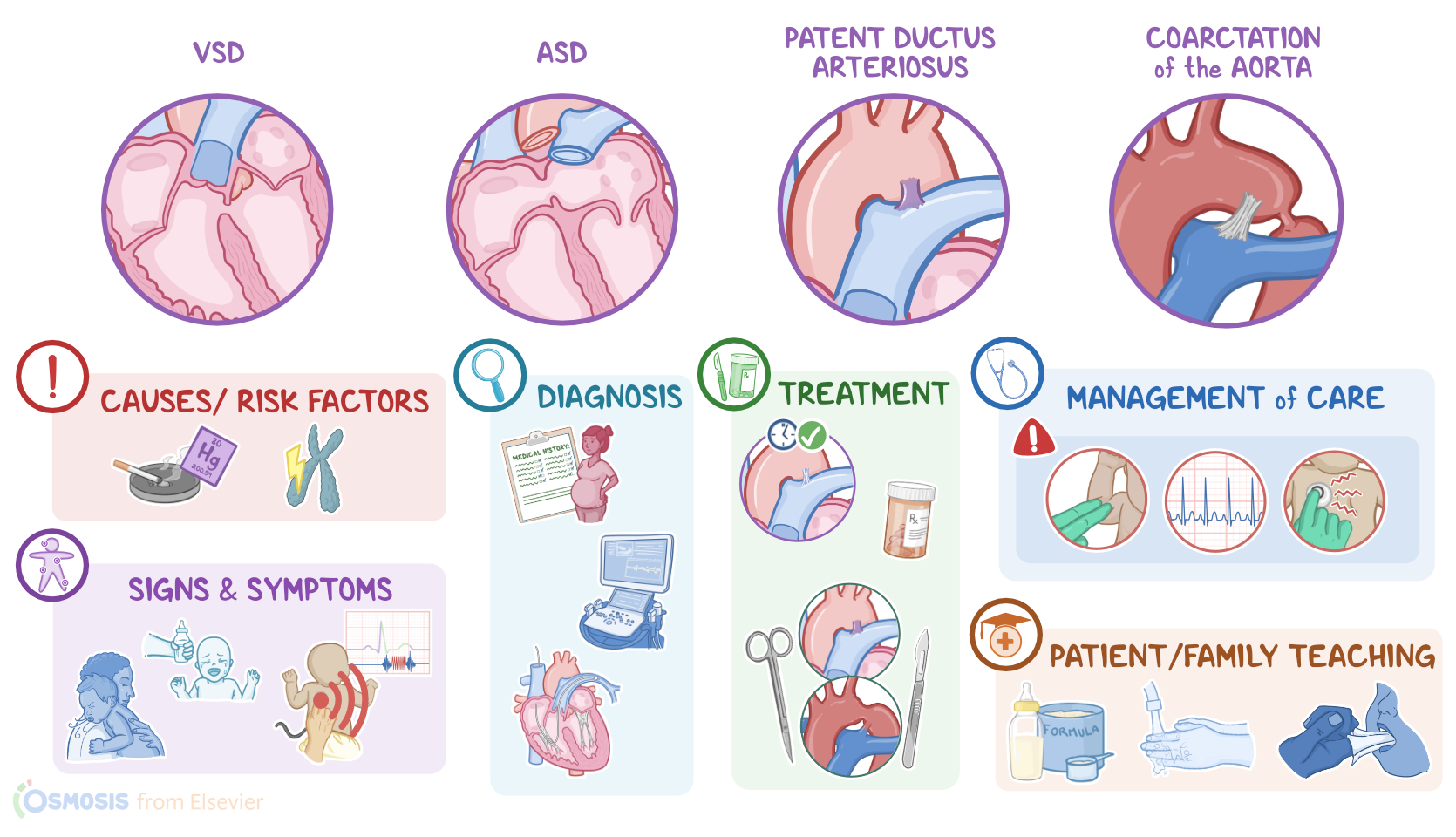
CONGENITAL HEART DEFECTS - ACYANOTIC

KEY POINTS
NOTES
DEFINITION
  • Cardiac conditions and anomalies present at birth
  • Acyanotic
    • Do not cause cyanosis
    • Ventricular septal defect (VSD)
    • Atrial septal defect (ASD)
    • Patent ductus arteriosus (PDA)
    • Coarctation of the aorta

PHYSIOLOGY
  • Fetal circulation
    • Lungs filled with fluid
      • High vascular resistance
    • Placenta serves as gas exchange; delivery of nutrients, removal of waste
    • Oxygenated blood > uterine arteries > placenta > capillaries > umbilical vein > fetal liver or ductus venosus
      • Ductus venosus > inferior vena cava > right atrium > foramen ovale or right ventricle 
        • Foramen ovale > left atrium > left ventricle > aorta > systemic circulation
        • Right ventricle > pulmonary arteries > lungs > ductus arteriosus > aorta > systemic circulation
  • At birth
    • Lungs expand
      • Decreased vascular resistance
      • Increased blood flow to lungs
    • Closure of foramen ovale and ductus arteriosus

CAUSES AND RISK FACTORS
  • Causes
    • Unknown
  • Risk factors
    • Interference with development of heart
      • Chromosomal abnormalities
      • Maternal infections, chronic illnesses, and exposure to teratogens

PATHOPHYSIOLOGY
  • Cardiac structure fails to form or close properly
    • Blood moves from left side of heart to right
    • Increased pulmonary circulation
  • VSD
    • Gap in ventricular septum
  • ASD
    • Gap in atrial septum
  • PDA
    • Ductus arteriosus fails to close at birth
  • Coarctation of the aorta
    • Narrowing of aorta
  • Complications
    • Arrhythmias
    • Embolism
    • Infective endocarditis
    • Heart failure
    • Pulmonary hypertension

SIGNS AND SYMPTOMS
  • Asymptomatic
  • Symptomatic
    • Tachypnea
    • Tachycardia
    • Activity intolerance
    • Feeding problems
    • Murmurs

DIAGNOSIS
  • Mother's history during pregnancy
  • Physical assessment
  • Echocardiogram
  • Chest X-ray, CT, or MRI
  • Electrocardiogram (ECG)
  • Cardiac catheterization
  • Prenatal
    • Obstetric ultrasound

TREATMENT
  • Depends on type of defect
  • Most close on own
  • Medications
  • Surgery

MANAGEMENT OF CARE
  • Goals of care
    • Maintain adequate cardiac output
    • Provide nutritional support
  • VSD
    • Assess vital signs, lung and heart sounds, and peripheral pulses
      • Immediately report to HCP
        • Signs and symptoms of decreased cardiac output or increased pulmonary congestion
    • Administer prescribed medications
    • Plot weight, length, and head circumference on growth chart
    • Ask caregivers about feedings
    • Encourage breastfeeding
    • Administer high-calorie formula as prescribed 

PATIENT AND FAMILY TEACHING
  • Explain condition, plan of care, and how to safely self-administer medications
  • Schedule frequent feedings
  • Keep track of how much infant is eating
  • Count wet and dirty diapers
  • How to properly weigh infant
  • Infection prevention
  • How to clean gums and teeth
  • Report to HCP right away
    • Poor oral intake
    • Poor weight gain
    • Lethargy
    • Difficulty breathing

Transcript

Watch video only

Congenital heart defects are cardiac conditions and anomalies that are present at birth. These are usually divided into two categories; aycanotic or cyanotic, based on the presence or absence of cyanosis, which means bluish discoloration of the skin. Congenital heart defects that don’t cause cyanosis are known as acyanotic heart defects. The main types of acyanotic heart defects are ventricular septal defect, or VSD for short, which is the most common one, in addition to atrial septal defect, or ASD, patent ductus arteriosus, or PDA, and coarctation of the aorta.  

Now, let’s quickly recap the anatomy and physiology of fetal circulation. During fetal life, the lungs are filled with fluid and have high vascular resistance, so they don’t participate in gas exchange. Instead, the placenta serves as the organ of gas exchange, as well as delivering nutrients and removing metabolic wastes from the fetus.  

So, oxygenated blood flows from the uterine arteries into the placenta, where oxygen passes through the capillaries and into the umbilical vein.  

Then, part of the blood reaches the fetal liver, whereas about half of it bypasses the liver by a shunt called the ductus venosus, which diverts the oxygenated blood into the inferior vena cava, which has deoxygenated blood from the lower body.  

Then, this blood flows into the right atrium and further mixes with deoxygenated fetal blood coming from the brain and upper body through the superior vena cava. Most of this mixed blood then moves through a small flap called the foramen ovale directly into the left atrium, into the left ventricle, and through the ascending aorta into the systemic circulation, supplying oxygen to the brain and upper body, as well as the lower body. 

The rest of the blood from the right atrium flows into the right ventricle, and into the pulmonary arteries. A small amount of this blood moves into the pulmonary circulation and perfuses the lung tissue, but most of it is shunted through the ductus arteriosus back into the aorta and systemic circulation.  

Ultimately, the blood flows from the systemic circulation into the umbilical arteries, and then back to the placenta.  

At birth, when the umbilical cord is cut, the baby stops receiving oxygenated blood from the placenta. As a result, the baby’s blood has a reduction in oxygen levels, and an increase in its carbon dioxide levels. This change stimulates the respiratory center in the baby’s brain, which stimulates the newborn to take their first breath, along with temperature changes and tactile stimulation in the extrauterine environment.  

This prompts a series of changes, which include lung expansion, and decreased pulmonary vascular resistance, allowing increased blood flow to the lungs.  

In addition, there’s a functional closure of the foramen ovale and ductus arteriosus.  

With time, the ductus venosus and umbilical vein, ductus arteriosus, and the umbilical arteries, atrophy then convert into ligaments.   

Now, the exact cause of congenital heart defects is unknown, but it's believed to be associated with risk factors that can interfere with the development of the heart.  

Common risk factors for all heart defects include chromosomal abnormalities of the fetus, in addition to maternal infections, chronic illnesses, and exposure to teratogens. The list of teratogens is long, and it includes things like medications such as isotretinoin, alcohol, recreational drugs like cocaine, tobacco smoke, and heavy metals like mercury

Additionally, some specific risk factors for patent ductus arteriosus include premature birth, asphyxia during delivery, and rubella infection during pregnancy.  

Now, the pathology of acyanotic congenital heart defects starts when a cardiac structure fails to form or close properly. The main types of acyanotic heart defects are ventricular septal defect, or VSD, atrial septal defect, or ASD, patent ductus arteriosus, or PDA, and coarctation of the aorta. 

So, in the ventricular septal defect, there’s a gap in the ventricular septum, which separates the right and left ventricles. Likewise, in atrial septal defect, the gap is in the atrial septum, which separates the right and left atria. Next is patent ductus arteriosus, and that’s when the ductus arteriosus fails to close after birth. And finally, coarctation is a narrowing of the aorta which mostly occurs below the origin of the left subclavian artery at the origin of the ductus arteriosus. 

Regardless of the type of defect, there’s a pathological communication between the left- and right-sided circulation. Due to the high pressure of the left side of the heart, the blood goes from the left to the right side of the heart and as a result, into the pulmonary circulation, and that is called left-to-right shunting. Because this extra blood is already oxygenated, there's no issue of cyanosis, but it does increase the pulmonary flow and that leads to pulmonary hypertension, which may progress into heart failure.  

In some cases, over a long period of time, pulmonary hypertension becomes so severe that the pulmonary pressure exceeds the systemic pressure causing a reversal of blood flow from the right to the left side of the heart, called right-to-left shunting. This reversal is called Eisenmenger syndrome, and at that point, the deoxygenated right-sided pulmonary blood gets shunted to the left-sided systemic circulation, causing cyanosis.   

Finally, some other complications of acyanotic heart defects include arrhythmias, embolism, and infective endocarditis

Ok, now, clients with acyanotic heart defects are typically asymptomatic, but some clients can develop tachypnea, tachycardia, and activity intolerance. Some clients can also experience feeding problems, which can cause poor weight gain, and failure or difficulty to thrive. 

On auscultation of the heart,defects can cause murmurs. These murmurs depend on the type of defect. For example, a ventricular septal defect typically causes a pansystolic murmur, and interestingly, it’s louder and harsher in small defects, and softer in larger ones. Atrial septal defects, on the other hand, can be heard as a soft, midsystolic murmur often described as a swishing sound. With PDA, there could be a continuous systolic murmur that extends into diastole. Finally, coarctation of the aorta could also cause a systolic murmur, but the most characteristic finding is a difference between upper and lower limb blood pressure, with blood pressure in the upper limbs being higher; and pulses in the lower extremities will be decreased or absent.  

The diagnosis of acyanotic heart defects starts with the mother’s history during pregnancy and physical assessment of the client, followed by echocardiography to visualize the defect.  

Most defects can also be detected prenatally by standard obstetric ultrasound examination. Additional imaging tests, such as a chest x-ray, CT, and MRI, might also be performed. An ECG is also required to look for arrhythmias.