Geriatric considerations - Respiratory: Nursing
Introduction0:00–0:20
Geriatrics is the branch of medicine that deals with the physiology and psychology of aging as well as the diagnosis and treatment of diseases affecting older clients.
Now, aging affects various organ systems, one of which is the respiratory system. All right.
Now, let's start by reviewing the physiology of the respiratory tract which can be divided into the upper respiratory tract and lower respiratory tract.
Physiology0:20–2:44
The upper respiratory tract includes the nose, nasal cavity, the oral cavity, pharynx, epiglottis, larynx, and the upper part of the trachea.
While the lower respiratory tract includes the lower part of the trachea and the lungs which contain the bronchi bronchioles, alveolar ducts.
And finally, the alveoli, most of the respiratory tract is lined with a pseudo stratified ciliated columnar epithelium, which contains goblet cells that produce mucus to trap small foreign particles as well as columnar cells which have cilia or tiny little hair like projections that move mucus up the respiratory tract.
So it can trigger the cough reflex and get coughed out. The cough reflex is also controlled by the central and peripheral nervous systems.
Now, let's follow air as it passes through the respiratory tract. First, it enters the nose which humidifies and warms that air before sending it to the pharynx.
From the pharynx, air passes through the epiglottis and enters the larynx. Next is the trachea which ends at the carina by bifurcating into the right and left main bronchi which get inside the lungs where they gradually branch into smaller bronchi and bronchioles.
These bronchioles have smooth muscles in their walls that allow them to constrict or dilate in response to certain stimuli.
Bronchioles carry the air into alveolar ducts. And finally, the alveoli, which are tiny sacs responsible for gas exchange between the air and the blood alveoli also have elastic recoil which gives them the ability to stretch and rebound with each breath within the alveoli.
There are alveolar macrophages which swallow pathogens and foreign particles before they enter the bloodstream. Now, lungs are surrounded by the chest wall that consists of the sternum ribs and their costal cartilages.
In addition to thoracic vertebrae, respiratory muscles are divided into primary and secondary respiratory muscles. Primary respiratory muscles are the diaphragm and external intercostal muscles.
Whereas secondary respiratory muscles include the sternal cleidomastoid and abdominal muscles. Effects of aging on the respiratory system include changes in structure and function.
Pathology2:44–4:04
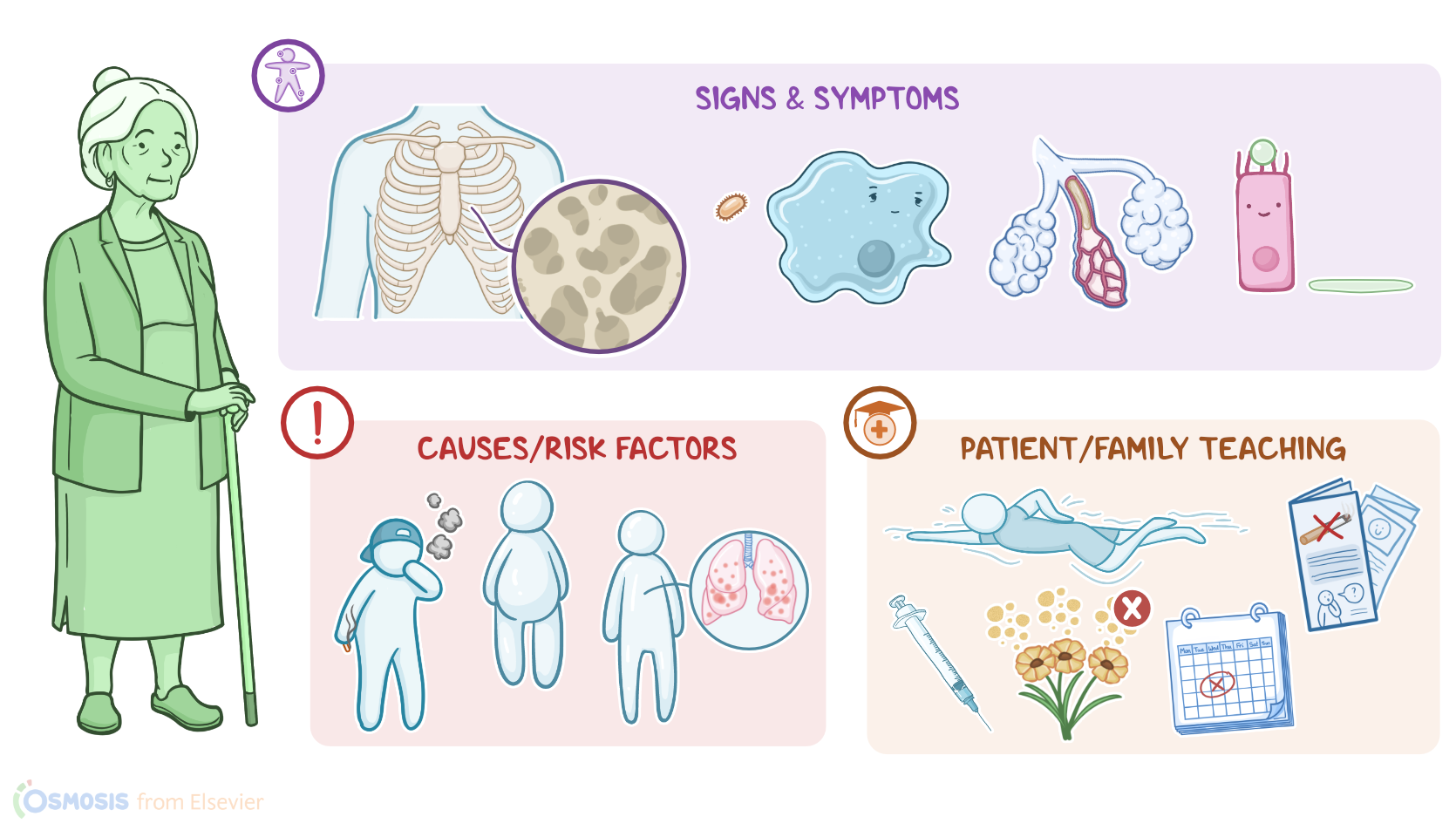
These changes include stiffness of the chest wall and decreased mobility of the ribs, osteoporosis and calcification of costal cartilages also contribute to the rigidity of the chest wall.
Effects of these changes include decreased chest expansion, inefficient, deep breathing and a less effective cough reflex Additionally, the strength and mass of the respiratory muscles decline and the elastic recoil of the lungs as well as the conducting airways is reduced.
These changes make it harder to inflate the lungs which increases the work of breathing and decreases exercise tolerance.
Other changes include a decreased number of functional alveoli which decreases the surface area available for gas exchange.
These changes along with an increase in physiological dead space leads to a mismatch between ventilation and perfusion as well as a low partial pressure of oxygen in the blood.
There is also a decline in the immune function of the respiratory system due to less efficient alveolar macrophages, less functional mucociliary, clearance of secretions and a less forceful cough.
All these changes increase the risk of respiratory infections. Now, various risk factors worsen the effects of aging on the respiratory system.
Risk factors4:04–4:15
These include smoking, obesity and chronic illnesses. All right, let's move on to client and family.
General client & family teaching4:15–5:33
Teaching. Begin by teaching your client how to adopt a lifestyle that promotes a healthy respiratory system and modifies risk factors for respiratory disease.
Talk to them about how maintaining regular physical activity as tolerated, has a positive effect on respiratory health and suggest activities such as swimming, dancing or walking to help strengthen their lungs and maintain a healthy weight.
Emphasize the importance of keeping all their immunizations up to date including pneumococcal COVID and an annual influenza vaccination, then encourage them to avoid environmental allergens and air pollution and stress the importance of avoiding any products that contain nicotine or tobacco, including cigarettes, e cigarettes and chewing tobacco.
If they need help to quit smoking, provide them with counseling and refer them to resources for support. Now, if your client has a chronic disease, like asthma, chronic bronchitis or emphysema, ensure they are adhering to their treatment regimen and that they know how to take their prescribed medications as directed.
Finally, encourage your client to maintain regular visits with their health care provider for continued monitoring and care.
Review5:33–6:47
All right, as a quick recap, geriatrics focuses on the physiology and psychology of aging along with diagnoses and treatment of disorders that affect older adults.
Organ systems are affected by the aging process, including the respiratory system, which is divided into the upper respiratory tract and lower respiratory tract.
Age related changes affect the structure and function including stiffness of the chest wall, calcification of the costal cartilages.
A decline in the strength and mass of the respiratory muscles and a reduced elastic recoil of the lungs and conducting airways.
These changes make it harder to inflate the lungs and increases the work of breathing. Other changes include decreased number of functional alveoli which decreases the surface area available for gas exchange, immune function of the respiratory system also declines increasing the risk of respiratory infections when teaching aging clients about respiratory health, encourage them to adopt a lifestyle that promotes a healthy respiratory system and modifies risk factors for respiratory disease, also encourage them to maintain regular visits with their primary care provider for continued monitoring and care.
| GERIATRIC CONSIDERATIONS - RESPIRATORY | ||
| KEY POINTS | NOTES | |
| DEFINITION |
| |
| PHYSIOLOGY |
| |
| PATHOPHYSIOLOGY |
| |
| RISK FACTORS |
| |
| PATIENT AND FAMILY TEACHING |
| |
No notes for this video yet
Try adding a note below