Meconium aspiration syndrome: Nursing

Last updated: November 04, 2022

Meconium aspiration syndrome: Nursing

Acute Final

Acute Final

Endocrine system anatomy and physiology
Antepartum assessment - Fetus: Nursing
Assessment of gestational age: Nursing
Fetal circulation: Nursing
Fetal development: Nursing
Group B streptococcus (GBS) infection in pregnancy: Nursing
Hepatitis B virus (HBV) infection in pregnancy: Nursing
Hyperemesis gravidarum: Nursing
Large for gestational age (LGA) infant: Nursing
Preeclampsia and eclampsia: Nursing
Prenatal screening: Nursing
Placenta previa: Nursing process (ADPIE)
Placental abruption: Nursing process (ADPIE)
Birth-related procedures: Nursing
Cesarean birth: Nursing
Intrapartum assessment - Fetal heart rate patterns: Nursing
Intrapartum assessment - Uterine activity: Nursing
Premature rupture of membranes (PROM): Nursing
Shoulder dystocia: Nursing
Prolapsed umbilical cord: Nursing process (ADPIE)
Stages of labor: Nursing
Assessment - Postpartum: Nursing
Perinatal depression: Nursing
Physiology of lactation: Nursing
Postpartum infections: Nursing
Postpartum hemorrhage: Nursing
Biliary atresia: Nursing
Cleft lip and palate: Nursing
Congenital diaphragmatic hernia: Nursing
Congenital heart defects - Acyanotic: Nursing
Congenital heart defects - Cyanotic: Nursing
Esophageal atresia and tracheoesophageal fistula: Nursing
Craniosynostosis: Nursing
Hemolytic disease of the fetus and newborn: Nursing
Hyperbilirubinemia: Nursing process (ADPIE)
Infant of a diabetic mother (IDM): Nursing
Meconium aspiration syndrome: Nursing
Neonatal respiratory distress syndrome (NRDS): Nursing
Neonatal sepsis: Nursing
Neural tube defects: Nursing
Newborn adaptation to extrauterine life: Nursing
Persistent pulmonary hypertension of the newborn (PPHN): Nursing
Physical assessment - Neonate: Nursing
Small for gestational age (SGA) infant: Nursing
Postterm infant: Nursing
Thermoregulation - Neonate: Nursing
Arterial blood gas (ABG) - Overview: Nursing
Arterial blood gas (ABG) - Metabolic acidosis: Nursing
Arterial blood gas (ABG) - Metabolic alkalosis: Nursing
Arterial blood gas (ABG) - Respiratory acidosis: Nursing
Arterial blood gas (ABG) - Respiratory alkalosis: Nursing
Adrenal insufficiency (Addison disease): Nursing
Anemia - Iron-deficiency: Nursing
Anemia - Aplastic: Nursing
Anemia - Macrocytic: Nursing
Case study - Hypothyroidism: Nursing
Case study - Iron-deficiency anemia: Nursing
Case study - Sickle cell anemia: Nursing
Complete blood count (CBC) - Hemoglobin and hematocrit: Nursing
Complete blood count (CBC) - Red blood cells (RBC): Nursing
Complete blood count (CBC) - Platelets: Nursing
Complete metabolic panel (CMP) - Blood urea nitrogen (BUN) and creatinine (Cr): Nursing
Complete metabolic panel (CMP) - Estimated glomerular filtration rate (eGFR): Nursing
Complete metabolic panel (CMP) - Liver function tests (LFT): Nursing
Cushing syndrome and Cushing disease: Nursing
Hematopoietic growth factors: Nursing pharmacology
Hyperparathyroidism: Nursing
Hyperthyroidism: Nursing process (ADPIE)
Hypoparathyroidism: Nursing
Hyperpituitarism: Nursing
Hypopituitarism: Nursing
Hypothyroidism: Nursing process (ADPIE)
Medications affecting the parathyroid glands: Nursing pharmacology
Medications for growth hormone disorders: Nursing pharmacology
Medications for thyroid disorders: Nursing pharmacology
Neutropenia: Nursing
Polycythemia: Nursing
Thrombocytopenia: Nursing
Acute kidney injury (AKI): Nursing process (ADPIE)
Benign prostatic hyperplasia (BPH): Nursing process (ADPIE)
Case study - Cholecystitis: Nursing
Case study - Cirrhosis: Nursing
Case study - Chronic kidney disease (CKD): Nursing
Case study - Benign prostatic hyperplasia (BPH): Nursing
Case study - Gastroesophageal reflux disease (GERD): Nursing
Case study - Pediatric appendicitis: Nursing
Case study - Pyelonephritis: Nursing
Cholecystitis: Nursing
Cholelithiasis: Nursing
Chronic kidney disease (CKD): Nursing
Cirrhosis: Nursing process (ADPIE)
Diverticular disease: Nursing
Gastroesophageal reflux disease (GERD): Nursing process (ADPIE)
Hemolytic uremic syndrome: Nursing
Hirschsprung disease: Nursing
Intestinal obstruction: Nursing
Irritable bowel syndrome (IBS): Nursing
Nephrotic syndrome: Nursing
Pyloric stenosis: Nursing process (ADPIE)
Renal and urinary calculi: Nursing
Urinary incontinence - Stress: Nursing process (ADPIE)
Diabetes insipidus: Nursing process (ADPIE)
Dialysis care: Nursing
Case study - Diabetic ketoacidosis (DKA): Nursing
Case study - Pediatric diabetes mellitus type 1: Nursing
Diabetes mellitus (DM): Nursing process (ADPIE)
Hyperosmolar hyperglycemic state (HHS): Nursing process (ADPIE)
Diabetic ketoacidosis (DKA): Nursing process (ADPIE)
Case study - Epilepsy: Nursing
Case study - Head injury: Nursing
Epidural and subdural hematoma: Nursing
Case study - Stroke: Nursing
Hemorrhagic stroke - Intracranial hemorrhage (ICH) and subarachnoid hemorrhage (SAH): Nursing
Increased intracranial pressure (ICP): Nursing
Hydrocephalus: Nursing process (ADPIE)
Intracranial aneurysm: Nursing
Seizure disorder: Nursing process (ADPIE)
Stroke: Nursing process (ADPIE)
Jaundice: Nursing
Nutrition - Enteral: Nursing skills
Nutrition - Newborn: Nursing
Nutrition - Parenteral: Nursing skills
Phenylketonuria (PKU): Nursing
Arterial embolism: Nursing
Disseminated intravascular coagulation (DIC): Nursing
Hemophilia: Nursing process (ADPIE)
Acute respiratory distress syndrome (ARDS): Nursing
Asthma: Nursing process (ADPIE)
Atelectasis: Nursing
Bacterial pneumonia: Nursing process (ADPIE)
Bronchiolitis and respiratory syncytial virus (RSV): Nursing process (ADPIE)
Case study - Acute respiratory distress syndrome (ARDS): Nursing
Care of an intubated client: Nursing skills
Case study - Chronic obstructive pulmonary disease (COPD): Nursing
Case study - Impaired gas exchange: Nursing
Case study - Pediatric asthma: Nursing
Chest tube care: Nursing
Chronic obstructive pulmonary disease (COPD): Nursing process (ADPIE)
Cystic fibrosis: Nursing
Epiglottitis: Nursing process (ADPIE)
Flail chest: Nursing
Intraoperative care: Nursing
Pleural effusion: Nursing
Pneumothorax and hemothorax: Nursing
Pulmonary edema: Nursing
Smoke inhalation injury: Nursing process (ADPIE)
Tracheostomy: Nursing
Venous thromboembolism (VTE): Nursing process (ADPIE)
Arrhythmias - Asystole: Nursing
Arrhythmias - Atrial flutter (Aflutter): Nursing
Arrhythmias - Premature atrial contractions (PACs): Nursing
Arrhythmias - Heart blocks: Nursing
Arrhythmias - Atrial fibrillation (Afib): Nursing
Arrhythmias - Premature ventricular contractions (PVCs): Nursing
Arrhythmias - Sinus tachycardia and sinus bradycardia: Nursing
Arrhythmias - Supraventricular tachycardia (SVT): Nursing
Arrhythmias - Ventricular fibrillation (Vfib): Nursing
Arrhythmias - Ventricular tachycardia (Vtach): Nursing
Cardiac biomarkers - Troponin: Nursing
Case study - Acute coronary syndrome (ACS): Nursing
Case study - Atrial fibrillation (Afib): Nursing
Case study - Heart failure with reduced ejection fraction (HFrEF): Nursing
Case study - Deep vein thrombosis (DVT): Nursing
Case study - Hypertension: Nursing
Case study - Hypovolemic shock: Nursing
Coronary artery disease (CAD) and angina pectoris: Nursing process (ADPIE)
Electrocardiogram (ECG) - Normal sinus rhythm (NSR): Nursing
Heart defects that decrease pulmonary blood flow - Nursing considerations & client education: Nursing
Hypertension: Nursing process (ADPIE)
Left-sided heart failure: Nursing process (ADPIE)
Myocardial infarction (MI): Nursing process (ADPIE)
Pericardial effusion and cardiac tamponade: Nursing process (ADPIE)
Peripheral arterial disease (PAD): Nursing process (ADPIE)
Rheumatic heart disease: Nursing process (ADPIE)
Shock - Cardiogenic: Nursing
Shock - Neurogenic: Nursing
Shock - Obstructive: Nursing
Shock - Septic: Nursing
Sickle cell disease: Nursing process (ADPIE)
Valvular heart disease: Nursing

Notes

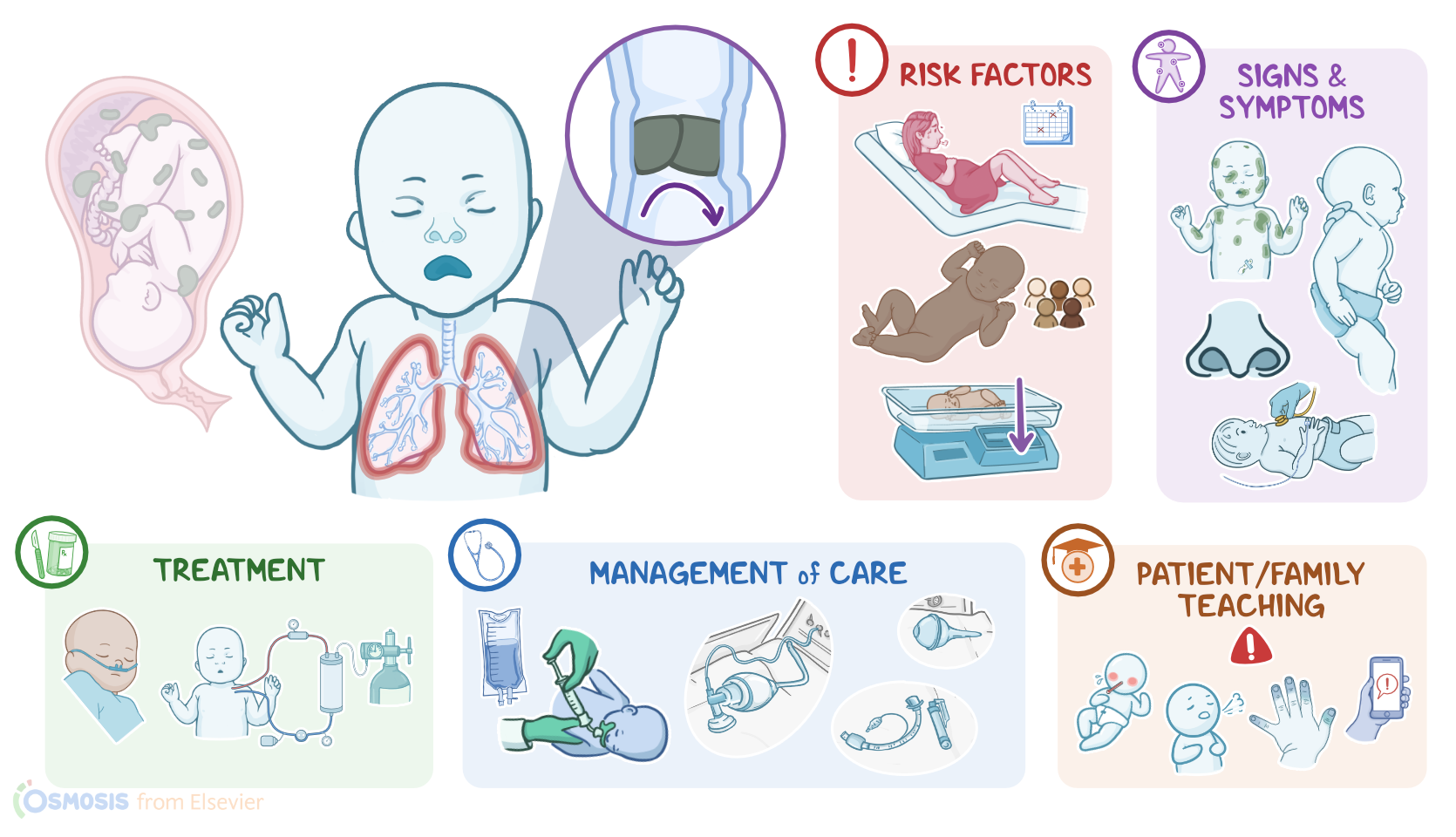
MECONIUM ASPIRATION SYNDROME

KEY POINTS
NOTES
DEFINITION
  • Respiratory obstruction and distress caused by meconium entering respiratory tract

PHYSIOLOGY
  • Meconium
    • Thick, sticky, green-black
    • First stool of newborn
    • Normally passed within first 48 hours of life

CAUSES AND RISK FACTORS
  • Causes
    • Unknown
  • Risk factors
    • Fetal stress
    • Post-term infant
    • Small for gestational age
    • Black
    • South Asia
    • Pacific Island
    • Indigenous Australia

PATHOPHYSIOLOGY
  • Stressful fetal event
  • Inadequate oxygen delivery
  • Hypoxia
  • Increased intestinal motility and relaxation of anal sphincter
  • Meconium excretion into amniotic fluid
  • Fetal gasping
  • Complications
    • Pneumonitis
    • Obstruction
    • Pneumothorax
    • Persistent pulmonary hypertension

SIGNS AND SYMPTOMS
  • Respiratory distress
  • Barrel-shaped chest
  • Crackles, rales, or rhonchi
  • Staining of nails, skin, or umbilical cord with meconium

DIAGNOSIS
  • History
  • Physical assessment
  • X-ray
  • Arterial blood gas

TREATMENT
  • Close monitoring
  • Resuscitation 
  • Antibiotics
  • Ventilatory support
  • Chest physiotherapy
  • Surfactant administration

MANAGEMENT OF CARE
  • Goals of care
    • Provide resuscitation
    • Provide supportive care
  • Place in radiant warmer
  • Dry/remove wet linen
  • Stimulate baby
  • Suction with bulb syringe as needed
  • Administer oxygen as indicated
  • Cluster care
  • Provide therapeutic environment
  • Administer feedings and medications as prescribed

PATIENT AND FAMILY TEACHING
  • Explain condition, plan of care, and how to safely administer medications
  • Keep all follow-up appointments
  • Notify HCP
    • Difficulty breathing
    • Blue skin discoloration
    • Lethargy
    • Fever
    • Concerns about development

Transcript

Watch video only

Meconium aspiration syndrome, or MAS for short, is a condition characterized by respiratory obstruction and distress caused by meconium entering the respiratory tract. Now, meconium is a thick, sticky, green-black substance that is the first stool of the newborn. It starts forming as early as the 12th week of gestation, and it’s made up of amniotic fluid, mucus, cells that have been shed from the skin or intestinal tract, and intestinal secretions, like bile. Normally, the meconium is passed by the newborn within the first 48 hours of life. All right, now the exact cause of meconium aspiration syndrome is unknown, but it’s believed to be initiated by a stressful intrauterine event that leads to the early passage of meconium. Risk factors for developing meconium aspiration syndrome include anything that can cause stress to the fetus, such as hypoxia, or low levels of oxygen in the fetal blood, caused by problems like compression of the umbilical cord, insufficiency of the placenta, or prolonged labor.

Meconium aspiration syndrome is also more common among post term infants, especially if they are small for gestational age. Other risk factors include babies who are Black or South Asian, as well as Pacific Islanders and indigenous Australians. The pathology of meconium aspiration syndrome starts with an intrauterine stressful event that leads to inadequate oxygen delivery to the fetus and subsequent hypoxia. Hypoxia causes increased intestinal motility and relaxation of the anal sphincter, which stimulates meconium excretion into the amniotic fluid, as well as fetal gasping, which can allow meconium to be aspirated into the respiratory tract. Meconium can also be aspirated spontaneously or when the baby takes the first breath after delivery. Now, aspiration of meconium can cause a number of complications. First, the bile salts and pancreatic enzymes contained in the meconium cause chemical pneumonitis.

In addition, meconium occludes the airways with a ball-valve mechanism that allows air in but obstructs airflow out during expiration. This leads to air trapping, alveolar collapse, and possible pneumothorax.Other complications include inhibition of surfactant production, and pulmonary vasoconstriction, which can progress to persistent pulmonary hypertension. Clinical manifestations of meconium aspiration syndrome include signs of respiratory distress including shallow, rapid breathing, along with grunting, nasal flaring, and chest retractions. In severe cases, the infant may also appear cyanotic. There is often a barrel-shaped chest, due to the air trapping in the lungs. During auscultation, abnormal breath sounds can also sometimes be heard, such as crackles, rales, or rhonchi. Other signs include staining of the nails, skin, and umbilical cord with meconium.

The diagnosis of meconium aspiration syndrome starts with the perinatal history and physical assessment, followed by a chest X-ray, which may show patchy infiltrates of the lung, lung consolidation, and hyperexpansion due to air trapping. Arterial blood gas or ABG analysis may show hypoxemia, hypercapnia, and respiratory acidosis. After delivery, the treatment of meconium aspiration syndrome depends on the status of the newborn. So, a vigorous infant with a heart rate of over 100 beats per minute, spontaneous respirations, and good muscle tone will need routine care and close monitoring. On the other hand, infants making poor attempts to take their first breath or have otherwise depressed respirations, current options include continuing with resuscitation measures and transferring to the neonatal intensive care unit, or NICU. Further treatments may include antibiotics to prevent infections, ventilatory support, chest physiotherapy to loosen secretions, and surfactant administration to replace endogenous surfactant.

Lastly, if persistent pulmonary hypertension develops, inhaled nitric oxide or extracorporeal membrane oxygenation might be necessary. Okay, let’s look at the nursing care you’ll be providing for a client with meconium aspiration syndrome. Priorities of nursing care are to provide effective resuscitation and supportive care. After delivery, work with the healthcare team to provide neonatal resuscitation measures, including placing the baby on a radiant warmer, drying and removing the wet linen, and gently stimulating the baby. Then, position the baby in a sniffing position and suction with a bulb syringe, if needed. Assist with additional interventions as indicated, including administration of oxygen, positive pressure ventilation with bag-valve mask, or intubation; and transfer the baby to the neonatal intensive care unit, as indicated.