Mumps (Parotitis): Nursing
Introduction0:00–0:25
Mumps is a highly contagious, systemic viral infection caused by the mumps virus and is usually associated with fever, swelling and inflammation of the parotid glands, or parotitis.
Thanks to vaccination, there are fewer cases of mumps, but in some parts of the world where the population is not immunized, it’s still possible to see outbreaks.Let’s start by discussing the physiology of the immune response.
Physiology0:25–0:54
Now, after a foreign antigen enters the body, it runs into antigen-presenting cells, like macrophages and dendritic cells, which ingest it and break it into fragments.
These antigen fragments are then presented on their surface and recognized by T helper cells, which help activate B cells to produce antibodies against that antigen.
These antibodies will then bind to the pathogen and attract other immune cells to attack it. Now, the cause of mumps is the mumps rubulavirus, or just mumps virus.
Causes & risk factors0:54–1:16
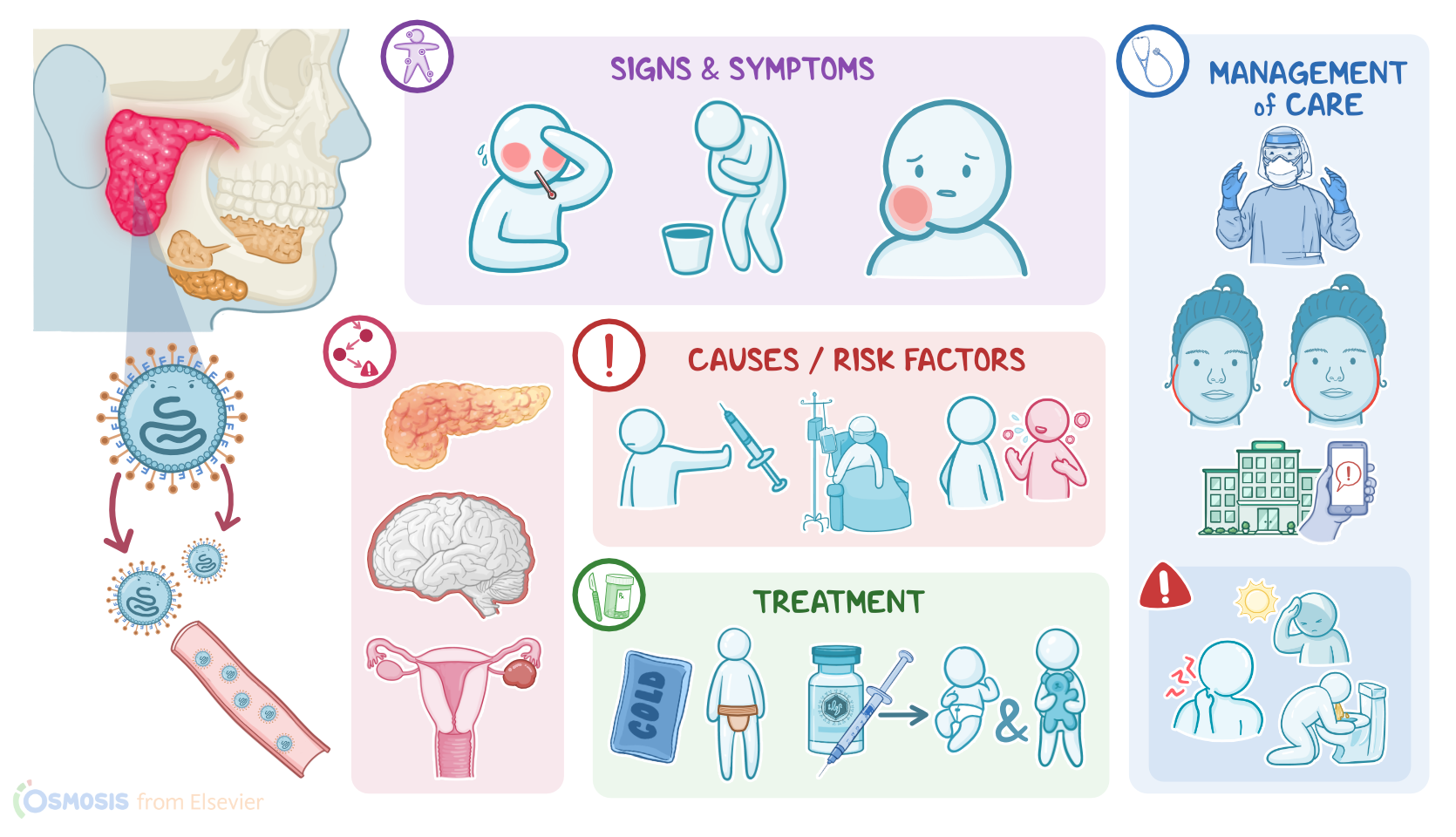
This is an RNA enveloped virus that belongs to the Paramyxoviridae family. Important risk factors for mumps include immunodeficiency; being unvaccinated or undervaccinated; coming in contact with an infected person; and traveling or living in an endemic area.Moving on to pathology.
Pathology1:16–3:31
Mumps virus is an airborne virus, meaning it spreads via small virus-containing droplets that get flung in the air when an infected client coughs or sneezes.
If another client breathers in these droplets, or they get in contact with infected surfaces and then touch their mouth, they can become infected.
Once the virus enters the body, it enters epithelial cells that line the nasopharynx where they replicate. The new viruses are released to infect other nearby cells.
Some of the mumps virus is picked up by the macrophages and dendritic cells, and carried to the local lymph nodes.The virus continues to replicate inside the lymph node and mucus membrane and eventually, they’ll get into the bloodstream where they can spread to other organs throughout the body.
The salivary glands, especially the parotid glands, are the most commonly affected, leading to parotitis. Mumps virus may also spread to other glands, such as the pancreas, mammary glands, ovaries, and testes.
Orchitis may even result in testicular atrophy resulting in decreased sperm count and impaired sperm motility. Inflammation of ovaries, or oophoritis, and mammary glands, or mastitis, may also develop.
Other complications include pancreatitis, which can cause diabetes; nephritis, and rarely myocarditis, thyroiditis, viral pneumonia and polyarthritis.
In the central nervous system, mumps can cause encephalitis, or meningitis, which are associated with headache, neck stiffness and altered mental status.
The virus can also infect the auditory nerve of the inner ear, causing mumps related hearing loss which can be permanent.Finally, the mumps virus can indirectly cause Guillain-Barre syndrome.
This is an autoimmune disease that’s often triggered by viral infections where the immune system attacks the myelin sheath of neurons, causing muscle weakness or paralysis.Okay, clinical manifestations of mumps might be absent and the client remains asymptomatic.
Clinical manifestations3:31–4:16
In other cases, after an incubation period of 12 to 25 days, signs and symptoms start to show up. This includes flu-like symptoms such as fever, headache, myalgia, malaise, loss of appetite and non-specific respiratory symptoms.
Orchitis can present as pain and swelling of the testis, while meningitis can present with headache, neck stiffness, nausea, and vomiting.
The infection is usually self-limiting and resolves within a few weeks.Diagnosis of mumps is typically based on the client’s history and physical assessment, followed by detection of mumps-specific IgM and IgG antibodies.
Diagnosis4:16–4:44
Additionally, a reverse transcriptase polymerase chain reaction, or RT PCR, can be used to detect viral RNA in saliva, blood, urine or cerebrospinal fluid.
Also, samples of these bodily fluids can be used to prepare viral cultures and look for infected cells.Treatment of mumps is mainly supportive and aims at reducing symptoms, which includes rest and increased fluid intake to prevent dehydration, analgesics for pain and acetaminophen or ibuprofen for fever.
Treatment4:44–5:19
Ice packs and testicular support may help reduce swelling and pain of the testicles. Finally, it’s important to note that mumps can be prevented via an MMR vaccine, which protects against mumps, measles and rubella.
Management and care5:19–7:16
Your priority nursing goals are to prevent the spread of infection, provide supportive care, and monitor for complications.First, place your client on droplet and contact precautions, and don appropriate personal protective equipment, including gloves, mask, and gown.
Then, start your assessment by gathering an accurate medical history, including immunization status and if they have been in contact with someone with similar symptoms.
Lastly, since mumps is a reportable disease, ensure your client’s case has been reported to your local health department.Next, for supportive care, monitor their temperature to assess for fever, and ask them about jaw pain using your facility’s pediatric pain scale.
Assess their neck and jaw area for parotid swelling and, if present, note if it is unilateral or bilateral. Administer the prescribed medications to alleviate pain and fever, and institute non-pharmacological comfort measures such as the intermittent application of cold and warm compresses to the affected areas.
Also keep track of their intake and output, and encourage plenty of fluids to maintain adequate urine output; and promote nutrition by offering a soft diet.Watch your client closely for complications that may develop.
Promote comfort with intermittent ice applications by using snug-fitting underwear to support the testicles. Then, assess your client for signs of meningitis, and immediately report to the healthcare provider if your client experiences photophobia, headache, stiff neck, nausea, or vomiting, or if you notice irritability or other altered behavior; and prepare to assist with a lumbar puncture procedure.
Now let’s move on to client and family teaching. First, explain to your client and their caregivers that mumps is a viral infection that causes swelling of the parotid glands and may cause other problems like swelling of the testicles or even meningitis.
General client and family teaching7:16–8:51
Then, provide education on infection control techniques, including hand hygiene and cough etiquette. Let them know that their child will be contagious from 2 days before the start of parotid gland swelling until 5 days after the swelling begins, and instruct them to keep their child at home during this time, and to avoid contact with others, especially those who have a greater risk of becoming sick such as people who are unvaccinated, pregnant, or immunodeficient.
Also discuss vaccination against mumps, and let them know that while receiving the vaccine after exposure to the mumps virus won’t change the course of this current infection, vaccination after illness can help prevent possible reinfection if they are exposed again later in life.Next, teach them about care at home to help lessen their symptoms while the virus runs its course.
Instruct them to take their prescribed medications as directed for reducing pain and fever. Encourage them to drink plenty of fluids so they do not become dehydrated, and to avoid worsening their jaw pain by choosing foods that are soft and require little chewing, and avoid citrus or other acidic foods.Finally, urge them to seek emergency care right away if their child experiences any symptoms of meningitis or encephalitis, like neck pain or stiffness and behavior changes.Alright, as a quick recap… Mumps is a highly contagious, systemic viral infection that is usually associated with fever and parotitis.
Review8:51–9:59
Risk factors for contracting mumps include being unvaccinated, immunocompromised, and coming into contact with an infected person.
The mumps virus is transmitted via airborne droplets or contact with infected surfaces, and signs and symptoms of infection may include fever, headache, malaise, loss of appetite, non-specific respiratory symptoms, and swelling of the parotid glands.
Complications can include orchitis, oophoritis, and meningitis or encephalitis. Diagnosis is based on client history and physical assessment, and confirmed with laboratory testing.
Treatment is supportive and aims at reducing symptoms until the infection clears. Goals of nursing care include preventing the spread of infection, providing supportive care, and monitoring for complications.
Client and family teaching centers on teaching about preventing the spread of mumps, supportive care while recovering at home, and when to seek medical care.
| MUMPS | ||
| KEY POINTS | NOTES | |
| DEFINITION |
| |
| PHYSIOLOGY |
| |
| CAUSES AND RISK FACTORS |
| |
| PATHOPHYSIOLOGY |
| |
| SIGNS AND SYMPTOMS |
| |
| DIAGNOSIS |
| |
| TREATMENT |
| |
| MANAGEMENT OF CARE |
| |
| PATIENT AND FAMILY TEACHING |
| |
No notes for this video yet
Try adding a note below