Perinatal depression: Nursing

Last updated: March 22, 2022

Perinatal depression: Nursing

Acute Final

Acute Final

Endocrine system anatomy and physiology
Antepartum assessment - Fetus: Nursing
Assessment of gestational age: Nursing
Fetal circulation: Nursing
Fetal development: Nursing
Group B streptococcus (GBS) infection in pregnancy: Nursing
Hepatitis B virus (HBV) infection in pregnancy: Nursing
Hyperemesis gravidarum: Nursing
Large for gestational age (LGA) infant: Nursing
Preeclampsia and eclampsia: Nursing
Prenatal screening: Nursing
Placenta previa: Nursing process (ADPIE)
Placental abruption: Nursing process (ADPIE)
Birth-related procedures: Nursing
Cesarean birth: Nursing
Intrapartum assessment - Fetal heart rate patterns: Nursing
Intrapartum assessment - Uterine activity: Nursing
Premature rupture of membranes (PROM): Nursing
Shoulder dystocia: Nursing
Prolapsed umbilical cord: Nursing process (ADPIE)
Stages of labor: Nursing
Assessment - Postpartum: Nursing
Perinatal depression: Nursing
Physiology of lactation: Nursing
Postpartum infections: Nursing
Postpartum hemorrhage: Nursing
Biliary atresia: Nursing
Cleft lip and palate: Nursing
Congenital diaphragmatic hernia: Nursing
Congenital heart defects - Acyanotic: Nursing
Congenital heart defects - Cyanotic: Nursing
Esophageal atresia and tracheoesophageal fistula: Nursing
Craniosynostosis: Nursing
Hemolytic disease of the fetus and newborn: Nursing
Hyperbilirubinemia: Nursing process (ADPIE)
Infant of a diabetic mother (IDM): Nursing
Meconium aspiration syndrome: Nursing
Neonatal respiratory distress syndrome (NRDS): Nursing
Neonatal sepsis: Nursing
Neural tube defects: Nursing
Newborn adaptation to extrauterine life: Nursing
Persistent pulmonary hypertension of the newborn (PPHN): Nursing
Physical assessment - Neonate: Nursing
Small for gestational age (SGA) infant: Nursing
Postterm infant: Nursing
Thermoregulation - Neonate: Nursing
Arterial blood gas (ABG) - Overview: Nursing
Arterial blood gas (ABG) - Metabolic acidosis: Nursing
Arterial blood gas (ABG) - Metabolic alkalosis: Nursing
Arterial blood gas (ABG) - Respiratory acidosis: Nursing
Arterial blood gas (ABG) - Respiratory alkalosis: Nursing
Adrenal insufficiency (Addison disease): Nursing
Anemia - Iron-deficiency: Nursing
Anemia - Aplastic: Nursing
Anemia - Macrocytic: Nursing
Case study - Hypothyroidism: Nursing
Case study - Iron-deficiency anemia: Nursing
Case study - Sickle cell anemia: Nursing
Complete blood count (CBC) - Hemoglobin and hematocrit: Nursing
Complete blood count (CBC) - Red blood cells (RBC): Nursing
Complete blood count (CBC) - Platelets: Nursing
Complete metabolic panel (CMP) - Blood urea nitrogen (BUN) and creatinine (Cr): Nursing
Complete metabolic panel (CMP) - Estimated glomerular filtration rate (eGFR): Nursing
Complete metabolic panel (CMP) - Liver function tests (LFT): Nursing
Cushing syndrome and Cushing disease: Nursing
Hematopoietic growth factors: Nursing pharmacology
Hyperparathyroidism: Nursing
Hyperthyroidism: Nursing process (ADPIE)
Hypoparathyroidism: Nursing
Hyperpituitarism: Nursing
Hypopituitarism: Nursing
Hypothyroidism: Nursing process (ADPIE)
Medications affecting the parathyroid glands: Nursing pharmacology
Medications for growth hormone disorders: Nursing pharmacology
Medications for thyroid disorders: Nursing pharmacology
Neutropenia: Nursing
Polycythemia: Nursing
Thrombocytopenia: Nursing
Acute kidney injury (AKI): Nursing process (ADPIE)
Benign prostatic hyperplasia (BPH): Nursing process (ADPIE)
Case study - Cholecystitis: Nursing
Case study - Cirrhosis: Nursing
Case study - Chronic kidney disease (CKD): Nursing
Case study - Benign prostatic hyperplasia (BPH): Nursing
Case study - Gastroesophageal reflux disease (GERD): Nursing
Case study - Pediatric appendicitis: Nursing
Case study - Pyelonephritis: Nursing
Cholecystitis: Nursing
Cholelithiasis: Nursing
Chronic kidney disease (CKD): Nursing
Cirrhosis: Nursing process (ADPIE)
Diverticular disease: Nursing
Gastroesophageal reflux disease (GERD): Nursing process (ADPIE)
Hemolytic uremic syndrome: Nursing
Hirschsprung disease: Nursing
Intestinal obstruction: Nursing
Irritable bowel syndrome (IBS): Nursing
Nephrotic syndrome: Nursing
Pyloric stenosis: Nursing process (ADPIE)
Renal and urinary calculi: Nursing
Urinary incontinence - Stress: Nursing process (ADPIE)
Diabetes insipidus: Nursing process (ADPIE)
Dialysis care: Nursing
Case study - Diabetic ketoacidosis (DKA): Nursing
Case study - Pediatric diabetes mellitus type 1: Nursing
Diabetes mellitus (DM): Nursing process (ADPIE)
Hyperosmolar hyperglycemic state (HHS): Nursing process (ADPIE)
Diabetic ketoacidosis (DKA): Nursing process (ADPIE)
Case study - Epilepsy: Nursing
Case study - Head injury: Nursing
Epidural and subdural hematoma: Nursing
Case study - Stroke: Nursing
Hemorrhagic stroke - Intracranial hemorrhage (ICH) and subarachnoid hemorrhage (SAH): Nursing
Increased intracranial pressure (ICP): Nursing
Hydrocephalus: Nursing process (ADPIE)
Intracranial aneurysm: Nursing
Seizure disorder: Nursing process (ADPIE)
Stroke: Nursing process (ADPIE)
Jaundice: Nursing
Nutrition - Enteral: Nursing skills
Nutrition - Newborn: Nursing
Nutrition - Parenteral: Nursing skills
Phenylketonuria (PKU): Nursing
Arterial embolism: Nursing
Disseminated intravascular coagulation (DIC): Nursing
Hemophilia: Nursing process (ADPIE)
Acute respiratory distress syndrome (ARDS): Nursing
Asthma: Nursing process (ADPIE)
Atelectasis: Nursing
Bacterial pneumonia: Nursing process (ADPIE)
Bronchiolitis and respiratory syncytial virus (RSV): Nursing process (ADPIE)
Case study - Acute respiratory distress syndrome (ARDS): Nursing
Care of an intubated client: Nursing skills
Case study - Chronic obstructive pulmonary disease (COPD): Nursing
Case study - Impaired gas exchange: Nursing
Case study - Pediatric asthma: Nursing
Chest tube care: Nursing
Chronic obstructive pulmonary disease (COPD): Nursing process (ADPIE)
Cystic fibrosis: Nursing
Epiglottitis: Nursing process (ADPIE)
Flail chest: Nursing
Intraoperative care: Nursing
Pleural effusion: Nursing
Pneumothorax and hemothorax: Nursing
Pulmonary edema: Nursing
Smoke inhalation injury: Nursing process (ADPIE)
Tracheostomy: Nursing
Venous thromboembolism (VTE): Nursing process (ADPIE)
Arrhythmias - Asystole: Nursing
Arrhythmias - Atrial flutter (Aflutter): Nursing
Arrhythmias - Premature atrial contractions (PACs): Nursing
Arrhythmias - Heart blocks: Nursing
Arrhythmias - Atrial fibrillation (Afib): Nursing
Arrhythmias - Premature ventricular contractions (PVCs): Nursing
Arrhythmias - Sinus tachycardia and sinus bradycardia: Nursing
Arrhythmias - Supraventricular tachycardia (SVT): Nursing
Arrhythmias - Ventricular fibrillation (Vfib): Nursing
Arrhythmias - Ventricular tachycardia (Vtach): Nursing
Cardiac biomarkers - Troponin: Nursing
Case study - Acute coronary syndrome (ACS): Nursing
Case study - Atrial fibrillation (Afib): Nursing
Case study - Heart failure with reduced ejection fraction (HFrEF): Nursing
Case study - Deep vein thrombosis (DVT): Nursing
Case study - Hypertension: Nursing
Case study - Hypovolemic shock: Nursing
Coronary artery disease (CAD) and angina pectoris: Nursing process (ADPIE)
Electrocardiogram (ECG) - Normal sinus rhythm (NSR): Nursing
Heart defects that decrease pulmonary blood flow - Nursing considerations & client education: Nursing
Hypertension: Nursing process (ADPIE)
Left-sided heart failure: Nursing process (ADPIE)
Myocardial infarction (MI): Nursing process (ADPIE)
Pericardial effusion and cardiac tamponade: Nursing process (ADPIE)
Peripheral arterial disease (PAD): Nursing process (ADPIE)
Rheumatic heart disease: Nursing process (ADPIE)
Shock - Cardiogenic: Nursing
Shock - Neurogenic: Nursing
Shock - Obstructive: Nursing
Shock - Septic: Nursing
Sickle cell disease: Nursing process (ADPIE)
Valvular heart disease: Nursing

Notes

PERINATAL DEPRESSION

KEY POINTS
NOTES
DEFINITION
  • Depressive disorder that most often occurs during pregnancy or the 4 weeks following delivery

PHYSIOLOGY
  • Hormonal fluctuations in the perinatal period
    • Placenta releases hormones
      • Human placental lactogen
      • Estrogen
      • Progesterone
    • Pituitary gland releases prolactin and others
    • Hormones travel through bloodstream to target areas of action
    • During labor
      • Pituitary gland secretes oxytocin
    • After delivery
      • Hormones rapidly decrease

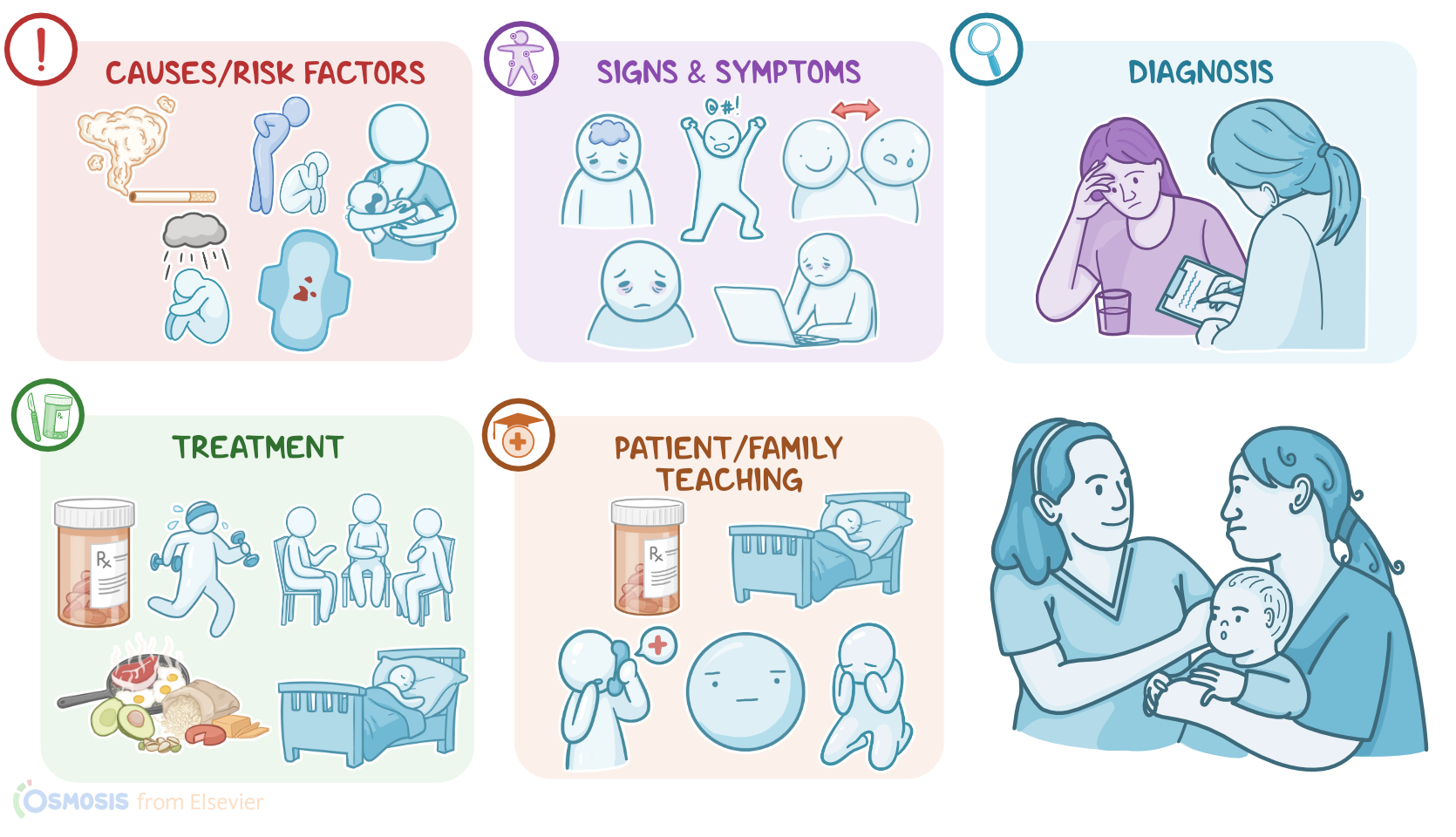
CAUSES AND RISK FACTORS
  • Causes
    • Likely related to changes in hormone levels
    • Imbalance of GABA, serotonin, dopamine, and glutamate
    • Emotional and physical stress of birth
  • Risk factors
    • Family history or personal history of a personal trauma
    • History of depression
    • Premenstrual syndrome
    • Premenstrual dysphoric disorder
    • Age <25
    • Single
    • First pregnancy
    • Unwanted pregnancy
    • Stressful life events before or after delivery; have inadequate social or financial support;  those who smoke; or formula feed the baby, or have difficulty breastfeeding, also seem to be at an increased risk. 

PATHOPHYSIOLOGY
  • Increased sensitivity to hormonal fluctuations and psychological changes

SIGNS AND SYMPTOMS
  • Extreme sadness, hopelessness, or irritability
  • Anhedonia
  • Appetite changes
  • Sleep changes
  • Fatigue
  • Difficulty concentration
  • Psychomotor changes
  • Emotional lability
  • Feelings of worthlessness
  • Excessive guilt
  • Thoughts of suicide 

DIAGNOSIS
  • History
  • Physical assessment
  • PHQ-9 or Edinburgh postnatal depression scale
  • DSM-5 criteria
  • Laboratory tests

TREATMENT
  • Psychotherapy
  • Lifestyle changes
  • Medications

MANAGEMENT OF CARE
  • Goals of care
    • Promote attachment
    • Encourage infant and self care
  • Establish positive and nurturing environment
  • Assess psychosocial status
  • Assess interactions with baby
  • Model appropriate infant care
  • Reinforce positive caregiving behaviors
  • Encourage engagement with support system
  • Notify HCP
    • Decreased involvement with baby
    • Emotional withdrawal
    • Unable to meet baby's needs
    • Isolated without support
    • Indications support or resources needed

PATIENT AND FAMILY TEACHING
  • Explain condition, plan of care, and how to safely administer medications
  • Provide individualized teaching
  • Discuss postpartum recovery
  • Hydration and nutritious diet
  • Assist with breastfeeding as indicated
  • Ensure lactation consultant referral as needed
  • Validate life changes
  • Provide reassurance
  • If greater than 4 weeks, notify HCP
    • Emotionless
    • Sad
    • Irritable
    • Unable to care for baby
  • Seek emergency care
    • Feelings of hurting self, baby, or others

Transcript

Watch video only

Perinatal depression, also known as major depressive disorder with peripartum onset, and previously known as postpartum depression, is a type of depressive disorder that most often occurs during pregnancy or during the four weeks following delivery. Now, let’s quickly review the physiology of some hormonal fluctuations that take place in the perinatal period. During pregnancy, the placenta releases a couple of hormones, including human placental lactogen, estrogen, and progesterone; while the pituitary gland releases prolactin, among others. All these hormones travel through the bloodstream to their specific areas of action to regulate specific body functions. During labor, the pituitary gland secretes another hormone called oxytocin, which stimulates uterine muscle contractions to facilitate delivery. Once the baby’s delivered, these hormones start rapidly decreasing.

Now, the exact cause of perinatal depression isn’t understood, but it’s likely related to changes in hormone levels, as well as an imbalance of GABA, serotonin, dopamine, and glutamate. All of these are neurotransmitters that help regulate mood, reward-motivated behavior, appetite, and sleep. These changes come along with the emotional and physical stress that can accompany the birth of a child. Now, the main risk factors for perinatal depression seem to include having a family or personal history of trauma, such as sexual abuse, as well as a history of depression, premenstrual syndrome, or premenstrual dysphoric disorder. Clients who are younger than 25; single; or who have an unwanted pregnancy; as well as those who struggle with stressful life events before or after delivery; have inadequate social or financial support; those who smoke; or have difficulty breastfeeding, also seem to be at an increased risk.

So, pathology-wise, the exact mechanism that leads to perinatal depression is not clear. It is thought that clients who develop perinatal depression have an increased sensitivity to the normal hormonal fluctuations that occur during the perinatal period. This, alongside the psychological changes of having a baby, such as anxiety, fatigue, and sleep deprivation, can all play a role in the pathology of perinatal depression. Finally, in some clients, perinatal depression can resolve spontaneously or with treatment; while less frequently, it could progress to chronic depressive disorder.

Clinical manifestations of perinatal depression typically include feelings of extreme sadness, hopelessness or irritability, associated with anhedonia, which means a diminished interest in everyday activities that used to be really pleasurable. Clients might also present either with an increase or decrease in appetite, which can lead to weight gain or loss. Other symptoms include sleeping too much or too little; lack of energy and feeling extremely tired; difficulty concentrating; psychomotor retardation, or slowing down of a person’s thoughts and a reduction in physical movement; emotional lability, feelings of worthlessness; excessive guilt; and finally recurrent thoughts of death or suicide. With perinatal depression, symptoms last for at least two weeks, significantly impair daily functioning, and may negatively affect both the birthing parent, the baby, and attachment and bonding. Perinatal depression should be differentiated from postpartum blues, which is way more common, and may cause milder feelings of depressed mood, mood swings, irritability, crying outbursts, and lethargy or fatigue; which typically resolve within two weeks after delivery.

These symptoms are in contrast to brief psychotic disorder with peripartum onset, which is another mood disorder that can occur in the perinatal period, albeit less frequently. Symptoms include illusions, hallucinations, as well as suicidal ideation, or thoughts of harming their baby.

Now, the diagnosis of perinatal depression primarily involves the client’s history and physical assessment. Screening for this condition should be done in all individuals in the perinatal period, and this can be done through the PHQ-9 depression questionnaire, or the Edinburgh Postnatal Depression Scale. Next, for diagnosis clients must meet certain criteria that are outlined in the diagnostic and statistical manual for mental disorders, the fifth edition, or DSM-5 for short, where perinatal depression is classified as a type of major depressive disorder. It’s also important to distinguish between perinatal depression and some of the usual complaints during the perinatal period, such as exhaustion, low libido, and changes in sleeping patterns and eating habits. Laboratory tests can be also performed, in certain cases, to rule out organic causes of depression. For example, serum TSH levels and anti-thyroid peroxidase antibodies can be determined to rule out postpartum thyroiditis.

Now, treatment of perinatal depression can be very challenging. Milder cases can be managed with psychotherapy, including cognitive behavioral therapy, as well as healthy lifestyle changes, like increasing the level of physical activity, as well as practicing meditation, yoga, deep-breathing exercises, and acupuncture. In this case, medication is usually not necessary. For more severe cases, medications like serotonin reuptake inhibitors or SSRIs, such as fluoxetine and sertraline and norepinephrine reuptake inhibitors, or SNRIs, like venlafaxine can be used. Alright, let’s look at the nursing care you’ll be providing for a client after delivery. Priority nursing goals are to promote caregiver-baby attachment and encourage infant and self-care.