Seizure disorder: Nursing process (ADPIE)
Definitions & Key takeaways
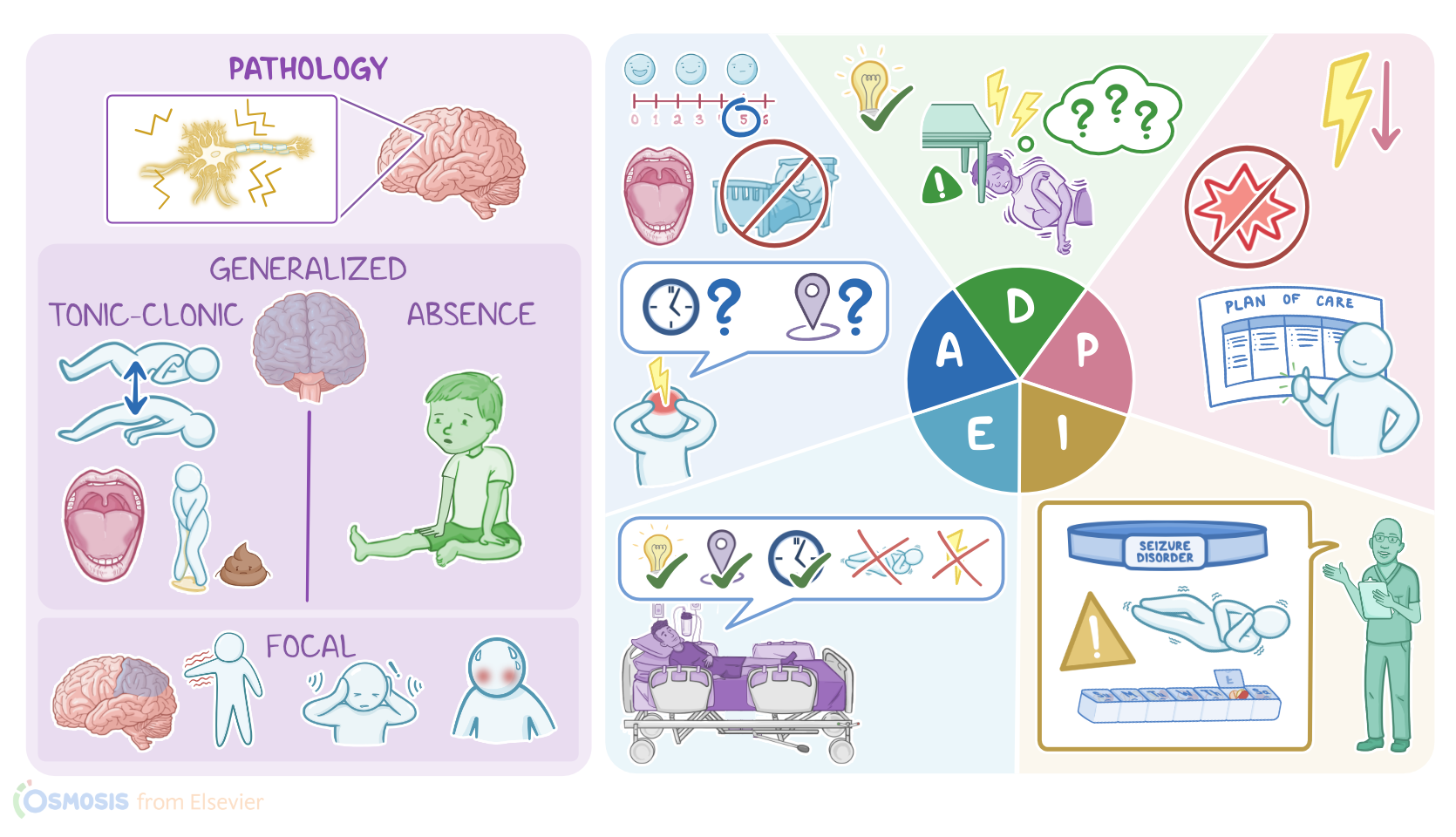
Seizure disorders may be due to epilepsy, which is a neurological condition characterized by recurrent convulsions that occur due to excessive electrical activity in the brain. Seizures can take many forms, with the most common being generalized tonic-clonic and absence seizures.
In generalized tonic-clonic seizures, people experience a tonic phase, where the muscles suddenly tense up, followed by the clonic phase, where muscles rapidly contract and relax. In absence of seizures which usually occur in children, there is a sudden, brief loss of consciousness without any change in the muscle tone.
The exact cause of epilepsy is often unknown, but it can be due to genetics, brain injury, infections, or developmental disorders, among other causes. The management of seizures involves anti-seizure medications like carbamazepine, phenytoin, and levetiracetam and supportive management.
Client Report0:00–0:35
Pathology0:35–6:30
Assessment6:30–8:02
Diagnosis8:02–8:20
Planning8:20–8:40
Implementation8:40–9:27
Evaluation9:27–10:19
Summary10:19–11:01
| SEIZURE DISORDER | ||
| KEY POINTS | NOTES | |
| PATIENT REPORT |
| |
| PATHOPHYSIOLOGY |
| |
| DIAGNOSIS AND TREATMENT |
| |
| ASSESSMENT |
| |
| NURSING DIAGNOSES |
| |
| PLANNING |
| |
| IMPLEMENTATION |
| |
| EVALUATION |
| |
No notes for this video yet
Try adding a note below