Venous thromboembolism (VTE): Nursing process (ADPIE)

1,083views

Venous thromboembolism (VTE): Nursing process (ADPIE)

Watch later

Watch later

Antibiotics - Glycopeptides: Nursing pharmacology
Corticosteroids - Inhaled: Nursing pharmacology
Oxygen therapy: Nursing pharmacology
Blood products: Nursing pharmacology
Bronchodilators: Nursing pharmacology
Analgesics: Nursing pharmacology
Antihistamines: Nursing pharmacology
Therapeutic communication: Nursing
Diabetes mellitus (DM): Nursing process (ADPIE)
Diabetic ketoacidosis (DKA): Nursing process (ADPIE)
Immunoglobulins: Nursing pharmacology
Physiologic changes - Postpartum: Nursing
Assessment - Postpartum: Nursing
Cesarean birth: Nursing
Postpartum infections: Nursing
Assessment of gestational age: Nursing
Nutrition - Newborn: Nursing
Newborn adaptation to extrauterine life: Nursing
Hemolytic disease of the fetus and newborn: Nursing
Physical assessment - Neonate: Nursing
Group B streptococcus (GBS) infection in pregnancy: Nursing
Neonatal eye prophylaxis: Nursing pharmacology
Streptococcus agalactiae (Group B Strep)
Hyperbilirubinemia: Nursing process (ADPIE)
Large for gestational age (LGA) infant: Nursing
Hepatitis B virus (HBV) infection in pregnancy: Nursing
Brachial plexus injury: Nursing
Postpartum hemorrhage: Nursing
Psychosocial changes - Postpartum: Nursing
Oxytocin: Nursing pharmacology
Rho(D) immune globulin: Nursing pharmacology
Perinatal depression: Nursing
Shoulder dystocia: Nursing
Venous thromboembolism (VTE): Nursing process (ADPIE)
Shock - Hypovolemic: Nursing
Eye conditions: Inflammation, infections and trauma: Pathology review
Otitis media: Nursing
Ventricular septal defect
Disseminated intravascular coagulation (DIC): Nursing
Antepartum assessment - Fetus: Nursing
Common discomforts of pregnancy: Nursing
Ectopic pregnancy: Nursing
Fetal circulation: Nursing
Fetal development: Nursing
Gestational trophoblastic disease: Nursing
Hyperemesis gravidarum: Nursing
Multiple gestation: Nursing
Physiologic changes - Pregnancy: Nursing
Pregestational conditions: Nursing
Psychosocial changes - Pregnancy: Nursing
Spontaneous abortion: Nursing
Placenta previa: Nursing process (ADPIE)
Placental abruption: Nursing process (ADPIE)
Ergot alkaloids: Nursing pharmacology
Prostaglandins: Nursing pharmacology
Analgesics for obstetrics: Nursing pharmacology
Tocolytics: Nursing pharmacology
Prenatal care: Nursing
Preeclampsia and eclampsia: Nursing
Neonatal abstinence syndrome: Nursing
Sudden infant death syndrome (SIDS): Nursing
ADHD: Information for patients and families (The Primary School)
Stimulant medications for attention-deficit hyperactivity disorder (ADHD): Nursing pharmacology
Cerebral palsy: Nursing
Failure to thrive (FTT): Nursing
Pelvic inflammatory disease (PID): Nursing process (ADPIE)
Contraception - Barrier methods: Nursing
Syphilis: Nursing
Chlamydia trachomatis
Candidiasis: Nursing process (ADPIE)
Treponema pallidum (Syphilis)
Gonorrhea and chlamydia: Nursing process (ADPIE)
Genital warts: Nursing
Contraception - Hormonal methods: Nursing
Dementia: Nursing
Alzheimer disease
Antiepileptics: Nursing pharmacology
Dyslipidemias: Pathology review
Schizophrenia: Nursing
Bipolar and related disorders
Mood stabilizers: Nursing pharmacology
Erectile dysfunction
Obsessive-compulsive disorder (OCD): Nursing
Benign prostatic hyperplasia (BPH): Nursing process (ADPIE)
Renal and urinary calculi: Nursing
Antipsychotics: Nursing pharmacology
Physical assessment - Mental status: Nursing
Delirium: Nursing
Restraints
Cataracts: Nursing
Glaucoma: Nursing process (ADPIE)
Peripheral arterial disease (PAD): Nursing process (ADPIE)
Physical assessment - Peripheral vascular system: Nursing
Peripheral venous disease (PVD): Nursing process (ADPIE)
Amputation: Nursing
Treatment for Helicobacter pylori: Nursing pharmacology
Macular degeneration: Nursing
Eye conditions: Retinal disorders: Pathology review
Antidepressants - SSRIs and SNRIs: Nursing pharmacology
Antidepressants - Tricyclic antidepressants (TCAs) and monoamine oxidase inhibitors (MAOIs): Nursing pharmacology
Anxiolytics and sedative-hypnotics: Nursing pharmacology
Thrombosis syndromes (hypercoagulability): Pathology review
Pulmonary embolism
Heart failure
Heart failure: Pathology review
Left-sided heart failure: Nursing process (ADPIE)
Coronary artery disease (CAD) and angina pectoris: Nursing process (ADPIE)
Nephrotic syndrome: Nursing
Immune response - Adaptive: Nursing
Inflammatory process: Nursing
Inflammation
Tuberculosis (TB): Nursing
Leukemia: Nursing process (ADPIE)
Breast cancer: Nursing process (ADPIE)
Lung cancer: Nursing
Biology of cancer: Nursing
Skin cancer - Basal cell carcinoma, squamous cell carcinoma, and melanoma: Nursing
HIV (AIDS)
Hypersensitivity reactions - Type I: Nursing
Hypersensitivity reactions - Type III: Nursing
Hypersensitivity reactions - Type II: Nursing
Hypersensitivity reactions - Type IV: Nursing
Physical assessment - Neurological system: Nursing
Antihyperlipidemics - Miscellaneous: Nursing pharmacology
Stroke: Nursing process (ADPIE)
Shock - Septic: Nursing
Shock - Neurogenic: Nursing
Burn injury: Nursing
Thermoregulation : Nursing
Arrhythmias - Atrial flutter (Aflutter): Nursing
Arrhythmias - Atrial fibrillation (Afib): Nursing
Arrhythmias - Supraventricular tachycardia (SVT): Nursing
Arrhythmias - Ventricular tachycardia (Vtach): Nursing
Arrhythmias - Ventricular fibrillation (Vfib): Nursing
Arrhythmias - Premature atrial contractions (PACs): Nursing
Arrhythmias - Premature ventricular contractions (PVCs): Nursing
Arrhythmias - Asystole: Nursing
Arrhythmias - Sinus tachycardia and sinus bradycardia: Nursing
ECG rate and rhythm
Cardiomyopathy: Nursing
Shock - Cardiogenic: Nursing
Endocarditis: Nursing
Cardiac preload
Acute respiratory distress syndrome (ARDS): Nursing
Neonatal respiratory distress syndrome (NRDS): Nursing
Chronic kidney disease (CKD): Nursing
Acute kidney injury (AKI): Nursing process (ADPIE)
Dialysis care: Nursing
Aortic aneurysm: Nursing process (ADPIE)

Notes

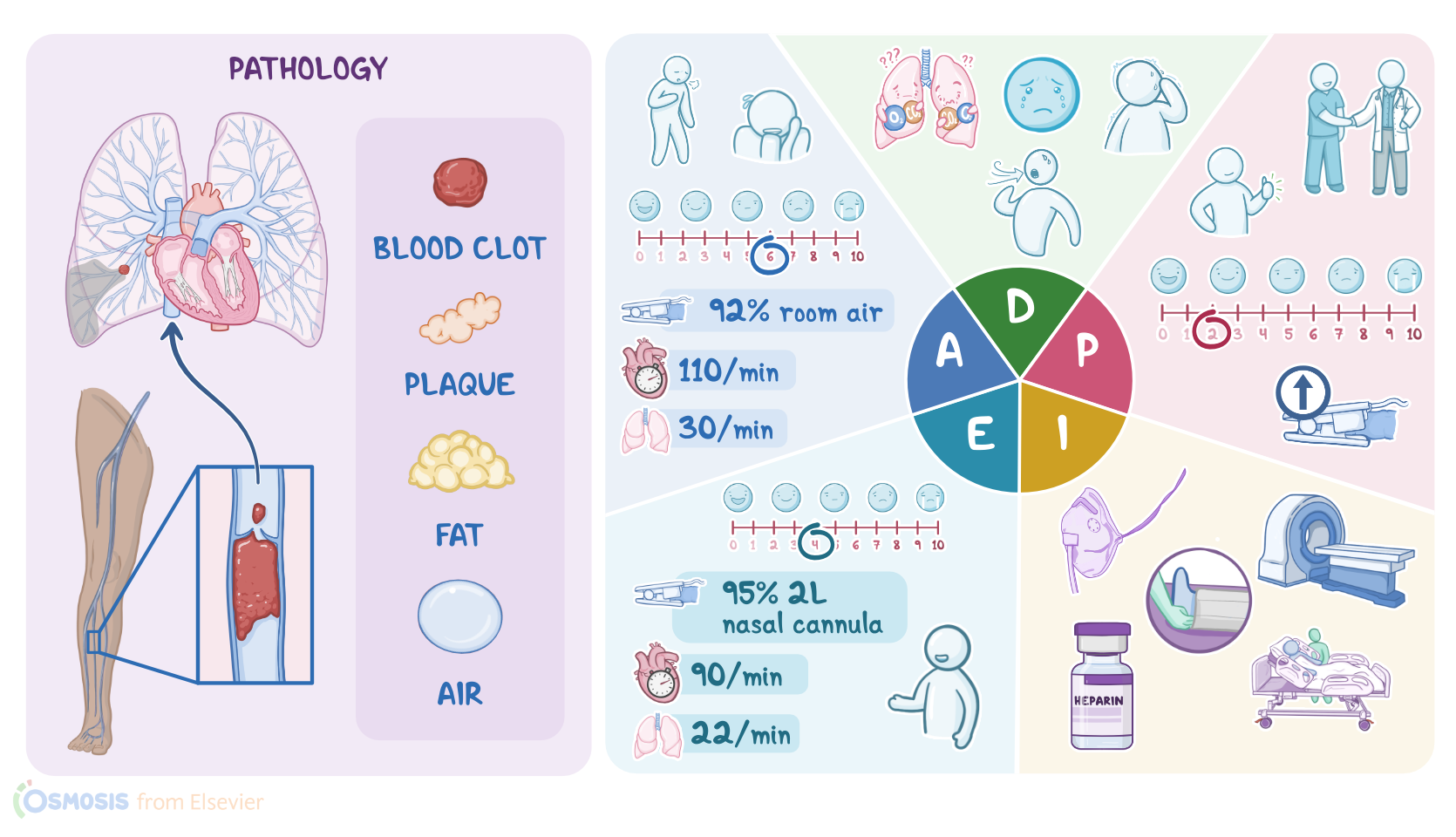
VENOUS THROMBOEMBOLISM (VTE)

KEY POINTS
NOTES
PATIENT REPORT
  • 34-year-old woman
  • Shortness of breath, chest pain, blood-tinged sputum
  • Delivered healthy, full-term infant via C-section 1 week ago
  • No other significant medical history

PATHOPHYSIOLOGY
  • Pulmonary embolism
    • Embolus lodges in pulmonary artery
    • Pulmonary circulation obstructed
  • Deep vein thrombosis (DVT)
    • Clot forms in a large vein
  • Venous thromboembolism
    • Blood clot forms in a vein
  • Risk factors
    • Virchow triad
  • Signs and symptoms (PE)
    • Depend on size and location of pulmonary artery blockage
    • Dyspnea
    • Cough
    • Tachypnea
    • Chest pain
    • Disorientation
    • Anxious
    • Apprehension or impending doom
    • Hemoptysis
  • Complications (PE)
    • Pulmonary hypertension
    • Right ventricular failure
    • Shock
    • Death

DIAGNOSIS AND TREATMENT
  • Diagnosis
    • CT
    • V/Q scan
    • Laboratory tests
  • Treatment
    • Small
      • Resolve on own
    • Large
      • Fibrinolytics
      • Anticoagulants
      • Embolectomy
      • IVC filter

ASSESSMENT
  • Short of breath, pain with breathing
  • Anxious
  • Dyspneic with conversation
  • Telemetry: sinus tachycardia
  • Heart rate: 110
  • Respiratory rate: 30, shallow
  • Productive cough with blood-tinged sputum
  • Crackles
  • Blood pressure: 95/72 mmHg
  • Temperature: 98.6 F (37.0 C)
  • Pain: 6/10
  • Oxygen saturation: 90% room air
  • Unilateral calf swelling and warmth
  • Hemoglobin: 12.5 mg/dL (125 g/L)
  • Hematocrit: 40%
  • Red blood cells: 5.0 million/mm3 (5.0 x10¹²/L)
  • White blood cells: 15,000 cells/mm(15 x 109/L)
  • Prothrombin time: 10 seconds
  • Activated partial thromboplastin time: 30 seconds
  • D-dimer: 2300 ng/dL (23 mg/L)
  • Troponin: 0.2 ng/dL (2 μg/L)
  • pH: 7.49
  • PaCO2: 30 mmHg (4.0 kPa)
  • HCO3-: 20 mEq/L (20 mmol/L)

NURSING DIAGNOSES
  • Impaired gas exchange related to decreased lung perfusion
  • Ineffective breathing pattern related to anxiety and dyspnea
  • Acute pain related to verbalization of pain
  • Anxiety related to verbalization and situational crisis 

PLANNING
  • Optimize oxygenation and ventilation
  • Decrease pain
  • Verbalize decrease in anxiety

IMPLEMENTATION
  • Apply face mask with 8L oxygen
  • Transfer to radiology for CT
  • Elevate head of bed
  • Administer medications as prescribed
  • Explain condition
  • Education on hydration, physical activity
  • Review symptoms of VTE
  • Review bleeding precautions 

EVALUATION
  • Respiratory rate: 22
  • Crackles
  • Heart rate: 90
  • Telemetry: normal sinus rhythm
  • Blood pressure: 110/80
  • Temperature: 98.0 F (36.6 C)
  • Pain: 4/10
  • Oxygen saturation: 95% 8L simple mask
  • Verbalizes education
  • Reports less anxiety

Transcript

Watch video only

Renata Gutierrez is a 34-year-old woman who came to the Emergency Department, or ED, with her partner, because of shortness of breath, chest pain, and coughing up blood-tinged sputum. The triage nurse informs you that Ms. Gutierrez delivered a healthy full-term baby by cesarean section one week ago. She has no other significant past medical history.

Venous thromboembolism, or VTE, refers to a clot that starts in a vein.

Specifically, a pulmonary embolism, or PE, occurs when an embolus, which is a small mass that could be a blood clot, fat, or even an air bubble, becomes lodged in the pulmonary artery and obstructs the pulmonary circulation. Most often the embolus is a blood clot associated with deep vein thrombosis, or DVT, which is when a clot forms in a large vein, usually in the leg or pelvis. The clot can break off and travel up the inferior vena cava to the right atrium, into the right ventricle, and finally into the pulmonary artery. This causes decreased blood flow to the lung tissue and impaired oxygenation.

Factors that increase the risk of a pulmonary embolism are summarized in Virchow triad, which include slowed blood flow, or venous stasis, hypercoagulation, meaning the blood is more likely to form clots, and damage to the endothelial lining of a blood vessel. Venous stasis can occur because of prolonged immobility like during a severe illness or after surgery, when an enlarged uterus compresses the nearby veins during pregnancy, or due to long-haul travel. Hypercoagulability can be caused by clotting disorders, use of oral contraceptives, smoking, and it occurs normally during pregnancy. And lastly, damage to the endothelial cell lining of a blood vessel can be the result of trauma or surgery.

Signs and symptoms of a pulmonary embolism depend on the size and location of pulmonary artery blockage. Even a small blockage impairs blood from getting into the lungs to pick up oxygen. Impaired oxygenation may cause a sudden onset of dyspnea, cough, tachypnea and chest pain that is described as pleuritic, meaning a sharp pain felt when inhaling and exhaling.

The patient may become disoriented and anxious from the hypoxemia, or they may report a feeling of apprehension and impending doom. As inflammation sets in, fluid buildup causes crackles which can be heard upon auscultation. Further deprivation of oxygen from the lung tissue leads to infarction of the lung tissue, which may result in hemoptysis. Complications from a PE can include pulmonary hypertension, right ventricular failure, shock and sudden death.

Diagnostics used to identify a PE include computed tomography pulmonary angiogram, or CTPA, where a dye is injected into the blood vessels to locate the blockage. A ventilation-perfusion scan, or V/Q scan, also called lung scintigraphy or ventilation-perfusion scintigraphy, can reveal areas of the lung that are ventilated, but not perfused, called a V/Q mismatch. Lab tests include a D-dimer test to detect fibrin breakdown products, which are usually present when there’s a blood clot.

Small clots may resolve on their own, however, large clots usually need treatment with fibrinolytic medications like tissue plasminogen activator, or tPA, to help break down the clot, and anticoagulants, like low molecular weight heparin to decrease blood coagulation. A

pulmonary embolectomy can also be done, either surgically or percutaneously, to remove the clot. For those at risk of developing further blood clots, anticoagulant medications may be given long term, or an inferior vena cava filter, or IVC filter, can be surgically placed into the inferior vena cava to prevent blood clots from entering the pulmonary artery and lungs. Keep in mind that the treatment course and medications may be influenced by factors such as whether the patient is pregnant or breastfeeding.

So, after you greet Ms. Gutierrez and introduce yourself as her nurse, you wash your hands, confirm her identity, and begin your assessment by asking how she’s doing. She replies she’s feeling short of breath, and it hurts every time she breathes. She goes on to tell you she has never experienced anything like this before and is very anxious. You notice that she has trouble getting the words out between breaths. After attaching a telemetry monitor, you observe sinus tachycardia with a heart rate of 110. Her respiratory rate is 30 per minute and shallow, she has a productive cough with blood-tinged sputum, and crackles are auscultated bilaterally. Her blood pressure is 95/72 mmHg, oral temperature 98.6° F, or 37°C, pain 6/10, and SpO2: 90% on room air.

Key Takeaways

Venous thromboembolism (VTE) is a condition where blood clots form in the veins, typically in the legs or pelvis, and can travel to the lungs, causing a pulmonary embolism (PE).

There are three main factors that lead to abnormal formation of clots, which are known as the Virchow's triad. They include venous stasis; a state of hypercoagulation; and damage to the endothelial cell lining. Venous stasis is said when blood doesn't flow appropriately in the veins due to prolonged periods of physical inactivity. Endothelial injury can occur when there is an injury or trauma to a blood vessel such as in trauma or surgery; and finally, hypercoagulable states can be seen in certain conditions like cancer and pregnancy.

Symptoms of VTE can include pain, swelling, warmth, and redness in the affected area, as well as shortness of breath, chest pain, and coughing up blood in the case of PE. The treatment involves thrombolytics to help break down the clot, or a thrombectomy, which is an intervention that aims to surgically remove the clot. Long-term treatment to prevent future thrombi from forming can include staying physically active, wearing compression stockings, and anticoagulant medications like warfarin or heparin.

Sources

  1. "Inflammation, Infection and Venous Thromboembolism. 128(12):2017-2036. " Circ Res. (2021)
  2. "Management of venous thromboembolism in pregnancy. 211:106-113. " Thromb Res (2022)
  3. "Long-term treatment of venous thromboembolism. 135(5):317-325. " Blood (2020)
  4. "Harrison’s Principles of Internal Medicine. 21st edition. ISBN: 978-1-264-26850-4 " McGraw Hill / Medical (2022)
  5. "Epidemiology and prevention of venous thromboembolism. 20(4):248-262. " Nat Rev Cardiol. (2023)
  6. "American Society of Hematology 2021 guidelines for management of venous thromboembolism: prevention and treatment in patients with cancer. 5(4):927-974. " Blood Advances. (2021)
  7. "Robbins & Kumar Basic Pathology. 11th edition. ISBN: 978-0-323-79018-5 " Elsevier (2022.)