
Gigantomastia · What It Is, Causes, Signs & Symptoms, Treatment, and More

Published: Apr 07, 2026
Author: Emily Miao, PharmD
Editor: Alyssa Haag
Editor: Ian Mannarino MD, MBA
Editor: Kelsey LaFayette, DNP, ARNP, FNP-C
Editor: Lahav Constantini, MD
Illustrator: Jung Hee Lee, MScBMC
7-day free trial

Go deeper with Osmosis

Osmosis is a learning platform with videos, questions, and AI tools to help you master topics like this.

4.8 · 12,000+ reviews
Watch quick, visual videos
Practice with Qbank-style questions
Use AI to explain, quiz, and review
Study anytime with the mobile app
Start free trial

No credit card · Cancel anytime

What is gigantomastia?

Gigantomastia is a rare, benign condition characterized by diffuse, rapid, and excessive breast enlargement in individuals assigned female at birth. Breast growth is typically bilateral but can also occur unilaterally, and often results in significant symptoms, including pain, postural problems, skin infections, necrosis, and sepsis.

Gigantomastia most commonly occurs during periods of hormonal change, such as puberty (i.e., juvenile gigantomastia) or during pregnancy (i.e., gestational gigantomastia). More rarely, it occurs outside these contexts and is classified as idiopathic gigantomastia.

The term macromastia, which also refers to a point along the spectrum of excessive breast enlargement, is often used interchangeably with gigantomastia. However, while there are no universally accepted definitions for either condition, gigantomastia is considered the most severe form. Definitions of gigantomastia vary based on breast size, ranging from more than 800 grams to 2 kilograms per breast. Many authors consider more than 1,500 grams per breast as a threshold, while others define gigantomastia as breast tissue accounting for ≥3% of total body weight.

Learn deeper with Osmosis

Master this topic faster with videos, questions, and AI.

Used by 8M+ healthcare learners.

Start free trial

No credit card · Cancel anytime

What causes gigantomastia?

The exact cause of gigantomastia is not fully understood, but recent research has identified several mechanisms that are thought to contribute.

Current research suggests gigantomastia does not result from increased blood hormone levels, but rather from the overproduction of estrogen by the breast tissue, through overexpression of the enzyme aromatase, and from increased local tissue sensitivity to estrogen, through elevated expression of estrogen receptor alpha. In juvenile gigantomastia, which begins during puberty, this local hypersensitivity to estrogen drives excessive breast growth. Similarly, in gestational gigantomastia, the hormonal changes of pregnancy (e.g., estrogen, progesterone, prolactin) trigger pathologic breast enlargement in susceptible individuals, most commonly during the first trimester.

In addition, overexpression of multiple growth factors in breast tissue of individuals with gigantomastia has been identified, suggesting that they play an important role in driving excessive tissue growth. These include paracrine factors (i.e., substances that act locally on nearby cells), such as IGF2, EGFR, TGF-β, and PDGFR.

Pseudoangiomatous stromal hyperplasia (PASH) is a benign condition characterized by proliferation of breast stromal myofibroblasts and is frequently identified incidentally on microscopic examination of biopsy specimens obtained from individuals with gigantomastia to exclude malignancy. It is considered hormone-dependent, particularly related to progesterone, and is typically seen in premenopausal women.

Certain medications have also been associated with gigantomastia in case reports. D-penicillamine, an antirheumatic drug, is the most frequently reported cause of drug-induced gigantomastia, and bucillamine, which is structurally similar to D-penicillamine, has also been implicated; however, these are rare occurrences.

Gigantomastia has been reported in association with autoimmune conditions including systemic lupus erythematosus, myasthenia gravis, chronic arthritis, and thyroiditis. In these cases, breast tissue may be a target of autoimmune processes, with the hormonal environment playing a facilitating role. Most individuals with autoimmune-associated gigantomastia have antinuclear antibodies (ANA) and show lymphocytic infiltration of breast tissue.

Additionally, some genetic studies have identified preliminary associations with variations in the aromatase gene and progesterone receptor gene, but further research is needed to fully understand the possible contribution of these factors.

Lastly, cases where gigantomastia develops outside typical hormonal periods (puberty or pregnancy) with no clear identifiable cause, are termed idiopathic gigantomastia.

What are the signs and symptoms of gigantomastia?

Gigantomastia can cause significant manifestations, including physical discomfort and pain due to excessive breast enlargement. Individuals may experience breast pain (i.e., mastalgia) and chronic upper body and back pain, which can impact activities of daily living. Enlarged breasts may also increase the risk of skin irritation, rashes, and inflammation in the folds beneath the breasts, and individuals may present with indentations and erythema on the skin from bra straps. Persistent chafing of the skin or clothing due to breast enlargement can also increase the risk of fungal infections. People with gigantomastia may experience loss of nipple sensation due to stretching of sensory nerves. Gigantomastia may also limit the ability to participate in physical activity or high-impact exercise, as movement may cause discomfort.

In severe cases, particularly gestational gigantomastia, complications may include skin necrosis, ulceration, hemorrhage, infection, and sepsis. These may require urgent surgical intervention.

Lastly, gigantomastia is associated with significant psychological distress, including anxiety, depression, body image dissatisfaction, and low self-esteem. Adolescents with this condition have lower quality-of-life scores and are at higher risk of disordered eating behaviors.

How is gigantomastia diagnosed?

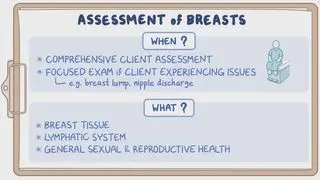
Diagnosis of gigantomastia begins with a review of symptoms and medical history. A focused physical exam of the breasts helps assess size, symmetry, the presence of lumps or masses, and any associated dermatologic conditions (e.g., intertrigo, fungal infection). A musculoskeletal exam can assess the individual’s posture and range of motion in the upper body.

If a lump or mass is palpated, further evaluation with breast imaging (e.g., mammography or ultrasound) may be performed to exclude other causes of breast enlargement (e.g., tumors).

Laboratory testing to evaluate hormone levels (e.g., prolactin, estrogen, progesterone) and thyroid function may also help identify the underlying etiology.

How is gigantomastia treated?

Medical treatment for gigantomastia aims to reduce breast size and relieve symptoms through a combination of pharmacologic therapy and breast reduction surgery. Medications such as tamoxifen, medroxyprogesterone, and bromocriptine may be used to regulate hormonal imbalances and limit further breast tissue growth.

Surgical management includes breast reduction procedures, such as reduction mammoplasty, which involves the removal of excess breast tissue and skin. In cases where significant reduction is necessary, free nipple grafts may be considered to achieve better proportion and symmetry. This technique involves removal of the nipple-areola complex along with  excess breast tissue; the nipples are then reattached as a graft at a higher position on the breast mound. In severe, painful, or recurrent cases, mastectomy (i.e., complete removal of breast tissue) may be considered. 

What are the most important facts to know about gigantomastia?

Gigantomastia is a rare, benign condition characterized by rapid and excessive breast enlargement affecting one or both breasts. The exact cause of gigantomastia is not fully understood, but current evidence suggests that local estrogen overproduction, increased tissue sensitivity to hormones, growth factors, genetic predisposition, medications, and autoimmune mechanisms may contribute. Gigantomastia most commonly occurs during periods of hormonal change, particularly puberty or pregnancy, though idiopathic cases also occur. Signs and symptoms include pain, postural problems, skin complications, and functional limitations due to breast enlargement. Diagnosis is primarily clinical based on history and physical examination with imaging and laboratory studies used to exclude other causes and evaluate underlying factors. Breast imaging is performed when indicated, particularly if a mass is suspected of pharmacologic therapy and surgical management aimed at controlling breast growth and relieving symptoms. Hormonal therapies (e.g., tamoxifen) may help limit further growth in selected cases. Reduction mammoplasty is the primary surgical treatment, while mastectomy may be considered in severe, refractory, or recurrent cases.

Key Takeaways

Definition 

Rare, benign condition characterized by rapid, excessive breast enlargement (typically bilateral), in females assigned sex at birth. 

Timing 

 - Most commonly occurs during periods of hormonal change 

 - Puberty juvenile gigantomastia 

 - Pregnancy → gestational gigantomastia 

 - May also be idiopathic 

Pathophysiology 

 - Not due to elevated systemic hormones alone 

 - Suggested mechanisms: 

 - Local estrogen overproduction (↑ aromatase)  

 - Increased tissue sensitivity (↑ estrogen receptor α) 

 - Overexpression of growth factors (e.g., IGF2, EGFR, TGF-β, PDGFR)

Associated Conditions  

 - Autoimmune diseases (e.g., systemic lupus erythematosus, myasthenia gravis, thyroiditis) 

 - Rare: drug-induced cases (e.g., D-penicillamine, bucillamine) 

Signs & Symptoms 

 - Breast pain (mastalgia) 

 - Back/neck/upper body pain 

 - Postural changes 

 - Skin irritation/infections (e.g., intertrigo, fungal), bra strap indentations 

 - Reduced physical activity 

 - Loss of nipple sensation 

Complications 

 - Severe cases may cause: 

 - Skin necrosis 

 - Ulceration 

 - Hemorrhage 

 - Infection 

 - Sepsis 

 → may require urgent intervention 

Psychological Impact 

 - Anxiety 

 - Depression 

 - Body image dissatisfaction 

 - Quality of life 

 - Higher risk of disordered eating in adolescents 

Diagnosis 

 - Primarily clinical (history + physical exam) 

 - Imaging (ultrasound/mammography) if mass suspected 

 - Labs (e.g., hormones, thyroid) to assess contributing factors 

Treatment 

 - Pharmacologic: 

 - Hormonal therapies (e.g., tamoxifen, medroxyprogesterone, bromocriptine) may help limit further breast growth 

 - Surgical: 

 - Reduction mammoplasty is standard 

 - Free nipple grafts in severe cases 

 - Mastectomy for refractory, recurrent, or extreme disease 

Students say Osmosis is 100% worth it

Because Osmosis saves them time. Lowers stress. And actually helps them remember when it counts.

I used Osmosis to prepare for my first medical school licensing exam! Super helpful and interactive for people who may not do great with just pages of text info!

Cecilia Ruiz

Cecilia Ruiz

MD student

Sayan Misra

I have used Osmosis for about four years. Best thing I have ever used for my medical studies.

Sayan Misra

Sayan Misra

Med student

Osmosis videos are superior because they define simple concepts, tell a story with a clear progression, and provide context.

Jay Pate

Jay Pate

Dental student

References


Alhindi N, Mortada H, Alzaid W, Al Qurashi AA, Awan B. A systematic literature review of the clinical presentation, management, and outcome of gestational gigantomastia in the 21st century. Aesthetic Plast Surg. 2023;47(1):10-29. doi:https://doi.org/10.1007/s00266-022-03003-5 


Antoszewski B, Kasielska-Trojan A, Jones TE, Danilewicz M, Jones MW. The immunohistochemical profile of mammary tissue in women with macromastia and its potential clinical implications. Endocrinology. 2024;165(4):bqae026. doi:https://doi.org/10.1210/endocr/bqae026 


Biancha-Vasco JM, Muñoz PAL, Gómez J, et al. Idiopathic gigantomastia exacerbated during pregnancy: its relationship with autoimmunity—a case report. Int J Rheum Dis. 2023;26(12):2567-2571. doi:https://doi.org/10.1111/1756-185X.14754 


Bowman E, Oprea G, Okoli J, et al. Pseudoangiomatous stromal hyperplasia (PASH) of the breast: a series of 24 patients. Breast J. 2012;18(3):242-247. doi:https://doi.org/10.1111/j.1524-4741.2012.01230.x 


Dancey A, Khan M, Dawson J, Peart F. Gigantomastia—a classification and review of the literature. J Plast Reconstr Aesthet Surg. 2008;61(5):493-502. doi:https://doi.org/10.1016/j.bjps.2007.10.041 


Das L, Rai A, Vaiphei K, et al. Idiopathic gigantomastia: newer mechanistic insights implicating the paracrine milieu. Endocrine. 2019;66(2):166-177. doi:https://doi.org/10.1007/s12020-019-02065-x 


Kasielska-Trojan A, Pietrusiński M, Bugaj-Tobiasz M, Strużyna J, Borowiec M, Antoszewski B. Genetic factors of idiopathic gigantomastia: clinical implications of aromatase and progesterone receptor polymorphisms. J Clin Med. 2022;11(3):642. doi:https://doi.org/10.3390/jcm11030642 


Liu C, Luan J, Fu S. A cross-sectional assessment of preoperative knowledge, psychological impact, and surgical needs in Chinese women with macromastia. Aesthetic Plast Surg. Published online February 19, 2026. doi:https://doi.org/10.1007/s00266-026-05705-6 


Mori T, Yokogawa N, Higuchi R, Tsujino M, Shimada K, Sugii S. Bucillamine-induced gigantomastia with galactorrhea and hyperprolactinaemia. Mod Rheumatol Case Rep. 2020;4(1):122-125. doi:https://doi.org/10.1080/24725625.2019.1673939 


Santen RJ, Karaguzel G, Livaoglu M, et al. Role of ERα and aromatase in juvenile gigantomastia. J Clin Endocrinol Metab. 2024;109(7):1765-1772. doi:https://doi.org/10.1210/clinem/dgae019 


Stahl S, Dannehl D, Daigeler A, et al. Definitions of abnormal breast size and asymmetry: a cohort study of 400 women. Aesthetic Plast Surg. 2023;47(6):2242-2252. doi:https://doi.org/10.1007/s00266-023-03400-4 


Talwar AA, Copeland-Halperin LR, Walsh LR, et al. Outcomes of extended pedicle technique vs free nipple graft reduction mammoplasty for patients with gigantomastia. Aesthet Surg J. 2023;43(2):NP91-NP99. doi:https://doi.org/10.1093/asj/sjac258 


White AG, McNamara CT, Nuzzi LC, Hwang CD, Labow BI. Reduction mammaplasty in younger patients: an evidence-based approach to treatment. Plast Aesthet Nurs. 2023;43(4):203-209. doi:https://doi.org/10.1097/PSN.0000000000000521