
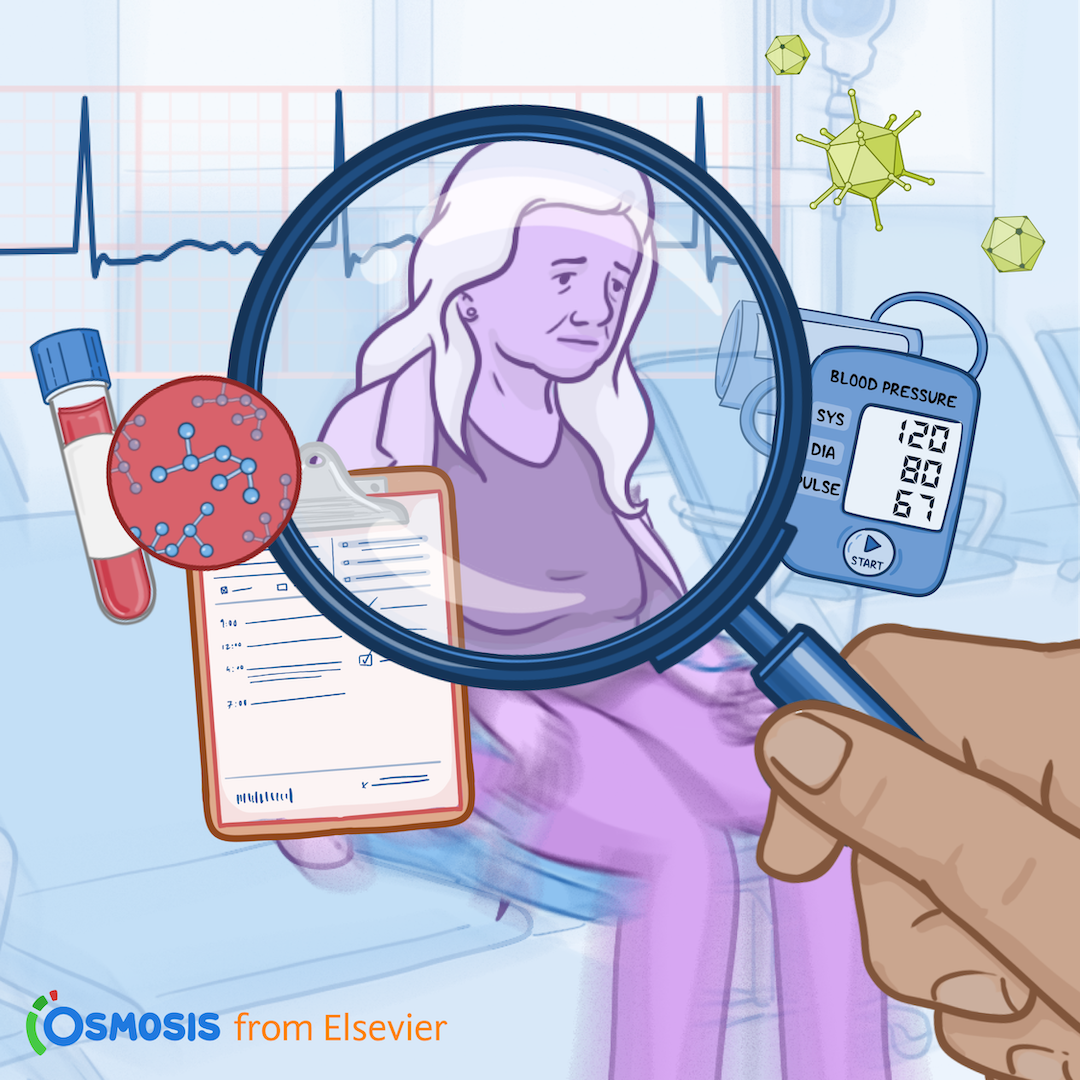
Most healthcare professionals do not go to work intending to treat one patient differently from another. We want to believe that we listen objectively, weigh the evidence, and make clinical decisions based on what is in front of us. But what if some of the things influencing those decisions are things we do not even realize we believe?
That is what makes implicit bias so difficult, and why addressing it matters.
Implicit bias applies to more than race. Our assumptions can be shaped by gender, age, disability, body weight, socioeconomic status, language, religion, sexual orientation, culture, and many other characteristics. They can even be influenced by how a patient dresses, communicates, or responds to us.
It sits beneath conscious intention. It can influence what we notice, what we dismiss, whose symptoms we take seriously, and how we interpret a patient’s behavior. And none of us should assume we are immune.

When Bias Doesn’t Look Like Bias
Imagine Liya, a 27-year-old Black woman presenting with severe pelvic pain during her periods. She rates her pain as 9 out of 10 and explains how significantly it is affecting her life. But she is calm, articulate, and composed. She isn’t crying or visibly distressed.
Her doctor considers himself open-minded and fair. Yet something doesn’t quite fit: Liya doesn’t look like someone experiencing 9-out-of-10 pain. Her initial investigations are reassuring, so he diagnoses dysmenorrhoea, recommends standard pain relief and advises her to return if things worsen. When she returns, her symptoms are worse, and she is understandably frustrated. She says she did not feel taken seriously the first time.
Then something else happens. Instead of focusing entirely on what she’s saying, he begins focusing on how she’s saying it. Her frustration feels confrontational. Without consciously choosing to do so, assumptions about pain, gender, race, and what a “difficult” patient looks like may begin to influence how he interprets her behavior.
Liya eventually seeks care elsewhere. At no point did her doctor consciously decide to provide her with poorer care. He may genuinely believe he treated her exactly as he would have treated anyone else. And that is precisely the problem. Implicit bias rarely announces itself. It often shows up in small, automatic judgments: what we notice, what we overlook, whose pain we believe, how we interpret behavior, and how quickly we reach a conclusion.
Bias Can Affect Any Patient
Our brains use shortcuts constantly. In healthcare, where clinicians work under time pressure, cognitive load, and uncertainty, rapid thinking is often essential. But shortcuts can also mislead us.
- We might assume an older patient will struggle to understand complex information.
- We might mistake limited English proficiency for limited understanding.
- We might attribute symptoms in a patient with obesity primarily to their weight.
- We might describe a woman reluctant to take hormones as “difficult” rather than exploring what sits behind that reluctance.
- We might interpret an anxious patient as demanding, or assume someone from a particular socioeconomic background will not adhere to a treatment plan.
Consider another patient: Daniel, 46, lives with obesity and presents with worsening knee pain. Before fully examining him, his clinician explains that weight loss is likely the answer. Daniel has already lost weight, exercises regularly, and is worried because the pain followed a twisting injury. If weight becomes the lens through which clinicians interpret every symptom, they can miss clinically relevant information.
Evidence suggests that both implicit and explicit weight bias are present across healthcare professions, although evidence quality and measurement methods vary (1, 2). Racial and ethnic disparities remain important too. Research has documented differences in areas including pain assessment and treatment. At the same time, reviews of implicit bias in healthcare also identify bias relating to gender, age, disability, weight, socioeconomic status, sexual orientation, and other characteristics (2-4, 13).
It’s important to note that not every clinical disparity (or every moment of clinical hesitation) is caused by implicit bias. It isn’t. Sometimes caution is clinically appropriate and supported by the evidence in front of us. The task is to distinguish proportionate clinical reasoning from assumptions that may be shaping how we interpret the same evidence.
Health outcomes are shaped by a much larger picture, including access to care, socioeconomic circumstances, institutional processes, structural inequalities, and explicit discrimination. Implicit bias is one part of that picture. So what can we actually do about it?
1. Replace Assumption with Clinical Curiosity
One of the most powerful questions we can ask ourselves is: “What am I assuming about this person?” Automatic associations develop through our upbringing, education, culture, media, clinical experiences, and the environments in which we live and work.
The danger comes when we assume that because we have good intentions, bias cannot affect us. Clinical curiosity asks us to investigate, not assume. Clinical humility allows us to accept that we may get things wrong.
Instead of:
- “They probably won’t understand this.” Ask what they already understand.
- “They won’t want this treatment.” Ask what matters to them and what concerns they have.
- “They’re being difficult.” Ask: “What might I not yet understand?”
Small shifts in perspective can completely change a consultation.
2. Build Fairness into the Clinical Process
We cannot rely on good intentions alone. Well-designed guidelines, checklists, and clinical decision-making support tools can create greater consistency in how patients are assessed. However, standardization is not automatically equitable: the assumptions and evidence embedded within our guidelines and algorithms also need scrutiny (8).
Training also plays a role, but a single unconscious-bias workshop is not the solution, given the mixed evidence on implicit-bias training in healthcare. A 2024 systematic review found substantial variation in how programs are designed and delivered, with many not well aligned with current science and significant limitations in the evidence used to assess their effectiveness. A separate rapid review found too little direct, clinically comparable evidence to draw firm conclusions about effects on patient outcomes (14, 15).
That doesn’t mean training has no value. It means education should be treated as one part of a wider approach: repeated reflection and skills practice, measurement, accountability, feedback, and changes to clinical systems. Some intervention reviews suggest that active, multicomponent approaches may be more promising than passive or one-off education, but sustained effects still need better study (16, 17).
Fairness has to become part of how we practice every day, not just something we workshop once a year.

3. Slow Down Your Thinking (When You Can)
Healthcare depends on rapid decision-making. We could not function without it. But rapid judgments also create opportunities for assumptions to enter our reasoning. When the clinical situation allows, deliberately interrogate your first impression:
- Why do I think this?
- What evidence supports my conclusion?
- Would I interpret this in the same way if this were a different patient?
- What else could explain what I am seeing?
A patient we describe as “non-compliant” may be frightened. A patient who appears “demanding” may have spent years trying to get someone to listen. A patient reluctant to accept treatment may have beliefs, previous experiences, or concerns we haven’t explored.
Sometimes the most important clinical question is simply: “What am I missing?”
4. Listen to Understand, Not Simply to Respond
Communication is one of our strongest safeguards against assumptions. Ask open questions. Explore concerns. Understand preferences. Notice discomfort. Check that what you think you heard is actually what the patient meant.
And involve patients in decisions about their care (9). Trauma-informed, culturally competent, shared decision-making lets patients tell us what matters to them rather than leaving us to fill in the gaps with assumptions.
We also need to be willing to hear uncomfortable feedback. If a patient tells us they felt dismissed, misunderstood, or unheard, our instinct may be to explain what we intended. But intention and impact aren’t always the same.
Before defending ourselves, we should ask ourselves: What did that patient experience that I didn’t recognize?

5. Create Teams and Systems to Challenge Blind Spots
Individual reflection matters, but implicit bias cannot be addressed solely at the individual clinician level. Healthcare organizations need to develop work cultures where people feel able to question decisions and challenge assumptions.
Organizations should also examine their own data. Are there differences in diagnosis, treatment, outcomes, or patient experience according to race, sex, age, disability, socioeconomic status, or other patient characteristics? If so, are we asking why?
Technology requires the same scrutiny. Artificial intelligence and clinical decision-support tools can reproduce existing inequalities if the data or assumptions they are built on already contain them (8, 10).
And we can’t ignore the environment in which clinicians make decisions. Time pressure, workload, and burnout make thoughtful, individualized decision-making harder. Addressing bias requires not only asking clinicians to reflect differently, but designing systems that make equitable care easier to deliver (11).
Awareness Is Only the Beginning
The goal is not to declare ourselves “bias-free.” It’s to become better at recognizing when assumptions may be influencing our decisions, and to build habits and systems that make it less likely that those assumptions determine somebody’s care outcomes.
That requires curiosity and humility: observing and listening when patients show or tell us that their experience of healthcare differed from what we thought we provided, and being willing to change what we do in response.
The question is not whether we have biases. As human beings, we all make assumptions. A better question to regularly reflect on as clinicians is: “Am I able to notice and challenge my own biases?”
Key Takeaways
- Implicit bias can involve assumptions related to race, gender, age, disability, weight, socioeconomic status, language, culture, and other patient characteristics.
- Clinical curiosity and humility can help clinicians replace assumptions with questions about patients’ experiences, preferences, and concerns.
- Guidelines, checklists, training, reflection, feedback, and system-level changes can work together to support greater consistency and equity in care.
- When circumstances allow, deliberately examining first impressions and the evidence behind them can help clinicians identify assumptions affecting their reasoning.
- Addressing bias requires both individual awareness and healthcare systems that support accountability, equitable processes, and opportunities to challenge blind spots.
References
- Institute of Medicine. Unequal Treatment: Confronting Racial and Ethnic Disparities in Health Care. Washington, DC: National Academies Press; 2003. doi:10.17226/10260.
- Hall WJ, Chapman MV, Lee KM, et al. Implicit racial/ethnic bias among health care professionals and its influence on health care outcomes: a systematic review. Am J Public Health. 2015;105(12):e60-e76. doi:10.2105/AJPH.2015.302903.
- Hoffman KM, Trawalter S, Axt JR, Oliver MN. Racial bias in pain assessment and treatment recommendations, and false beliefs about biological differences between Blacks and Whites. Proc Natl Acad Sci U S A. 2016;113(16):4296-4301. doi:10.1073/pnas.1516047113.
- FitzGerald C, Hurst S. Implicit bias in healthcare professionals: a systematic review. BMC Med Ethics. 2017;18:19. doi:10.1186/s12910-017-0179-8.
- van Ryn M, Burgess DJ, Dovidio JF, et al. The impact of racism on clinician cognition, behavior, and clinical decision making. In: Major B, Dovidio JF, Link BG, eds. The Oxford Handbook of Stigma, Discrimination, and Health. Oxford University Press; 2018.
- Chapman EN, Kaatz A, Carnes M. Physicians and implicit bias: how doctors may unwittingly perpetuate health care disparities. J Gen Intern Med. 2013;28(11):1504-1510. doi:10.1007/s11606-013-2441-1.
- Sabin JA, Greenwald AG. The influence of implicit bias on treatment recommendations for 4 common pediatric conditions: pain, urinary tract infection, attention deficit hyperactivity disorder, and asthma. Am J Public Health. 2012;102(5):988-995. doi:10.2105/AJPH.2011.300621.
- Obermeyer Z, Powers B, Vogeli C, Mullainathan S. Dissecting racial bias in an algorithm used to manage the health of populations. Science. 2019;366(6464):447-453. doi:10.1126/science.aax2342.
- National Institute for Health and Care Excellence. Shared Decision Making. NICE guideline NG197. London: NICE; 2021.
- World Health Organization. Ethics and Governance of Artificial Intelligence for Health: WHO Guidance. Geneva: World Health Organization; 2021.
- National Academies of Sciences, Engineering, and Medicine. Taking Action Against Clinician Burnout: A Systems Approach to Professional Well-Being. Washington, DC: National Academies Press; 2019. doi:10.17226/25521.
- Lawrence BJ, Kerr D, Pollard CM, et al. Weight bias among health care professionals: a systematic review and meta-analysis. Obesity (Silver Spring). 2021;29(11):1802-1812. doi:10.1002/oby.23266.
- Kruse JA, Collins JL, Vugrin M. Educational strategies used to improve the knowledge, skills, and attitudes of health care students and providers regarding implicit bias: an integrative review of the literature. Int J Nurs Stud Adv. 2022;4:100073. doi:10.1016/j.ijnsa.2022.100073.
- Hagiwara N, Duffy C, Cyrus J, et al. The nature and validity of implicit bias training for health care providers and trainees: a systematic review. Sci Adv. 2024;10(33):eado5957. doi:10.1126/sciadv.ado5957.
- Fricke J, Siddique SM, Aysola J, Cohen ME, Mull NK. Healthcare Worker Implicit Bias Training and Education: Rapid Review. In: Making Healthcare Safer IV: A Continuous Updating of Patient Safety Harms and Practices. Agency for Healthcare Research and Quality; 2024. PMID: 38330158.
- Moore CH, et al. Interventions for reducing weight bias in healthcare providers: an interprofessional systematic review and meta-analysis. Clin Obes. 2022;12:e12545. doi:10.1111/cob.12545.
- Kruse JA, Collins JL, Vugrin M. Educational strategies used to improve the knowledge, skills, and attitudes of health care students and providers regarding implicit bias: an integrative review of the literature. Int J Nurs Stud Adv. 2022;4:100073. doi:10.1016/j.ijnsa.2022.100073.

Get your Osmosis from Elsevier free trial today to discover why millions of clinicians and caregivers love learning by Osmosis!
Leave a Reply