
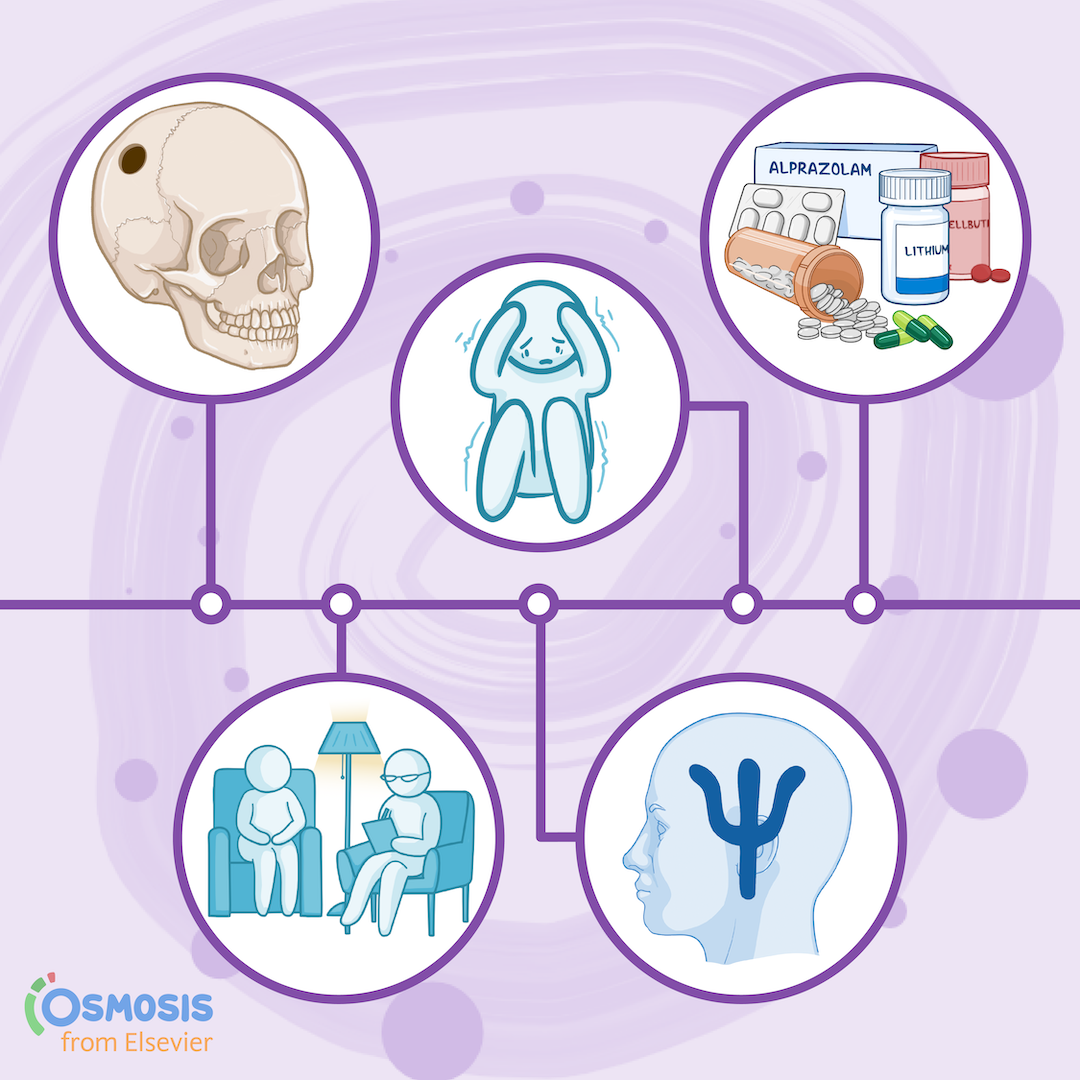
We’re in for a rollicking ride through the tumultuous history of psychiatry! From ancient skull-drillers to modern brain-ticklers, psychiatry’s history is a mix of quirky cures, spectacular missteps, and brilliant breakthroughs.
Officially labeled as the science of soothing troubled minds, psychiatry saves countless lives while also wrestling with understanding the brain’s most profound mysteries. From supernatural scapegoats to the neuroscience spotlight, let’s explore how cultures, thinkers, and tinkerers have shaped this influential medical discipline since the dawn of time.
Early Concepts of Mental Illness
Picture this: it’s 3000 BC, and your friend in ancient Mesopotamia is yelling at invisible goats and waltzing with the stars. The local priest declares it’s a demon’s doing because mental illness was a supernatural blockbuster back then, with Mesopotamians etching exorcism chants on clay tablets, like the Maqlû series. Their well-intentioned goal was to heal the tormented souls of their patients by torching pesky spirits with incense, rituals, and offerings to the gods. Priests doubled as astrologers, blaming misaligned stars for mania. Scribes who recorded cases of “sickness of the head” often cited treatments like herbal brews mixed with myrrh and opium. Egyptians blended magic spells with herbal concoctions. The Ebers Papyrus even suggested cannabis as a treatment for “hysteria.” Priests used music, sacred naps, and invocations, believing divine intervention soothed people’s troubled souls.
The Greeks’ take on mental illness was divided. Some saw madness as divine inspiration, while others saw it as Zeus throwing a cosmic tantrum. Trephination, the drilling of skull holes to let bad vibes out, was often seen as the solution. In fact, archaeological finds reveals healing marks on skulls, proving some patients actually survived this wild procedure. Pythagoras believed music harmonized the soul, a precursor to modern music therapy. Playwrights like Euripides portrayed madness in tragedies, reflecting cultural fascination.
Across the globe, India’s Atharva Veda tied mental illness to cosmic disharmony, prescribing chants, meditation, yoga, and herbs. Chinese healers linked emotions to organs – anger to the liver and sadness to the lungs – using acupuncture, moxibustion, and herbal teas to balance yin and yang. African shamans danced to reconnect lost souls, while Mesoamerican leaders and priests attributed lunar cycles to spirits, offering rituals under starry skies with maize (corn) and cacao (cocoa bean) offerings. Treatments were a wild buffet of options, including sacred baths, animal sacrifices, and starry-eyed rituals.
Though steeped in mysticism, these ancient efforts demonstrated humanity’s universal urge to crack the mind’s code, laying a foundation for psychiatry’s future. While it was less science and more spiritual speed-dating, these ancient treatments got the ball rolling, proving we’ve been obsessed with fixing minds since we started scribbling on clay.
The Birth of Psychiatry in the Classical Era
Onward to ancient Greece, where Hippocrates gave psychiatry a serious glow-up. Sick of the “gods are mad” justification, he came up with the humoral theory. Mental illness stemmed from imbalances in four bodily fluids: blood, phlegm, yellow bile, and black bile. Too much black bile? You’re moping like a tragic poet. Too much yellow bile? Crankier than a philosopher stuck in a toga traffic jam. His prescription? Diet, exercise, rest, and maybe a purge or bloodletting to “rebalance” things, swapping spirits for a semblance of science, as we know it.
Hippocrates declared the brain the mind’s command center; a bold call for a guy with no MRI to back up his story. His students spread his teachings, noting that stress or trauma could trigger mental distress, recommending patients spend time in calm environments—a clear precursor to modern stress management.
Roman physician Galen took up the baton, dissecting animal brains to map emotions like a proto-neuroscientist, and actively applying his theories. He treated Emperor Marcus Aurelius for stress by blending Stoic philosophy with medicine. He soothed a lovesick patient using talk therapy, reinforcing the idea that psychology has been around far longer than we give it credit for. Galen’s public dissections wowed crowds by revealing the brain’s role in behavior, while his writings on the “passions” linked emotional well-being to physical health.
And here we remained for centuries, with humoral theory shaping medieval medicine while also exposing many mistakes. Galen thought nerves carried “spirit,” and the heart played a role in emotions, influencing Islamic scholars like Al-Razi, who built asylums in Baghdad while blending Greek wisdom with Persian medicine.
Al-Razi’s Comprehensive Book on Medicine described mental disorders with clinical precision, noting symptoms like insomnia, agitation, and delusions. He even used music and diet to treat patients, echoing Pythagoras’ theories on health. While these toga-clad champs didn’t have lab coats, their bold ideas set the stage for centuries, turning psychiatry into a quest for truth over superstition, with observation and reason as their guiding stars.

Psychiatry in the Middle Ages and Renaissance
As we creep into the Middle Ages, psychiatry took a hard left into divine drama. Mental illness was declared a spiritual showdown with demons, witches, or God’s wrath as the go-to culprits. Hearing voices in 1200? You might be a saintly visionary like Joan of Arc or a witch headed for a bonfire, depending on what your neighbors say and the priest’s mood.
The Catholic Church provided healthcare to the public, with treatments leaning hard on prayer, exorcism, or a pilgrimage to a holy shrine. Asylums sprouted up, with London’s Bethlem Hospital (aka “Bedlam”) founded in 1247. These “hospitals” functioned more like grim warehouses for the mentally ill. Patients were confined in chains inside dank cells, surviving on gruel and receiving little hope of recovery or care. To cover costs, administrators began charging the public to observe the patients, turning patient suffering into a macabre spectacle. Bethlem’s records demonstrate that such tours not only funded the institution but also became a form of grim entertainment that continued into the 1700s.
The Renaissance (14th-17th centuries) brought a flicker of hope; messy and confused, but bursting with potential for a kinder, wiser approach to mental health. Thinkers like Paracelsus scoffed at demonic nonsense, proposing that chemical imbalances were more likely the real culprit. Spanish scholar Juan Luis Vives pushed for more compassionate care, arguing in his 1526 work, On Assistance to the Poor, that the mind deserved respect, not shackles. Anatomist Andreas Vesalius dissected brains and, in his 1543 book, De Humani Corporis Fabrica, challenged Galen’s errors with detailed anatomical drawings. The number of asylums grew, but conditions often stayed brutal; think cold baths, restraint chairs, and “therapeutic” bleeding that often did more harm than good.
As astrologers linked planets like Saturn to melancholy and alchemists prepared early psych meds using mercury and herbs, physicians like Felix Platter classified disorders, distinguishing mania from melancholia, paving the way for modern diagnostics. English writer Robert Burton‘s 1621 Anatomy of Melancholy explored the causes of depression, blending science, philosophy, and humor. Asylums in Islamic regions, like Cairo’s Al-Mansuri Hospital, began to humanize mental health treatment, offering music, storytelling, and occupational therapy; a superior option to the grim institutions in Europe. Meanwhile, Swiss physician Johann Weyer argued that witches had a mental illness rather than being evil. He challenged official Church dogma in his 1563 book, De Praestigiis Daemonum, helping to set the stage for the Enlightenment’s big leap forward.
The Enlightenment and the Rise of Modern Psychiatry
Cue the Enlightenment, the 18th century’s intellectual assembly, where reason and human rights crashed the scene. Philippe Pinel, France’s psychiatric superhero, walked into Bicêtre Hospital in Paris with patients chained like medieval outcasts and said, “This won’t do.” Pinel pioneered “moral treatment,” unshackling clients and offering them dignity, conversation, and sunshine. His act of freeing patients in 1793 was a pivotal moment in psychiatry, proving kindness could heal the human mind. His 1801 book, Treatise on Insanity, outlined humane care, emphasizing scientific observation over punishment, with case studies showing improved patient outcomes.
In England, a group of Quakers, led by philanthropist William Tuke, opened the York Retreat in 1796, a cozy haven where empathy ruled the day with tea, sympathy, and gardening, not chains. Tuke believed the environment shaped a patient’s recovery, a radical idea at the time, influencing modern therapeutic settings.
As psychiatric institutions multiplied, some turned into overcrowded chaos factories, with thousands of vulnerable people packed into grim wards. Reformer Dorothea Dix crusaded for better conditions in the US, exposing asylum horrors in her 1843 report to Massachusetts lawmakers. Her work to expose this travesty of care sparked reform across 32 states and Canada.
Science flexed its muscles. Early brain studies by Franz Gall (phrenology’s dubious originator) hinted at physical causes, while terms like “neurosis” and “psychosis” entered the general lexicon. Enlightenment thinkers like John Locke inspired human rights debates and fueled calls for fair treatment. Pinel’s legacy wasn’t perfect. Some asylums stayed grim, but his blend of compassion and reason gave psychiatry a heart and a brain.
Italy’s Vincenzo Chiarugi banned chains in Florence and published his reforms in 1789. Around the same time, America’s Benjamin Rush, the “father of American psychiatry,” pushed for brighter asylums with better ventilation and patient activities. Early psychological experiments, such as Franz Mesmer‘s “animal magnetism” (a quirky hypnosis precursor), demonstrated the era’s thirst for innovation (even if his methods were debunked). Scottish physician William Cullen coined the term “neurosis” in 1769, distinguishing it from insanity by describing it as any disease of the nervous system without fever. French doctor Jean-Étienne Esquirol refined diagnostic categories, describing conditions like monomania (a precursor to compulsion).
These advancements cemented psychiatry’s shift toward humane, scientifically-proven care, allowing this newly minted medical specialty to navigate toward modernity with purpose and a commitment to treating patients as humans, not beasts.

Psychiatry in the 19th and Early 20th Century
The 19th century was bold, messy, and full of questionable psychiatric fads. Classification systems kicked things off, with psychiatrist Emil Kraepelin industriously sorting mental disorders into categories like dementia praecox (early schizophrenia) and manic-depressive illness. His work provided doctors with a diagnostic roadmap in his 1883 Textbook of Psychiatry, laying the groundwork for modern classifications like the Diagnostic and Statistical Manual of Mental Disorders (DSM).
Meanwhile, Sigmund Freud was developing his approach to psychoanalysis, turning therapy into a couch-bound probe into patients’ dreams, repressed desires, and the ever-infamous Oedipus complex. He had a theory for every quirk. In his 1899 book, The Interpretation of Dreams, Freud challenged the field of psychology, with critics scoffing at his phallic fixation and childhood obsessions, calling them speculative.
On the biological side, things got intense. Lobotomies, pioneered by António Egas Moniz in the 1930s, used ice picks to scramble brains (which is as absolutely barbaric as it sounds), earning Moniz a controversial Nobel Prize in 1949. Insulin shock therapy, inducing comas, and electroconvulsive therapy (ECT) were all hailed as breakthroughs, despite disturbing side effects like memory loss. Asylums often resembled Gothic horror sets, with patients packed into them like sardines. Hydrotherapy (ice baths), restraint chairs, and spinning chairs (to “reset the brain”) were par for the course.
The intellectual debate raged: was mental illness a glitch in the brain or a cry of the psyche? Both perspectives fueled innovation; Freud’s talk therapy, Charcot’s hypnosis for hysteria, and early brain surgeries pushed boundaries, even if some treatments seem straight out of a horror story to us today.
Along the way, women like Mary Whiton Calkins pioneered psychological research, becoming the first woman elected by her peers as president of the American Psychological Association in 1905, despite academic barriers. Meanwhile, Carl Jung and Alfred Adler built on Freud’s ideas, adding archetypes and inferiority complexes.
Neurologists like Sigmund Exner explored brain localization, bridging biology and psychology. American asylums, like those designed by Thomas Kirkbride, aimed for healing through architecture, with sprawling, light-filled buildings meant to calm minds.
Social reformers like Clifford Beers, a former mental patient, published A Mind That Found Itself (1908), which sparked mental health advocacy and led to the founding of the National Committee for Mental Hygiene. A chaotic chapter for psychiatry, the early 20th century paved the way for a variety of modern mental health breakthroughs in uniting scientific progress with newfound compassion.
Modern Psychiatry and Contemporary Practices
During the 20th century, psychiatry got a modern makeover. The 1950s brought psychopharmacology‘s first antipsychotic to market (chlorpromazine), taming schizophrenia’s chaos and revolutionizing treatment after its 1952 debut. Suddenly, pharmaceuticals became psychiatry’s newest treatment frontier, with antidepressants like Prozac, selective serotonin reuptake inhibitors (SSRIs), and anti-anxiety meds like Valium, turning mental health into a haven for breakthroughs, billion-dollar industries, and debate over what it really means to feel “better.”
Neuroscience arrived at the party, with innovative technology like fMRIs and PET scans unveiling the brain’s secrets, showing how neural pathways influence mood and behavior. A wave of de-institutionalization swept through in the ’60s and ’70s, closing asylums previously used to warehouse social outcasts as often as mentally ill patients. Community mental health centers were established, spurred on by laws like the US’s Community Mental Health Act of 1963. And while integration into society was the goal, all too often, it was a case of out of the asylum and into the alley. Underfunding mental health programs rapidly led to homelessness and inadequate care for millions of people.
Today, psychiatry’s a vibrant psychotherapeutic smorgasbord designed to meet every kind of mind, from the anxious and overworked to the deeply wounded. Cognitive behavioral therapy (CBT) rewires toxic thoughts. Dialectical behavior therapy (DBT) tames the intense, emotional storms that fuel conditions like personality disorders.
Mindfulness apps bring Zen to your life through your phone. Ketamine clinics and psilocybin trials are tackling stubborn forms of depression, with studies showing rapid relief for treatment-resistant cases. Transcranial magnetic stimulation (TMS) zaps brains with precision, offering non-invasive relief for depression, along with providing a window into the mechanisms of autism spectrum disorder.
Peer support networks and global initiatives, like the WHO’s suicide prevention efforts, expand care, aiming to reduce global suicide rates by a third by 2030. But challenges lurk and stigmas persist, with up to 50% of adults facing the effects of mental health stigma. Access to care varies wildly, with low-income individuals having less access to quality care.
Telepsychiatry is now bridging the gap, with 55% of therapy sessions online in the US. AI crunches data for tailored treatments, predicting patient responses via machine learning, while genetic research promises personalized meds through pharmacogenomics. Virtual reality therapy immerses patients in calming scenarios, and wearable mood trackers, like smartwatches, monitor stress in real time. Cultural shifts matter too. Therapies now cater to diverse communities, with programs addressing racial trauma or LGBTQ+ mental health, like the Trevor Project’s crisis support.
While therapist shortages and high costs remain hurdles, with waitlists stretching months in some areas, innovations like smartphone-based CBT apps and brain-computer interfaces hint at a future where mental health care is as accessible as Netflix. From ancient, misinformed lobotomies to online therapy, psychiatry has evolved, balancing science with compassion to meet the world’s growing mental health needs.
Psychiatry as the Heart of Mental Health
No medical specialty has had quite the level of drama, doubt, and transformation as psychiatry. From Mesopotamian demon-busting to Hippocrates’ humoral hustle, medieval exorcisms to Pinel’s unshackling kindness, Freud’s couch capers to today’s brain-scanning brilliance, the field’s journey is a love letter to the mind’s complexity. Each era, with its triumphs and “what were they thinking?” moments, taught us mental health is no sideshow; it is the main event. This history isn’t just a nerdy flex; it’s a roadmap for a future where care is accessible, stigma extinct, and every mind gets its due. Here’s to a world where neurodiversity is celebrated, quirks and all.
Key Takeaways
- Psychiatry began with spiritual and mystical explanations for mental illness.
- Hippocrates introduced scientific ideas linking bodily fluids to mental health.
- The Enlightenment sparked humane treatments and scientific observation.
- Freud and early psychologists shaped the field with psychoanalysis.
- Modern psychiatry combines medication, therapy, and advanced neuroscience.
References
- https://www.ncbi.nlm.nih.gov/pmc/articles/PMC2400227/
- https://www.psychiatry.org/about-apa/history-of-psychiatry
- https://www.britannica.com/science/psychiatry
- https://www.medicalnewstoday.com/articles/323533
- https://www.nimh.nih.gov/about/history-of-nimh
- https://www.rcpsych.ac.uk/about-us/our-history
- https://www.psychologytoday.com/us/blog/freud-fluent/202003/history-of-psychiatry
- https://www.who.int/news-room/fact-sheets/detail/mental-disorders
- https://psychiatryonline.org/doi/full/10.1176/appi.ajp.21060614
- https://www.newyorker.com/magazine/2019/05/27/the-troubled-history-of-psychiatry
- https://www.aacap.org/App_Themes/AACAP/docs/resources_for_primary_care/cap_resources_for_medical_student_educators/The%20History%20of%2https://publichealth.jhu.edu/departments/mental-health/about/origins-of-mental-health0Mental%20Health%20Treatment%20in%20the%20US.ppt
- https://jamanetwork.com/journals/jamapsychiatry/fullarticle/205598
- https://psychiatryonline.org/doi/10.1176/ps.49.9.1241
- https://www.stevenreidbordmd.com/history-of-psychiatry
- https://www.phil.uni-wuerzburg.de/cmawro/magic-witchcraft/maqlu/
- https://psychiatryonline.org/doi/10.1176/appi.ajp.2013.13070860
- https://www.sensorystudies.org/picture-gallery/spheres_image/
- https://www.medicalnewstoday.com/articles/323633#medical-practice
- https://www.jstor.org/stable/642941
- https://ilkogretim-online.org/index.php/pub/article/download/2890/2821/5581
- https://pmc.ncbi.nlm.nih.gov/articles/PMC11245246/
- https://pmc.ncbi.nlm.nih.gov/articles/PMC1316181/
- https://pmc.ncbi.nlm.nih.gov/articles/PMC3705672/
- https://www.psychologytoday.com/ca/blog/short-history-mental-health/201311/balancing-your-humors
- https://plato.stanford.edu/archIves/win1997/entries/stoicism/
- https://ohiostatepress.org/books/BookPages/Galen.html
- https://dokumen.pub/prisons-asylums-and-the-public-institutional-visiting-in-the-nineteenth-century-9781442661639.html
- https://www.disabilitymuseum.org/dhm/lib/detail.html?id=737&page=all
- https://www.nobelprize.org/prizes/medicine/1949/moniz/facts/
- https://pmc.ncbi.nlm.nih.gov/articles/PMC2978191/
- https://psychiatryonline.org/doi/full/10.1176/appi.ajp-rj.2021.160404
- https://www.psychiatry.org/patients-families/stigma-and-discrimination
- https://www.washingtonpost.com/wellness/2024/02/12/mental-health-online-telemedicine-therapy/
- https://www.osmosis.org/blog/a-quick-mental-health-treatment-guide-for-clinicians-classic-psychotherapies
- https://www.osmosis.org/blog/a-quick-mental-health-treatment-guide-for-clinicians-classic-behavioral-psychotherapies
- https://www.osmosis.org/blog/mindfulness-in-medicine
- https://www.headspace.com/app
- https://www.osmosis.org/blog/a-quick-mental-health-treatment-guide-for-clinicians-interventional-or-procedural-therapies#:~:text=Another%20effective%20therapeutic%20procedure%20is,the%20release%20of%20neurotransmitters%20and
- https://www.osmosis.org/learn/Psychotherapeutic_Drug_Therapy
- https://www.thetrevorproject.org/get-help/

Access your free trial to find out why millions of current and future clinicians and caregivers love learning with us.
Leave a Reply