
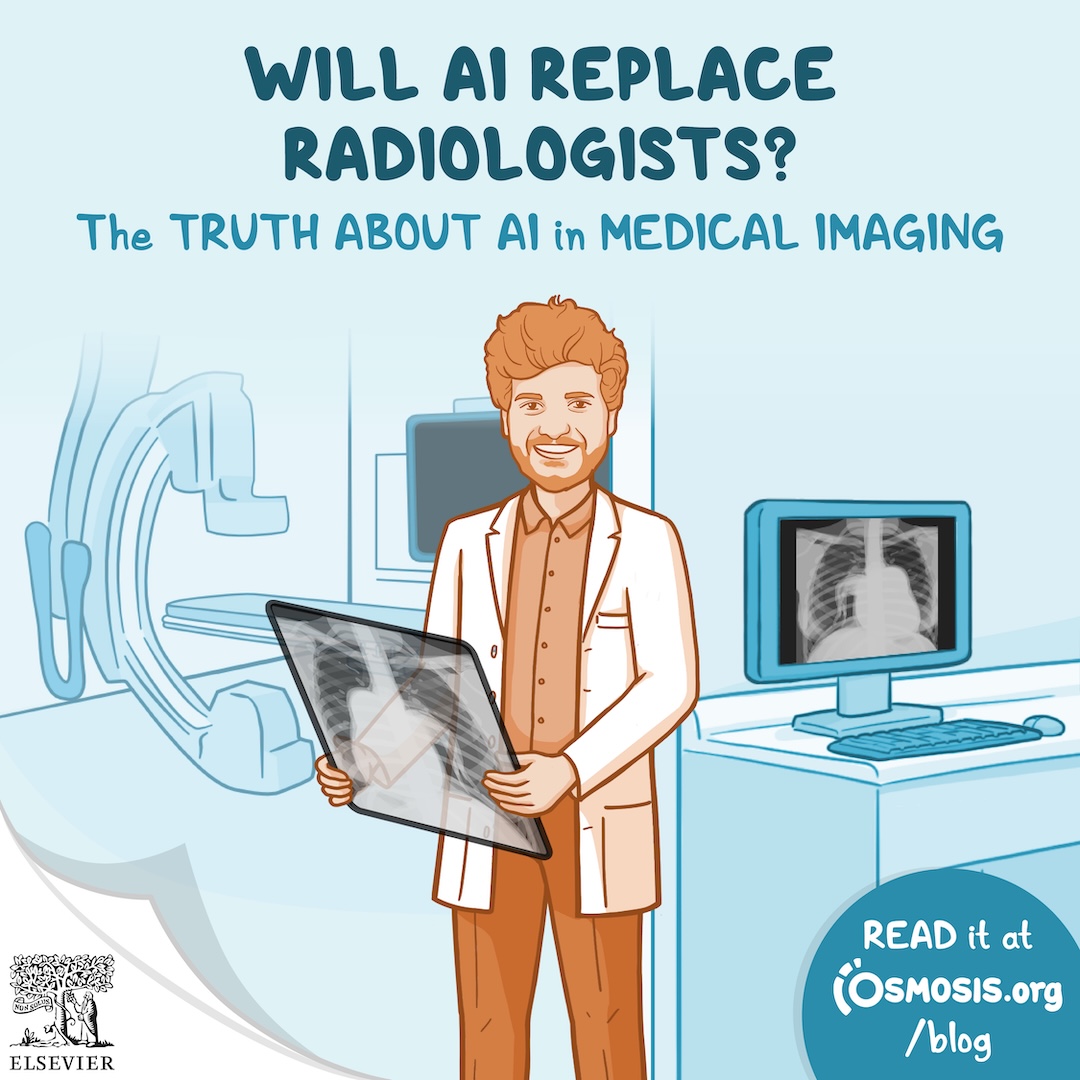
You’ve dreamed of becoming a radiologist. You’ve studied, sacrificed, and stayed up late memorizing anatomy. Then you read in your favorite news source that Artificial Intelligence (AI) is going to replace radiologists. (Wait, what now?) Let’s uncover the facts and see where AI truly stands in the future of radiology – its basis, upside, and challenges.
The Growing Gap in Modern Radiology
Back in 2015, AI started doing something futuristic. It was able to recognize faces, helping us organize our photo libraries on our phones. Scientific American even called deep learning a “world-changing idea.” Nearly a decade later, it’s hard to disagree: it truly was, and still is, reshaping our world.
The Silent Shortage
Today, radiology is a cornerstone of nearly every medical specialty, from a simple chest X-ray to a complex MRI. But with the growing demand for imaging, can radiologists really keep up?
The end of the COVID-19 pandemic didn’t mean we were “back to normal.” The pandemic’s aftershocks continue to ripple through healthcare to this day, and radiology is feeling the tremors. Daniel Arnold, CEO of Medality, reports a significant drop in practicing radiologists since COVID-19.
In fact, according to the Association of American Medical Colleges (AAMC), the US is projected to face a shortage of up to 42,000 specialists, including radiologists, by 2033. And a deficit of radiologists is particularly concerning, as it can delay diagnoses given the critical role of imaging and reporting. In an emergency setting, delays in imaging across all modalities have been associated with increased hospital length of stay.
And a deficit of radiologists is particularly concerning, as it can delay diagnoses given the critical role of imaging and reporting. In an emergency setting, delays in imaging across all modalities have been associated with increased hospital length of stay. And delays in diagnosis or in urgent intervention could ultimately cost patients their lives.
A Growing Imaging Backlog
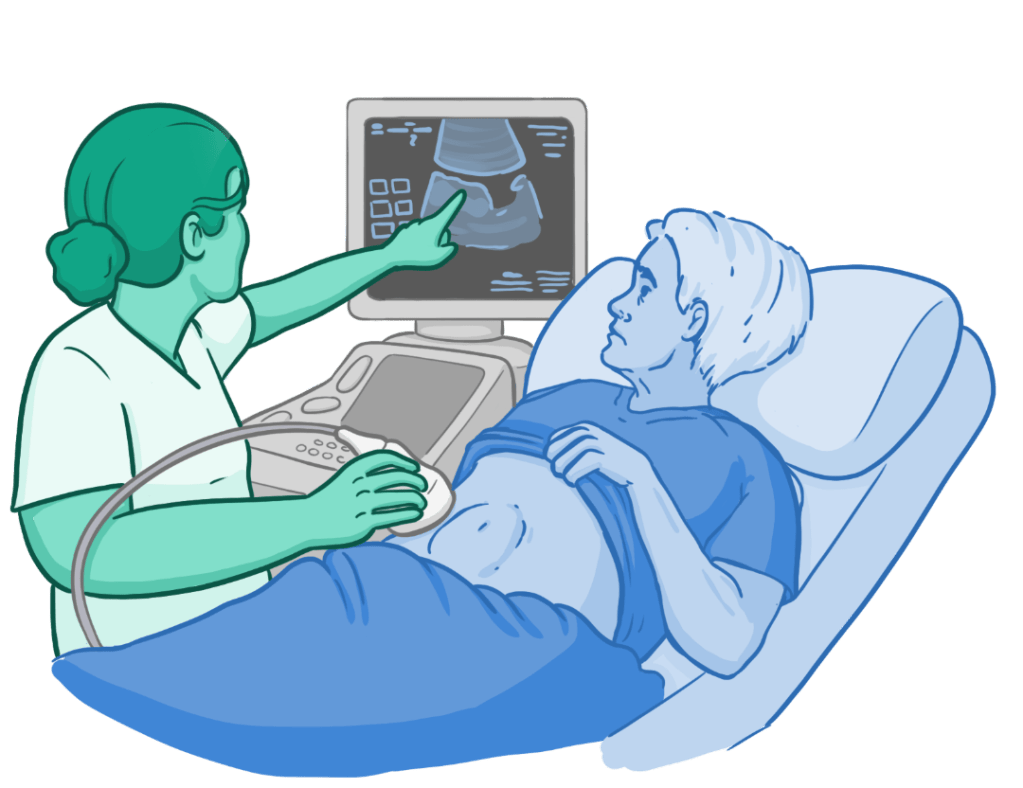
Research shows that between 2012 and 2016, annual growth in CT and MRI scans was 1-5%. To put this increase into perspective, in a single emergency department, 42% of CT scan reports were provided more than 3 hours after the scans were taken. This delay arises from the increasing patient load in hospitals, which often depends on advanced radiological imaging for timely intervention.
The Pros of Artificial Intelligence
AI has simplified countless tasks for millions worldwide, and healthcare is no exception. Doctors are steadily embracing this technology to improve patient care while also making their own workflows more efficient.
The Potential of Intelligent Imaging
AI can be integrated into radiological modalities, making them smarter and easier for radiologists to use. Research shows that AI has already made significant strides across a variety of types of scans:
- MRI – AI-assisted imaging reduces the need for gadolinium-based contrast by up to ten times without compromising image quality.
- PET scans – AI can reduce the tracer dose to just 1/200th of the standard amount and cut scan time by 75%, all while maintaining image quality comparable to full-dose PET scans.
- Emergency care – AI can also help with triaging patients by analyzing radiological findings, prioritizing the most severe cases, and alerting radiologists accordingly.
Diagnostic Support
Even the most experienced radiologist can occasionally miss a subtle finding. A missed diagnosis can have a life-changing impact on a patient. AI can act as a second pair of eyes, helping ensure that radiologists never have to think, “What if I missed something?”
- In a study evaluating bone pathologies on X-rays, AI identified more findings than radiologists, but it also flagged many results as being of low clinical importance.
- AI-powered ultrasound has shown promise in screening and evaluating prostate cancer, performing comparably to standard MRI and even surpassing conventional ultrasound readers.
- Studies show that junior doctors perform better and more confidently when using AI tools. In moments when senior supervision isn’t available, AI can serve as a reliable partner.

Challenges in AI Integration
So, while AI holds great promise for healthcare, it still has a long way to go before becoming a true day-to-day asset for radiology teams. Let’s explore the challenges.
Real World Performance
AI tools don’t always live up to expectations when moved from research labs into real clinical workflows. In clinical studies, 80% showed no change in radiologists’ performance with AI, while only 20% demonstrated improvement.
Adaptability
Many people assume that AI can automatically adapt to different patients, hospital protocols, or new medical knowledge. In reality, implementing changes requires extensive reconfiguration and regulatory approval before AI can be used in practice.
High Costs
Even a minor software update can cost millions, which can mean hospitals will likely hesitate to upgrade, slowing improvements and leaving patients with outdated tools while faster, more accurate technology remains just out of reach.
“Black Box” Effect
AI often feels like a mystery to clinicians. It processes data and delivers an answer, but it doesn’t explain how it arrived at that answer. This “black box” effect becomes a challenge when a doctor disagrees with the AI’s answer but still needs to make a final diagnosis. In addition, the opaque nature of these systems can allow hidden (or implicit) biases from training data, such as the underrepresentation of certain populations, to persist and potentially reinforce disparities in patient care.
Accountability
Another tricky question is responsibility. If an AI tool makes an error that leads to a misdiagnosis, who takes the blame? For now, the answer is the clinician. But imagine a scenario where the doctor disagrees with the AI, only to find out later that AI was right. The AI could end up being used as a “lead witness” against the clinician in a trial.

Patient Privacy
Confidentiality is at the heart of the doctor-patient relationship, and regulations like HIPAA protect sensitive patient health information (PHI). While AI models require large amounts of data to perform well, they must also strictly adhere to these privacy rules, making it harder for developers to build effective models using minimal patient data.
Interestingly, many public AI tools (including ChatGPT, Google Gemini, and Microsoft Copilot) are absolutely not HIPAA-compliant. While they may be great for drafting an email, they’re not ready to guard your medical secrets.
To address these challenges, new AI guidelines focus on fairness, transparency, accountability, and privacy protection, ensuring its safe and ethical use in healthcare. New HIPAA-compliant tools such as Doximity GPT demonstrate that the integration of responsible AI into medicine is already underway.
Shaping the Future of Care Together
AI’s rise in healthcare is undeniable, but it’s still far too early to say it will replace radiologists. Medicine requires human qualities such as compassion, trust, and ethical judgment that algorithms can’t replicate. The real challenge isn’t whether AI will replace doctors, but how humans adapt to working alongside it. In the end, it’s not human versus machine; it’s human with machine, shaping the future of care together.
Key Takeaways
- AI enhances radiology by improving imaging speed and diagnostic accuracy.
- Growing radiologist shortages increase demand for AI-assisted tools.
- Real-world AI performance and adaptability face significant challenges.
- Ethical, privacy, and accountability issues must be addressed in the use of AI.
- Future healthcare will involve collaboration between humans and AI technology.
About the Author
Muhammad Fahad is a final-year medical student at Bakhtawar Amin Medical and Dental College in Multan, Pakistan. As a member of the Osmosis Health Leadership Initiative, he’s dedicated to applying his medical knowledge to make a meaningful impact on people’s lives. Passionate about personal and professional growth, he actively seeks new skills and experiences that broaden his perspective, helping him develop into a compassionate and purpose-driven clinician.
References
- https://www.scientificamerican.com/article/deep-learning-is-the-a-i-breakthrough-we-ve-been-waiting-for/
- https://www.osmosis.org/podcast/an-online-solution-for-training-radiologists-medality
- https://radiologybusiness.com/topics/healthcare-management/healthcare-economics/physician-specialist-shortage-radiologists-aamc
- https://www.beckershospitalreview.com/radiology/the-radiologist-shortage-explained/
- https://www.sciencedirect.com/science/article/abs/pii/S0009926016300551
- https://pmc.ncbi.nlm.nih.gov/articles/PMC10546456/
- https://www.sciencedirect.com/science/article/abs/pii/S2588931124002955#f0005
- https://pmc.ncbi.nlm.nih.gov/articles/PMC6550235/
- https://www.hipaajournal.com/hipaa-compliance-checklist/
- https://www.hipaajournal.com/when-ai-technology-and-hipaa-collide/
- https://www.elsevier.com/about/policies-and-standards/responsible-ai-principles
- https://www.doximity.com/doximity-gpt-info
- https://medality.com/

Try Osmosis from Elsevier today! Access your free trial and discover why millions of current and future clinicians and caregivers love learning with us.
Leave a Reply