
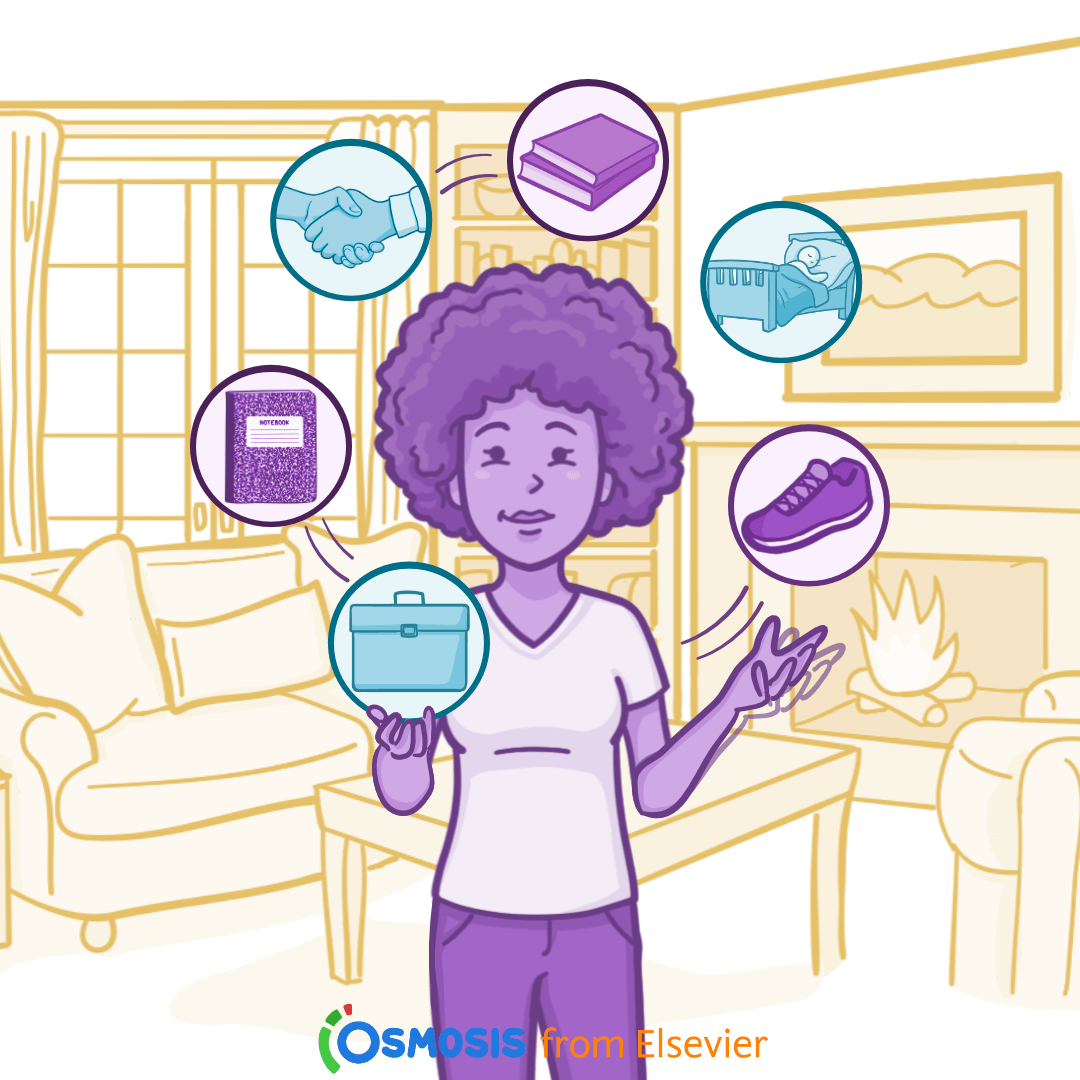
If you’re a healthcare student struggling at the end of the term with uncomfortable feelings related to being on the edge of missing deadlines, please know: those feelings are common, normal, and manageable. You’re not weak or failing, and you are not alone. Everyone in your class (even the overachievers posting their beautifully organized notes online) is under a lot of stress. Keep in mind that as an aspiring (and practicing) clinician or caregiver, understanding stress management is vital to your professional survival.
The exams, the OSCEs, the reflective portfolios, the clinical competencies, the twelve-hour shifts, the patients who break your heart, the group chats that have turned into collectively screaming into the void…it’s objectively, ridiculously too much. Recent studies confirm just how common burnout is among healthcare students, with one study noting the burnout rate among medical students is around 37%. Similar rates are prevalent for nursing students, especially in the later years of study.
This isn’t because you or your peers have suddenly become fragile. It’s because healthcare training pushes you to your absolute limits so that one day, when a real human life is on the line, you can stay calm in chaos. The line between healthy, motivating stress and outright burnout is razor-thin, but it is a line you need to learn to recognize and defend.
The good news is that you don’t have to choose between your degree and your mental health. You’re allowed to care for yourself with the same urgency and professionalism you extend to patients. Consider this article your practical guide to managing your mental health during the end of term (and beyond) from someone who’s been where you are and continues to remain passionate about this work.
Understanding Stress and Burnout in Healthcare
Stress is your body’s ancient survival system doing exactly what it evolved to do. A sudden surge of adrenaline and cortisol sharpens your focus, speeds your reaction time, and gives you the mental clarity to insert a difficult cannula or recall the exact management of acute asthma when the crash call goes out. This is the good kind of stress that actually improves performance. The trouble starts when that alarm system gets stuck in the “on” position for weeks or months.
Chronic stress keeps cortisol levels elevated day after day, and the damage begins:
- memory and concentration diminish
- immune function drops
- anxiety and low mood creep in
- sleep becomes fragmented
In 2019, the World Health Organization formally recognized burnout in the ICD-11 as an occupational phenomenon characterized by three core dimensions:
- overwhelming emotional exhaustion
- depersonalization or cynicism
- profound sense of reduced personal accomplishment
Healthcare students face unusually high burnout rates. A 2023 study found burnout rates two to three times higher than peers in other degrees. This happens because you’re not just learning in lectures; you’re doing emotionally challenging, high-stakes clinical work under assessment, often on little sleep and, most likely, a lot of junk food. The myth that “real clinicians” never struggle only fuels this stress.
The single most hopeful finding of the last twenty years of psychological research is that resilience is not a fixed personality trait. It’s a set of learnable, trainable skills. You’re not doomed to burn out just because you care deeply. You are in the toughest resilience boot camp on earth, and boot camps work when you train smarter, not harder.
Recognizing the Warning Signs
Your body and mind will try to warn you long before you hit full collapse. The key is learning to listen when they whisper, rather than waiting until they scream.
There are both physical and emotional warning signs, including:
- exhaustion that no amount of time off or rest seems can fix
- tension headaches or migraines
- frequent minor illnesses
- muscle tension
- changes in appetite or weight
- persistent dread thinking about your studies
- sudden tearfulness or irritability
- numbness where excitement used to live
- increased cynicism
Behaviorally, watch for classic patterns:
- putting off revision for days, then pulling frantic all-nighters
- withdrawing from friends and family
- skipping proper meals or showers
- relying on extra caffeine, energy drinks, alcohol, or sugar to keep functioning
Performance often suffers too. One especially dangerous warning sign is loss of empathy. When compassion starts to feel like a burden rather than a privilege, that is a five-alarm fire. However, please know that none of these signs means you’re unsuited to this career. They simply mean you’re a feeling, caring human placed in an extraordinarily demanding environment for prolonged periods.
Common Triggers at the End of Term
The end-of-term meltdown is never random bad luck. It’s the entirely predictable collision of multiple stressors that all choose the same two-week window to explode. Academic overload is the most visible culprit, with exams, reflective essays, group presentations, and portfolio submissions landing at the same time. Clinical assessments pile on, especially OSCE practice that eats up every spare evening.
Emotional exposure is relentless and cumulative. One shift, you might be supporting a young parent receiving devastating news, the next morning, you’re sitting in a pharmacology exam, still carrying that weight. Secondary traumatic stress builds quietly but powerfully. Sleep collapses because you’re either revising frantically or lying awake panicking about the revision you still haven’t done. Nutrition-filled meals become whatever can be eaten one-handed while walking between wards or typing notes. Hydration is the same half-empty water bottle that’s been in your bag for a week.
Social-media comparison culture adds insult to injury, with everyone posting aesthetic study setups and captions about “only four hours of sleep and still feeling great,” while you feel like you are barely surviving. Fear of failure feels existential because of how much time and effort you’ve sunk into this, and the idea of “failing” is tied to your entire identity.
Combined, these factors create the end-of-term challenges that healthcare students experience. Recognizing these triggers as external, systemic pressures rather than personal shortcomings can help. Identifying the problem is the first step in addressing it.
Proven Strategies for Stress Management
You don’t need hours of free time or an extended, silent retreat. You need short, high-leverage habits that fit into the gaps in a healthcare student’s day. Here are some stress management strategies:
- Start with ruthless prioritization: Every single night, write down the three outcomes (not 15) that would make tomorrow feel successful. This helps restore your perceived control.
- Use strict time-blocking in your calendar: Color-code sleep, meals, and movement with a non-negotiable status.
- When studying, abandon heroic all-nighters. Spaced repetition is backed by more than fifty years of cognitive-science research and can halve revision time while doubling long-term retention. Closing the book and testing yourself is twice as effective as passive re-reading or highlighting.
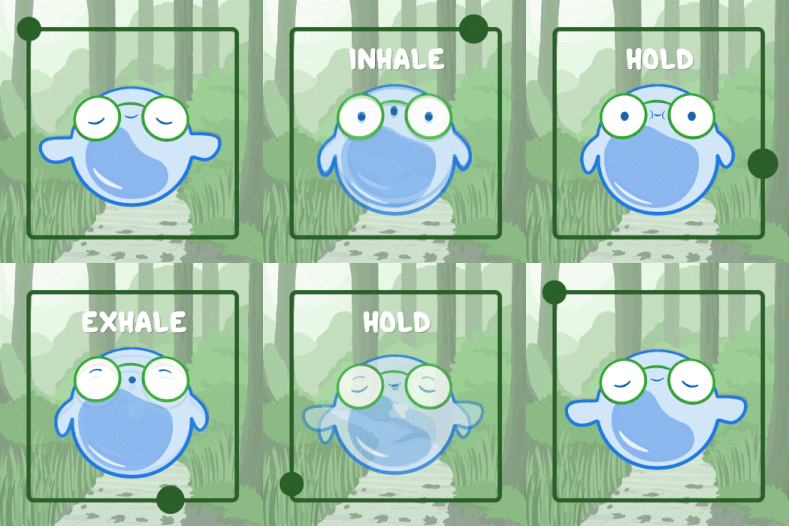
- When acute panic hits, reach for physiological tools first. Box breathing (four-second inhale, four-second hold, four-second exhale, four-second hold) is recommended for acute distress among healthcare workers. It lowers your heart rate and helps you get out of fight-or-flight in under 2 minutes.
- Movement is pure rocket fuel. Just 10 minutes of moderate daily physical activity reduces the risk of depression and improves cognitive performance more than another cup of coffee.
- Mindfulness techniques for healthcare workers don’t require a twenty-minute meditation. Try the five-minute “note-and-label” practice (notice the feeling, name it, let it pass)
Self-Care Habits That Build Resilience
Self-care strategies aren’t a luxury. Building resilience for healthcare students is preventative medicine. Sleep is the closest thing modern medicine has to a wonder drug. Even one night of shortened sleep impairs next-day cognitive performance. Protect your relaxation time religiously. Consider blue-light-blocking glasses an hour or two before bedtime, no screens an hour before getting into bed, a cool, dark room to sleep in, and a caffeine cut-off at least 8 hours before bedtime.
Nutrition when you’re busy is about planning, not perfection. Batch-cook one massive pot of something nutritious and freeze it in handy portions on your day off so you always have food that reheats in a few minutes. Keep healthy emergency snacks (e.g., a pack of your favorite nuts, a bag of microwave popcorn, a piece of fruit, a can of tuna, some beef jerky) in your bag at all times, because low blood sugar can feel identical to anxiety and panic. Hydration is non-negotiable. Keep a bottle with you and refill it like it’s part of your drug round.
Gratitude practice is powerful. Studies have shown significant reductions in measured burnout and depression scores through journaling and reflection. Keep a journal or phone note titled “tiny wins” and drop in everything from “first-try cannula” to “patient smiled and said thank you” so you can read it on tough days.
Maintaining connection is biological medicine. Schedule one proper catch-up with a human each week, even if it’s just coffee in the hospital atrium. These are proven self-care strategies for healthcare students and professionals that, over time, evolve into genuine, unbreakable emotional resilience.
Setting Healthy Boundaries and Work-Life Balance
Learning to say no is one of the most important clinical (and life) skills you’ll ever master, and you can start practicing it today. Have a polite, professional script ready: “I would really love to help, but I’m completely at capacity this week. Can we revisit that after exams?” Every time you say yes to something low-priority, you are saying no to your own well-being. Protect restorative time as if it were a deteriorating patient. Schedule time each week to do something that genuinely refreshes your mind and body, and treat that block of time as sacred and non-negotiable.
Perfectionism drains energy. Adopt the 80/20 rule: 80% effort gets you most of the marks with a fraction of the stress and burnout risk. Kristin Neff’s studies on self-compassion show that treating yourself with the same kindness you’d offer a struggling friend dramatically reduces emotional exhaustion and, seemingly counterintuitively, improves academic performance.
Work-life balance for healthcare professionals does not magically appear the day you qualify. It’s a habit you deliberately recognize and build right now. Leave your shift on time when you’re not on call, switch your phone to Do Not Disturb after a certain hour, give yourself permission to have a life outside medicine, and start cultivating interests and relationships that have nothing to do with patients or pathophysiology. The boundaries you set today become the default settings for the next forty years of your career. Choose them wisely and protect them fiercely.
When to Seek Support
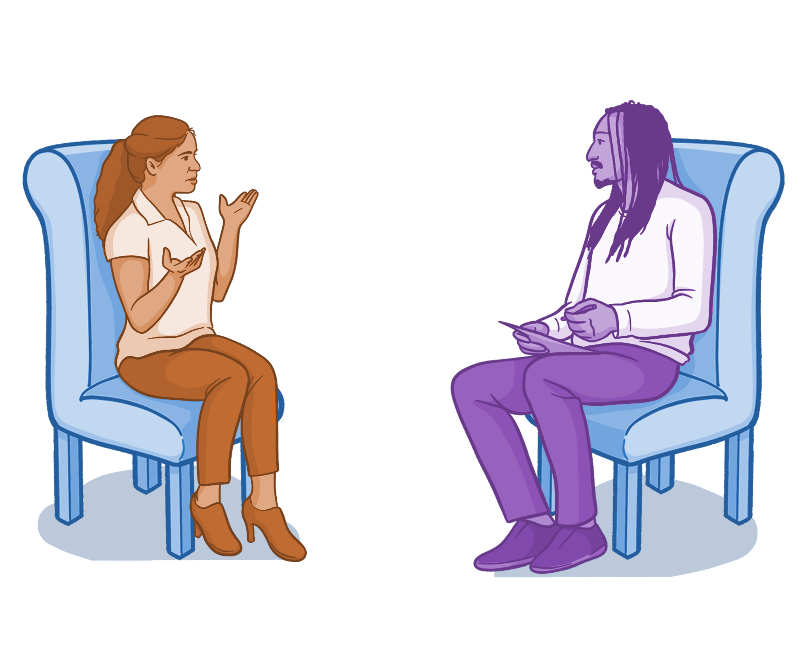
Some stress loads are simply too much to carry alone, and recognizing that is not a weakness; it’s wisdom and professionalism. If you’re experiencing low mood or anxiety that lasts more than two weeks, panic attacks, hopelessness, suicidal thoughts, or the sense that you genuinely can’t keep going, reach out. Today. University counselling services, personal tutors, dedicated healthcare-student wellbeing teams, your GP, employee assistance programs on placement, peer-support networks, and 24-hour crisis lines all exist for exactly this reason.
Many universities now offer same-day mental health appointments and support tailored to the unique pressures of clinical degrees. The old stigma is crumbling fast; seeking mental-health support is a sign of strength and self-awareness, not failure, in today’s healthcare settings. Protecting your mental health is not selfish. You wouldn’t hesitate to give a hypoxic patient the oxygen they need to recover. Give yourself the same urgency and compassion when your own reserves are dangerously low.
Long-Term Burnout Prevention
The habits you build during these brutal training years will shape the clinician you become over the next twenty or thirty years, so start building the habits for a sustainable career now. Schedule time every few months to honestly review your sleep quality, mood, relationships, sources of joy, and whether healthcare is still just one part of your identity rather than the whole thing.
Deliberately keep learning and investing in non-clinical skills and hobbies like languages, music, sports, cooking, woodworking, really anything you find rejuvenating, so that when imposter syndrome or tough rotations hit later, you have multiple sources of confidence to depend on.
Make sure to nurture friendships and hobbies that have absolutely nothing to do with healthcare. They become your safe place during the hardest weeks and prevent your entire sense of self from being tied to your job.
When you are the consultant, the ward sister, the senior paramedic, the lead physiotherapist, or the advanced nurse practitioner, remember exactly how overwhelming and isolating it felt and refuse to let your newer colleagues suffer in silence. Advocate for systemic change like mandatory debriefs after critical incidents, realistic work schedules that protect sleep, proper protected teaching time, genuine mental-health days, and a culture where saying “I’m struggling” is met with support rather than judgment. Systemic change always begins with those who’ve survived deciding that the cycle stops with them.
You’re Becoming Who You’re Meant to Be
Feeling like you’re drowning right now doesn’t mean you have chosen the wrong path. It means you’re in one of the toughest, most demanding training systems on the planet, and you’re still here, still caring, still fighting. That alone is extraordinary. Burnout is not inevitable; it’s preventable with awareness, tiny daily habits, fierce boundaries, self-compassion, and the courage to ask for help when you need it.
You’ve already survived 100% of your hardest days so far. Every single tool you need to not just survive but genuinely thrive is already inside you. You’re simply in the process of learning how to use them. The world is waiting for brilliant, compassionate health care professionals, and you’re becoming exactly that. Keep going. You’ve got this.
Key Takeaways
- Stress and burnout are common in healthcare training but can be managed effectively.
- Recognize warning signs early: exhaustion, irritability, loss of empathy, and withdrawal.
- Use practical habits: prioritize tasks, practice mindfulness, develop and maintain good sleep and nutrition habits.
- Set healthy boundaries and embrace self-compassion to protect mental health.
- Seek professional support when stress becomes overwhelming; it’s a sign of strength.
References
- https://pubmed.ncbi.nlm.nih.gov/35775726/
- https://www.frontiersin.org/journals/public-health/articles/10.3389/fpubh.2023.1142576/full
- https://www.health.harvard.edu/staying-healthy/understanding-the-stress-response
- https://www.ourmental.health/empaths/7-signs-youre-an-empath-experiencing-burnout
- https://www.who.int/news/item/28-05-2019-burn-out-an-occupational-phenomenon-international-classification-of-diseases
- https://pmc.ncbi.nlm.nih.gov/articles/PMC5661741/
- https://www.cochranelibrary.com/cdsr/doi/10.1002/14651858.CD002892.pub6/epdf/full
- https://healthcare.utah.edu/integrative-health-wellness/resiliency-center/news/2021/04/how-practice-three-good-things
- https://journals.sagepub.com/doi/10.1177/1529100612453266
- https://pmc.ncbi.nlm.nih.gov/articles/PMC5476736/
- https://www.medicalnewstoday.com/articles/321805
- https://pmc.ncbi.nlm.nih.gov/articles/PMC9902068/
- https://www.ncbi.nlm.nih.gov/pmc/articles/PMC7276502/
- https://ojin.nursingworld.org/table-of-contents/volume-28-2023/number-3-september-2023/articles-on-previously-published-topics/gratitude-practice-to-decrease-stress/
- https://self-compassion.org/the-research/
- https://www.osmosis.org/blog/burnout-in-the-medical-community
- https://www.osmosis.org/blog/osmosiss-top-3-tips-to-avoid-burnout
- https://www.osmosis.org/blog/nursing-resilience-the-free-online-course-for-nurses
- https://www.osmosis.org/blog/how-to-maintain-a-good-work-life-balance-as-a-physician-assistant
- https://journals.lww.com/academicmedicine/abstract/2014/03000/burnout_among_u_s__medical_students,_residents,.25.aspx
- https://www.osmosis.org/blog/recognizing-symptoms-of-stress-and-depression-in-medical-students-and-how-to-help
- https://www.osmosis.org/blog/work-smart-not-hard-how-osmosis-takes-the-stress-out-of-medical-school
- https://www.sciencedirect.com/science/article/pii/S2666776224001285
- https://www.sciencedirect.com/science/article/pii/S1557308724000842
- https://www.sciencedirect.com/science/article/pii/S0924933818301640
- https://www.sciencedirect.com/science/article/pii/S0025619622005158
- https://www.sciencedirect.com/science/article/pii/S2405844024128009
- https://www.sciencedirect.com/science/article/pii/S0828282X23000739
- https://www.sciencedirect.com/science/article/pii/S1575181324000354
- https://www.sciencedirect.com/science/article/pii/S2666915323001506
- https://www.sciencedirect.com/science/article/pii/S0165032724012163
- https://www.sciencedirect.com/science/article/pii/S0165178124001136

Try Osmosis from Elsevier today! Access your free trial and discover why millions of current and future clinicians and caregivers love learning with us.
Leave a Reply