COVID-19: Nursing
Introduction0:00–0:28
COVID-19 is a highly contagious disease that predominantly affects the respiratory tract. This disease is caused by the SARS COV two virus which is a type of Coronavirus.
It's a single stranded RNA virus with a crown of protein spikes that stick out on the outer surface. The name can be broken down as follows.
SARS is for severe acute respiratory syndrome. C is for Corona vi is for virus D is for disease and 19 is for 2019, the year it was first identified.
Physiology0:28–1:12
Now, let's quickly review the respiratory tract which can be divided into two regions, the upper respiratory tract and lower respiratory tract.
The upper respiratory tract includes the nose, nasal cavity, the oral cavity, pharynx, epiglottis, larynx, and the upper part of the trachea.
While the lower respiratory tract includes the lower part of the trachea and the lungs containing the bronchi, bronchioles, alveolar ducts.
And finally, the alveoli alveoli are tiny air filled sacs where most gas exchange occurs. So as we breathe, the inhaled oxygen moves from the alveolar sacs into the blood, while the carbon dioxide moves from the blood into the alveolar sacs to be exhaled.
Causes and Risk Factors1:12–2:12
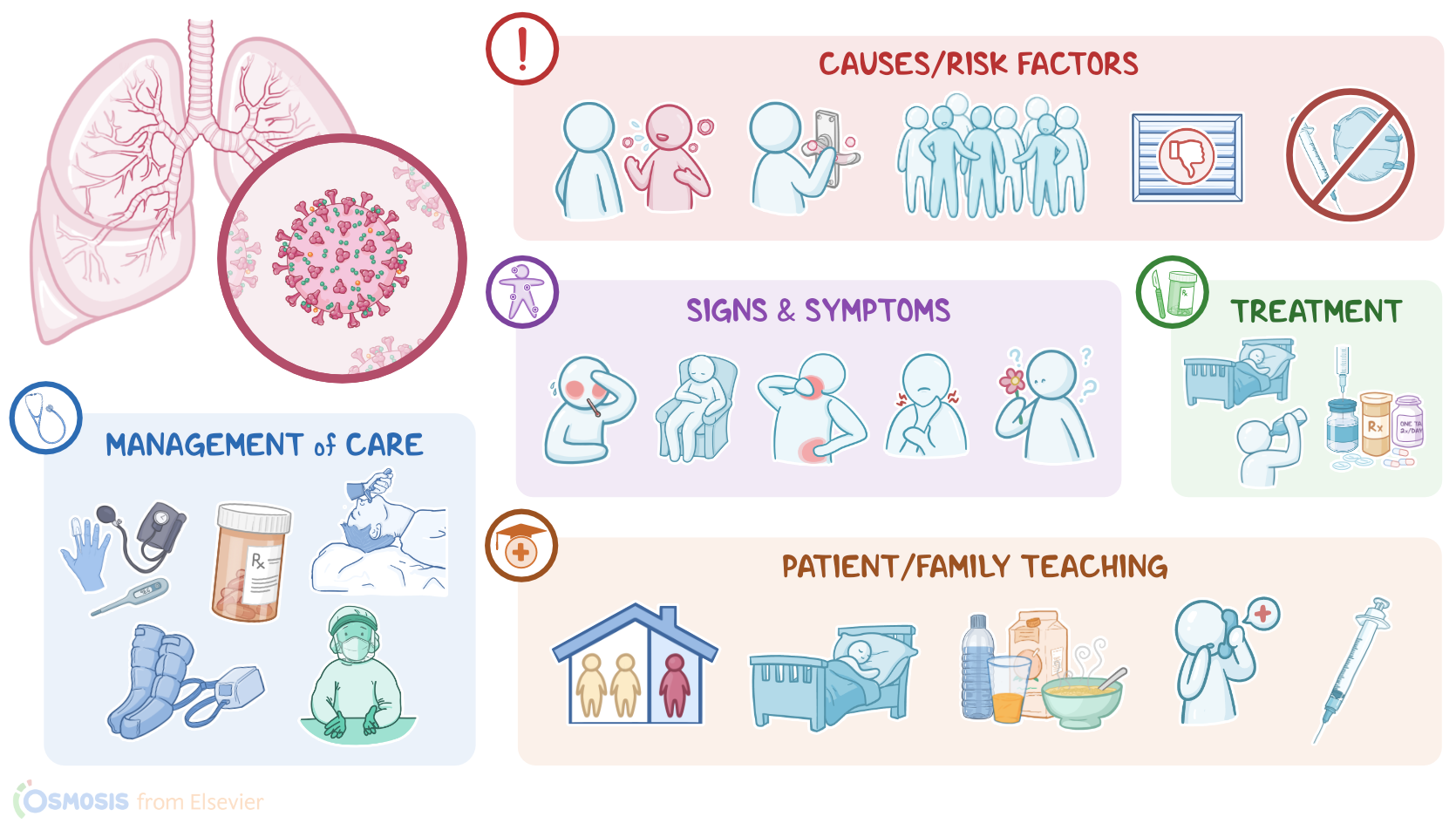
So, COVID-19 is caused by the SARS COV two virus entering the respiratory tract. The virus is most often spread from person to person through tiny aerosolized particles and larger droplets which are expelled.
When an infected individual talks, sneezes or coughs. The droplets can ultimately reach the respiratory tract of another person when they're inhaled or land on their eyes, nose or mouth.
Since the droplets don't travel far, they tend to settle on surfaces. So less frequently, the virus can be transmitted indirectly when an individual touches a contaminated surface.
And then prior to washing their hands, they touch their eyes, nose or mouth. On.
The other hand, aerosolized particles can remain suspended in the air for longer periods and travel further distances. So they can cause infection when they're inhaled.
Pathology2:12–2:54
Risk factors for getting COVID-19 include older age pregnancy, having underlying health conditions such as chronic lung disease, cancer, or diabetes.
Mellitus being immunocompromised and not being fully vaccinated. The risk of infection also increases when in close contact with infected individuals, particularly in poorly ventilated indoor spaces or crowded settings.
Infected individuals are most likely to spread the virus 1 to 2 days before symptom onset until about 10 days after symptom onset, the virus typically enters the body through the nose or mouth.
Clinical Manifestations2:54–4:02
Once inside the body, the viral spikes on the SARS COV two virus bind to a protein called angiotensin converting enzyme two or ace two for short, which is found mainly on host cells like respiratory epithelial cells and pneumocytes, pneumocytes make up the alveoli where gas exchange occurs.
Depending on the severity of alveolar damage. Symptoms may vary.
Some clients with COVID-19 can be asymptomatic when present. The most common symptoms include fever, chills, fatigue, myalgia, headaches, a new loss of taste or smell, sore, throat, cough and dyspnea, as well as nausea, vomiting, diarrhea, or abdominal pain.
Diagnosis4:02–5:14
Less commonly, clients may present with conjunctivitis, skin rashes and confusion or delirium. In the most severe cases, complications may develop like acute respiratory distress syndrome as well as cardiovascular or thromboembolic events, sepsis and acute kidney injury.
Now, diagnosis of COVID-19 begins with a history considering possible exposure signs and symptoms and physical assessment followed by viral tests to confirm the diagnosis.
There are two types of viral tests, nucleic acid amplification tests like RT PCR which detects viral RNA and antigen testing which detects viral antigens such as those found on the spike or S protein.
Clients may receive tests from a health care provider or perform self tests using an at home testing kit. Additional tests can be performed to determine the severity of the disease.
Laboratory tests may show normal or decreased white blood cells, elevated CRP indicating inflammation and increased liver function tests like LDH AST and ALT severe cases may show abnormal coagulation tests like an increased PTI nr and D dimer.
Treatment5:14–6:01
In addition, chest x rays or CT scans can be performed to assess disease severity or complications. Finally, if there is a need to determine whether a client has previously had a COVID-19 infection or to assess their immune response to the virus.
Clients who previously had known or suspected COVID-19 may get serologic tests to detect antibodies against SARS COV two, there's no cure for COVID-19.
So, treatment involves supportive therapy to reduce the symptoms and antiviral medications when needed. Supportive care includes rest and hydration as well as medications like analgesics, antipyretics and antihistamines.
Management of care6:01–9:58
Mild cases are typically treated at home while some moderate cases may warrant hospitalization for close monitoring as well as supplemental oxygen as needed.
Severe cases require hospitalization, supplemental oxygen and medications like glucocorticoids, antivirals and thromboprophylaxis as well as management of complications.
Finally, the most effective way to prevent COVID-19 is through vaccination. All right.
Now, let's look at the nursing care you'll provide for a client with COVID-19. The priority goals of your nursing care are to improve your clients respiration and oxygenation to prevent and manage systemic complications and to prevent the spread of the disease.
Begin by assessing your client's respiratory status, breath, sounds and oxygen saturation. Keep their SP O2 between 92% and 96% by administering high flow oxygen as ordered if they develop shortness of breath and their SP two is consistently below 92% report your findings to the healthcare provider and implement the prescribed interventions including noninvasive positive pressure, ventilation and prone positioning.
Continue to closely monitor their vital signs. Po two and arterial blood gasses or ABG S report the development of severe acidosis and worsening hypoxemia and prepare for intubation and mechanical ventilation.
Lastly, administer glucocorticoids and antiviral medications as ordered, then be sure to monitor your client for signs and symptoms of cardiovascular and hematological complications of COVID-19.
Review their baseline diagnostic tests such as ECG BNP and troponin levels and report ECG changes or a rise in BNP and troponin, which could indicate myocardial injury.
Also keep a close eye on their coagulation studies and promptly report indications of disseminated intravascular coagulation including thrombocytopenia, increased ddimer, increased fibrin degradation products and prolonged pt be prepared to provide supportive care and administer blood products as ordered.
Also promptly report if you notice signs of unusual clotting such as microvascular thrombosis of the toes, sometimes called COVID toes, which can manifest as swelling usually with a pinkish or reddish discoloration on lighter skin tones or a purplish hue and darker skin tones.
In addition, be sure to report any clotting of intravascular catheters as well as any signs of deep vein thrombosis such as warmth, swelling and reddened or darkened skin around a painful area in a lower extremity, clinical manifestations of pulmonary embolism like anxiety, a sudden onset of dyspnea or a client report of chest pain and any signs and symptoms of stroke, which could manifest as facial drooping, difficulty speaking or a sudden and severe headache, dizziness and confusion.
Be sure to implement the ordered thromboprophylaxis interventions including administering low molecular weight heparin and applying either antiembolic stockings or an intermittent sequential pressure device to your client's lower extremities.
Next, monitor your clients intake and output and assess for signs of acute kidney injury including decreased urine output, increased bun and creatinine, electrolyte, imbalances and mental status changes.
Measures to prevent transmission of COVID-199:58–10:40
Report your assessment findings and be prepared to assist with renal replacement therapy if indicated. Also keep a close eye on your clients, vital signs and laboratory test results and report if your client develops signs of sepsis such as a temperature of 100.4 °F or 38 °C or above tachycardia.
And hypotension also report increased urine specific gravity, increased or decreased white blood cell count, increased lactate and liver enzymes and the development of metabolic acidosis be prepared to initiate fluid resuscitation and vasopressors.
As ordered. Finally, institute measures to prevent transmission of COVID-19.
Client and family teaching10:40–12:56
Place your client in isolation and implement contact and droplet precautions, protect yourself and others by using appropriate personal protective equipment or PPE for short, which includes an N95 respirator face shield or goggles, gown, gloves and shoe covers, use dedicated equipment for each client in your unit and avoid unnecessary exposure by clustering your nursing interventions, thereby decreasing the number of times you need to enter your client's room.
In addition, remember to wear gloves whenever disinfecting contaminated surfaces or equipment. All right, now, let's move on to client and family teaching as you prepare for discharge, encourage your client to take steps in order to avoid spreading the virus to others in their home and community while they continue to recover at home, let them know that they should self isolate until their healthcare provider tells them they are no longer able to transmit the virus to others and that they should not go to work school or other public areas except for appointments with their healthcare provider.
When traveling to their appointments, remind them to avoid using public transportation such as subways, buses or taxis while at home.
Teach your client the importance of not touching others and staying in a specific room or part of the house as much as possible.
Remind them to wear a mask if they need to be in the same room with others who should also wear masks. Also instruct them to avoid sharing personal household items such as dishes, towels or bedding and to use a separate bathroom.
If available, then teach your client about cough etiquette, instruct them to cover their mouth and nose with a tissue when coughing or sneezing to throw the tissue away and then wash their hands emphasize the importance of frequent hand hygiene as well as routinely disinfecting commonly used surfaces like countertops, computer keyboards and doorknobs.
Next, encourage your client to get plenty of rest, drink plenty of fluids and eat a nutritious diet that includes a variety of fruits, vegetables, whole grains and protein instruct them to follow their healthcare providers.
Review12:56–15:25
Recommendations for activity, teach them how to use their pulse oximeter to check their heart rate and oxygen level and remind them to rest if their oxygen gets too low or their heart rate is too fast.
Also stress the importance of seeking immediate medical attention if they experience any unusual signs or symptoms, such as difficulty breathing, confusion, slurred, speech, bluish, discoloration of lips, face or nail beds.
If their blood oxygen saturation is below 92% and if they feel sad, overwhelmed, have trouble sleeping or feel like they want to hurt themselves, lastly encourage them to get vaccination once they have fully recovered.
All right. As a quick recap.
COVID-19 is a highly contagious disease caused by the SARS COV two virus. It is transmitted through respiratory droplets and aerosolized particles and from contaminated surfaces.
Risk factors include older age pregnancy, having underlying health conditions being immunocompromised, being in close contact with infected individuals, particularly in enclosed spaces without adequate ventilation and not being fully vaccinated.
Diarrhea, abdominal pain and skin rashes. Complications include acute respiratory distress syndrome, cardiovascular or thromboembolic events, sepsis and acute kidney injury.
Treatment of mild cases can be done at home and involves supportive care such as hydration, rest analgesics and antipyretics.
Severe cases involve measures to support respiratory function as well as medications such as anti virals, monoclonal antibodies and glucocorticoids.
Along with supportive care. Nursing care involves close assessment and monitoring, preventing and managing complications when they occur and preventing the spread of COVID-19.
Client education is focused on self care during recovery at home, as well as infection control practices when to seek medical attention and encouraging vaccination against COVID-19 once they have fully recovered.
| COVID-19 | ||
| KEY POINTS | NOTES | |
| DEFINITION |
| |
| PHYSIOLOGY |
| |
| CAUSES AND RISK FACTORS |
| |
| PATHOPHYSIOLOGY |
| |
| SIGNS AND SYMPTOMS |
| |
| DIAGNOSIS |
| |
| TREATMENT |
| |
| MANAGEMENT OF CARE |
| |
| PATIENT AND FAMILY TEACHING |
| |
- "Lewis’s Medical-Surgical Nursing: Assessment and Management of Clinical Problems. 12th Edition. ISBN:978-0-323-78961-5 " Elsevier (2023)
- "McCance & Huether’s pathophysiology: The biological basis for disease in adults and children (9th ed.). ISBN: 978-0-323-78987-5 " Elsevier (2023)
No notes for this video yet
Try adding a note below