Common discomforts of pregnancy: Nursing
Introduction0:00–0:26
Common discomforts of pregnancy refer to all temporary symptoms and changes that pregnant clients experience as their babies grow and develop within the uterus.
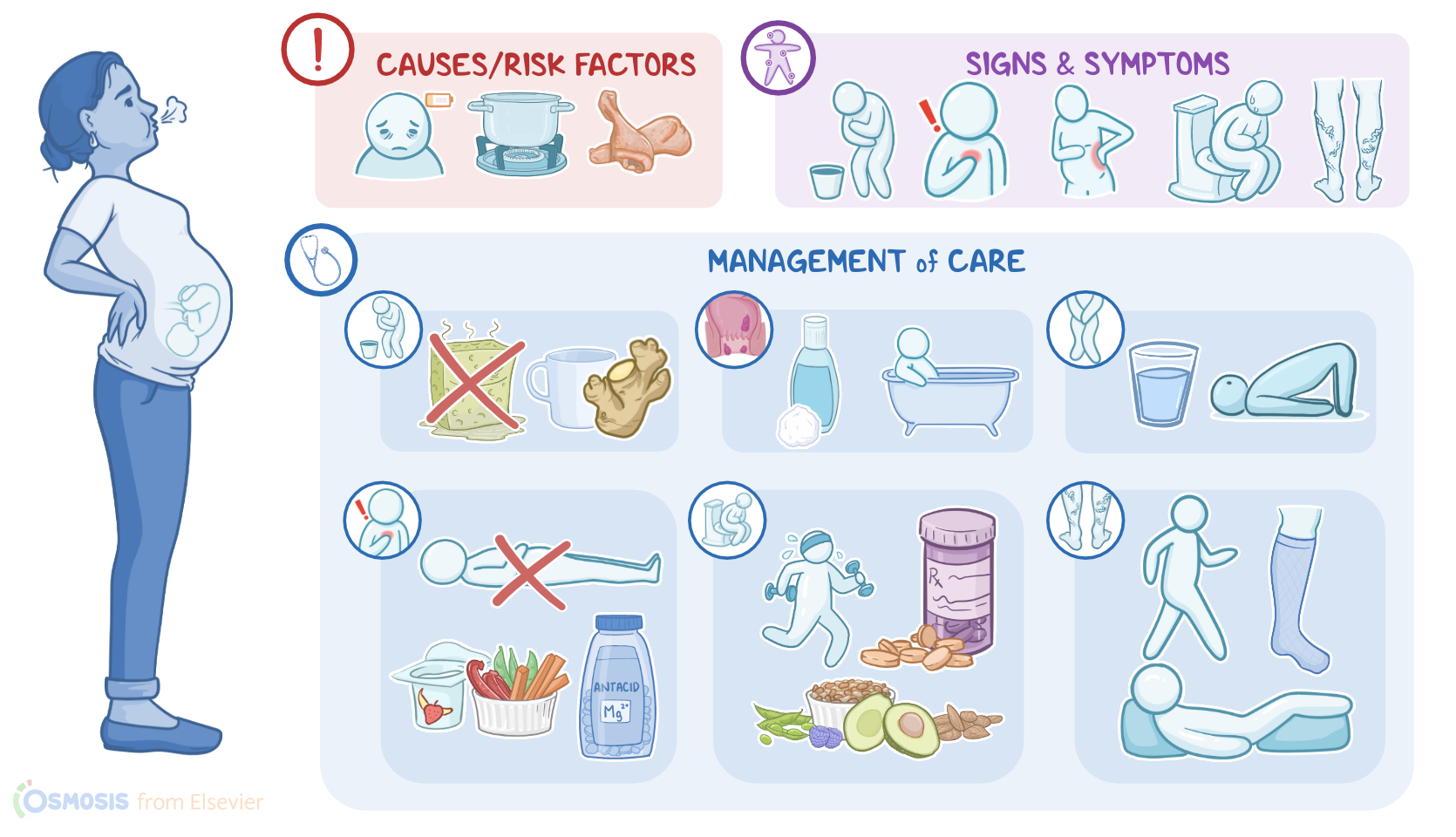
The most common discomforts of pregnancy include nausea, vomiting, heartburn, backache, round ligament pain, urinary frequency, constipation, hemorrhoidal disease, varicose veins, and finally, leg cramps.
First, let’s start with nausea and vomiting which is often attributed in part to pregnancy hormones. It typically occurs in the morning and as a result, is often referred to as morning sickness.
Nausea and vomiting0:26–1:31
Nausea and vomiting are some of the earliest discomforts of pregnancy and can be worsened by fatigue, cooking smells, and fried, greasy, or spicy food.
Now, morning sickness should not be confused with hyperemesis gravidarum, which is a condition that also occurs during pregnancy that’s characterized by severe vomiting that interferes with the client’s daily life.
It could also result in weight loss, dehydration, electrolyte imbalance and may require hospitalization, IV fluids and antiemetics.
Management of nausea and vomiting includes eating small and frequent, high protein meals, maintaining hydration, eating slowly, and avoiding odors or other factors that can trigger nausea.
Increasing intake of vitamin B6 can also be helpful, as well as consuming beverages containing ginger, like ginger ale or ginger tea.Next up is heartburn or pyrosis.
Heartburn1:31–2:20
Now, the esophagus and the stomach are separated by a muscular valve called the lower esophageal sphincter, which prevents the reflux of stomach contents back into the esophagus.
Early in pregnancy, hormonal changes lead to a decreased tone of the lower esophageal sphincter, thereby allowing the stomach contents to reach the esophagus and cause heartburn.
Later in pregnancy, the growing fetus can directly exert pressure on the stomach, causing the stomach contents to move back into the esophagus.
Management of heartburn includes eating small, frequent meals and avoiding laying down after eating. Low-sodium antacids can be helpful, as well as histamine-2 receptor inhibitors, which decrease the production of gastric acid.Switching gears and moving on to constipation, this primarily occurs due to hormonal changes that decrease the tone and motility of the gastrointestinal tract.
Constipation2:20–2:54
Other factors that can contribute to constipation include uterine pressure on the intestinal tract, decreased fluid intake, low fiber diet, and iron supplementation.
As for treatment, dietary changes such as increasing the fluid and fiber intake, as well as engaging in moderate physical activity might be enough to relieve constipation, while others could be prescribed a stool softener.Next, there’s hemorrhoids, which are swollen and sometimes inflamed veins in the rectum and anus.
Hemorrhoids2:54–3:32
These are more likely to occur during pregnancy because there’s increased blood volume and the uterus can press on veins coming from the anus and rectum, preventing blood flow and causing the veins to enlarge.
Straining to pass stools when constipated can also increase pressure on veins and contribute to the formation of hemorrhoids.
If itching, pain, or bleeding occur, some comfort measures include applying witch hazel compresses, anesthetic ointments, and frequent tepid baths.Similarly, pregnant clients have a higher risk of developing varicose veins.
Varicose veins3:32–4:19
The enlarged uterus can exert pressure on the inferior vena cava, which carries the venous blood from the lower parts of the body up to the right side of the heart.
As a result, blood builds up in veins of the lower extremities, causing them to become enlarged and swollen. Varicose veins are more common with obesity and multiparity, and can be worsened by prolonged standing or sitting, where gravity force makes it even harder for venous vessels to propel the blood from the legs back into the inferior vena cava.
Management of varicose veins includes elevating the legs during the day, regular walks, which help stimulate blood circulation in the lower extremities, and the use of compression stockings.
Urinary frequency4:19–5:00
Now, urinary frequency can be the result of increased glomerular filtration as well as direct pressure on the bladder from the enlarging uterus; and it’s normal during pregnancy unless accompanied by symptoms of a urinary tract infection like pain or burning, in which case the healthcare provider should be consulted.Also, fluids should never be decreased as a way to manage urinary frequency; instead, hydration should be maintained, and the bladder should be emptied at least every 2 hours while awake.
Avoiding caffeinated beverages can also help, and doing Kegel exercises that strengthen the pelvic floor can help decrease urge incontinence.Another common pregnancy discomfort is backache or back pain.
Backache5:00–5:44
During pregnancy, hormonal changes can cause ligaments in the client’s body to become softer, allowing them to stretch in preparation for labor.
These changes also affect the sacroiliac joint that connects the spine and pelvis. As a result, the joint becomes less stable, which can cause pain.
Further, as the uterus grows, there’s an increased curvature of the lumbosacral joint. The pain can be worsened by lifting heavy objects or excess weight gain, so management primarily includes maintaining good posture, and using proper body mechanics.
Wearing low-heeled shoes can also help, as well as doing pelvic-tilt exercises.Finally, leg cramps or painful spasms of leg muscles, specifically the gastrocnemius or calf muscle, can occur during pregnancy.
Leg cramps5:44–6:23
The cramps can be related to downward uterine pressure on the nerves going to the legs, as well as decreased serum calcium or increased serum phosphorus.
Leg cramps usually occur during the third trimester at times when muscles are relaxed, for example, during sleep. The healthcare provider may recommend increasing calcium or magnesium in the diet.
Once the spasm occurs, dorsiflexion of the foot, as well as heat and massage might also help relieve the pain. Alright, as a quick recap… Common discomforts of pregnancy are temporary symptoms due to the growth and development of the fetus.
Review6:23–6:52
One important factor is the enlargement of the uterus which can compress or put pressure on different organs; when it affects the stomach, it can cause heartburn; compressing the bladder causes urinary frequency; compressing veins cause hemorrhoids and varicose veins; and compressing nerves can cause leg cramps.
The other important factor is pregnancy hormones that can cause nausea and vomiting,
| COMMON DISCOMFORTS OF PREGNANCY | ||
| KEY POINTS | NOTES | |
| DEFINITION |
| |
| NAUSEA AND VOMITING |
| |
| HEARTBURN |
| |
| CONSTIPATION |
| |
| HEMORRHOIDS |
| |
| VARICOSE VEINS |
| |
| URINARY FREQUENCY |
| |
| BACKACHE |
| |
| LEG CRAMPS |
| |
No notes for this video yet
Try adding a note below