Psychosocial changes - Postpartum: Nursing
Psychosocial changes - Postpartum: Nursing
CA
CA
Notes
| PSYCHOSOCIAL CHANGES - POSTPARTUM | ||
| KEY POINTS | NOTES | |
| DEFINITION |
| |
| BONDING & ATTACHMENT |
| |
| MATERNAL TOUCH & VERBAL BEHAVIORS |
| |
| ADAPTATION |
| |
| MATERNAL ROLE ATTAINMENT |
| |
| COMMON MATERNAL CONCERNS |
| |
Transcript
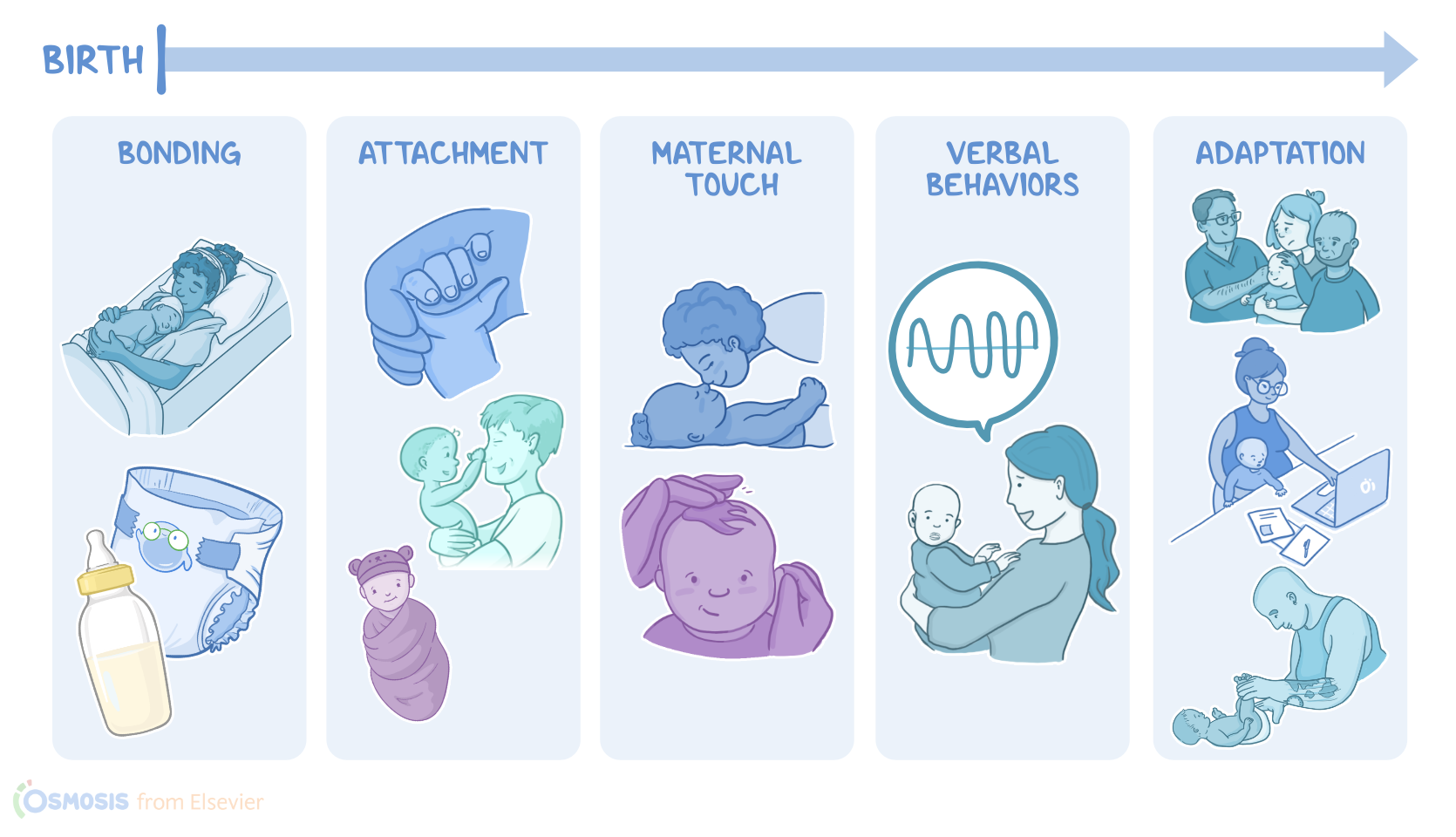
Psychosocial changes during the postpartum period include various adjustments and changes that occur during the first 6 weeks after giving birth. The most important psychosocial changes include bonding, attachment, maternal touch and verbal behaviors, as well as adaptation and maternal role attainment. During this period, the nurse should provide support for the new family and intervene to promote a healthy outcome during the postpartum period. First, let’s start with the bonding. Simply said, bonding refers to the intense connection that parents develop for their baby. Important methods to promote maternal bonding include promoting skin-to-skin contact and breastfeeding. On the other hand, paternal bonding can be enhanced with methods including presence during labor and delivery, bathing the baby, changing diapers, and bottle feedings.
Sometimes, the bonding process can be delayed due to neonatal complications that might require admission to the neonatal intensive care unit. When this happens, nursing care involves providing information, encouraging bedside visitation and involvement in their baby’s care, and coordinating resources to support the family. Now, bonding should not be confused with attachment, which refers to an enduring linkage between the parents and their child. It is a reciprocal relationship where the baby receives food, warmth, cuddling, and gentle interaction, and develops feelings of security and trust. In other words, babies can anticipate that their parents or caregivers will be available to support them in times of need. In turn, the baby demonstrates reciprocal attachment behaviors, including making eye contact, tracking their parent’s face or grasping their finger.
Okay, let’s switch gears and move on to maternal touch. Right after delivery, mothers usually use their fingertips to touch their baby. But, as time passes, they typically feel more comfortable and start to stroke their baby’s hair or chest with the palm of their hands. Additionally, they hold their baby close, rub the nose against their baby’s nose, or rub their cheek against their baby’s cheek. While interacting with their babies, mothers typically use a high-pitched voice. Next up is adaptation, which can be divided into three main phases. First is the taking-in phase, which provides time for the mother to recover from the labor, regain strength, and reorganize their thoughts. During this phase, clients are focused on their own physical needs like sleep and nourishment. They are often passive, often preferring to rely on a partner or healthcare providers for decision-making. Second is the taking-hold phase, where the client becomes more active, takes more responsibility for her own care, and does not rely on others for decision-making.
Clients gradually adapt and begin focusing on the baby. At first, clients might be insecure about their skills and competence as a parent. This is an ideal time for the nurse to provide positive reinforcement for caregiving activities, and to encourage the partner’s participation. Finally, the last phase is the letting go phase. That’s when they “let go” of the previous life, embrace their new role and responsibility, as well as the life changes that come with a new baby. Adaptation also applies to other family members, such as the client’s partner and other children. Regarding the partner, the arrival of the baby can change the relationship dynamics, and they also need to adapt and settle into their new role as a parent. Greater partner involvement with caregiving, such as diaper changes or feeding, indicates a greater acceptance of their new role.
The baby’s siblings also need to adapt, and they may show different reactions. Some children may experience fear of replacement, acting out, or regression, while others may have an easier time accepting the baby’s arrival. It’s important to assess their reaction and help them adapt by accepting their feelings, and teaching them to interact with the baby. Now, important factors that can affect adaptation during the postpartum period include maternal age, previous experiences, as well as maternal and infant temperament. Additionally, adaptation might be different in clients who undergo cesarean birth than those who have had a vaginal delivery. Finally, neonatal complications might slow down the process of adaptation, but the family can catch up with the adjustments and changes over the next several months.