Shock - Anaphylactic: Nursing
Introduction0:00–0:25
Shock is a life-threatening condition that occurs when body organs don’t receive enough oxygen and nutrients to function properly.
Shock can be grouped into four types based on the cause: hypovolemic, cardiogenic, obstructive, and distributive shock, which can be further divided into septic, anaphylactic, and neurogenic shock.
Now, to understand anaphylactic shock, let’s quickly review the physiology of blood vessels, which contain smooth muscle in their walls.
Physiology0:25–1:40
When the smooth muscle relaxes, it increases the diameter of blood vessels, called vasodilation. On the other hand, when smooth muscle contracts, the diameter of blood vessels decreases, called vasoconstriction.
The contraction and relaxation of smooth muscles are primarily controlled by the sympathetic nervous system, which normally maintains a partial constriction, generating enough force to keep blood moving through the circulatory system.
The sympathetic system stimulation can increase or decrease to keep up with the body’s needs. Increased sympathetic stimulation of the blood vessels causes vasoconstriction and increases peripheral vascular resistance.
Vasoconstriction, when the total blood volume is constant, raises blood pressure and allows blood to flow faster through the blood vessels.
In contrast, vasodilation is typically caused by decreased sympathetic stimulation, in addition to inflammatory cytokines and histamine, which decrease peripheral vascular resistance.
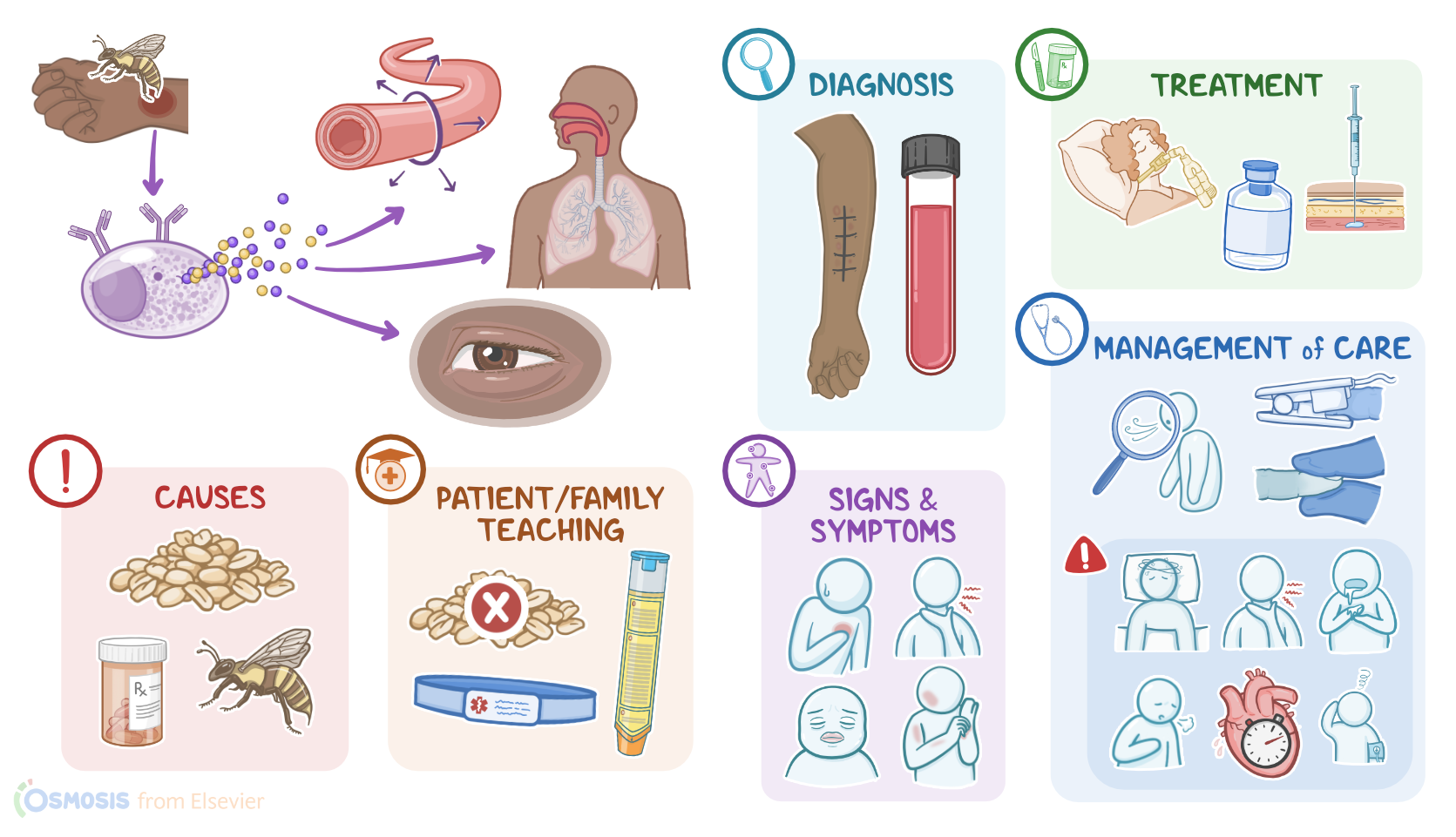
So, vasodilation, when blood volume is constant, lowers the blood pressure and slows down the blood flow through the blood vessels.Okay, now the main cause of anaphylaxis and anaphylactic shock is a systemic allergic reaction to an external trigger, which can be medications, insect bites, or food, for example, nuts.
Causes & risk factors1:40–2:08
Important risk factors include certain comorbidities such as older age, asthma and other respiratory disorders like chronic obstructive pulmonary disease; or cardiovascular disease.
Now, let’s talk about pathology. The pathophysiologic mechanism behind anaphylaxis and anaphylactic shock is a type I hypersensitivity reaction, which is mediated by IgE antibodies that bind and sensitize the mast cells and basophils.
Pathology2:08–4:51
Once an external trigger reaches the body, it binds IgE antibodies and stimulates mast cells and basophils to degranulate and release vasoactive mediators, such as histamine and bradykinin that eventually cause massive systemic vasodilation.
In addition to histamine, mast cells also release an enzyme tryptase, which breaks down the proteins and causes local tissue damage.
Now, the next events in anaphylactic shock are grouped into four stages: initial, compensatory, progressive, and refractory stages.
In the initial stage, systemic vasodilation causes less blood to return to the heart through the venous system; this, in turn, decreases cardiac output.
As a consequence, body cells are not well-perfused, so they switch to anaerobic metabolism to produce energy, causing lactic acid to build up in the blood.
When lactic acid builds up, that lowers blood pH, causing metabolic acidosis. This activates the compensatory stage.
During the compensatory stage, the sympathetic nervous system increases its activity to compensate for the decreased tissue perfusion in order to maintain homeostasis, and acid-base compensatory mechanisms activate to correct the acidosis.
In the progressive stage, these compensatory mechanisms start failing, so the body’s metabolic needs can’t be met. This results in lactic acid buildup in the blood, more than in the initial stage, and gradually worsening metabolic acidosis.
Finally, the refractory stage is when shock progresses to cellular death and multiple organ damage, which can be fatal. Now, switching gears and moving on to complications.
Reduced blood supply to the myocardium can result in myocardial infarction, while reduced blood supply to the brain might cause loss of consciousness.
Additionally, the edema can affect the airway, more specifically, the larynx, and cause upper airway obstruction, respiratory failure, as well as complications, such as cardiorespiratory arrest and even death.Clinical manifestations of anaphylactic shock can be cardiovascular, such as hypotension, tachycardia, and chest pain; and respiratory, which are typically associated with laryngeal edema and include voice hoarseness, shortness of breath, and stridor.
Clinical manifestations4:51–5:27
Additionally, there’s often angioedema of the lips and tongue, meaning these organs swell up. There could also be skin manifestations, which typically include flushing and itching.
If the cause of anaphylactic shock is an insect bite, localized signs of inflammation at the site of the bite are often present.Diagnosis of anaphylactic shock starts with the client’s history, and physical assessment, followed by lab tests, which might reveal high serum levels of histamine, tryptase, and serum IgE antibodies.
Diagnosis5:27–6:04
An electrocardiogram, as well as imaging studies like an X-ray or CT scan, can be used to exclude possible complications of the anaphylactic shock.
Treatment6:04–6:37
In terms of treatment for anaphylactic shock, the first step is to ensure airway patency, which in severe cases, might require intubation, and administer epinephrine intramuscularly.
Additionally, high flow oxygen, as well as nebulized albuterol, IV diphenhydramine and IV methylprednisolone can be administered.
Early resuscitation with IV fluids is also required. In the case of persistent hypotension, then vasopressors like norepinephrine or vasopressin should be used.Okay, now let’s talk about the nursing care you’ll be providing for a client with anaphylactic shock.
Management and care6:37–8:26
Your primary nursing goals are to maintain airway patency and oxygenation and promote adequate organ perfusion. Begin by monitoring your client’s airway and oxygenation by instituting pulse oximetry, and administer the ordered high flow oxygen to keep the SpO2 greater than 90%.
Inspect their face, lips, and tongue for swelling, and assess their mental status. Monitor their respiratory rate, depth and effort; and auscultate their lung sounds.
Immediately report to the healthcare provider if your client experiences dyspnea, stridor or hoarseness, drooling, or signs of decreased oxygenation such as altered level of consciousness.
Suction secretions, and prepare to assist with rapid intubation, as indicated. Administer the prescribed medications, such as epinephrine, to help mediate the allergic reaction.
Next, watch for signs of decreased organ perfusion by assessing your client’s circulatory status. Assess their vital signs, peripheral pulses, capillary refill, skin color, and urinary output.
Immediately report if your client has decreased blood pressure, tachycardia, weak peripheral pulses, slow capillary refill, cool and mottled skin, decreased urine output or anuria.
Administer the prescribed IV fluids and medications, including an infusion of epinephrine or vasopressors, as ordered, and raise your client’s legs and feet to assist in promoting adequate circulation to the central part of the body.
Finally assist the healthcare team in identifying the underlying cause of the anaphylactic reaction.All right, let’s move on to client and family teaching.
General client and family teaching8:26–9:23
First, teach your client that anaphylactic shock is a life-threatening condition that occurs because of a severe allergic reaction called anaphylaxis.
Now, if the cause of your client’s anaphylactic reaction was identified, stress the importance of avoiding the allergen that caused the reaction.
Then, teach them how to recognize signs of anaphylaxis, and demonstrate how to use their prescribed automatic injectable epinephrine device.
Be sure to provide enough time for them to practice using the injector device and to ask questions. Ensure other family members know how to use it as well.
Also be sure to emphasize the importance of keeping it with them at all times, and provide information on where they can obtain a medical alert identification.
Finally, instruct them to seek emergency medical treatment immediately after using their automatic injectable epinephrine device.All right, as a quick recap… Anaphylactic shock is a type of distributive shock that occurs as a result of a systemic allergic reaction to an allergen, such as medications, insect bites, or certain foods.
Review9:23–10:41
The clinical manifestations of anaphylactic shock are hypotension, tachycardia, laryngeal edema, angioedema of the lips and tongue, hoarseness, shortness of breath and stridor, and skin manifestations like flushing and itching.
Diagnosis includes the client's history and physical assessment, and can be confirmed with laboratory testing. Additionally, a skin prick test can identify the allergen responsible for the allergic reaction.
Treatment includes establishing a patent airway, administering epinephrine and high flow oxygen, and giving other medications to help mediate the allergic reaction and increase blood pressure.
The priority nursing goals include maintaining airway patency and oxygenation, and promoting adequate organ perfusion. Client and family teaching centers on explaining the cause of anaphylaxis, recognizing the symptoms of an anaphylactic allergic reaction, how to use their automatic injectable epinephrine device, and when to
| SHOCK - ANAPHYLACTIC | ||
| KEY POINTS | NOTES | |
| DEFINITION |
| |
| PHYSIOLOGY |
| |
| CAUSES AND RISK FACTORS |
| |
| PATHOPHYSIOLOGY |
| |
| SIGNS AND SYMPTOMS |
| |
| DIAGNOSIS |
| |
| TREATMENT |
| |
| MANAGEMENT OF CARE |
| |
| PATIENT AND FAMILY TEACHING |
| |
No notes for this video yet
Try adding a note below