Geriatric considerations - Gastrointestinal: Nursing
Introduction0:00–0:18
Geriatrics is the branch of medicine that deals with the physiology and psychology of aging as well as the diagnosis and treatment of diseases affecting older clients.
Now, aging affects various organ systems. One of which is the gastrointestinal system.
Physiology0:18–0:44
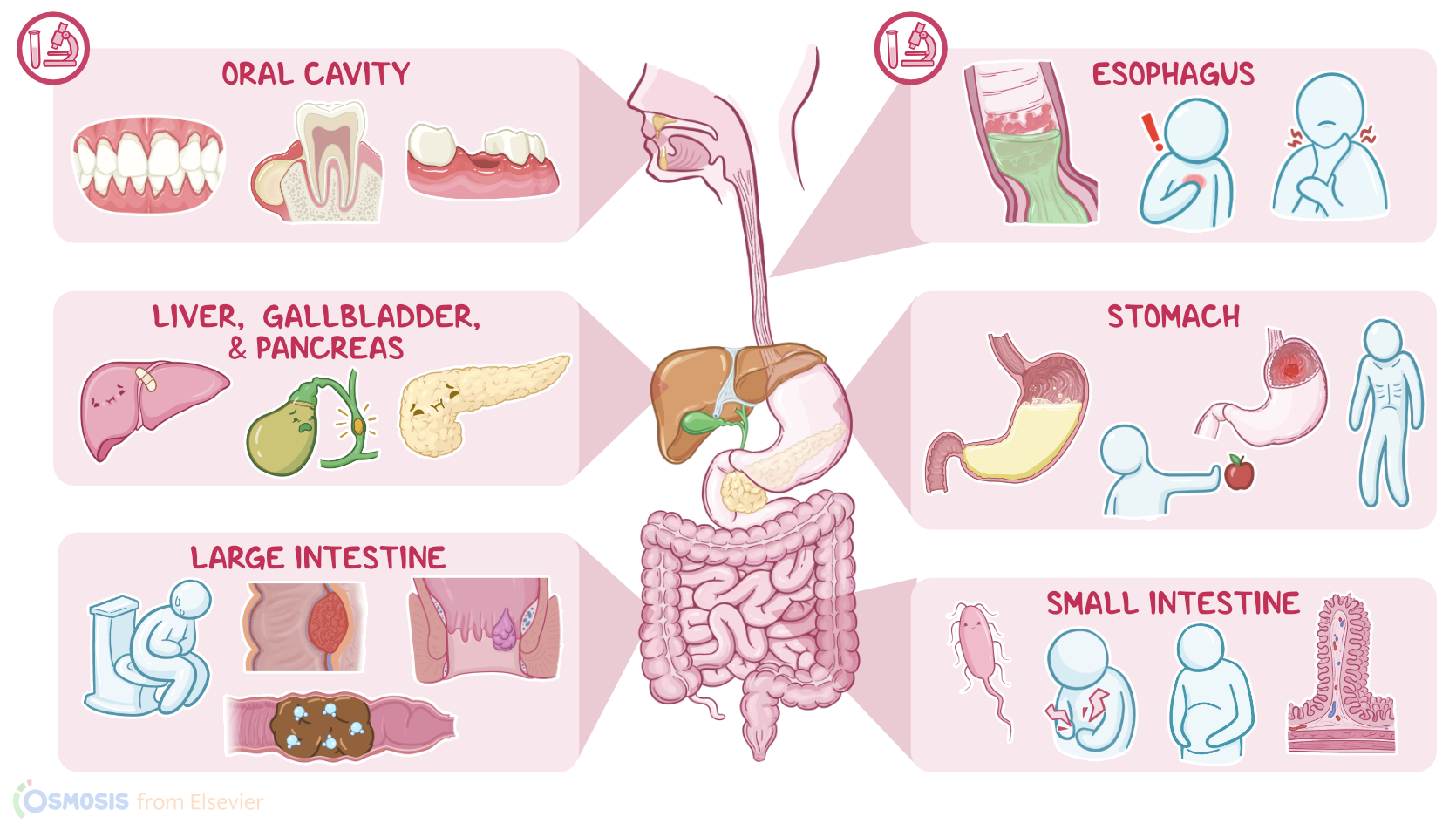
All right, let's start by reviewing the physiology of the gastrointestinal system, which is primarily responsible for mechanical and chemical digestion of food, absorption of nutrients and finally, excretion of waste as feces from top to bottom, the gastrointestinal tract starts with the oral cavity.
Then the esophagus, the stomach, the small intestine, the large intestine and ends with the anus. First.
Mouth0:44–1:54
Let's start with the oral cavity, which plays an important role in breaking down food. As a person ages, taste buds, atrophy and decrease in number, resulting in decreased ability to taste salty, sweet, bitter sour and umami.
This can decrease the enjoyment of food. So, poor eating habits and nutritional deficiencies could develop.
Many elderly clients also have periodontal disease which refers to disease that affects the gum or gingivae and the underlying bones that support the teeth.
The mildest form of periodontal disease is gingivitis where just the gums are inflamed. If left untreated, gingivitis can progress to the more severe disease called periodontitis where both gums and bones are affected and can eventually result in tooth loss.
Additionally, with aging, the production of saliva by salivary glands decreases, which can lead to xerostomia or dry mouth.
And this can also contribute to gingivitis and tooth decay. Elderly clients without teeth or clients who have poorly fitting dentures often find it hard to chew food.
Esophagus1:54–2:33
The esophagus and the stomach are separated by a muscular valve called the lower esophageal sphincter which prevents the reflux of stomach contents back into the esophagus.
Elderly clients may develop decreased esophageal motility leading to symptoms such as dysphasia as well as increasing the risk of aspiration.
Additionally, over time, the lower oesophageal sphincter can lose tone, causing reflux of stomach content and causing gastroesophageal reflux disease or GERD.
The most common symptom is heartburn. Next up is the stomach.
Stomach2:33–3:43
The stomach produces gastric secretions that are made up of water, hydrochloric acid as well as pepsin mucous and prostaglandins.
But with aging, the amount of these gastric secretions decreases. Elderly clients can develop atrophic gastritis which can eventually lead to gastric acid hyposecretion which results in malabsorption of nutrients such as vitamin B12, calcium, iron, zinc and folic acid less pepsin, which is an enzyme that chops up proteins impairs protein digestion and decreased mucus.
And prostaglandins makes the stomach more susceptible to the damage from gastric secretions. As a result, older clients have a higher risk of developing peptic ulcer disease.
This is especially common in those who take aspirin or other non steroidal anti inflammatory medications such as Ibuprofen.
Finally, gastric elasticity and motility decreases leading to decreased gastric emptying time which allows food to stay in the stomach longer.
This may eventually reduce the client's appetite and food intake leading to weight loss and nutritional deficiencies. Moving on to the small intestine, which is characterized by tiny ridges and grooves that are covered with little finger like fibers called vla that increase the surface area available for absorption of nutrients.
Small intestine3:43–4:43
Now, the intestinal surface is rich in enzymes including lactase maltase and sucrase which help digest sugars in the gastrointestinal lumen.
There are also masses of lymphoid tissue called pairs patches which monitor the intestinal bacterial flora and prevent their overgrowth.
Now, age related atrophy of the intestinal vili decreases the available absorptive surface area. So, less nutrients are absorbed with aging, the production of lactase decreases, thereby increasing the risk of lactose intolerance.
Additionally, there's a reduction in the number of payers patches which can result in the overgrowth of certain intestinal bacteria leading to symptoms such as bloating and abdominal pain as well as reduced absorption of calcium, iron and folic acid.
Ok. The absorption of nutrients in the small intestine is not possible without the help of the three accessory organs called the liver gallbladder and pancreas.
Pancreas, liver, and gallbladder4:43–6:00
The liver is the primary site of metabolism, protein synthesis and bile production which is stored and concentrated in the gallbladder.
From here, the bile is squeezed into the small intestine where it serves as a fat emulsifier, meaning it helps break fats into smaller compounds that are easier to absorb.
On the other hand, the pancreas produces and secretes pancreatic enzymes that help break down carbohydrates proteins as well as fats.
Now, with aging, the liver undergoes structural and functional changes that decrease its metabolic properties. As a result, older clients have reduced metabolism of medications and therefore increased risk of dose related side effects.
The contractility of the gallbladder also decreases as a result, there is bile stasis which increases the risk of cholelithiasis or gallstones formation.
Finally, older clients might develop fibrosis or scarring of the pancreatic tissue, which can decrease the production of pancreatic enzymes leading to glucose intolerance and impaired fat absorption.
Finally, let's cover the age related changes of the large intestine, which helps with water and electrolyte absorption and feces formation.
Large intestine6:00–6:44
With aging the muscle layer of the large intestine atrophies leading to reduced intestinal motility. As a result, food spends a longer time in the large intestine, causing more of the water in it to get absorbed.
This results in drier feces that is harder to pass resulting in constipation. Clients who experience constipation, often strain to pass stools, thereby increasing the pressure on the veins of the rectum and anus.
As a result, these vessels may get swollen and inflamed leading to hemorrhoidal disease. Finally, advancing age is the most important risk factor for the development of colorectal cancer.
General client & family teaching6:44–8:55
Now, moving on to client and family teaching, begin by teaching your client about normal changes in digestion that occur with aging.
Explain that digestion can be inhibited by problems with their teeth or gums, weakened muscles in their gastrointestinal tract and decrease digestive enzyme secretion.
Then remind your client to take their prescribed medications and dietary supplements as ordered and discuss the importance of keeping follow up appointments with their healthcare provider.
Next, teach your client that their oral health is an important part of their overall health. Encourage them to perform oral hygiene daily to prevent periodontal disease and to visit their dentist regularly for checkups.
If they wear dentures, talk to them about the importance of ensuring their dentures fit properly. If your client has a dry mouth, recommend taking frequent sips of water or sucking on sugar free, hard candy or ice chips to keep their mouth moist.
Also be sure to discuss your clients prescribed diet as needed if they have swallowing difficulties. If your client's appetite is decreased, encourage them to eat small, frequent meals of nutrient dense foods and show them how to divide their plate into quarters with 1/4 for whole grains, 1/4 for sources of protein like lean meat, legumes, nut butters and low fat dairy products.
And the remaining half for a variety of vegetables and fruits remind them to weigh themselves at regular intervals and instruct them to let their healthcare provider know if they experience a 5% loss of their baseline weight.
Also emphasize the importance of routine screening to monitor for colorectal cancer. Finally, to prevent dehydration and constipation, remind them to drink 88 ounce servings or 2 L of water each day.
Teach them about nutritious sources of fiber such as legumes, whole grains, vegetables such as broccoli, carrots and cauliflower and fruits like apples, bananas and berries.
Also talk to them about the importance of avoiding straining when having a bowel movement to prevent hemorrhoids. And to let their healthcare provider know if they have less than two bowel movements each week, especially if they are hard to pass.
Summary8:55–9:23
All right. As a quick recap, the primary roles of the gastrointestinal system are mechanical and chemical digestion of food, absorption of nutrients and the excretion of waste.
Each step is affected by the aging process. So as clients age, they may need additional help in supporting gastrointestinal function.
General client and family teaching includes lifestyle modifications to support gastrointestinal function as well as their overall health and wellbeing
| GERIATRIC CONSIDERATIONS - GASTROINTESTINAL | ||
| KEY POINTS | NOTES | |
| DEFINITION |
| |
| PHYSIOLOGY |
| |
| MOUTH |
| |
| ESOPHAGUS |
| |
| STOMACH |
| |
| SMALL INTESTINE |
| |
| PANCREAS, LIVER, AND GALLBLADDER |
| |
| LARGE INTESTINE |
| |
| PATIENT AND FAMILY TEACHING |
| |
No notes for this video yet
Try adding a note below