Persistent pulmonary hypertension of the newborn (PPHN): Nursing
Introduction0:00–0:23
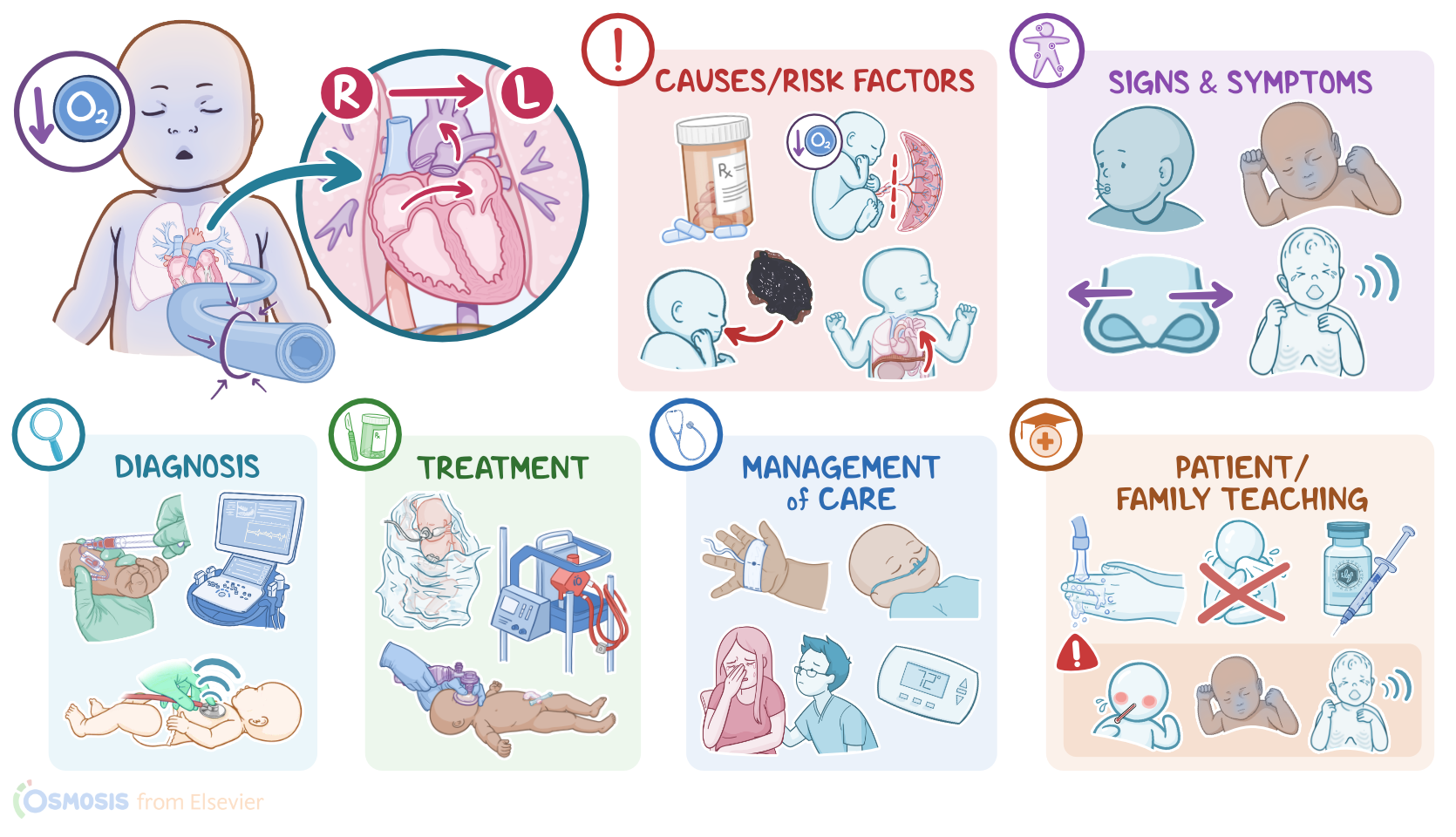
Persistent pulmonary hypertension of the newborn, or PPHN for short, is a condition in which the pulmonary arteries remain constricted after birth, resulting in increased pulmonary vascular resistance and right-to-left shunting of blood, ultimately leading to hypoxemia and acidosis.
Alright, let’s quickly recap the physiology of pulmonary blood vessels. During intrauterine life, the fetal lungs are filled with fluid and the arteries are tightly constricted, so the pressure in the fetal lungs is high, and in the fetal heart, the pressure on the right side is higher than on the left side of the heart.
Physiology0:23–1:55
This pressure difference between the right and left side of the heart allows the majority of the oxygenated blood coming from the placenta to the right atrium to bypass the lungs and pass directly through the foramen ovale, which is an opening between the two atria, into the left atrium.
At the same time, the right ventricle pumps blood into the pulmonary trunk. Again, since the lungs are collapsed, most blood flows through the ductus arteriosus into the descending aorta and eventually to the umbilical arteries that lead to the placenta.
Now, after birth, when the baby takes its first breath, their lungs expand and pulmonary blood flow increases. This makes pulmonary vessels expand, and decreases pulmonary blood pressure.
In turn, this decreases the pressure in the right side of the heart, which causes the foramen ovale to close. As the baby continues to breathe, arterial oxygen levels increase, causing the ductus arteriosus to constrict.
The process of closing these shunts is gradual and may take up to 48 hours to fully close. Deoxygenated blood can then flow into the lungs to get oxygenated, and the newborn circulation is established.
Now, the exact cause of PPHN is unknown, but it's believed to be associated with risk factors that can interfere with the development of the lungs.
Causes & risk factors1:55–3:13
These include the maternal use of certain medications, such as nonsteroidal antiinflammatory medications, or NSAIDs, and selective serotonin reuptake inhibitors, or SSRIs for short.
Another risk factor is hypoxemia, or low oxygen levels in the blood, before, during, or after birth. This can be a result of asphyxia, where oxygen supply to the fetus or newborn is cut off; meconium aspiration syndrome, where the meconium or first stool of the newborn, enters the respiratory tract causing obstruction and distress; as well as congenital diaphragmatic hernia, in which an opening in the diaphragm allows the abdominal organs to herniate into the thorax pushing against the lungs.
Hypoxemia can also be the result of hypothermia and sepsis, as well as polycythemia, in which the increased number of red blood cells causes a sluggish blood flow leading to tissue hypoxia and ischemia.
Finally, congenital heart disease, like pulmonary atresia or tricuspid atresia may lead to decreased blood flow and underdevelopment of pulmonary vessels.Okay, now the pathology of PPHN typically starts with hypoxemia, which causes the pulmonary artery and its branches to stay constricted even after birth.
Pathology3:13–4:28
This means that the blood pressure in the pulmonary circulation, and the right side of the heart do not decrease as they should after birth and remain increased compared to the left side of the heart, creating a right-to-left shunt through the fetal shunts.
So, deoxygenated blood coming from the various tissues around the body into the right atrium bypasses the lungs and goes straight through the foramen ovale and ductus arteriosus to the left side of the circulation.
From there, deoxygenated blood returns back to the tissues. This being said, tissues around the body cannot get enough oxygen, so they have to rely on anaerobic metabolism which produces lactic acid, resulting in metabolic acidosis.
Acidosis also accentuates pulmonary vasoconstriction, further increasing pulmonary blood pressure and right-to-left shunting, and creating a vicious cycle of hypoxemia.Ultimately, persistent hypoxemia may lead to complications like organ damage and sensorineural hearing loss, in addition to neurodevelopmental and cognitive delay.
Newborns with PPHN typically present with signs of respiratory distress, including nasal flaring, tachypnea, and intercostal or substernal retractions during inspiration, along with grunting during expiration.
Clinical manifestations4:28–4:50
The infant will often appear cyanotic, due to the deoxygenated blood in the systemic circulation. The diagnosis of PPHN starts with a history and physical assessment, followed by arterial blood gas, or ABG analysis, which shows hypoxemia and metabolic acidosis.
Diagnosis4:50–5:38
A low PaO2 persisting despite administration of a high oxygen concentration is also often found in PPHN, as well as a higher preductal oxygen saturation than a postductal oxygen saturation.
Upon auscultation, a systolic murmur might be heard, usually from a patent ductus arteriosus.To confirm the diagnosis, an echocardiography is typically performed, which shows elevated pressures in the pulmonary arteries and right-to-left shunting of blood through the foramen ovale and ductus arteriosus.The treatment of PPHN starts with addressing the underlying cause of hypoxemia, along with supportive measures, including the administration of warm, humidified oxygen; continuous positive airway pressure or CPAP, using face masks or nasal prongs; as well as inhaled nitric oxide, which help dilate the pulmonary blood vessels, and decrease pulmonary blood pressure.
Treatment5:38–6:21
If needed, sedation, and high-frequency ventilation might be also used. Finally, in severe cases, extracorporeal membrane oxygenation, or ECMO, which is a machine that temporarily replaces the function of the heart and lung, might be required.
Okay, let’s look at the nursing care you’ll be providing to an infant with persistent pulmonary hypertension of the newborn.
Management of care6:21–8:02
Your priority nursing goals are to optimize oxygenation and provide emotional support. Begin by administering the prescribed supplemental oxygen and instituting pulse oximetry.
Collaborate with respiratory therapy to keep the oxygen saturation within the prescribed parameters by instituting a CPAP, inhaled nitric oxide, or intubation mechanical ventilation, as indicated.Next, take steps to address any cause that tends to promote right-to-left shunting.
Maintain a neutral thermal environment to avoid cold stress. Then, promote perfusion to vital organs by administering the prescribed IV fluids and vasopressors to maintain a normal blood pressure.
Keep a close eye on the laboratory test results and implement the prescribed orders to maintain normal glucose, electrolytes, and acid-base balance.
Also, be sure to implement measures to keep the infant calm to decrease their body’s demand for oxygen. Ensure a quiet environment, dim the lights, keep noise levels at a minimum, and cluster care to provide extended periods of rest.
Also, administer the prescribed sedatives and analgesics, as needed.Finally, remember to provide emotional support for the infant’s caregivers.
Acknowledge their anxiety, keep them informed about their baby’s condition, and address any concerns or questions they may have.
Also, encourage them to visit and interact with their baby to promote bonding.Alright, let’s move on to client and family teaching.
General client & family teaching8:02–9:49
First, explain how high pressure in their baby's lungs is causing too little blood to flow to the lungs, so not enough oxygen is getting into their baby’s blood.
Explain how each of the interventions are aimed at helping their baby breathe.Once their baby is ready to be discharged home, teach the caregivers about their baby’s special needs and any ongoing treatments that are needed.
Ensure they understand the importance of bringing their baby to all of their follow-up appointments for continued monitoring and care.Next, teach the caregivers how to care for their baby at home.
If their baby will be discharged on medications or will need special equipment for care at home, teach them how to correctly administer the medications and to use the equipment with confidence.
Also be sure to evaluate the car seat they’ll be using to take their baby home, to ensure their baby can be positioned in it while maintaining their heart rate, breathing, and oxygen saturation.
Be sure to explain how their baby’s lungs may take several weeks or months to fully recover, so stress the importance of protecting their baby from respiratory infections like the cold or the flu.
Remind them to always practice good hand hygiene, and to keep their baby away from crowds or other people who are sick. Recommend that all household members get their annual influenza vaccination.Finally, instruct them to immediately seek medical care if their baby develops a fever; is not feeding well; or if they notice their baby’s chest sucks in or their nostrils flare during breathing; if they hear wheezing or grunting sounds, or if their baby’s skin or mucous membranes turn blue or gray.Alright, as a quick recap, persistent pulmonary hypertension of the newborn, or PPHN for short, is a condition in which the pulmonary arteries remain constricted after birth, leading to a right-to-left shunt, hypoxemia, and acidosis.
Review9:49–10:58
Although the exact cause remains unknown, risk factors include maternal use of certain medications such as NSAIDs or SSRIs, as well as hypoxemia before, during, or after birth.
The clinical presentation includes signs of respiratory distress such as cyanosis, nasal flaring, tachypnea, retractions, and grunting.
Diagnosis typically involves a history and physical assessment, followed by arterial blood gas analysis, and echocardiography.
Treatment involves addressing the underlying cause and implementing supportive measures like supplemental oxygen, mechanical ventilation, and inhaled nitric oxide.
Goals of nursing care include optimizing oxygenation and providing emotional support. Teaching emphasizes care of their baby at home and when to seek medical care.
| PERSISTENT PULMONARY HYPERTENSION OF THE NEWBORN (PPHN) | ||
| KEY POINTS | NOTES | |
| DEFINITION |
| |
| PHYSIOLOGY |
| |
| CAUSES AND RISK FACTORS |
| |
| PATHOPHYSIOLOGY |
| |
| SIGNS AND SYMPTOMS |
| |
| DIAGNOSIS |
| |
| TREATMENT |
| |
| MANAGEMENT OF CARE |
| |
| PATIENT AND FAMILY TEACHING |
| |
No notes for this video yet
Try adding a note below