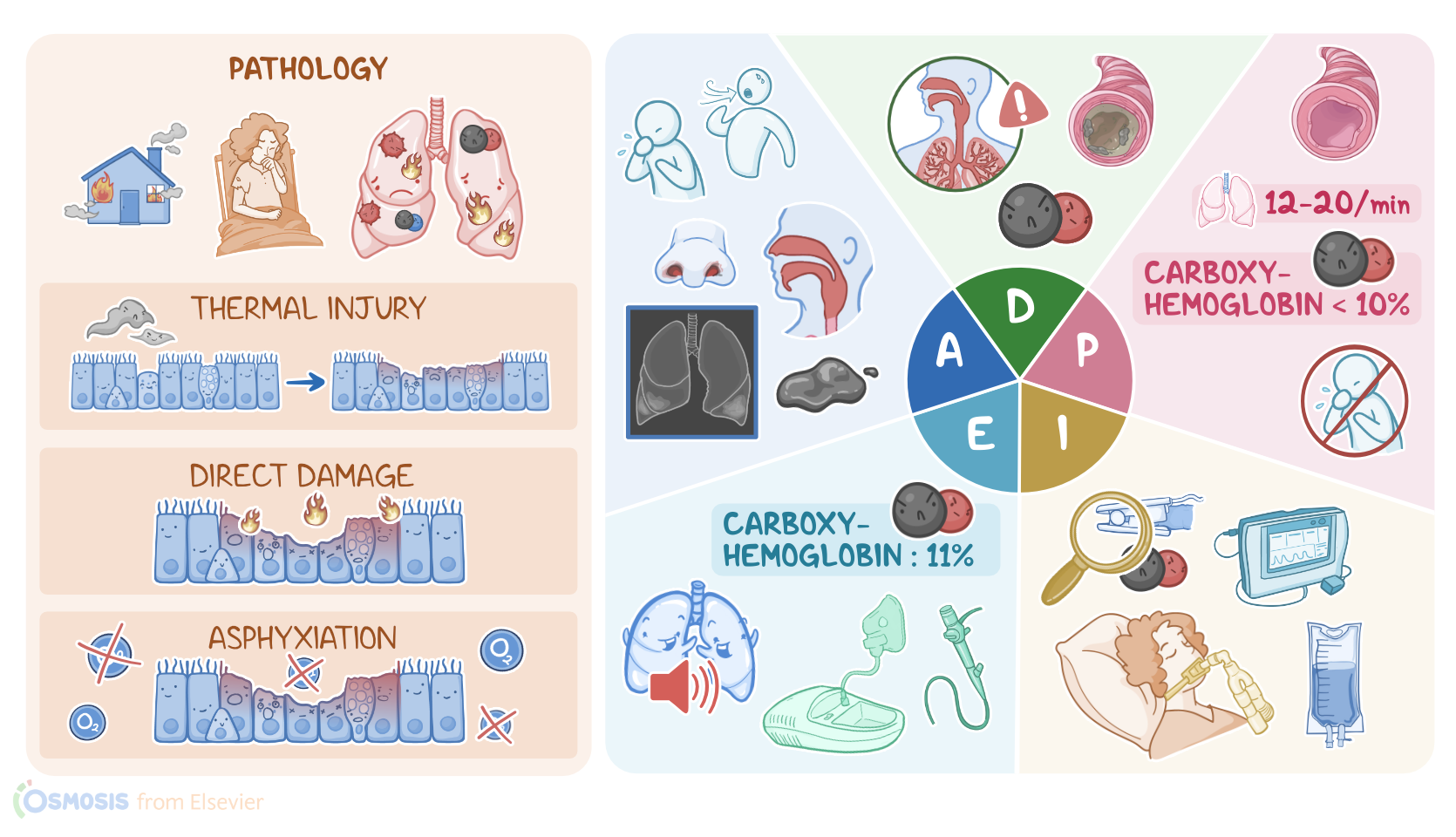
Smoke inhalation injury: Nursing process (ADPIE)

Smoke inhalation injury: Nursing process (ADPIE)

223 Content

223 Content

Hypersensitivity reactions - Overview: Nursing pathophysiology
Community health case study - Rural healthcare: Nursing
Critical care case study - Septic shock: Nursing
Critical care case study - Cardiogenic shock: Nursing
Critical care case study - ST elevation myocardial infarction (STEMI): Nursing
Critical care case study - Disseminated intravascular coagulation (DIC): Nursing
Critical care - Burns: Nursing
Critical care - Multiple organ dysfunction syndrome (MODS): Nursing
Critical care case study - Intracranial hypertension: Nursing
Acute and chronic: Clinical decision making
Airway, breathing, circulation: Clinical decision making
Clinical judgment: Clinical decision making
Maslow's hierarchy of needs: Clinical decision making
Nursing process: Clinical decision making
Overview: Clinical decision making
Restrictive and invasive: Clinical decision making
Safety: Clinical decision making
Aortic aneurysm: Nursing process (ADPIE)
Cardiac biomarkers - Creatine kinase (CK): Nursing
Cardiac biomarkers - Troponin: Nursing
Cardiomyopathy: Nursing
Case study - Hypovolemic shock: Nursing
Myocardial infarction (MI): Nursing process (ADPIE)
Myocarditis: Nursing
Pericardial effusion and cardiac tamponade: Nursing process (ADPIE)
Pericarditis: Nursing
Shock - Anaphylactic: Nursing
Shock - Cardiogenic: Nursing
Shock - Hypovolemic: Nursing
Shock - Neurogenic: Nursing
Shock - Obstructive: Nursing
Shock - Septic: Nursing
Valvular heart disease: Nursing
Testicular cancer: Nursing
Case study - Leukemia: Nursing
Disseminated intravascular coagulation (DIC): Nursing
Leukemia: Nursing process (ADPIE)
Multiple myeloma: Nursing
Neutropenia: Nursing
Immunodeficiency disorders - Secondary: Nursing
Burn injury: Nursing
Case study - Burn injury: Nursing
Frostbite: Nursing process (ADPIE)
Skin cancer - Basal cell carcinoma, squamous cell carcinoma, and melanoma: Nursing
Lymphoma - Hodgkin and non-Hodgkin: Nursing
Biology of cancer: Nursing
Care of a client in the emergency department: Nursing
Complications of cancer: Nursing
Tumor lysis syndrome (TLS): Nursing Process (ADPIE)
Case study - Stroke: Nursing
Encephalitis: Nursing
Hemorrhagic stroke - Intracranial hemorrhage (ICH) and subarachnoid hemorrhage (SAH): Nursing
Increased intracranial pressure (ICP): Nursing
Meningitis: Nursing process (ADPIE)
Stroke: Nursing process (ADPIE)
Breast cancer: Nursing process (ADPIE)
Case study - Breast cancer: Nursing
Lung cancer: Nursing
Leukemia: Nursing pathophysiology
Burns: Nursing pathophysiology
Skin cancer: Nursing pathophysiology
Multiple organ dysfunction syndrome (MODS): Nursing pathophysiology
Stroke: Nursing pathophysiology
Breast cancer: Nursing pathophysiology
Types of leadership: Nursing
Quality and safety: Nursing
Legal issues: Nursing
Health promotion and illness prevention: Nursing
Health literacy: Nursing
Ethics: Nursing
Disaster management: Nursing
Delegation and supervision: Nursing
Decision-making: Nursing
Environmental emergencies: Nursing
Social determinants of health (SDOH): Nursing
Case study - Accidental ingestion: Nursing
Poisoning: Nursing process (ADPIE)
Smoke inhalation injury: Nursing process (ADPIE)
Insect stings and bites: Nursing
Atrophy, aplasia, and hypoplasia
Hyperplasia and hypertrophy
Metaplasia and dysplasia
Oncogenes and tumor suppressor genes
Aneurysms
Aortic valve disease
Mitral valve disease
Chronic kidney disease (CKD): Nursing
Dialysis care: Nursing
Polycystic kidney disease (PKD): Nursing
Acute kidney injury (AKI): Nursing process (ADPIE)
Critical care case study - Acute kidney injury: Nursing
Kidney disease: Nursing pathophysiology

Notes

SMOKE INHALATION INJURY

KEY POINTS
NOTES
PATIENT REPORT
  • 35-year-old 
  • Emergency department
  • House fire
  • Presents with cough, shortness of breath, and hoarse voice
  • Admitted to ICU with smoke inhalation injury

PATHOPHYSIOLOGY
  • Damage to airways or lungs from inhaled smoke 
  • Caused by heat particulates or toxic chemicals 
    • Exposure during house fire or enclosed space fire 
  • Non-modifiable risk factors 
    • Young children 
    • Elderly individuals 
    • Physical disabilities 
    • Mental disabilities 
    • Underlying lung disorders 
  • Modifiable risk factors 
    • No functioning smoke detectors 
    • Alcohol use during fire 
    • Drug use during fire 
  • Types of airway injury 
    • Thermal injury 
    • Chemical and particulate injury 
    • Asphyxiation 
  • Signs and symptoms depend on 
    • Duration of exposure 
    • Depth of smoke penetration 
  • Upper airway injury 
    • Affects mouth oropharynx and larynx 
    • Local erythema 
    • Ulceration and sloughing 
    • Hoarse voice 
    • Carbonaceous sputum 
    • Localized edema 
    • Dyspnea 
    • Stridor 
  • Tracheobronchial injury 
    • Bronchospasm 
    • Productive cough 
    • Bronchorrhea 
    • Wheezing 
  • Parenchymal injury 
    • Affects bronchioles and alveoli 
    • Initially asymptomatic 
    • Inflammatory response within hours 
    • Edema and increased capillary permeability 
    • Atelectasis 
    • Dyspnea 
    • Decreased breath sounds 
    • Tachypnea 
    • Use of accessory muscles 
    • Systemic hypoxia 
  • Complications  
    • Systemic toxicity 
      • Carbon monoxide 
      • Cyanide 
    • Pneumonia 
    • Pulmonary edema 
    • Acute respiratory distress syndrome 
    • Respiratory failure 
    • Tissue hypoxia 
    • End organ damage 
    • Death 
  • Long term complications 
    • Tracheal stenosis 
    • Airway scarring 
    • Bronchiectasis 
    • Bronchiolitis obliterans 
    • Interstitial fibrosis

DIAGNOSIS AND TREATMENT
  • Diagnosis
    • History
    • Physical assessment
    • Laboratory tests
    • Arterial blood gas
    • Diagnostic imaging
    • Bronchoscopy
  • Treatment
    • Supportive care
    • Intubation or tracheostomy, if indicated
    • Humidified oxygen
    • Chest physiotherapy
    • Bronchodilators
    • Anti-inflammatory medications
    • Nebulized heparin
    • IV fluids

ASSESSMENT
  • Bilateral conjunctivitis 
  • Singed nares 
  • Oropharyngeal erythema 
  • Bilateral wheezing
  • Coughing blackish sputum 
  • Complains of headache 
  • Alert and oriented 
  • Difficulty speaking full sentences 
  • Vital signs 
    • Temperature 98.6 ℉ (37.0 ℃)
    • Heart rate 108/min
    • Respiratory rate 28/min
    • Oxygen saturation 94 % 
    • Blood pressure 110/88 mmHg 
    • Pain 0/10 
  • Lab values 
    • pH 7.38 
    • PaCO₂ 50 mmHg (6.6 kPa)
    • HCO₃ 24 mEq/L (24 mmol/L)
    • PaO₂ 70 mmHg (9.3 kPa)
    • Carboxyhemoglobin 20% 
  • Chest X-ray shows patchy infiltrates in lower lobes 
  • Bronchoscopy shows bronchorrhea 
  • Blackish soot deposits observed

NURSING DIAGNOSES
  • Ineffective airway clearance related to airway inflammation, bronchospasm, and mucus secretion
  • Impaired gas exchange related to increased pulmonary capillary permeability
  • Ineffective breathing pattern related to increased work of breathing
  • Risk for poisoning related to exposure to carbon monoxide

PLANNING
  • Prior to discharge from the ICU, patient will
    • Maintain clear, open airways as evidenced by normal breath sounds
    • Have improved gas exchange evidenced by unlabored respirations at 12 to 20/min, pulse oximetry at therapeutic levels and blood gases closer to normal range
    • Demonstrate an effective breathing pattern as evidenced by breathing at a normal rate and depth, the absence of dyspnea, and no use of accessory muscles
    • Have a carboxyhemoglobin level decreased to less than 10%.

IMPLEMENTATION
  • Intubation to protect airway 
  • Mechanical ventilation initiated 
  • During intubation 
    • Monitor vital signs 
    • Monitor respiratory status 
  • Post intubation monitoring 
    • Continuous pulse oximetry 
    • Continuous capnography 
  • Medications 
    • Nebulized albuterol
    • N-acetylcysteine  
    • Heparin 
    • Continue IV fluids 
    • Maintain fluid and electrolyte balance 
  • Ongoing monitoring 
    • Watch for changes in oxygenation 
    • Monitor ABG values 
    • Monitor carboxyhemoglobin levels 
    • Report changes to HCP immediately

EVALUATION
  • Vital signs and respiratory status stable 
  • Lungs sound clear on auscultation 
  • Latest ABG results 
    • pH 7.38 
    • PaCO₂ 49 mmHg (6.5 kPa)
    • HCO₃ 25 mEq/L (25 mmol/L)
    • PaO₂ 80 mmHg (10.6 kPa)
    • Carboxyhemoglobin 11% 
  • Continue nebulized medications for several days 
  • Mechanical ventilation continues 
  • Await resolution of upper airway edema 
    • Confirm with follow up bronchoscopy 

Transcript

Watch video only

Janine Jones is a 35-year-old female who was brought to the emergency department, or ED, by ambulance after being trapped in her home during a fire.

Firefighters responded when a neighbor noticed smoke coming from Janine’s home.

Janine appears alert and oriented but she is unsure how long she was stuck in her home.

She presents with coughing, shortness of breath, and a hoarse voice.

She is admitted to the intensive care unit or ICU, with smoke inhalation injury.

Smoke inhalation injuries occur when the airways or lungs are damaged from inhaling heat, irritant particulates, or toxic chemicals present in smoke.

The most common scenario involves being in a house fire or other enclosed space during a fire.

Now, there are some factors that may put an individual at risk for an inhalation injury during a fire.

Non-modifiable risks include age, in particular young children and the elderly, as well as those with physical or mental disabilities.

These factors can make it harder for the individual to stop a fire, or escape from it.

In addition, having an underlying lung disorder increases the risk of harm from smoke inhalation.

On the other hand, modifiable risk factors include being in a building without functioning smoke detectors, or being under the influence of alcohol or drugs during a fire.

Now, once the smoke is inhaled into the airways, it can cause three main types of airway injury.

The first type is thermal injury, which is when the heat from the smoke burns the epithelium lining the airway.

The second type of injury comes from particulates and chemicals that can irritate and cause direct damage to the airway.

And third, smoke inhalation can cause asphyxiation, where oxygen availability and use by the tissues is impaired.

The signs and symptoms associated with a smoke inhalation injury typically depend on the duration and extent of exposure, and how far the inhaled smoke travels down the airways.

First there’s upper airway injury, which involves direct thermal damage from heat to the mouth, oropharynx, and larynx.

This mainly leads to local erythema, as well as ulceration and sloughing of the airway epithelium.

Other frequent signs of upper airway injury include a hoarse voice due to vocal cord damage, and dark grey or black sputum, referred to as carbonaceous sputum.

In addition, some clients may develop localized edema.

If the edema becomes severe enough, it can obstruct the airway, leading to dyspnea and stridor, which is a harsh, grating sound when breathing.

If the smoke makes its way a bit further down the airway, the particulates and chemicals that are directly toxic to the tracheobronchial epithelium and can result in bronchospasm, a productive cough associated with bronchorrhea or excessive mucus discharge, as well as wheezing, which is a high-pitched whistling sound that usually happens during exhalation.

Particulates and chemicals that are small enough to travel all the way down to the lungs, can cause damage to the bronchioles and alveoli.

Initially, parenchymal injury doesn’t show any symptoms, but within a few hours, an inflammatory response results in edema and increased pulmonary capillary permeability.

The client might develop atelectasis, which is when the part of the lung collapses, resulting in dyspnea and decreased breath sounds, tachypnea, the use of accessory respiratory muscles, and systemic hypoxia.

Clients experiencing smoke inhalation injury often develop complications.

One of the main complications is systemic toxicity from the products of combustion, including carbon monoxide and cyanide.

Pneumonia is a common complication, since microbes can more easily access and invade the damaged respiratory tract.

Pulmonary edema can be the result of lung inflammation.

Another important complication is acute respiratory distress syndrome, or ARDS, which is when fluid builds up in the alveoli, impairing their ability to get enough oxygen into the blood.

Ultimately, this can lead to respiratory failure, resulting in severe tissue hypoxia, as well as end-organ damage, and death.

Fortunately, most clients who survive a smoke inhalation injury don’t develop long term complications.

However, some important ones to keep in mind include permanent tissue damage, such as tracheal stenosis or scarring that leads to airway narrowing; bronchiectasis with damaged and thickened bronchi; bronchiolitis obliterans, which is characterized by extensive scarring and obstruction of the bronchioles; and interstitial fibrosis with scarring of the lung tissue.

The main diagnostic studies used in the case of an inhalation injury include standard laboratory tests, such as a complete blood count, which often reveals an increased neutrophil count, indicating inflammation and infection; decreased electrolytes like sodium and potassium; elevated blood urea nitrogen and creatinine; and elevated serum lactate levels.

In addition, blood gas analysis often shows an increased PaCO2 and decreased PaO2, and it may reveal an elevated carboxyhemoglobin indicating carbon monoxide poisoning.

Then, chest X-rays are typically done to visualize the lungs, and look for pulmonary edema.

Finally, a bronchoscopy is performed to directly examine the upper airways and bronchi for damage.

Treatment of inhalation injury is typically supportive.

The main goal is to maintain an open airway.

Clients that present with an obstructed airway, signs of respiratory distress, abnormal mental status, or severe burns to the face and neck, should be intubated immediately and ventilated mechanically.

Some clients may need a tracheostomy, which is an incision in the trachea to bypass the airway obstruction.

On the other hand, those who are not intubated early must be closely monitored, as they may rapidly develop airway edema.

All clients should receive humidified oxygen.

In addition, treatment should aim at reducing pulmonary secretions and clearing the airways from excessive mucus or epithelial sloughing.

Key Takeaways

Smoke inhalation injury is a serious medical condition that occurs when the airways or lungs are damaged from inhaling heat, irritant particulates, or toxic chemicals present in smoke during a fire. Symptoms include breathing difficulties, coughing, wheezing, and other respiratory symptoms. The severity of the injury depends on the duration and intensity of the exposure, as well as the type of materials burned.

In addition to respiratory symptoms, smoke inhalation injury can also cause systemic effects, such as carbon monoxide poisoning and chemical toxicity from other toxic gasses, which can lead to organ damage, altered mental status, and even death. Treatment for smoke inhalation injury typically involves securing the airway, administering oxygen, removing any residual smoke or debris from the airway, administering IV fluids and other supportive care as needed.