Gynecomastia · What Is It, Causes, Signs and Symptoms, Treatment, and More

Published: Apr 07, 2026
Author: Anna Hernández, MD
Editor: Alyssa Haag, MD
Editor: Józia McGowan, DO
7-day free trial

Go deeper with Osmosis

Osmosis is a learning platform with videos, questions, and AI tools to help you master topics like this.

4.8 · 12,000+ reviews
Watch quick, visual videos
Practice with Qbank-style questions
Use AI to explain, quiz, and review
Study anytime with the mobile app
Start free trial

No credit card · Cancel anytime

What is gynecomastia?

Gynecomastia refers to the enlargement of breasts in genetic males. It’s caused by the proliferation of glandular tissue due to a hormonal imbalance between estrogen and testosterone levels. The prevalence of gynecomastia varies with age; it’s especially common during puberty, affecting up to 70% of individuals during their pubertal stage.

Learn deeper with Osmosis

Master this topic faster with videos, questions, and AI.

Used by 8M+ healthcare learners.

Start free trial

No credit card · Cancel anytime

What causes gynecomastia?

Most cases of gynecomastia are physiological, meaning they occur naturally as part of the body’s development. However, in some cases, gynecomastia can be a sign of an underlying condition that requires further examination.

Physiologic gynecomastia is age-dependent, and it typically shows three peaks throughout a person’s life. The first peak affects newborn genetic males and is caused by the transfer of estrogen from the pregnant person through the placenta. The second peak affects individuals going through puberty and is caused by a delayed testosterone surge relative to estrogen at the beginning of puberty. Finally, decreasing testosterone levels may contribute to a final peak in gynecomastia incidence in older adults.

Pathological gynecomastia, on the other hand, can occur at any age due to several conditions. One of the most common causes is liver failure, or cirrhosis, where there is increased conversion of androstenedione to estrogen. Similarly, obesity causes increased conversion of androgens to estrogens by fatty tissue, disrupting the estrogen-to-androgen balance. Another cause is tumors that secrete estrogen or estrogen precursors, such as certain testicular or adrenal tumors. Next, gynecomastia can be a symptom of primary hypogonadism, like in Klinefelter syndrome, where the testes do not produce enough sex hormones.

Pathological gynecomastia can also be caused by medications such as anabolic steroids and the diuretic, spironolactone, as well as by alcohol and recreational drugs like amphetamines or cannabis. Finally, hormone therapy used in prostate cancer may be antiandrogen agents like bicalutamide which can also cause gynecomastia as a side effect.

What are the signs and symptoms of gynecomastia?

Gynecomastia usually presents as a rubbery or firm mass behind the nipple that spreads outwards over the breast region. Breast enlargement is usually bilateral, but can sometimes be unilateral, most commonly left-sided. Although it is usually painless, some individuals may experience tenderness if gynecomastia is of recent onset or has developed rapidly.

True gynecomastia should be distinguished from pseudo-gynecomastia, where breast enlargement is caused by fat deposition and not glandular proliferation. This can usually be tested on examination by pinching to see if there is a disc of breast tissue present behind the areola.

How is gynecomastia diagnosed?

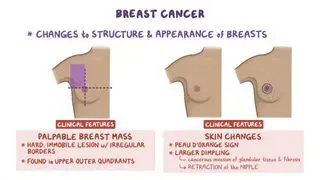
Gynecomastia is diagnosed clinically based on the medical history and physical examination, which should include examination of the breasts, testes, and lymph nodes. A hard or immobile mass outside the areola may suggest breast cancer. Similarly, any masses associated with skin changes, nipple discharge or retraction, enlarged lymph nodes or systemic symptoms such as weight loss increase the risk of breast cancer.

Diagnostic testing is only necessary when the cause of gynecomastia is unknown. Depending on the clinical suspicion, diagnostic work-up may include measurement of liver enzymes (e.g., bilirubin, ALT, AST), renal function tests (e.g., serum creatinine), and thyroid-stimulating hormone levels, as well as hormonal studies, including luteinizing hormone (LH) and follicle-stimulating hormone (FSH), prolactin, testosterone and estrogen levels. A testicular ultrasound may be done in cases where a mass in the testes has been felt upon examination.

In cases where there is a suspicion for breast cancer, breast imaging with mammography and/or ultrasound may be performed to rule out malignancy. Additionally, a sample of breast tissue may be taken to analyze the tissue under the microscope. This typically involves a technique called fine-needle aspiration, where a thin needle is inserted into the breasts to obtain small tissue samples.

How is gynecomastia treated?

Treatment of gynecomastia is different for each individual. Often, physiologic gynecomastia resolves on its own, especially if it is pubertal gynecomastia. In such cases, observation may be all that is required.

For people with pathological gynecomastia, treatment is directed at managing the underlying illness, adjusting medications, and avoiding alcohol and recreational drugs, which can contribute to the condition. Medications like tamoxifen or raloxifene, which act as an estrogen antagonist in breast tissue, are sometimes used to treat gynecomastia and breast pain. Other medications that have been used include aromatase inhibitors, like anastrozole, which decrease estrogen production, and testosterone replacement therapy in cases of hypogonadism.

Surgery for gynecomastia is often considered when the condition is long-standing, painful, or causes significant emotional or physical distress. Surgical treatment involves removing the hypertrophic glandular tissue, which can be done through minimally invasive techniques that reduce scarring and healing time. Individuals with pseudo-gynecomastia may benefit from liposuction techniques, which remove excess fatty tissue but not the glandular breast tissue.

What are the most important facts to know about gynecomastia?

Gynecomastia is the enlargement of breast tissue in genetic males. It is caused by an imbalance between estrogen and testosterone levels, leading to an increase in glandular breast tissue. Gynecomastia can occur at any age and may be associated with various factors, including hormonal changes during puberty, aging, certain medications, and underlying health conditions such as liver cirrhosis or testicular cancer. The prognosis for gynecomastia is generally good, especially when it is a temporary condition related to puberty or reversible factors like medications. In severe cases, gynecomastia can be managed with medications like tamoxifen, as well as with surgery in severe cases.
Students say Osmosis is 100% worth it

Because Osmosis saves them time. Lowers stress. And actually helps them remember when it counts.

I used Osmosis to prepare for my first medical school licensing exam! Super helpful and interactive for people who may not do great with just pages of text info!

Cecilia Ruiz

Cecilia Ruiz

MD student

Sayan Misra

I have used Osmosis for about four years. Best thing I have ever used for my medical studies.

Sayan Misra

Sayan Misra

Med student

Osmosis videos are superior because they define simple concepts, tell a story with a clear progression, and provide context.

Jay Pate

Jay Pate

Dental student

References


Dickson G. Gynecomastia. afp. 2012;85(7):mal716-722. Accessed July 28, 2024. https://www.aafp.org/pubs/afp/issues/2012/0401/p716.html   


Kanakis GA, Nordkap L, Bang AK, et al. EAA clinical practice guidelines—gynecomastia evaluation and management. Andrology. 2019;7(6):778-793. doi:10.1111/andr.12636 


Sharp NE, Bleicher RJ. Gynecomastia. Ann Breast Surg. 2021;5(0):23-23. doi:10.21037/abs-20-124