Mowat-Wilson Syndrome · What It Is, Causes, Signs and Symptoms, Diagnosis, and More

Published: Apr 22, 2026
Author: Georgina Tiarks
Editor: Alyssa Haag
Editor: Ian Mannarino MD, MBA
Editor: Kelsey LaFayette, DNP, ARNP, FNP
Illustrator: Jung Hee Lee, MScBMC
7-day free trial

Go deeper with Osmosis

Osmosis is a learning platform with videos, questions, and AI tools to help you master topics like this.

4.8 · 12,000+ reviews
Watch quick, visual videos
Practice with Qbank-style questions
Use AI to explain, quiz, and review
Study anytime with the mobile app
Start free trial

No credit card · Cancel anytime

What is Mowat-Wilson syndrome?

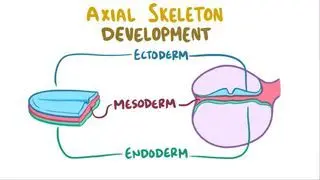
Mowat-Wilson syndrome (MWS) is a rare genetic disorder affecting embryological development that causes congenital malformations. There have only been a few hundred recorded cases of Mowat-Wilson syndrome worldwide. It is caused by a mutation to the ZEB2 gene that causes an array of developmental malformations such as dysmorphic facies, congenital heart defects, brain malformations, genitourinary abnormalities, gastrointestinal anomalies, intellectual disabilities, and skeletal and eye abnormalities. 

Learn deeper with Osmosis

Master this topic faster with videos, questions, and AI.

Used by 8M+ healthcare learners.

Start free trial

No credit card · Cancel anytime

What causes Mowat-Wilson syndrome?

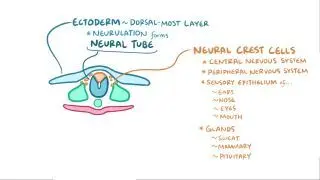
Mowat-Wilson syndrome is typically caused by de novo, or new, mutations in the ZEB2 gene. This may be in the form of a heterozygous pathogenic variant or a heterozygous deletion of 2q22.3 on ZEB2. The ZEB2 gene is responsible for the neural crest and neural tube cell development, specifically the growth of the peripheral and central nervous systems. When mutations affect these primordial cells, structural defects may occur during embryological development.

What are the signs and symptoms of Mowat-Wilson syndrome?

The signs and symptoms of Mowat-Wilson syndrome include a wide array of structural malformations. Distinctive facial features include a high forehead, microcephaly (i.e., small head), hypertelorism (i.e., wide space between eyes), pointed triangular chin, prominent round nasal tip (i.e., columella), dental crowding, and an open mouth. 

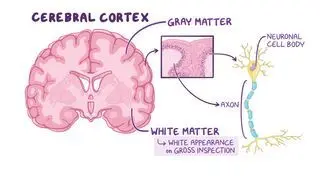
Individuals with Mowat-Wilson syndrome can have diminished development of or agenesis of the corpus callosum (i.e., fibers connecting two hemispheres of the brain), malformation of the hippocampus, reduced white matter, craniosynostosis, and cortical dysgenesis. A multitude of neurologic abnormalities can result, which include epilepsy, severe intellectual disabilities (e.g., autistic qualities, attention deficit disorder), sleep disturbance, bruxism, and impaired speech. Affected individuals may also display a happy demeanor, which can cause this disorder to be mistaken for Angelman syndrome. Poor eyesight can also occur due to eye abnormalities (e.g., strabismus, refractive errors). Sleep disturbances such as night wakings and early morning wakings are also common. 

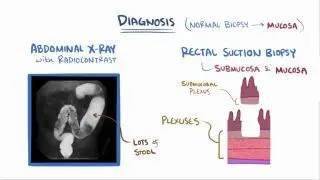
Enteric complications are a result of Hirschsprung disease (e.g., a congenital condition affecting nerve cells in the colon), which may cause delayed passage of meconium as a neonate and chronic constipation, while the skeletal abnormalities seen (e.g., scoliosis, foot deformities) can cause discomfort and gait changes. Congenital heart disease (e.g., patent ductus arteriosus, ventricular septal defect, atrial septal defect, pulmonary stenosis, and coarctation of the aorta) can lead to fatigue, tachycardia (i.e., elevated heart rate), and difficulty breathing. Genitourinary anomalies (e.g., hypospadias, cryptorchidism, hydronephrosis, vesicoureteral reflux) are also common.
How is Mowat-Wilson syndrome diagnosed?

Mowat-Wilson syndrome can be diagnosed after a thorough medical and physical exam and confirmatory genetic testing. Although no formal diagnostic criteria are outlined, the distinctive characteristics may lead healthcare professionals to a clinical diagnosis. The pattern includes dysmorphic facial features, developmental delay, moderate to severe intellectual disabilities, impaired speech, epilepsy, and eye abnormalities. If all, or most, of these conditions, are present then there may be high suspicion of Mowat-Wilson syndrome.  Imaging studies (e.g., CT, MRI) may show neurological abnormalities 

In addition to clinical findings, diagnosis of MWS is reliant on genetic analysis. If there is a high suspicion of Mowat-Wilson syndrome, gene-targeted testing, which analyzes the ZEB2 gene individually, can be performed. Other broader genetic testing may also be completed to assess for other syndromes. 

How is Mowat-Wilson syndrome treated?

Mowat-Wilson syndrome may be treated using supportive measures as there is no cure. An interdisciplinary healthcare team (e.g., pediatric cardiologist, neurosurgeon, pediatric cardiothoracic surgeon, urologist, gastroenterologist, internist, nurses, speech therapist, and physical therapist) may be employed to treat the various conditions in MWS. Individuals with MWS often have epilepsy, which can be treated with polytherapy (e.g., valproic acid, levetiracetam). In some cases, seizures may be refractory to traditional medications, and in those cases, a vagus nerve stimulator and steroids can help control seizures. Treatment options for sleep disturbances include melatonin, benzodiazepines or niaprazine. People born with Hirschsprung disease may require colorectal surgery to remove abnormal segments of bowel. Constipation can be managed with diet (e.g., high-fiber diet, fluids) or medications (e.g., osmotic laxative, stimulant laxative). Brain, genitourinary, and heart malformations may require surgery depending on the type and severity. Individuals with eye problems may need to see an ophthalmologist for specialty care. Additionally, speech therapy may be utilized for those with speech difficulty.

What are the most important facts to know about Mowat-Wilson syndrome?

Mowat-Wilson syndrome is a congenital malformation syndrome caused by genetic defects in embryological development. Mutations and deletions to the ZEB2 gene cause this syndrome. It is characterized by dysmorphic facial features, epilepsy, sleep disturbance, eye anomalies, brain malformations, intellectual disabilities, congenital heart disease, and skeletal abnormalities. MWS is currently a clinical diagnosis based on the characteristic clinical features and can be treated with a variety of pharmaceutical, surgical, and psychosocial treatment

Key Takeaways

Definition 

A rare genetic disorder affecting embryological development that causes congenital malformations such as dysmorphic facies, congenital heart defects, brain malformations, genitourinary and gastrointestinal abnormalities, intellectual disabilities, and skeletal and eye abnormalities 

Incidence 

A few hundred recorded cases worldwide 

Causes 

De novo mutations in ZEB2 gene (involved in neural crest and neural tube cell development) 

Signs and Symptoms 

 - Facial features: high forehead; microcephaly; hypertelorism; pointed triangular chin; prominent round nasal tip; dental crowding; open mouth  

 - Brain abnormalities: agenesis of corpus callosum; hippocampus malformation; reduced white matter; cortical dysgenesis  

 - Neurologic abnormalities: epilepsy; severe intellectual disabilities; sleep disturbances; bruxism; impaired speech; happy demeanor; poor eyesight; sleep disturbances  

 - GI abnormalities: Hirschsprung disease 

 - Skeletal abnormalities: scoliosis, foot deformities  

 - Congenital heart disease: PDA, VSD, ASD, pulmonary stenosis, aorta coarctation  

 - Genitourinary abnormalities: hypospadias, cryptorchidism, hydronephrosis, vesicoureteral reflux 

Diagnosis 

 - Medical examination  

 - Physical examination  

 - Genetic testing  

 - Imaging  

Treatment 

 - Supportive measures by multidisciplinary team, e.g.:  

 - Epilepsy: medications, vagus nerve stimulator, steroids  

 - Sleep disturbances: melatonin, benzodiazepines, niaprazine 

 - Hirschsprung disease: colorectal surgery; diet; medications 

Students say Osmosis is 100% worth it

Because Osmosis saves them time. Lowers stress. And actually helps them remember when it counts.

I used Osmosis to prepare for my first medical school licensing exam! Super helpful and interactive for people who may not do great with just pages of text info!

Cecilia Ruiz

Cecilia Ruiz

MD student

Sayan Misra

I have used Osmosis for about four years. Best thing I have ever used for my medical studies.

Sayan Misra

Sayan Misra

Med student

Osmosis videos are superior because they define simple concepts, tell a story with a clear progression, and provide context.

Jay Pate

Jay Pate

Dental student

References


Adam MP, Conta J, Bean LJ. Mowat-Wilson Syndrome. In: Adam MP, Feldman J, Mirzaa GM, et al., eds. GeneReviews®. University of Washington, Seattle; 1993. Accessed December 5, 2023. http://www.ncbi.nlm.nih.gov/books/NBK1412/ 


Cordelli DM, Di Pisa V, Fetta A, et al. Neurological Phenotype of Mowat-Wilson Syndrome. Genes (Basel). 2021;12(7):982. doi:10.3390/genes12070982 


Evans E, Mowat D, Wilson M, Einfeld S. Sleep disturbance in Mowat–Wilson syndrome. American Journal of Medical Genetics Part A. 2016;170(3):654-660. doi:10.1002/ajmg.a.37502 


Garavelli L, Mainardi PC. Mowat-Wilson syndrome. Orphanet Journal of Rare Diseases. 2007;2(1):42. doi:10.1186/1750-1172-2-42 


Steiner CE. Mowat-Wilson syndrome. Arq Neuropsiquiatr. 2015;73(1):1-2. doi:10.1590/0004-282X20140224