
Pseudobulbar Palsy · What It Is, Causes, Signs and Symptoms, and More

Published: Apr 03, 2026
Author: Georgina Tiarks
Editor: Alyssa Haag, MD
Editor: Emily Miao, MD, PharmD
Editor: Kelsey LaFayette, DNP, ARNP, FNP-C
Illustrator: Jung Hee Lee, MScBMC
7-day free trial

Go deeper with Osmosis

Osmosis is a learning platform with videos, questions, and AI tools to help you master topics like this.

4.8 · 12,000+ reviews
Watch quick, visual videos
Practice with Qbank-style questions
Use AI to explain, quiz, and review
Study anytime with the mobile app
Start free trial

No credit card · Cancel anytime

What is pseudobulbar palsy?

Pseudobulbar palsy, also known as pseudobulbar affect (PBA), is a neurologic condition that occurs when there’s bilateral injury to the corticobulbar tract in the brain. The corticobulbar tract is an upper motor neuron pathway responsible for coordinating voluntary movement and connects the cerebral cortex to the cranial nerves that control the face. These neurons begin in the precentral gyrus and descend through the corona radiata, internal capsule, cerebrum, through the brainstem, and innervate their respective cranial nerves.   

Pseudobulbar palsy causes bilateral injury to the corticobulbar tract resulting in upper motor neuron signs of the cranial nerves V (i.e., trigeminal), VII (i.e., facial), IX (i.e., glossopharyngeal), X (i.e., vagus), XI (i.e., accessory spinal), XII (i.e., hypoglossal). Upper motor neuron signs include weakness, clonus (i.e., contractions), spasticity, and hyperreflexia. Conversely, bulbar palsy only affects cranial nerves IX, X, XI, XII.

Learn deeper with Osmosis

Master this topic faster with videos, questions, and AI.

Used by 8M+ healthcare learners.

Start free trial

No credit card · Cancel anytime

What causes pseudobulbar palsy?

The causes of pseudobulbar palsy may include any process that interrupts the corticobulbar tract. Disruption of these tracts can inhibit serotonin and glutamate pathways, both neurotransmitters in the brain. Most commonly this includes cerebrovascular accidents, traumatic brain injury (TBI), tumors, degenerative neurologic disorders (e.g., Alzheimer disease, Parkinson disease, multiple systems atrophy, amyotrophic lateral sclerosis [ALS]). More rare etiologies may include multiple sclerosis; central pontine myelinolysis; medication neurotoxicity (e.g., methotrexate); and infection (e.g., cerebral malaria, encephalitis, syphilis).

What are the signs and symptoms of pseudobulbar palsy?

The signs and symptoms of pseudobulbar palsy include upper motor neuron signs related to cranial nerves V, VII, IX, X, XI, and XII.  

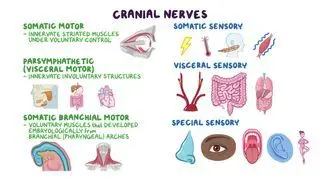
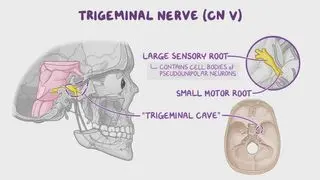
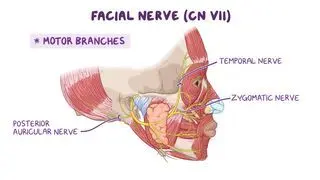
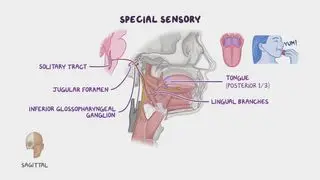
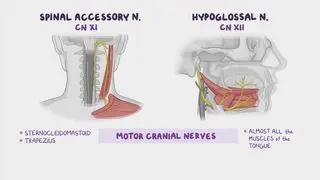
Cranial nerve V is responsible for facial sensation and movement of the muscles of mastication, or chewing. Cranial nerve VII provides innervation for facial movement, salivation, and taste. Cranial nerve IX stimulates salivation, taste, the gag reflex, and controls swallowing. Cranial nerve X is responsible for several bodily functions including the gag reflex, speech, and swallowing. Cranial nerve XI controls the sternocleidomastoid and trapezius muscles responsible for head movement and shoulder elevation. Finally, cranial nerve XII innervates the muscles of the tongue. Many of these nerves work in conjunction with each other.  

  Obstruction of these cranial nerves in PBA cause impaired mastication, drooling, facial paralysis, dysarthria (i.e., speech difficulty), dysphagia (i.e., difficulty swallowing), muscle weakness, tongue spasticity, trismus (i.e., jaw muscle spasms), and hyperreflexia of facial reflexes (e.g., gag reflex).  

Another finding in PSA is emotional outbursts including uncontrollable laughter or inappropriate crying.  Individuals with underlying psychiatric disorders like depression or bipolar disorder may attribute their symptoms to their mood disorders because of their labile emotional responses.

How is pseudobulbar palsy diagnosed?

Diagnosis of pseudobulbar palsy starts with a thorough medical history and physical examination to evaluate each cranial nerve palsy. PBA is a clinical diagnosis, meaning that a healthcare provider can diagnose it based on an findings from the history and physical examination. However, additional testing to evaluate for an underlying cause may also be done.  

This may include blood work (e.g., complete blood count, complete metabolic panel, syphilis serology, peripheral blood smear, blood cultures) to assess for infection; lumbar puncture with cerebrospinal fluid analysis to evaluate infection or signs of multiple sclerosis; electroencephalogram to assess brain activity; and imaging (e.g., CT scan or MRI) to evaluate for stroke, inflammation, or a tumor. Individuals may also require swallowing studies and a speech assessment to evaluate dysphagia and dysarthria.

How is pseudobulbar palsy treated?

Treatment is also typically targeted to specific needs of each individual, including which cranial nerves were most impacted and the impact on quality of life. Additionally, treatment of options may vary and depend on the underlying cause. Treatment can include surgery to remove a tumor, thrombectomy for stroke, or medications to treat infections or other underlying neurologic conditions 

Individuals may also need to undergo speech and swallowing retraining and physical therapy to help regain controlled facial movement. Physical therapists can help the individual through repeated exercises that target individual muscles. Botulism injections, anticholinergic medications (e.g., glycopyrrolate), or surgery of the salivary gland to prevent drooling can also be used. Selective serotonin reuptake inhibitors (SSRIs) and tricyclic antidepressants (TCAs) can be used to increase serotonin and glutamate in the brain. The Food and Drug Administration (FDA) has also recently approved a medication combination, dextromethorphan-quinidine, to reduce the inappropriate laughing and crying associated with the condition.  

Often, individuals seek care from a range of healthcare providers such as physical therapists, speech therapists, neuropsychologists, neurologists, and psychiatrists.

What are the most important facts to know about pseudobulbar palsy?

Pseudobulbar palsy (PBA) is a neurologic condition caused by obstruction to the corticobulbar neuronal tract in the brain. This can occur due to cerebrovascular accidents, tumors, brain injury, or neurodegenerative conditions such as ALS, Alzheimer disease, Parkinson disease, and multiple system atrophy. PBA results in upper motor neuron injury to cranial nerves V, VII, IX, X, XI, and XII.  PBA symptoms manifest as facial paralysis, dysarthria, dysphagia, drooling, trismus, exaggerated gag reflex, and tongue spasticity. Another finding in PBA is emotional lability, such as crying or laughing inappropriately. PBA is a clinical diagnosis based on findings from the history and physical exam. Further work-up may be necessary to find the underlying cause. Treatment is focused on managing the underlying cause as well as symptom relief, through physical therapy as well as speech and swallowing retraining.
Students say Osmosis is 100% worth it

Because Osmosis saves them time. Lowers stress. And actually helps them remember when it counts.

I used Osmosis to prepare for my first medical school licensing exam! Super helpful and interactive for people who may not do great with just pages of text info!

Cecilia Ruiz

Cecilia Ruiz

MD student

Sayan Misra

I have used Osmosis for about four years. Best thing I have ever used for my medical studies.

Sayan Misra

Sayan Misra

Med student

Osmosis videos are superior because they define simple concepts, tell a story with a clear progression, and provide context.

Jay Pate

Jay Pate

Dental student

References


Ahmed A, Simmons Z. Pseudobulbar affect: prevalence and management. Ther Clin Risk Manag. 2013;9:483-489. doi:10.2147/TCRM.S53906 


Budson AE, Soloman PR. Progressive Supranuclear Palsy. In: Memory Loss, Alzheimer’s Disease, and Dementia: A Practical Guide for Clinicians. Elsevier; 2015:111-118. doi:https://doi.org/10.1016/B978-0-323-28661-9.00009-3 


Chiereghin S, Purpura G, Riva A, Nacinovich R, Cavanna AE. Pseudobulbar affect in patients with multiple sclerosis: A systematic review. Sclerosis. 2024;2(3):186-198. doi:https://doi.org/10.3390/sclerosis2030013 


Finegan E, Chipika RH, Li Hi Shing S, Hardiman O, Bede P. Pathological crying and laughing in motor neuron disease: Pathobiology, screening, intervention. Frontiers in Neurology. 2019;10. doi:https://doi.org/10.3389/fneur.2019.00260 


Hakimi M, Maurer CW. Pseudobulbar Affect in Parkinsonian Disorders: A Review. Journal of Movement Disorders. 2019;12(1):14-21. doi:https://doi.org/10.14802/jmd.18051 


Stocker A, Struffert T, Engelhorn T, Huttner HB. Consecutive Lacunar Strokes Mimicking Brainstem Symptoms in a Patient With Pseudobulbar Palsy. Neurologist. 2015;20(1):16-17. doi:10.1097/NRL.0000000000000038