Neonatal respiratory distress syndrome (NRDS): Nursing
Introduction0:00–0:31
Neonatal respiratory distress syndrome is a respiratory condition caused by deficiency of lung surfactant. It most commonly affects preterm infants, meaning those born before 37 weeks.
However, the risk is much higher for those born before the 28th week. The disorder is characterized by alveolar collapse, and noncardiogenic pulmonary edema, which can lead to hypoxemia and respiratory failure.
Alright, now let’s quickly review the physiology of the respiratory system. Alveoli are tiny air-filled sacs where most gas exchange occurs, so as a person breathes, the inhaled oxygen moves from the alveolar sacs into the blood, while the carbon dioxide moves from the blood into the alveolar sacs to be exhaled.
Physiology0:31–2:04
During intrauterine life, the alveoli are filled with fetal lung fluid, which expands the lungs and allows them to develop properly.
By 24 to 25 weeks of gestation, surfactant production starts. This is an oily secretion that coats the interior of the alveoli and reduces surface tension to prevent their collapse.
Surfactant typically builded up to an adequate level by 34 to 36 weeks of gestation, but more surfactant can also be released during labor and immediately after birth to enhance the transition from fetal to neonatal life.
This allows them to force out the remaining fetal lung fluid and get air to enter the lungs. Infants crying also helps raise the pressure inside the chest, allowing more fluid to exit the lungs.
Complete absorption of fetal lung fluid may take several hours after birth.Okay, now the main cause of neonatal respiratory distress syndrome is insufficient production of lung surfactant, which can be due to premature birth or an abnormal pulmonary surfactant B gene, which is inherited in an autosomal recessive pattern.
Causes & risk factors2:04–2:53
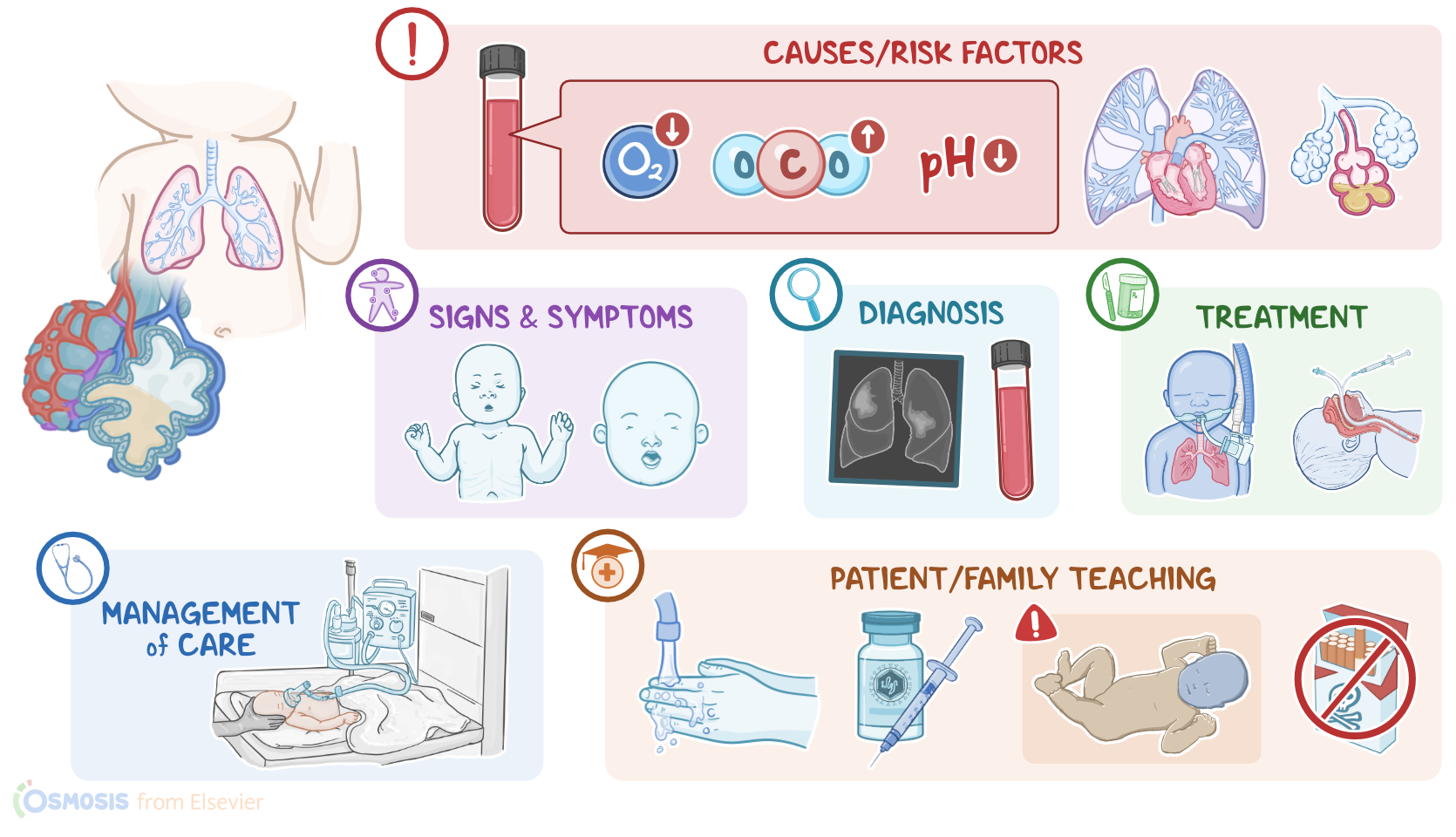
Risk factors for the development of neonatal respiratory distress syndrome include prematurity especially in infants born before the 28th week of gestation, and cesarean delivery without labor.
Finally, respiratory distress syndrome is more common among infants assigned male at birth. Okay, now the pathology of neonatal respiratory distress syndrome starts with insufficient production of surfactant, which causes the alveoli to collapse.
Pathology2:53–4:30
At the same time, widespread alveolar collapse leads to damage of the respiratory epithelium, which triggers an inflammatory response in the lungs.
This causes capillaries to become permeable to larger molecules like proteins, which leak into the alveoli, pulling water with them, and further inactivating surfactant.
The end result is noncardiogenic pulmonary edema.Now, these collapsed, fluid-filled alveoli cannot participate in gas exchange.
This results in acute hypoxemia, or low oxygen level in the blood, and hypercapnia or high carbon dioxide level in the blood.
With hypoxemia, tissues in the body do not get enough oxygen so they have to rely on anaerobic metabolism which produces lactic acid, resulting in metabolic acidosis.
The inability to get rid of carbon dioxide results in respiratory acidosis. Now, hypoxemia, hypercapnia, and acidosis will cause pulmonary vasoconstriction, which may eventually progress to pulmonary hypertension.
With persistent pulmonary hypertension, the ductus arteriosus remains open, resulting in intrapulmonary shunting and decreased oxygenation.
Ultimately, the infant may develop complications like respiratory failure and even death. Clinical manifestations of neonatal respiratory distress start within the first hours after birth, and include nasal flaring, tachypnea, and intercostal or substernal retraction during inspiration, along with grunting during expiration.
Clinical manifestations4:30–5:15
An asynchronous breathing pattern that creates a paradoxical seesaw respiration pattern between the chest and abdomen may also be seen.
During auscultation of the chest, there are typically decreased breath sounds, as well as diffuse crackles which is the sound of collapsed alveoli popping open with inspiration.
Signs of impending respiratory failure include gasping and a decreasing respiratory rate. The diagnosis of neonatal respiratory distress syndrome starts with the client’s history and physical assessment, followed by a chest x-ray or CT scan, which show signs of hypoventilation, such as reduced lung volume, as well as diffuse, reticulogranular ground glass opacities on both lungs.
Diagnosis5:15–6:02
Another feature is air bronchogram where the air-filled bronchi appear dark in contrast to the surrounding white or gray atelectatic tissue.Arterial blood gas, or ABG analysis may show hypoxemia, hypercapnia and respiratory acidosis.
Hypoglycemia will be present due to increased glucose consumption related to prematurity and increased work of breathing.Treatment of neonatal respiratory distress syndrome starts with administration of warm, humidified oxygen by continuous positive airway pressure or CPAP, using face mask or nasal prongs, along with supportive measures, including stabilization of body temperature, administration of IV fluids, blood glucose stabilization, and nutritional support.
Treatment6:02–7:03
Surfactant administration can be given in the delivery room or within the first few hours of life to avoid progressive alveolar atelectasis.
In severe cases, intubation and mechanical ventilation might be necessary.It's important to keep in mind that some of these interventions can cause additional complications.
Long-term supplemental oxygen, especially at high concentrations can cause retinopathy of prematurity, pneumothorax, and bronchopulmonary dysplasia, which is a chronic lung disease in which bronchi are damaged and alveolar tissue is destroyed.
Management and care7:03–9:28
Okay, now let’s talk about the care you’ll be giving to a client with neonatal respiratory distress syndrome. Your priority nursing goals are to support respiratory function, provide supportive therapies, and monitor for complications.Begin by coordinating with the respiratory therapist to keep your client’s respiratory status stable by adjusting the supplemental oxygen and CPAP or ventilator settings.
Remember that you’ll be avoiding any significant fluctuations in blood oxygen levels, using the lowest pressures and oxygen concentration necessary to keep their vital signs, blood oxygen content, and lab values within the parameters given by the healthcare provider.
Then, assist with the administration of surfactant, as prescribed. Continuously observe your client’s respiratory effort and breathing pattern, skin color, chest expansion, and breathing depth.
Auscultate their lungs, monitor vital signs, and keep a close eye on their oxygen saturation. Also remember to review ABG results, looking for abnormal blood gas values and acid-base imbalance.
Report to the healthcare provider immediately if your client’s vital signs and blood oxygen content drop despite intervention or if their lab values are not within normal limits.
Next, be sure to provide supportive therapy to help them conserve energy and reduce their oxygen consumption. Promote temperature stability by placing them in an incubator or radiant warmer with an abdominal skin temperature monitor, and check their temperature frequently.
Administer the prescribed IV fluids and nutrition; and monitor their intake, output, and electrolyte levels. Keep a close eye on their blood glucose level, watch for signs of hypoglycemia such as jitteriness or decreased tone, and follow your unit’s protocol for glucose management.Finally, watch for signs of complications that can occur with treatments such as prolonged use of high levels of oxygen or mechanical ventilation.
Monitor their oxygenation needs, and report any signs of BPD, including a continued need for higher concentrations of oxygen, the inability to decrease supplemental oxygen within the expected time frame, or inability to be weaned from the CPAP or ventilator.Okay, let’s move on to client and family teaching.
General client and family teaching9:28–11:30
First, explain to the newborn’s caregivers that neonatal respiratory distress syndrome is a condition in which a newborn’s lungs are not mature enough to supply them with enough oxygen.
Let them know their newborn needs supplemental oxygen and breathing support to make sure they are getting enough oxygen, and to let their lungs and muscles rest.
Explain that they will likely get a medication called surfactant, which will help keep the tiny air sacs in their lungs open.
Support them by explaining the purpose of the equipment, such as the incubator or radiant warmer, monitors, IVs, and oxygen set-up.
Give them realistic reassurance on their newborn’s condition, encourage them to ask questions, and help them take part in basic newborn care tasks as your client’s condition allows.Be sure to explain any additional measures needed at home once the newborn is discharged home.
Emphasize the importance of regular follow-up appointments with the healthcare provider, and remind them the client will need an eye exam, since oxygen support in neonates increases their risk of retinal damage.
Finally, explain that their newborn will be at an increased risk for respiratory infections. Teach them about infection prevention methods such as frequent hand hygiene, avoiding exposure to people who could be sick, and ensuring that all family members are up to date on their vaccines.
Instruct them to contact their health care provider if their newborn has difficulty feeding or is not gaining weight; and to seek medical attention immediately if their newborn has any signs of respiratory infection like fever, irritability, cough, changes in breathing patterns, or wheezing, or if they notice bluish discoloration of your baby's lips, face, or nails.Alright, as a quick recap… Neonatal respiratory distress syndrome is a respiratory condition caused by a surfactant deficiency in the lungs that results in alveolar collapse, resulting in hypoxemia, hypercapnia, acidosis, pulmonary hypertension and pulmonary edema.
Review11:30–12:48
Risk factors include being born prematurely and cesarean delivery. Clinical manifestations include rapid, shallow breathing, nasal flaring, retractions, grunting, and seesaw respirations.
Diagnosis begins with the client’s history and physical assessment, but may also include a chest x-ray and lab work. Treatment includes supplemental oxygen, nasal continuous positive airway pressure, or mechanical ventilation, and administration of surfactant.
Supportive measures include IV fluids, stabilizing body temperature, monitoring blood glucose values, and nutritional support.
Priority nursing goals are to support respiratory function, provide supportive therapy, and monitor for complications. Client and family teaching centers on explaining the client’s condition and treatments, how to care for their newborn at home, and when to seek medical attention.
| NEONATAL RESPIRATORY DISTRESS SYNDROME (NRDS) | ||
| KEY POINTS | NOTES | |
| DEFINITION |
| |
| PHYSIOLOGY |
| |
| CAUSES AND RISK FACTORS |
| |
| PATHOPHYSIOLOGY |
| |
| SIGNS AND SYMPTOMS |
| |
| DIAGNOSIS |
| |
| TREATMENT |
| |
| MANAGEMENT OF CARE |
| |
| PATIENT AND FAMILY TEACHING |
| |
No notes for this video yet
Try adding a note below