
VITAMINS · Seizure Risk Factors Acronym

Published: Jan 06, 2026
Author: Lily Guo, MD
Editor: Alyssa Haag, MD
Editor: Emily Miao, PharmD, MD
Editor: Kelsey LaFayette, DNP, ARNP, FNP-C
Illustrator: Jannat Day
7-day free trial

Go deeper with Osmosis

Osmosis is a learning platform with videos, questions, and AI tools to help you master topics like this.

4.8 · 12,000+ reviews
Watch quick, visual videos
Practice with Qbank-style questions
Use AI to explain, quiz, and review
Study anytime with the mobile app
Start free trial

No credit card · Cancel anytime

What are seizures?

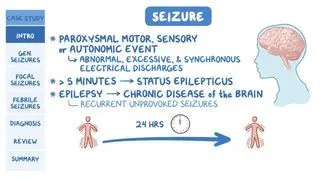
Seizures are uncontrolled bursts of abnormal electrical activity in the brain that can cause temporary changes in behavior, consciousness, and memory. This includes abnormalities in muscle tone or movements, such as twitching or limpness; temporary loss of consciousness; and memory loss. Seizures can be categorized by type, depending on if the abnormal electrical activity affects one specific area of the brain (i.e., focal seizure) or whether it affects both sides of the brain simultaneously (i.e., generalized seizure).  

Focal seizures can further be categorized according to whether consciousness is affected. When consciousness is preserved, it’s called a focal aware seizure, previously called a simple partial seizure. When the individual loses consciousness, it’s known as a focal impaired awareness seizure, previously called complex partial seizures. Focal impaired awareness seizures are the most common types of seizures in adults with epilepsy. They may stare into space and be motionless or they may engage in repetitive behaviors where they smack their lips, repeat certain words or phrases, and have facial grimacing. These seizures can last up to 3 minutes and are followed by a post-ictal phase where the person is confused, somnolent, and have a headache for up to several hours.  

Conversely, generalized seizures can be categorized into tonic-clonic seizures (i.e., grand mal seizures), clonic, tonic, myoclonic, atonic, and absence seizures. Generalized tonic-clonic are the most common type of generalized seizures, characterized by an abrupt loss of consciousness; the muscles of the body first stiffen (i.e., tonic phase) then involuntarily twitch or jerk for up to 2 minutes (i.e., clonic phase). Clonic seizures are accompanied by rhythmic, jerking muscle contractions that typically involve the arms, neck, and face. Tonic seizures cause sudden muscle stiffening which may lead to temporary muscle paralysis, leading to fallsmyoclonic seizures involve sudden muscle contractions, typically affecting the arms; atonic seizures, or drop seizures, cause a sudden loss of control of muscles, typically the legs; and lastly, absence seizures, previously called petit mal, are marked by staring with a blank facial expression and impaired consciousness lasting between 5 and 10 seconds.  

Electroencephalograms (EEGs) aid in diagnostic evaluation of seizures by using electrodes to measure the brain's electrical activity. Once diagnosed, depending on the type and cause, antiseizure medication (e.g., levetiracetam, fosphenytoin, phenytoin, valproic acid) may be used to treat and prevent future seizures.  

Learn deeper with Osmosis

Master this topic faster with videos, questions, and AI.

Used by 8M+ healthcare learners.

Start free trial

No credit card · Cancel anytime

What is VITAMINS?

VITAMINS is an acronym that can help one remember the risk factors or inciting causes of seizures. 

What does the “V” in VITAMINS mean?

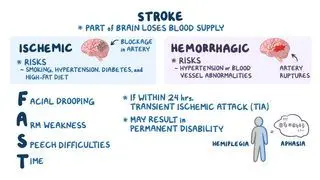
The “V” in VITAMINS represents vascular risk factors and causes, including ischemic or hemorrhagic stroke and arteriovenous (AV) malformation. An ischemic stroke occurs when a blood clot obstructs the vessels supplying blood and oxygen to the brain. Approximately 6-8% of adults with ischemic stroke develop post-stroke seizures, most occurring within the first 1-2 days after ischemia. Intracerebral hemorrhage (i.e., bleeding into the brain tissue) is another type of stroke that can increase the risk of seizures. Hemorrhages usually occur during routine activity, however, intense exercise or exertion can precipitate intracerebral hemorrhage. Seizures can occur in approximately 15% of those with intracerebral hemorrhage, especially those with lobar hemorrhages (i.e., affecting cortical tissue) as opposed to those affecting deeper brain structures or the cerebellum  

An AV malformation is an abnormal tangle of blood vessels whereby the arteries and veins connect in the brain, bypassing any capillaries. As a result, the pressure gradient in the blood vessels is disrupted, allowing for weakening and rupture of vessels. Rupture of an AV malformation leads to release of hemosiderin (i.e., a brown iron-containing pigment derived from red blood cells), which irritates the cortex and can cause seizures.  

What does the first “I” in VITAMINS mean?

The first “I” in VITAMINS represents infection, including meningitis, encephalitis, Lyme disease, tuberculous  meningitis, and brain abscesses. Meningitis refers to inflammation of the meninges, the tissue surrounding the brain and spinal cord. Encephalitis refers to inflammation of the brain tissue itself, potentially leading to swelling. Both can increase the risk of seizures 

Other infectious agents such as Lyme disease (i.e., an infection caused by caused by the bacteria Borrelia burgdorferi) and tuberculosis (i.e., an infection caused by the bacteria Mycobacterium tuberculosis) when spread to the brain can also cause seizures. Brain abscesses, a collection of pus and immune cells, can be caused by a bacterial or fungal infection. Seizures are a common complication of brain abscesses and are usually the first sign that there may be an infection. Other symptoms include high fever, neck rigidity, nausea, and vomiting.  If infectious causes of seizure are suspected, a lumbar puncture may be performed, where cerebrospinal fluid is extracted from the spinal canal and sent for diagnostic testing 

What does the “T” in VITAMINS mean?

The “T” in VITAMINS represents trauma to the head and brain. Mechanisms may include falls, motorcycle accidents, and blunt or penetrating trauma resulting in traumatic brain injury (TBI) such as subdural and epidural hematomas. A subdural hematoma is a collection of blood between the dura (i.e., outermost layer of the three meninges covering the brain) and the arachnoid layers (i.e., the thin middle meningeal layer) covering the brain. Epidural hematomas occurs when blood accumulates between the skull and the dura mater.  

TBI including hematomas occurs when there is a sudden blow or jolt to the head, which can result in damage to brain tissue, from inflammation and oxidative stress on a cellular level. Seizures occurring within a week of a traumatic brain injury are known as early posttraumatic seizures.   

What does the “A” in VITAMINS mean?

The “A” in VITAMINS represents autoimmune conditions, including systemic lupus erythematosus (SLE) and central nervous system (CNS) vasculitis. SLE is an autoimmune disease that can attack any organ system. Compared to the general population, those with SLE are more prone to developing seizures, and often occur early in the disease course. This occurs secondary to autoantibodies creating blood clots that lead to thromboses in the brain; attacking blood vessels resulting in vasculitis (i.e., inflammation of blood vessels); and via secretion of pro-inflammatory cytokines (i.e., signaling proteins) that lower the seizure threshold.  

CNS vasculitis is a rare autoimmune disorder affecting the blood vessels of the brain and spinal cord. In CNS vasculitis, T cells attack and cause inflammation of blood vessels in the central nervous system, often resulting in seizures along with headache, cognitive dysfunction, and stroke 

What does the “M” in VITAMINS mean?

The “M” in VITAMINS represents metabolic causes of seizure, which include hepatic encephalopathy, or an impairment in brain function secondary to cirrhosis (i.e., fibrosis of the liver). Hepatic encephalopathy is a medical condition characterized by coma, disorientation, asterixis (i.e., a flapping tremor), and occasionally seizures due to excess ammonia build-up in the brain.  

Additionally, metabolic derangements can also precipitate seizure. Some metabolic causes include hypoglycemia, uremia, and low levels of electrolytes such as sodium, calcium, or magnesium. Hypoglycemic seizures can occur in individuals with diabetes who take excessive amounts of insulin or oral hypoglycemic agents (e.g., sulfonylureas such as glyburide, glimepiride, and glipizide). Hypoglycemic seizures can be accompanied by diaphoresis, tachycardia, anxiety, and confusion. Uremia (i.e., high levels of urea, a waste product in the blood) which can be associated with kidney failure, is often associated with seizures, particularly myoclonic seizures.  

Sudden falls in serum sodium concentrations can trigger generalized tonic-clonic seizures. Individuals usually first become confused and have an altered level of consciousness. It is important to correct sodium levels slowly to avoid swelling in the brain. Low calcium, or hypocalcemia, is a rarer cause of seizures most often occurring in neonates. It is usually accompanied by tetany, or muscle contractions. Lastly, low levels of magnesium, or hypomagnesemia, characterized by levels below 0.8 mEq/L may result in seizures, as well as irritability, agitation, and confusion. Hypomagnesemia is common in alcohol withdrawal 

What does the second “I” in VITAMINS mean?

The second “I” in VITAMINS represents idiopathic causes, where the cause of seizure is unknown. Epilepsy is an example of idiopathic cause of seizure. Epilepsy is defined as at least two unprovoked seizures occurring more than 24 hours apart. Up to 60% of individuals have an unknown cause of epilepsy, even after a complete and thorough evaluation. 

What does the “N” in VITAMINS mean?

The “N” in VITAMINS represents neoplasms, which refer to an abnormal mass of tissue that may be benign or malignant. Examples include a primary brain tumor, or a secondary tumor, such as breast cancer or lung cancer spreading to the brain (i.e., brain metastases). Approximately 40-60% of individuals with brain neoplasms develop seizures, commonly the focal type. The mechanism is thought to be due to changes in excitatory neurotransmission between brain cells and changes in ion currents brought on by the tumor. Other potential mechanisms include hypoxia, or reduced oxygen flow to the affected area of the brain; inflammation; and mechanical effects (i.e., the tumor pressing on the brain tissue).  

What does the “S” in VITAMINS mean?

The “S” in VITAMINS represents syndrome, or seizures that manifest secondary to an underlying congenital syndrome such as tuberous sclerosis, Down syndrome, or Von Hippel-Lindau syndrome. Tuberous sclerosis is a genetic condition resulting in tumors in various parts of the body, including in the brain. Approximately 80-90% of children with tuberous sclerosis have generalized or partial seizures. Down syndrome, a genetic condition where the individual has an extra chromosome, is associated with increased prevalence of epilepsy. The risk typically occurs in children before the first year of life. Von Hippel-Lindau syndrome is a genetic condition that causes tumors and cysts to grow in certain parts of the body (i.e., brain, spinal cord, eyes), thereby increasing the risk of seizures.  

In addition to congenital disorders, there is a group of syndromes called generalized epilepsy syndromes. Lennox–Gastaut syndrome is a severe form of epilepsy where there are multiple types of seizures starting in early childhood, usually before the age of 4 years. Other examples of generalized epilepsy syndromes include epilepsy with myoclonic astatic seizures; epilepsy with myoclonic absence; and epilepsy with generalized tonic-clonic seizures on awakening. In general, individuals with generalized epilepsy syndromes are more prone to developing absence seizures.  

What are the most important facts to know about the VITAMINS acronym?

The VITAMINS acronym is a tool to help individuals remember the risk factors and common causes of seizures. Different types of seizures include focal seizures which can be divided into focal aware seizures and focal impaired awareness seizures; and generalized seizures, which include tonic-clonic seizures, clonic, tonic, myoclonic, atonic, and absence seizures. The V in VITAMINS represents Vascular; I represents Infectious; T represents Traumatic; A represents Autoimmune; M represents Metabolic; the second I represents Idiopathic; N represents Neoplastic causes; and S represents Syndromes, which are all potential risk factors and causes of seizures.  

Key Takeaways

Definition 

VITAMINS is an acronym that can help remember the risk factors or inciting causes of seizures. 

Seizures 

Seizure = uncontrolled bursts of abnormal electrical activity in the brain  

Diagnosis: EEG  

Treatment: antiseizure medications (e.g., levetiracetam, fosphenytoin, phenytoin, valproic acid) 

Types:  

- Focal seizures  

     - Focal aware seizure (preserved consciousness) 

     - Focal impaired awareness seizure (loss of consciousness) 

          - Most common form in adults with epilepsy 

          - Motionless or repetitive behaviors; facial grimacing; stare into space 

- Generalized seizures 

     - Tonic-clonic seizures (most common type) 

          - Abrupt loss of consciousness  

          - Tonic phase: stiffening 

          - Clonic phase: involuntary twitches or jerks for up to 2 minutes  

- Clonic seizures  

     - Jerking muscle contractions (arms, neck, face) 

- Tonic seizures 

     - Sudden muscle stiffening → temporary muscle paralysisfalls 

- Myoclonic seizures  

     - Sudden muscle contractions (arms)  

- Atonic seizures 

     - Sudden loss of control of muscles (legs) 

- Absence seizures  

     - Staring with blank facial expression and impaired consciousness (5-10 seconds) 

VITAMINS 

V 

Vascular risk factors and causes 

- Ischemic stroke  

     - Blood clot obstructs blood supply to the brain 

     - 6-8% develop post-stroke seizures (within 1-2 days) 

- Hemorrhagic stroke  

     - Intracerebral hemorrhage  

     - 15% develop seizures (especially lobar hemorrhages) 

- Arteriovenous (AV) malformation  

     - Arteries and veins connect in the brain bypassing capillaries  

     - Disrupted pressure gradient → weakening and rupture  

     - Hemosiderin release upon rupture → cortex irritation → seizures 

I 

Infection* 

- Meningitis (i.e., inflammation of meninges) 

- Encephalitis (i.e., inflammation of brain tissue) 

- Lyme disease (Borrelia burgdorferi) 

- Tuberculous meningitis (Mycobacterium tuberculosis) 

- Brain abscesses (by bacterial or fungal infections)  

     - Seizures often first sign  

*Other symptoms can include: high fever, neck rigidity, nausea, vomiting  

*If suspected: lumbar puncture 

T 

Trauma* to the head and brain 

*falls, motorcycle accidents, blunt or penetrating trauma resulting in traumatic brain injury 

- Subdural hematoma (blood collection between dura and arachnoid layers) 

- Epidural hematoma (blood collection between skull and dura mater) 

Early posttraumatic seizures = seizures occurring within a week from TBI 

A 

Autoimmune conditions  

- Systemic lupus erythematosus  

     - Seizures often early in the disease course, due to:  

          - Autoantibodies forming blood clots in the brain 

          - Vasculitis (from autoantibodies attacking blood vessels) 

          - Pro-inflammatory cytokines secretion 

- Central nervous system (CNS) vasculitis  

     - T cells attack and cause inflammation of blood vessels in the CNS → seizures, headache, cognitive dysfunction, stroke 

M 

Metabolic causes 

- Hepatic encephalopathy from liver cirrhosis 

     - Ammonia buildup in the brain 

     - Coma, disorientation, asterixis, seizures 

- Metabolic derangements, e.g.:  

     - Hypoglycemia  

          - Seizures, diaphoresis, tachycardia, anxiety, confusion 

     - Uremia (myoclonic seizures) 

     - Low sodium levels (tonic-clonic seizures)  

     - Hypocalcemia (rare cause of seizures, most often in neonates) 

     - Hypomagnesemia (seizures, irritability, agitation, confusion) 

I

Idiopathic (unknown cause) 

- Epilepsy = at least two unprovoked seizures occurring more than 24 hours apart  

     - Unknown cause in up to 60% of individuals 

N 

Neoplasms 

- Primary or secondary brain tumors (seizures in 40-60%) causing: 

     - Changes in excitatory neurotransmission between brain cells and ion currents 

     - Hypoxia 

     - Inflammation  

     - Mechanical effects 

S 

Syndrome 

- Tuberous sclerosis (can cause brain tumors; seizures in 80-90% of children 

- Down syndrome 

- Von-Hippel-Lindau syndrome (tumors and cysts, can involve the  brain) 

- Generalized epilepsy syndromes 

     - Lennox-Gastaut syndrome  

          - Multiple types of seizures in early childhood  

     - Epilepsy with myoclonic astatic seizures  

     - Epilepsy with myoclonic absence  

     - Epilepsy with generalized tonic-clonic seizures on awakening 

Students say Osmosis is 100% worth it

Because Osmosis saves them time. Lowers stress. And actually helps them remember when it counts.

I used Osmosis to prepare for my first medical school licensing exam! Super helpful and interactive for people who may not do great with just pages of text info!

Cecilia Ruiz

Cecilia Ruiz

MD student

Sayan Misra

I have used Osmosis for about four years. Best thing I have ever used for my medical studies.

Sayan Misra

Sayan Misra

Med student

Osmosis videos are superior because they define simple concepts, tell a story with a clear progression, and provide context.

Jay Pate

Jay Pate

Dental student

References


Chowdhury AR, Marcus EN. Seizure disorder exacerbated by hepatic encephalopathy: A case report. Open Access Maced J Med Sci. 2019 May 30;7(10):1669-1671. doi: 10.3889/oamjms.2019.458. PMID: 31210820; PMCID: PMC6560308.  


Muslimov IA, Berardi V, Stephenson S, Ginzler EM, Hanly JG, Tiedge H. Autoimmune RNA dysregulation and seizures: Therapeutic prospects in neuropsychiatric lupus. Life Sci Alliance. 2022 Oct 13;5(12):e202201496. doi: 10.26508/lsa.202201496. PMID: 36229064; PMCID: PMC9559755. 


Parmontree P, Tunthanathip T, Doungngern T, Rojpitbulstit M, Kulviwat W, Ratanalert S. Predictive risk factors for early seizures in traumatic brain injury. J Neurosci Rural Pract. 2019 Oct;10(4):582-587. doi: 10.1055/s-0039-1700791. Epub 2019 Oct 23. PMID: 31831975; PMCID: PMC6906099. 


Rauchman SH, Zubair A, Jacob B, Rauchman D, Pinkhasov A, Placantonakis DG, Reiss AB. Traumatic brain injury: Mechanisms, manifestations, and visual sequelae. Front Neurosci. 2023 Feb 23;17:1090672. doi: 10.3389/fnins.2023.1090672. PMID: 36908792; PMCID: PMC9995859. 


Suarez JI. Diagnosis and management of subarachnoid hemorrhage. Continuum (Minneap Minn). 2015; 21:1263.  


Vecht CJ, Kerkhof M, Duran-Pena A. Seizure prognosis in brain tumors: New insights and evidence-based management. Oncologist. 2014 Jul;19(7):751-9. doi: 10.1634/theoncologist.2014-0060. Epub 2014 Jun 4. PMID: 24899645; PMCID: PMC4077452.