Polycythemia: Nursing
Introduction0:00–0:22
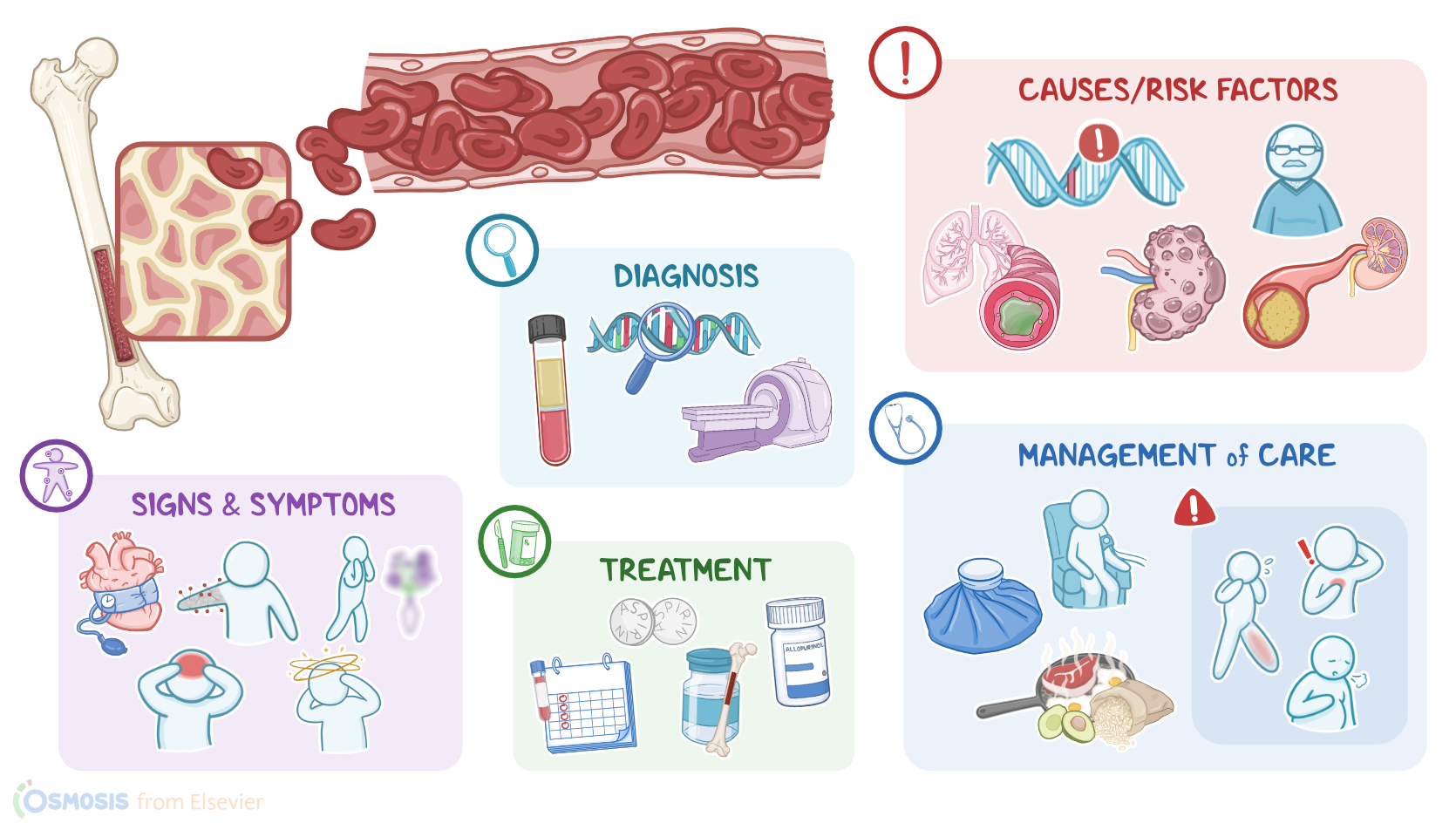
Polycythemia is a condition associated with an increased number of circulating red blood cells or RBCs for short. Polycythemia can be primary, meaning there's a spontaneous increase in the production of red blood cells; or secondary, when another condition causes increased production.
First, let’s cover some basic physiology of blood cells, starting with RBCs. When we breathe in, air flows through the nasal cavity, pharynx, and larynx, down into the trachea.
Physiology0:22–2:00
From here, the air reaches the lungs, where RBCs pick up oxygen and transport it to the peripheral tissues, where they release it.
After releasing oxygen, the RBCs pick up carbon dioxide. Carbon dioxide is a waste product of cellular metabolism, which is then transported back to the lungs, and eventually eliminated through the air that we breathe out.
Additionally, red blood cells have an important role in maintaining the acid-base balance in the body. The production of red blood cells starts in the bone marrow, where the hematopoietic stem cells reside.
In order to proliferate and reach their mature form, hematopoietic cells require stimulation by specific growth factors.
One of these factors is a hormone called erythropoietin, produced by kidneys. Once produced, erythropoietin enters the blood and travels to the bone marrow, where it signals hematopoietic cells to differentiate into red blood cells.
Moreover, if there’s tissue hypoxia or low levels of oxygen in peripheral tissues, the kidneys can increase the production of erythropoietin, therefore ramping up the production of red blood cells.
Finally, the other two groups of blood cells include white blood cells, which primarily defend the body from foreign pathogens; and platelets, which have a key role in blood clotting and hemostasis.Now, primary polycythemia, also known as polycythemia vera, is a chronic myeloproliferative disorder caused by an acquired mutation of the JAK2 gene, which codes for a protein that promotes cell growth and proliferation.
Causes and risk factors2:00–3:12
Risk factors associated with this mutation include being assigned male at birth and over 50 years of age. On the other hand, secondary polycythemia is usually caused by conditions associated with tissue hypoxia, like high altitude, chronic obstructive pulmonary disease, and cyanotic heart disease.
Other important causes include renal conditions, like renal artery stenosis, renal cysts, and renal tumors; Next are erythropoietin secreting tumors, like hepatocellular carcinoma.
Finally, some medications like erythropoietin analogs, testosterone, and anabolic steroids can cause polycythemia as a side effect.
Risk factors associated with secondary polycythemia include smoking, obesity, chronic alcoholism, and hypertension.Now, let’s switch gears and look at the pathology of polycythemia.
Pathology3:12–4:53
In primary polycythemia, the mutation of the JAK2 gene causes hematopoietic cells to divide even in the absence of erythropoietin.
As a result, there’s overproduction of primarily red blood cells, but also white blood cells and platelets. On the other hand, with secondary polycythemia, tissue hypoxia stimulates the production of erythropoietin, which increases the production of red blood cells, eventually causing polycythemia.
In both types of polycythemia, the increased the volume and viscosity of the blood ultimately causes sluggish blood flow, congestion in the peripheral organs, and tissue hypoxia and ischemia.Now, complications of polycythemia are primarily linked to increased viscosity of the blood and circulatory congestion, because these factors increase the risk of developing blood clots or thrombosis.
The most common thrombotic complications include stroke, angina pectoris, myocardial infarction, and deep vein thrombosis.
Additionally, high turnover of red blood cells is characterized by increased levels of uric acid in the body, which can result in complications such as kidney stones and gout, which is a type of joint inflammation caused by high levels of uric acid.
Other important complications include peptic ulcers, hepatomegaly, and splenomegaly. Moreover, splenomegaly occurs because the spleen is trying to eliminate the excess blood cells from circulation.Now, the clinical manifestations of polycythemia are often caused by blood vessel congestion.
Clinical manifestations4:53–6:13
When cerebral circulation is affected, there’s dizziness and headaches; retinal vessel congestion causes blurred vision; impaired peripheral circulation can cause tingling or burning in the hands and feet; additionally, when there’s pain, swelling and redness in the hands and feet, it’s called erythromelalgia and this can be triggered by stress, exercise, temperature change, or dehydration.
There can also be facial plethora which is ruddy complexion. Another common symptom is pruritus, or itchiness, especially after a hot shower or bath, and this is likely due to overproduction of histamine and prostaglandins by mast cells.
There can also be systemic effects, like fatigue, from a combination of hypoxia and iron deficiency. Other important clinical features include hypertension due to hypervolemia, and cyanosis of visible mucosa.
Although there’s an increased number of platelets, they can function abnormally, causing nose bleeds, gum bleeds and petechiae, which are red, flat, pinpoint spots on the skin.
Finally, an enlarged liver or spleen that can cause abdominal fullness or pain and can be felt on palpation. Diagnosis is based on the complete blood cell count, which typically reveals an increased hematocrit, as well as increased hemoglobin, WBCs, RBCs , and platelets.
Diagnosis6:13–7:25
Primary polycythemia can also be diagnosed using genetic testing to look for mutations in the JAK2 gene; while clients with secondary polycythemia might require imaging methods, such as ultrasound, X-ray, and MRI, to detect the cause of secondary polycythemia.
For both types of polycythemia, serum erythropoietin levels can be used to differentiate between the two. Clients with primary polycythemia have low erythropoietin levels because the mutation of the JAK2 gene stimulates the production of red blood cells in the absence of erythropoietin.
At the same time, the increased number of RBCs suppresses erythropoietin levels. On the flip side, clients with secondary polycythemia usually have high erythropoietin levels, because there’s tissue hypoxia or tumor that increases the production of erythropoietin.Finally, if a bone marrow biopsy is performed, it can show hypercellularity, as well as hyperplasia of all blood cell lines, in both primary and secondary polycythemia.Treatment of polycythemia vera primarily includes therapeutic phlebotomy, which is a procedure where 500 mL of blood is drawn every week from a vein to reduce the blood volume and viscosity until lab values like hematocrit decrease.
Treatment7:25–8:06
Next, clients with polycythemia should increase their fluid intake and take low dose aspirin to decrease the risk of blood clotting.
Another group of medications, called myelosuppressive agents, can be used to suppress the bone marrow and the production of blood cells, while allopurinol is given to reduce uric acid production.
Finally, individuals with secondary polycythemia require the treatment of the primary condition that caused polycythemia.Alright, now let’s take a look at the nursing care you’ll provide for a client with polycythemia vera.
Management of Care8:06–9:40
Your priority nursing goals are to manage your client’s symptoms and monitor for complications. Begin by assessing your client’s vital signs, especially their blood pressure.
Also check their CBC and note their RBC count and hematocrit. Then, assist with therapeutic phlebotomy, and administer the prescribed IV fluids to reduce blood volume and viscosity.
Also administer the prescribed myelosuppressive medication to help reduce production of RBCs and other blood cells in the bone marrow.
After treatment, monitor you client closely, and immediately report to the healthcare provider if your client develops hypertension; thrombotic symptoms, including pain, redness, or swelling in the calf; chest pain; a sudden onset of dyspnea, or stroke-like symptoms; and prepare to administer antithrombotics or anticoagulants as ordered.
Assess their nutritional status and ask them about their appetite and usual diet. Provide small, nutrient dense, high calorie meals, and request a nutrition consult, as needed.
For pruritus, administer the prescribed antihistamine, apply cool compresses, and keep their skin moisturized. Okay, moving on to client and family teaching.
General client & family teaching9:40–11:20
First, teach your client that polycythemia is a condition where the bone marrow makes too many red blood cells, which causes the blood to become thick, which then slows circulation and decreases oxygen delivery to the body.
Then, review the plan of care and stress the importance of adhering to the prescribed treatments, including routine phlebotomy and medications.Next, encourage lifestyle modifications, including a heart healthy diet and drinking enough fluids to keep their urine pale yellow.
Also encourage moderate physical activity, and help them to deal with fatigue by balancing activity with periods of rest.
Lastly, remind them to promote circulation by taking regular breaks to get up, stretch, and walk around during prolonged periods of sitting.If your client experiences pruritus, suggest they take lukewarm baths, to keep their skin moisturized, to avoid scratching, and to take their prescribed antihistamine, as directed.
If the pruritus negatively impacts their quality of life, encourage them to contact their healthcare provider to discuss other treatment options.Finally, instruct your client to seek medical attention immediately if they experience signs of a stroke such as confusion, trouble speaking, or sudden numbness or weakness; chest pain or trouble breathing; if they have sudden abdominal or flank pain; or if they have blood in their stool or vomit.
All right, as a quick recap… Polycythemia is a condition associated with an increased number of circulating red blood cells in the blood.
Review11:20–13:26
Primary polycythemia, also called polycythemia vera, is caused by an acquired mutation of the JAK2 gene, causing an overproduction of RBCs, WBCs, and platelets.
On the other hand, secondary polycythemia is usually caused by conditions associated with tissue hypoxia, like smoking, obesity, chronic alcoholism, and hypertension, that stimulate erythropoietin production and increased RBC production.
Complications of polycythemia include thrombosis and bleeding. In addition, high turnover of RBCs increases uric acid in the blood, leading to kidney stones and gout.
Clinical manifestations include headache, dizziness, blurred vision, erythromelalgia, facial plethora and pruritus, especially after a hot shower or bath.
Diagnosis is based on a complete blood cell count and testing to look for mutations in the JAK2 gene can be used to diagnose primary polycythemia.
A bone marrow biopsy can show hypercellularity, as well as hyperplasia of all blood cell lines. An X-ray, MRI and ultrasound can also be used to detect secondary polycythemia.
Erythropoietin levels are usually low with primary polycythemia, and high with secondary polycythemia.Phlebotomy is the primary treatment for polycythemia, as well as hydration, and medications like low-dose aspirin.
Myelosuppressive medications or medications like allopurinol can also be used. In clients with secondary polycythemia, treatment also focuses on alleviating the underlying cause.
Goals of nursing care include symptom management and monitoring for complications. Client and family education emphasizes lifestyle modifications, treatment adherence, and when to seek medical attention.
| POLYCYTHEMIA | ||
| KEY POINTS | NOTES | |
| DEFINITION |
| |
| PHYSIOLOGY |
| |
| CAUSES AND RISK FACTORS |
| |
| PATHOPHYSIOLOGY |
| |
| COMPLICATIONS |
| |
| SIGNS AND SYMPTOMS |
| |
| DIAGNOSIS |
| |
| TREATMENT |
| |
| MANAGEMENT OF CARE |
| |
| PATIENT AND FAMILY TEACHING |
| |
No notes for this video yet
Try adding a note below